
How to Customize Advent Calendar Boxes with Brand Artwork
Custom artwork can turn an advent calendar box from a basic seasonal package into a retail-ready branded display. For B2B buyers, the real challenge is not only choosing colors and graphics, but matching the artwork with the correct structure, insert, material, printing method, sample process, and export packing plan.
This guide explains how to plan custom printed advent calendar boxes for brand artwork, bulk production, and overseas shipment. It is written for purchasing teams, wholesalers, gift companies, retail buyers, and brands preparing a seasonal packaging project.
Start with the Box Structure Before Designing the Artwork
Artwork should not be prepared before the structure is confirmed. Drawer boxes, door-opening boxes, book-style rigid boxes, and folding calendar boxes all require different dielines, glue positions, crease lines, inner space, and opening directions.
A buyer may want a large front panel for strong shelf impact, but the factory must also check whether the doors, drawers, or trays can open smoothly after printing, lamination, and assembly. This is why structure review should come before final artwork approval.
Common Advent Calendar Box Structures for B2B Projects
For overseas retail and gift packaging, the most common structures include drawer advent calendar boxes, double-door advent calendar boxes, rigid book-style boxes, folding paperboard calendar boxes, and counter display calendar packs. Each structure has a different effect on cost, packing volume, and production time.
Buyers who are still comparing structures can review custom advent calendar box products or discuss project requirements with a custom advent calendar boxes manufacturer before preparing final artwork.
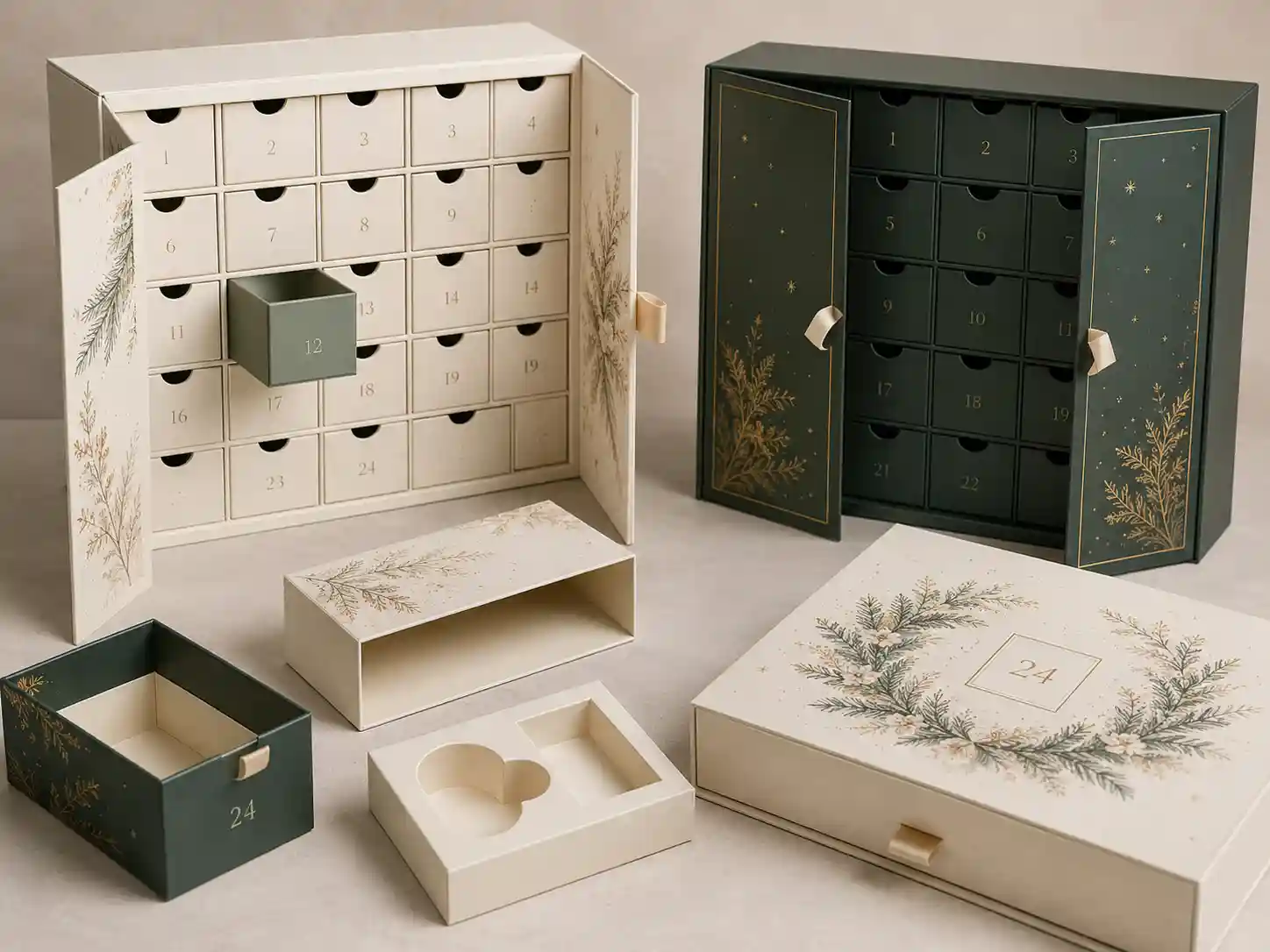
Match the Structure with the Product Inside
The inner product decides the box depth, drawer size, insert material, and opening strength. A chocolate gift set, skincare sample kit, toy set, candle set, jewelry set, stationery set, or promotional bundle will each need a different insert plan.
For example, a skincare brand may need PET, paperboard, or EVA-style inserts to hold small bottles upright. A candy or chocolate project may need food-contact material confirmation from the buyer’s side. A promotional gift company may focus more on flat packing, quick assembly, and mixed-item placement.
When sending an inquiry, prepare product size, product weight, quantity per box, preferred opening style, and target retail channel. These details help the supplier quote more accurately and avoid redesign after sampling.
Prepare Brand Artwork for Custom Printed Advent Calendar Boxes
Artwork for custom printed advent calendar boxes should be prepared with production limits in mind. A design that looks clean on screen may not print correctly if the dieline, bleed, color mode, font files, or finishing areas are incomplete.
For a smooth project, provide editable artwork files such as AI, PDF, or layered design files. The artwork should include bleed, safe margins, dieline layers, CMYK color settings, spot color instructions if needed, and clear notes for special finishing.
Artwork Files Buyers Should Prepare
A complete artwork package usually includes the outer box design, drawer or door panel artwork, insert printing if required, logo placement, barcode area, warning text, shipping marks, and any retail label space. If the project uses multiple SKUs, mark each SKU clearly to avoid mixing panels during production.
Buyers can also prepare a simple artwork checklist before requesting custom advent calendar box services. This helps the supplier check printing feasibility, material use, and sample timing early.
Printing and Finishing Options
Most B2B advent calendar boxes use offset printing for full-color artwork. Finishing choices may include matte lamination, gloss lamination, soft-touch lamination, spot UV, foil stamping, embossing, debossing, or textured paper.
Matte lamination is often used for premium gift packaging because it reduces glare and gives the box a clean retail look. Spot UV can highlight a logo or product name. Foil stamping can work well for seasonal packaging, but it should be used carefully because large foil areas may increase cost and production risk.
Customization Process from Dieline to Approved Sample
A reliable process helps reduce mistakes before bulk production. The basic workflow is structure confirmation, dieline creation, artwork placement, digital proof, sample production, sample review, final approval, bulk printing, assembly, QC, and export packing.
Giftpackpro can support buyers who need practical planning from structure to shipment, especially when artwork, inserts, and packing requirements must be checked together.
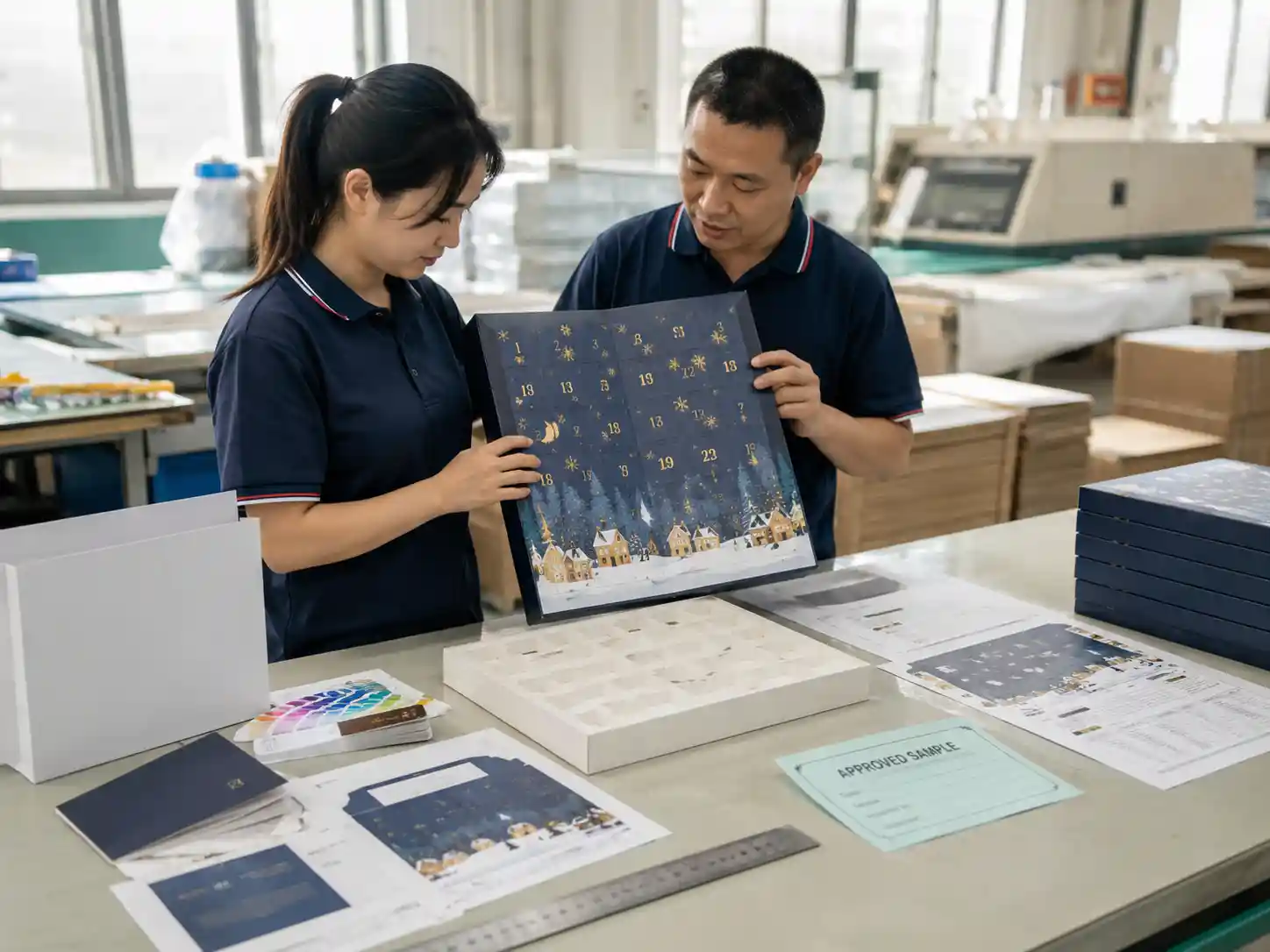
Why Dieline Review Matters
The dieline is the production map for the box. It shows cut lines, crease lines, glue areas, folding direction, drawer panels, door panels, and insert positions. If artwork is placed too close to a crease or cut line, key text or logo details may be damaged after assembly.
For custom printed advent calendar boxes, dieline review is especially important because many panels are small. Number windows, drawer fronts, hidden messages, product labels, and decorative patterns must align across multiple parts.
Sample Review Points
When the sample arrives, do not only check the front artwork. Open and close each drawer or door. Check whether the insert holds the products firmly. Review color, lamination, logo position, text clarity, barcode area, carton packing method, and product fit.
If the sample is for buyer approval, take photos and notes from multiple angles. Mark required changes clearly before approving bulk production. Small sample issues are easier to fix than bulk production problems.
Planning MOQ, Lead Time, and Bulk Production
MOQ depends on the structure, material, printing method, finishing, and labor required for assembly. Simple folding paperboard boxes may have a lower MOQ, while rigid drawer calendar boxes with multiple compartments usually require more setup time and manual work.
Lead time should include artwork review, sample production, sample shipping, buyer feedback, material purchasing, printing, finishing, die cutting, assembly, QC, carton packing, and export preparation. Seasonal packaging projects should start early because production slots can become tight before peak shipping periods.
| Project Stage | Buyer Should Prepare | Factory Checks | Why It Matters |
|---|---|---|---|
| Structure planning | Product size, weight, quantity, target retail channel | Box style, insert type, opening method, material strength | Prevents product-fit and assembly problems |
| Artwork preparation | Editable files, logo, CMYK artwork, barcode, text content | Dieline fit, bleed, safe area, color feasibility | Reduces printing errors and approval delays |
| Sample review | Approval notes, product samples, change list | Color, finishing, structure, insert fit, opening function | Confirms the box before bulk production |
| Bulk production | Final order quantity, delivery schedule, packing request | Printing, lamination, die cutting, assembly, QC | Keeps quality consistent across the order |
| Export packing | Shipping marks, carton label, pallet request if needed | Master carton size, carton strength, packing list | Helps reduce transport damage and warehouse confusion |
Quality Control for Printed Calendar Box Projects
Quality control should cover both appearance and function. A beautiful print is not enough if drawers are tight, doors cannot close, inserts are loose, or cartons are weak for export shipping.
For premium projects, buyers may request checks for color consistency, surface scratches, glue marks, panel alignment, drawer movement, door opening, insert placement, and carton drop resistance. If the project requires responsible paper sourcing, buyers can also review official information about FSC chain of custody certification. For quality management expectations, buyers may refer to the official ISO 9001 quality management standard.
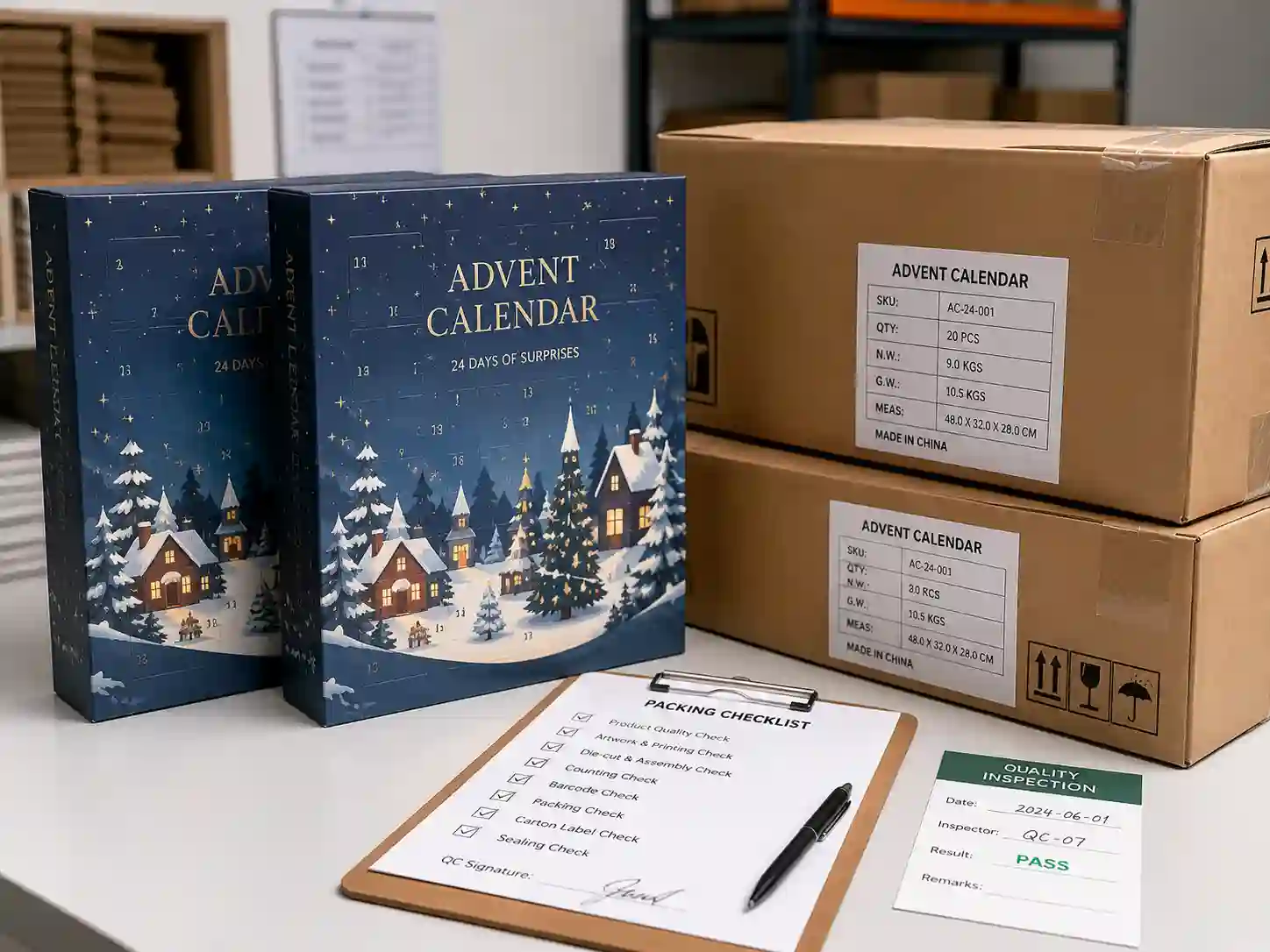
Printing QC Checklist
Check whether the final printed colors match the approved sample as closely as possible. Paper material, lamination, lighting, and ink absorption can all affect color. For brand projects, it is useful to provide Pantone references or approved physical color samples when color control is important.
Also check small text, product warnings, icons, barcode readability, and logo edges. Many advent calendar boxes have small numbered panels, so even minor registration issues may look obvious in retail photos.
Structure QC Checklist
Open every type of drawer, door, or flap during sample review. The box should feel stable when placed on a table or retail shelf. Inserts should hold products without excessive movement. If the calendar box will be pre-filled before shipment, ask the supplier to test the packed weight and handling method.
Export Packing and Shipping Questions Buyers Often Ask
Export packing is not just a logistics detail. It affects damage rate, warehouse handling, freight cost, and final retail delivery. Rigid advent calendar boxes may need stronger master cartons, corner protection, inner poly bags, or pallet planning depending on the shipping method.
Flat-packed structures can reduce shipping volume, but they may require assembly after arrival. Pre-assembled or pre-filled boxes save time for retail teams, but they increase carton volume and require stronger packing. Buyers should decide which option fits their labor cost, retail deadline, and warehouse process.
Flat Pack or Assembled Pack?
Flat pack is suitable when the buyer has local assembly capacity or wants lower shipping volume. Assembled pack is better when the product must arrive retail-ready. Pre-filled pack is useful for gift sets, but it requires more careful testing because the product weight affects box strength and carton protection.
If you are comparing these options, read more advent calendar box buying guides or contact the team to request a custom quote with your packing requirement.
How to Prepare a Clear Quote Request
A clear request helps the supplier quote faster and more accurately. Instead of asking only for “a custom advent calendar box price,” send enough details for structure, printing, material, insert, and packing evaluation.
Information to Include in Your Inquiry
Prepare the box size, product size, product weight, quantity, target order volume, preferred structure, printing design, finishing request, insert type, sample deadline, delivery country, packing method, and whether the boxes will be shipped flat, assembled, or pre-filled.
If artwork is not ready, send a reference layout and explain the branding direction. If the product is still being developed, send estimated dimensions and weight. The supplier can still provide an initial direction, then update the quote after final details are confirmed.
Example Quote Request
A practical B2B quote request may look like this: “We need 3,000 custom printed advent calendar boxes for a skincare sample set. The box should have 24 drawers, matte lamination, printed outer panels, and a paperboard insert. Each product is around 30 ml. Please quote sample cost, MOQ, bulk production lead time, carton packing, and shipping-ready master carton information.”
This type of request gives the factory enough information to check structure, material, insert, labor, printing, and packing. It also helps avoid a low initial quote that later changes because key details were missing.
Common Problems and Practical Solutions
Problem: Artwork Looks Good on Screen but Poor After Printing
Use CMYK files, high-resolution images, clear bleed, and correct safe margins. For important brand colors, provide Pantone references or approved color samples. Avoid placing tiny text on dark patterns or crease areas.
Problem: Drawers or Doors Are Too Tight
This usually relates to structure tolerance, paper thickness, lamination, or assembly pressure. Review the sample carefully and ask the supplier to adjust the dieline before bulk production.
Problem: Insert Does Not Hold Products Firmly
Send real product samples when possible. If the product is not available, provide accurate product dimensions and weight. The insert should be tested with the actual product before final approval.
Problem: Cartons Are Too Large or Shipping Cost Is High
Compare flat pack, assembled pack, and pre-filled pack. Ask for master carton dimensions and estimated carton weight during quotation. For large seasonal orders, carton planning can affect total landed cost.
Problem: The Buyer Needs a Fast Deadline
Confirm the structure early, reduce unnecessary finishing, approve the sample quickly, and avoid changing artwork after proof approval. Complex structures and special finishes usually need more production time.
Final Advice for B2B Buyers
The best results come from planning artwork and structure together. Before approving custom printed advent calendar boxes, check the dieline, sample, insert, printing effect, carton packing, and export schedule as one complete project.
Giftpackpro works with overseas brands, wholesalers, gift companies, and purchasing teams that need seasonal paper gift packaging with practical production support. To move from concept to quotation, review available custom advent calendar box services, compare custom advent calendar box products, learn more about the Giftpackpro packaging factory, or request a custom quote with your size, artwork, quantity, insert, and shipping requirements.


