How to Choose Door Layout for Advent Calendar Boxes
The advent calendar box door layout affects more than the look of the package. It changes product loading, insert design, artwork planning, retail shelf impact, e-commerce protection, sampling cost, and final assembly speed.
For overseas brands, wholesalers, retail buyers, and purchasing teams, door layout should be decided before artwork and quotation are finalized. A 24-door calendar, 12-door campaign box, or mixed-size promotional set may look similar from the outside, but the production logic can be very different.
This guide explains how to choose a practical door layout for custom advent calendar boxes used in retail displays, e-commerce gift sets, seasonal launches, and promotional campaigns.
Why Door Layout Matters in B2B Advent Calendar Projects
Door layout is the visible opening plan on the front panel of the calendar box. It controls how many doors are used, how each door opens, how products are arranged behind the front panel, and how the buyer experiences the campaign day by day.
In B2B production, the layout also affects the hidden structure. Behind each door, the factory may need paperboard dividers, molded pulp trays, PET trays, EVA inserts, or separate product cavities. If the door layout is decided too late, insert fitting and artwork alignment become harder to control.
For buyers comparing suppliers, it is useful to review door layout together with custom advent calendar box services, sample options, insert engineering, export packing, and lead time. A good layout should be attractive, but it must also be realistic for bulk production.
Start with the Campaign Type, Not Only the Door Count
Many buyers begin with a simple question: “Should we make 12 doors or 24 doors?” That is only one part of the decision. The better starting point is the campaign type.
Retail Shelf Campaigns
For retail shelves, the front view matters first. The layout should be clean enough for shoppers to understand quickly. Large doors, clear numbering areas, and strong visual zones usually work better than a very dense layout.
If the box will stand upright on a shelf, the lower doors should not be too small or too close to the bottom edge. Retail handling, shelf friction, and carton compression can all affect the bottom area. A balanced door layout helps reduce visible damage during store handling.
E-Commerce Gift Sets
For e-commerce, the box may travel through courier networks before the customer sees it. Door cuts, front panel thickness, insert support, and outer carton protection become more important. A highly complex door layout may look premium, but it can also create more weak points on the front panel.
For online gift sets, buyers should ask the supplier whether the advent calendar will ship as a finished assembled box, semi-assembled box, or flat-packed component. Each packing method changes how the door layout should be reinforced.
Seasonal Launches and Promotional Sets
For product launches, the door layout can support product storytelling. For example, a skincare brand may group trial sizes by routine. A snack brand may use larger doors for hero products and smaller doors for samples. A stationery brand may combine standard square doors with longer doors for pens or rulers.
Giftpackpro often recommends confirming the product list before finalizing the layout. A beautiful door pattern is not enough if the actual items do not fit behind the doors.
Main Door Layout Options for Advent Calendar Boxes
There is no single best layout. The right choice depends on product size, brand artwork, packing method, budget, and sales channel. The table below compares common B2B options.
| Door Layout Type | Best For | Key Advantages | Quotation Notes |
|---|---|---|---|
| Equal-size grid layout | Small products with similar dimensions | Clean structure, easier insert planning, stable production | Provide product size, weight, and quantity for each cavity |
| Mixed-size door layout | Gift sets with different product sizes | Flexible product arrangement and stronger campaign storytelling | Needs accurate product list before dieline confirmation |
| Random visual layout | Premium seasonal campaigns and retail display impact | More dynamic front artwork and higher shelf visibility | May require more layout checking and sample testing |
| Drawer-style layout | Reusable gift boxes and premium sets | Better opening experience and stronger structure | Usually higher material and assembly cost than perforated doors |
| Book-style opening with inner doors | Luxury gift sets, beauty kits, and brand campaigns | Large outside artwork area plus detailed inner reveal | Confirm magnet, ribbon, hinge, and insert requirements early |
How Door Layout Affects Insert Design
The insert is where many advent calendar projects become more technical. A simple front layout may still require detailed insert work if the products are fragile, heavy, irregular, or made from different materials.
Product Size and Cavity Matching
Before choosing the advent calendar box door layout, prepare a product size list. Include length, width, height, weight, and product orientation. If bottles, tubes, jars, sachets, or accessories are mixed in one set, each item should be assigned to a door position.
For example, a beauty advent calendar may use 24 doors, but the products may include mini bottles, sheet masks, lip products, jars, and small tools. A standard grid may not work unless the insert is designed carefully behind the front panel.
Insert Material Selection
Paperboard dividers are often suitable for lighter products and cost-sensitive campaigns. EVA or foam inserts may be used for fragile items, but buyers should check whether the material matches brand positioning and market requirements. Molded pulp can be useful for certain sustainable packaging plans.
Buyers can review custom advent calendar box products to compare possible structures, then discuss insert direction with the supplier before requesting a sample.
Door Opening Direction
Door direction matters. Some doors open left to right, some open upward, and some use tear-open perforation. If the product behind the door is close to the front panel, the opening direction must leave enough space for removal.
A poor opening direction can make the product difficult to take out, especially when the cavity is deep or the item has a tight insert fit. This should be tested during sampling, not after mass production.
Artwork Planning for Door Layout
Door layout and artwork must be developed together. If the artwork is created before the door map, important graphics may be cut by door lines, perforation, or finger holes.
Numbering and Visual Hierarchy
Numbers should be readable without taking over the whole design. For retail shelves, large numbers can help shoppers understand the product quickly. For premium gift sets, smaller numbers may look cleaner, but they still need enough contrast.
Buyers should decide whether the numbers are printed as part of the main artwork, placed in small icons, or integrated into illustrations. For export markets, avoid real brand names, unauthorized characters, celebrity faces, or copyrighted graphics unless licensing is already confirmed.
Bleed, Cut Lines, and Perforation Safety
The dieline should show bleed, safe area, door cut lines, crease lines, and perforation lines. Artwork should not place small text too close to door cuts. Important logos, campaign messages, and product claims should remain outside risky cut areas.
If the project needs responsibly sourced paper claims, buyers can check official guidance from FSC and confirm documentation requirements with the supplier before printing certification-related marks.
Retail and E-Commerce Planning Considerations
A door layout that looks good on screen may not perform well in retail or e-commerce. The box must match the sales channel.
For Retail Shelf Display
Retail buyers usually care about shelf visibility, front-facing impact, barcode placement, carton strength, and replenishment handling. The front panel should not be too crowded. If the calendar box is large, the door layout should keep the visual center clean enough for brand recognition.
For retail campaigns, buyers may also need PDQ trays, shelf-ready cartons, or outer cartons with shipping marks. It is better to discuss these items together with the box layout, instead of treating them as a separate packing detail later.
For E-Commerce Gift Sets
E-commerce calendars need stronger protection. If doors are thin, close to the edge, or heavily perforated, the front panel may be more vulnerable during parcel delivery. A protective mailer carton or stronger master carton may be needed.
For online sets, the product photo must match the final structure. If the campaign page shows a book-style box but the final production uses a flat front perforated structure, the buyer may face consistency issues. Confirm the structure before photography and listing design.
For Seasonal Campaign Timing
Advent calendar projects are time-sensitive. Door layout decisions should be locked before mass artwork, sample approval, and bulk material purchasing. Last-minute layout changes can affect the dieline, insert, printing plate, sample cost, and production schedule.
Buyers can use advent calendar box buying guides to plan earlier and avoid rushing structure decisions during peak season.
Customization Process for Door Layout Projects
A practical process helps avoid repeated sampling. For most B2B projects, the workflow starts with product details and ends with approved packing specifications.
Step 1: Confirm Product List and Quantity
Prepare a list of all items inside the calendar. Include size, weight, material, fragility, and whether the product must face a certain direction. If the final product list is not ready, provide dummy product sizes for layout testing.
Step 2: Choose Structure Type
Common structures include front perforated door calendars, drawer calendars, book-style calendars, rigid gift box calendars, and foldable paperboard calendars. A custom advent calendar boxes manufacturer can suggest the structure based on product weight, budget, and sales channel.
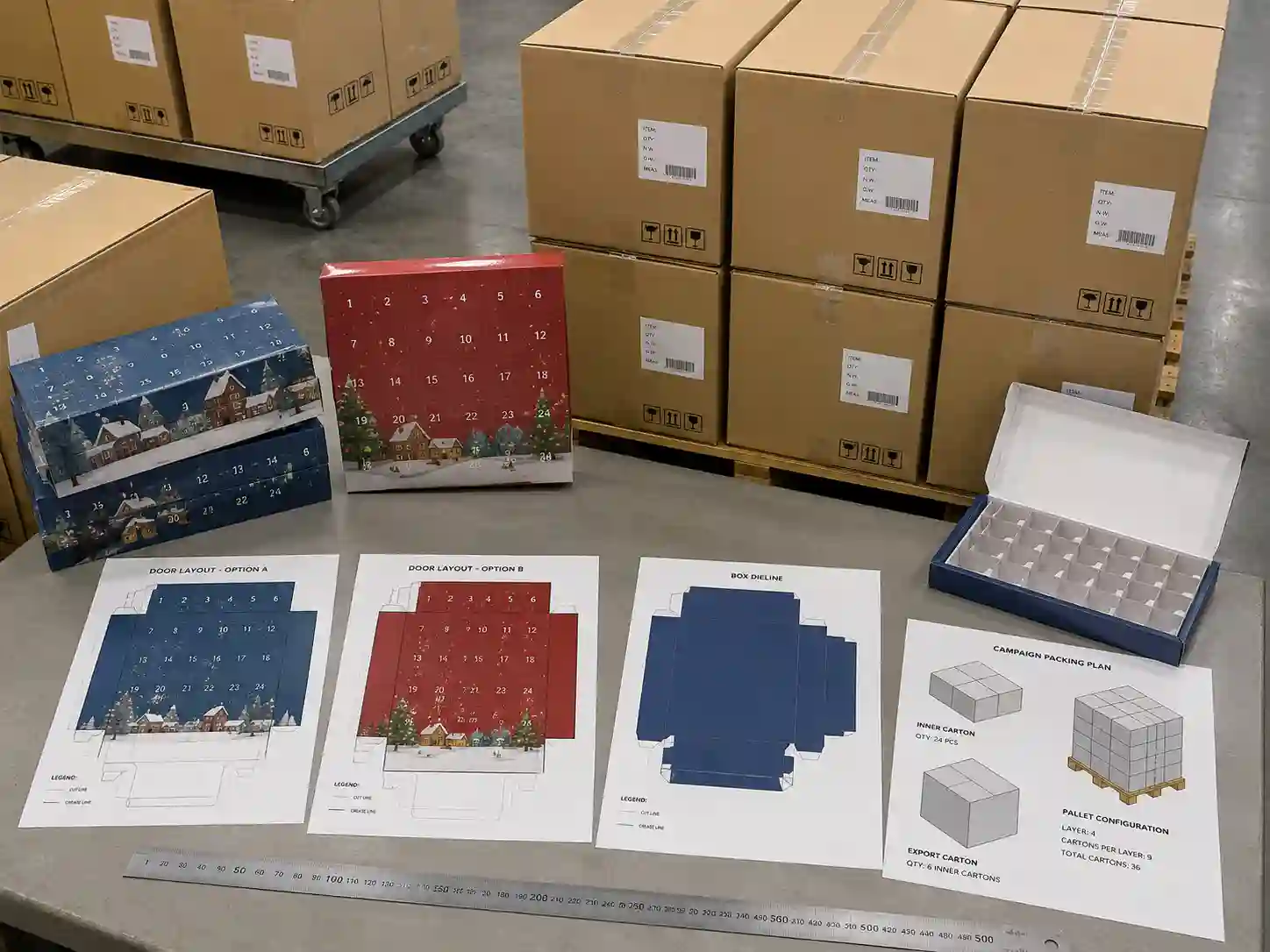
Step 3: Build the Door Map
The door map shows which product goes behind each door. It should include door number, cavity size, product name or code, insert material, opening direction, and any special loading notes.
Step 4: Make the Dieline and Sample
After the door map is approved, the supplier can create a dieline. The first sample should test structure, insert fit, opening performance, and visual balance. For important campaigns, buyers may request a blank structural sample before color proofing.
Step 5: Confirm Artwork and Packing
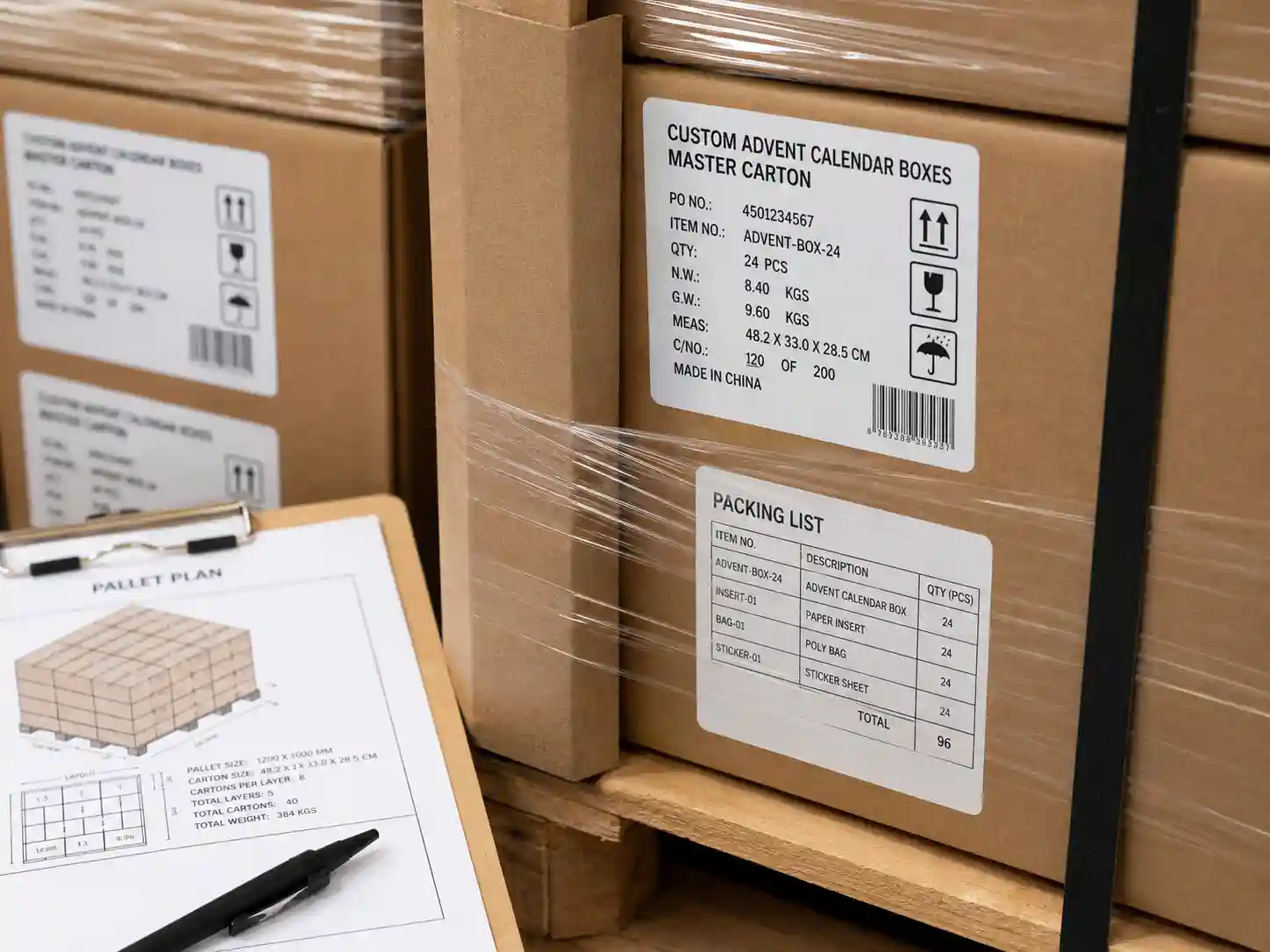
Once structure and inserts are approved, artwork can be applied to the dieline. At this stage, buyers should also confirm inner packing, master carton size, carton marks, pallet plan, and export documents.
Giftpackpro can support buyers through custom advent calendar box services when they need door layout planning, insert matching, sampling, and bulk production coordination.
Quality Control Points for Door Layout
Quality control should focus on both appearance and function. A calendar box may pass visual inspection but still fail if doors are hard to open or products shift during shipping.
Door Opening Test
Each door should open smoothly without tearing the surrounding artwork too aggressively. Perforation depth, paper thickness, lamination, and front panel support all affect the opening result.
Insert Fit Test
The insert should hold products in place during handling and shipping. For mixed-size doors, the factory should check whether each product matches the correct position. Wrong loading can cause pressure marks, bulging, or poor door alignment.
Drop and Carton Packing Review
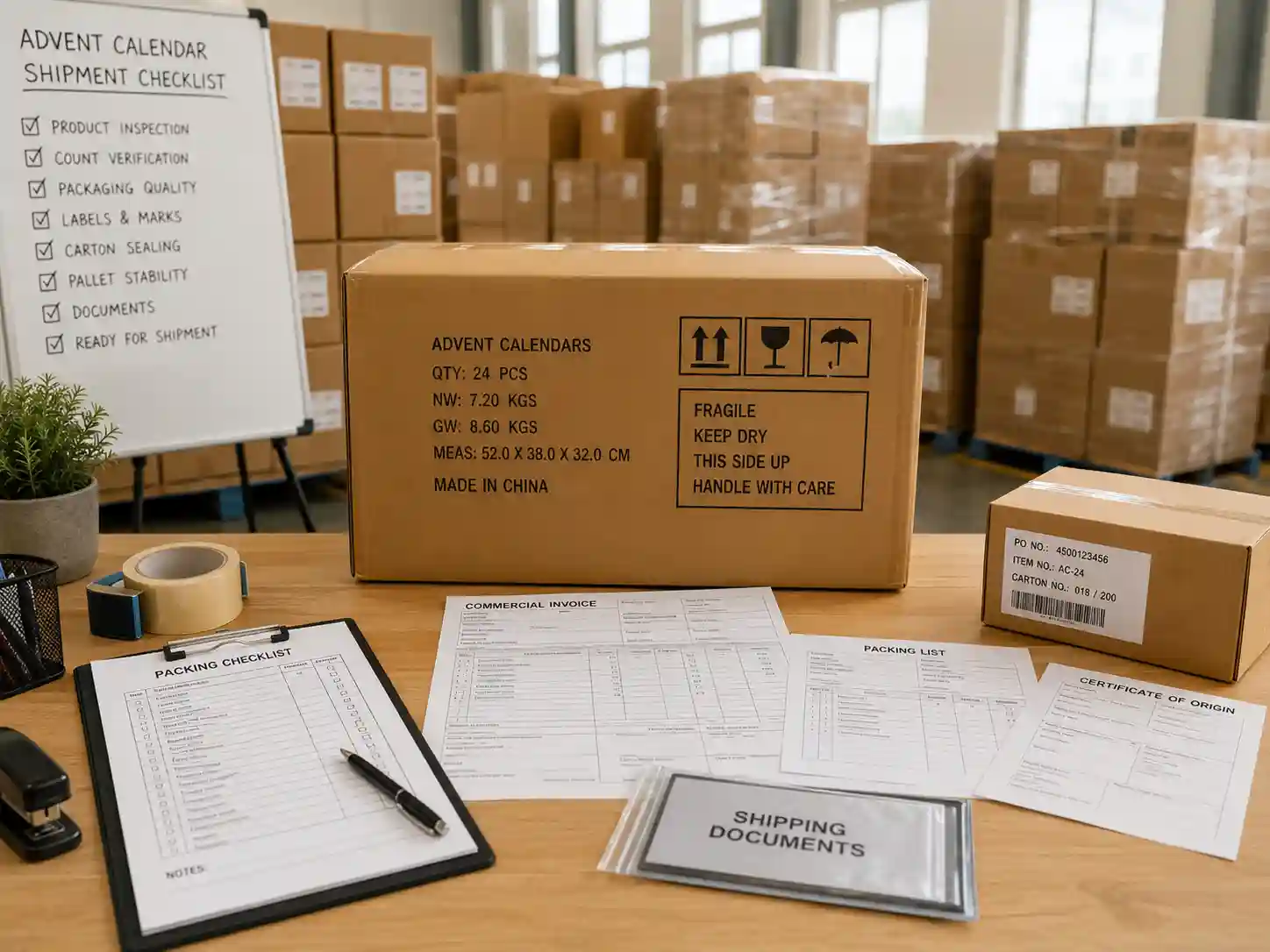
For export orders, packing review is essential. Buyers should confirm whether the calendar box is shipped assembled, flat packed, or packed with products inside. Master carton strength, carton texture, label area, and pallet plan should be checked before shipment.
For packaging sold into regulated markets, buyers should review local requirements. For example, EU buyers can reference official EU packaging and packaging waste information when planning recycling and packaging compliance discussions.
Quote Preparation Advice for Buyers
To receive a useful quotation, do not send only a reference picture. A supplier needs enough information to estimate materials, insert structure, printing, labor, packing, and delivery schedule.
Prepare the following details before requesting pricing:
- Target door count, such as 12, 24, 25, or a custom campaign number
- Product size and weight list for each door position
- Preferred structure, such as perforated doors, drawers, or book-style opening
- Insert material preference, such as paperboard, molded pulp, EVA, or foam
- Artwork requirement, printing colors, finishing, and surface treatment
- Estimated order quantity and expected delivery date
- Packing method, including assembled packing, flat packing, or product-loaded packing
- Destination country, shipping method, and any retail carton label requirements
If the project is still early, buyers can send a product list and target budget first. The Giftpackpro packaging factory can then suggest a practical door layout direction before detailed artwork begins.
Common Mistakes to Avoid
Choosing Door Count Before Product Size
A 24-door design may look standard, but it may not fit the product mix. If some items are much larger than others, a mixed-size layout may be more practical than forcing all products into equal cavities.
Ignoring Retail Shelf Size
A large advent calendar can have strong shelf impact, but it must still fit the retail plan. Buyers should confirm shelf depth, display orientation, and carton packing before approving the final size.
Using Complex Artwork Without Checking Cut Lines
Detailed artwork can be damaged by door cuts or perforation. Always check the dieline before final artwork approval.
Forgetting Export Packing Until the End
Export packing should be discussed early. A premium door layout is not useful if the front panel gets crushed during shipping. Ask for carton size, master carton quantity, and pallet plan during quotation.
When to Request a Custom Door Layout
A custom layout is worth considering when the product set includes different item sizes, when the campaign requires strong retail shelf impact, or when the brand wants a more premium opening experience.
Standard layouts can work well for simple product sets. Custom layouts are better for promotional campaigns where packaging is part of the sales message. The key is to balance visual design with production stability.
If your team is planning a retail launch, e-commerce gift set, or seasonal promotional campaign, you can request a custom quote with product sizes, target quantity, door count, and packing requirements. This gives the supplier enough information to recommend a realistic advent calendar box door layout before sampling begins.