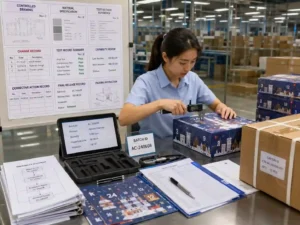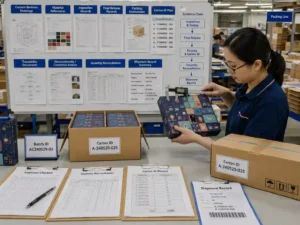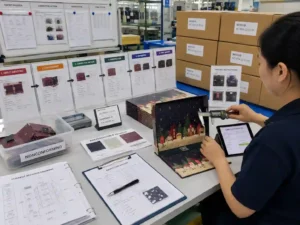
A clear custom advent calendar box dieline helps buyers control structure, artwork, inserts, sampling, cost, and production timing before bulk manufacturing starts. For overseas brands, wholesalers, gift companies, and retail purchasing teams, the dieline is not only a design file. It is the technical bridge between product size, box opening method, paperboard strength, print layout, assembly process, and export packing.
This guide explains how to prepare a practical dieline brief for drawer, door-opening, rigid, paperboard, fold-out, and mixed-structure advent calendar boxes. It also shows what information to send to your supplier when you need a faster quote, fewer sample revisions, and better bulk production control.
What Is a Custom Advent Calendar Box Dieline?
A custom advent calendar box dieline is a flat technical layout that shows cut lines, crease lines, glue areas, folding panels, window or door positions, drawer dimensions, insert cavities, bleed areas, and safe artwork zones. It tells the factory how the box should be printed, cut, folded, assembled, and inspected.
For simple folding cartons, a dieline may only include outer panels, flaps, and glue tabs. For advent calendar packaging, the dieline is more complex because the structure usually includes multiple compartments, numbered doors, drawers, paperboard dividers, or product-specific inserts.
If you are still comparing structure options, working with a custom advent calendar boxes manufacturer can help you turn product measurements and retail requirements into a workable layout before final artwork begins.
Start with Product Size and Packing Logic
The first dieline decision is not artwork. It is product fit. Before preparing a custom advent calendar box dieline, collect accurate measurements for every item that will go inside the box.
Buyers should provide length, width, height, unit weight, fragile points, product shape, and whether each item needs fixed positioning. A chocolate, candle, cosmetic bottle, toy accessory, tea sachet, or small gift item will each require a different insert and compartment logic.
For quote preparation, send your supplier:
- Product dimensions for each item, preferably in millimeters
- Product weight and total filled box weight
- Number of compartments, doors, or drawers
- Retail shelf size limits if available
- Artwork direction, front-facing panel, and barcode area
- Target order quantity, delivery country, and expected launch date
These details help the factory estimate board thickness, insert type, carton size, production process, and export packing method. If the inner products are not final yet, use product dummies with confirmed maximum dimensions.
Choose the Right Advent Calendar Box Structure
Different structures require different dieline planning. The best option depends on product weight, retail positioning, budget, assembly time, shipping method, and how much customization the buyer needs.
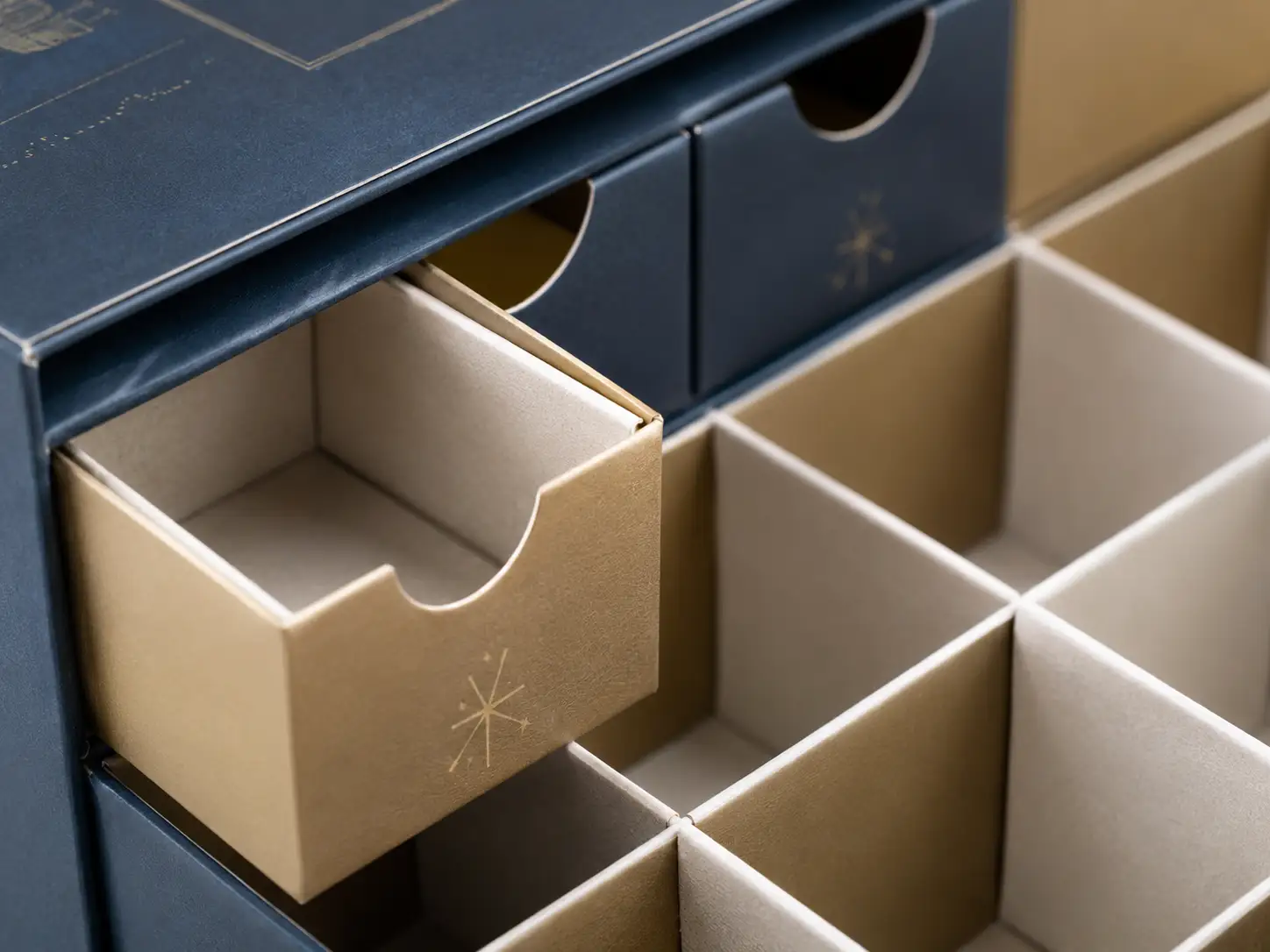
Drawer Advent Calendar Box Dieline
A drawer-style advent calendar usually uses a rigid outer case with small pull-out drawers. The custom advent calendar box dieline must define each drawer sleeve, drawer tray, finger notch, handle position, and spacing between compartments.
This structure works well for cosmetics, jewelry, candles, tea gifts, small accessories, and premium retail gift sets. The main advantage is a strong unboxing feel and reusable structure. The main dieline challenge is tolerance control. If drawer clearance is too tight, drawers may stick. If it is too loose, the box may feel low quality.
Door-Opening Advent Calendar Box Dieline
Door-opening boxes use perforated or die-cut doors on the front panel. The dieline needs to show each door outline, hinge direction, tear line, opening gap, number position, and inner product cavity.
This structure is common for lightweight items and high-volume seasonal promotions. It is usually more cost-efficient than rigid drawer boxes, but it requires careful testing because doors must open cleanly without tearing the printed surface too much.
Rigid Advent Calendar Box Dieline
Rigid advent calendar boxes are often built with greyboard wrapped by printed paper. The dieline must separate wrapping paper layouts, greyboard pieces, drawer or insert components, and assembly references. Buyers should confirm whether the box uses magnetic closure, book-style opening, double-door opening, or a sleeve case.
Rigid structures are suitable for premium gift sets and retail display programs. They usually need longer sampling time and higher MOQ because more manual assembly is involved.
Paperboard Advent Calendar Box Dieline
Paperboard structures use folding carton board, corrugated paperboard, or laminated paperboard. The dieline usually includes fold lines, locking tabs, dust flaps, inner trays, and printed door panels.
This option is useful for larger quantities, lighter products, and buyers who need better shipping efficiency. It can reduce unit cost compared with rigid boxes, but it needs proper board selection and compression testing if the filled box is heavy.
Fold-Out Advent Calendar Box Dieline
A fold-out structure opens like a book, gatefold, or multi-panel display. The dieline must show hinge areas, panel sequence, opening direction, insert location, and any ribbon or magnetic closure position.
Fold-out layouts are useful when the buyer wants strong shelf impact or a larger visual area for brand artwork. The risk is that the opened structure may become unstable if the paperboard is too thin or the insert is not balanced.
Structure Comparison for B2B Buyers
| Structure Type | Best For | Main Dieline Focus | Buyer Notes |
|---|---|---|---|
| Drawer advent calendar box | Cosmetics, candles, jewelry, premium gifts | Drawer clearance, sleeve layout, pull notch, insert fit | Higher perceived value, but needs accurate tolerance testing |
| Door-opening paperboard box | Lightweight seasonal items and high-volume retail programs | Door perforation, opening sequence, cavity alignment | Cost-efficient, but requires clean door-opening tests |
| Rigid book-style box | Premium gift sets and brand launch kits | Greyboard panels, wrap paper, magnetic or ribbon closure | Strong display value, usually longer sampling and assembly time |
| Fold-out advent calendar | Retail shelf display and large artwork presentation | Panel sequence, hinge strength, insert balance | Good visual impact, but needs stability checks |
| Mixed paperboard and insert structure | Multi-SKU gift sets with varied product sizes | Compartment layout, divider strength, product protection | Useful for mixed products, but needs precise sample review |
Plan the Insert Before Finalizing the Outer Box
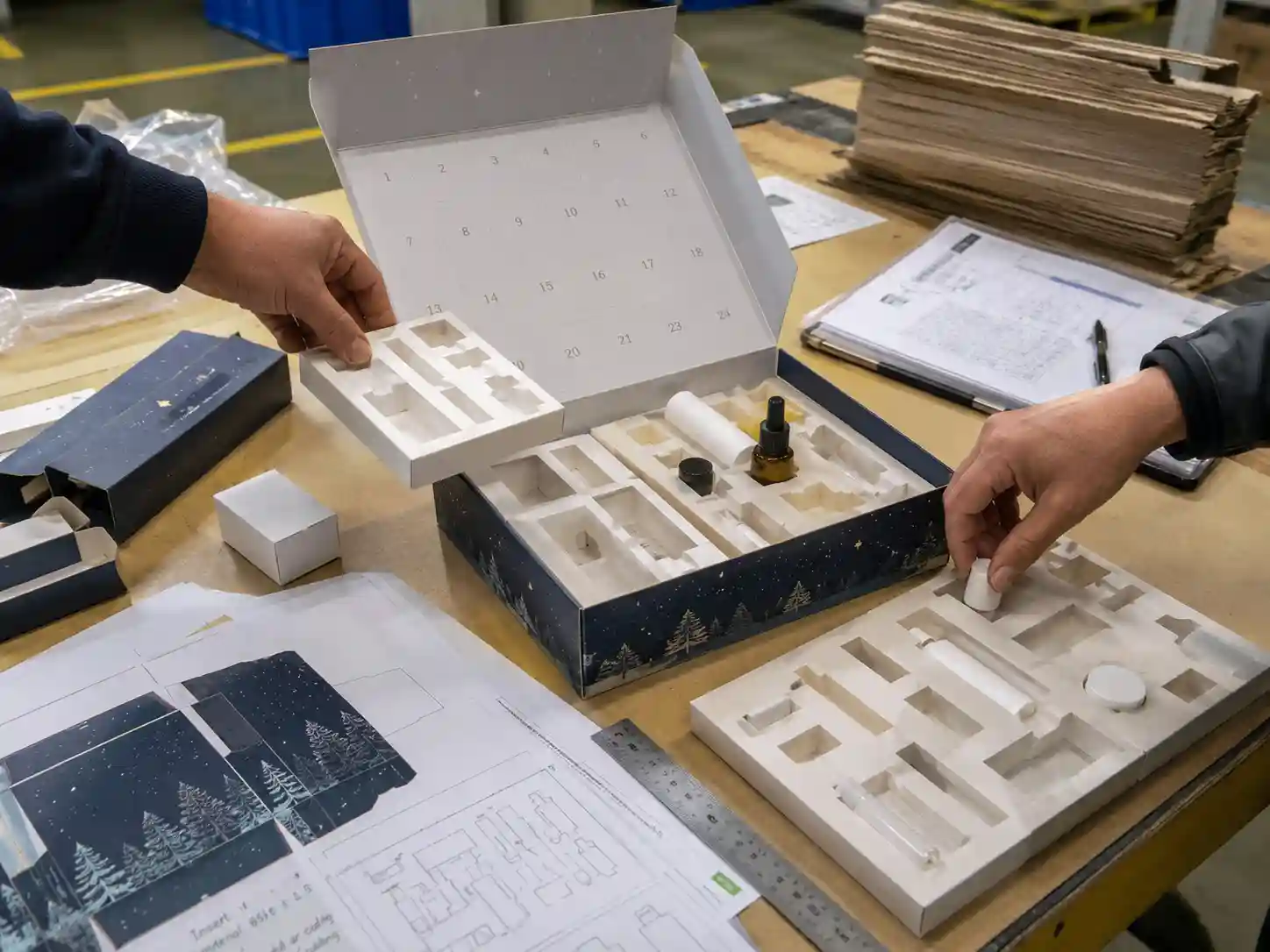
Many buyers focus on the outer box first, then discover that the insert does not match the product set. For advent calendar packaging, the insert should be planned together with the outer structure.
The insert affects compartment size, total box thickness, product protection, assembly speed, and final carton packing. Common insert choices include paperboard dividers, molded pulp, PET trays, EVA foam, corrugated supports, and folded paper trays. If sustainability or paper-based packaging is important, buyers may prefer paperboard dividers or molded pulp. For responsible paper sourcing, buyers can refer to FSC information when discussing certified paper options with their supplier.
When preparing a custom advent calendar box dieline, ask whether the supplier will create the insert dieline and outer box dieline together. This is especially important for drawer boxes and door-opening boxes because the product cavity must align with the visible opening.
Artwork Layout Rules for Advent Calendar Dielines
Artwork must follow the dieline, not the other way around. Once the structure is confirmed, the designer should place artwork on the correct panels with bleed, safe margins, number positions, barcode space, warning text, and retail information.
For B2B buyers, the most common artwork problems are wrong panel direction, numbers crossing crease lines, important text too close to die-cut doors, and artwork placed over glue areas. These issues can delay sampling and make bulk production risky.
Before sending final artwork, check these points:
- Bleed area is included outside cut lines
- Text and logos stay inside the safe zone
- Door numbers do not overlap perforation lines
- Barcode and compliance text are placed on a flat readable panel
- Spot UV, foil stamping, embossing, and matte lamination areas are clearly marked
- All fonts are outlined or packaged with the artwork file
If your team needs help preparing artwork, structure, inserts, and sampling steps together, review the available custom advent calendar box services before requesting a quotation.
Customization Decisions That Affect the Dieline
Customization is not only about print design. It changes the technical layout. A small change in closure, handle, window, drawer count, insert material, or finishing process can require a new dieline.
Door Count and Number Layout
A 12-day, 24-day, or 25-day advent calendar box will use a different grid. The dieline must balance door size, product cavity, print design, and opening strength. Very small doors may look neat on artwork but become hard to open in real use.
Material and Board Thickness
Rigid greyboard, folding carton board, corrugated board, and laminated paperboard all fold and cut differently. The same custom advent calendar box dieline cannot always be reused across materials. Board thickness affects crease depth, drawer clearance, folding radius, and carton volume.
Printing and Finishing
Matte lamination, gloss lamination, foil stamping, embossing, debossing, spot UV, and textured paper can improve shelf appeal. However, these finishes must be marked clearly on the dieline or finishing layer. For quality management expectations, some buyers also reference ISO 9001 when discussing factory process control and inspection systems.
Retail Display Requirements
If the box will stand on a shelf, hang on a display, fit into a shipper, or be packed in a retail-ready carton, the dieline must consider the full retail journey. Giftpackpro often discusses these points early because a box that looks good in a flat artwork file may still need changes for shelf stability or export shipping.
Sample Review: Where Dieline Problems Usually Appear
A sample is the most practical way to test a custom advent calendar box dieline. Even a well-prepared file needs real paperboard testing because cutting, folding, wrapping, drawer sliding, and insert fitting all depend on material behavior.
During sample review, check whether drawers move smoothly, doors open cleanly, inserts hold products tightly, printed panels align correctly, and the filled box can withstand normal handling. If product dummies are used, confirm that the final products will not exceed the sample dimensions.
Buyers should take photos or videos of any issue and mark the exact location on the dieline. Instead of saying “the drawer is not good,” write “drawer 08 is tight on the left side; increase clearance by 0.5 mm” or “door 14 tear line is too weak; adjust perforation strength.” This helps the factory revise the dieline faster.
For more planning references, visit the advent calendar box buying guides and compare structure, inserts, lead time, and production questions before starting a new project.
MOQ, Lead Time, and Bulk Production Impact
The more complex the dieline, the more time the project may need. Drawer structures, rigid wrapping, special inserts, and multiple finishing processes usually require more tooling, sample testing, and manual assembly. Paperboard door-opening structures may be faster, but they still require die-cut mold testing and opening performance checks.
MOQ can vary by structure, size, material, print process, and finishing requirements. Buyers should avoid requesting a final unit price without confirming the basic dieline direction. A supplier may give a wide estimate at the early stage, but accurate pricing normally requires size, material, structure, insert type, quantity, artwork, and packing method.
To speed up the process, prepare a short project brief with target quantity, product list, box style reference, size range, delivery country, retail launch schedule, and whether you need a blank sample or printed sample.
QC and Export Packing Checks for Advent Calendar Boxes
Quality control should be linked to the dieline. If the dieline defines the structure, QC confirms whether production matches that structure. For advent calendar boxes, inspection should include box dimensions, compartment accuracy, door-opening performance, drawer sliding, insert fit, print registration, color consistency, glue strength, and carton packing.
Export packing is also part of dieline planning. A large rigid calendar box may look premium but create high freight cost if the carton size is inefficient. A folding paperboard structure may reduce shipping volume, but it may need clear assembly instructions if the buyer or co-packer will fill the products later.
Before confirming bulk production, ask your supplier to provide carton size, pieces per master carton, gross weight, net weight, packing direction, and whether pallet packing is recommended. This information helps purchasing teams compare total landed cost, not only unit price.
What to Send When Requesting a Quote
A complete quote request makes the supplier’s job easier and reduces back-and-forth emails. For a custom advent calendar box dieline, the best quote brief includes both commercial and technical details.
- Target structure: drawer, door-opening, rigid, paperboard, fold-out, or mixed design
- Product dimensions and product weight for every compartment
- Required box size or shelf size limit
- Compartment count and opening sequence
- Material preference, such as rigid board, folding carton board, or corrugated paperboard
- Insert material preference and product protection needs
- Printing method, surface finishing, and artwork status
- Order quantity, sample requirement, destination country, and delivery deadline
- Export carton or pallet packing requirements
If you already have a dieline, send the editable AI or PDF file together with product photos and measurements. If you do not have a dieline, send a structure reference and product list so the factory can suggest a workable direction.
You can also review custom advent calendar box products to compare common structures before preparing your own dieline brief.
Common Dieline Mistakes to Avoid
Using One Dieline for Different Product Sets
Even small product changes can affect insert fit and door alignment. If the product set changes, the dieline should be reviewed again before sample approval.
Ignoring Filling and Assembly
A box may look correct when empty but become difficult to fill during production. Buyers should ask whether the structure is suitable for factory filling, buyer-side filling, or third-party co-packing.
Placing Artwork Before Structure Approval
Artwork done too early may need major rework after structure changes. Confirm the structure and insert direction first, then finalize print design.
Checking Unit Price Only
A cheaper structure may increase assembly time, damage risk, or shipping volume. Good dieline planning considers unit cost, sample cost, tooling cost, labor, packing, and freight impact together.
How Giftpackpro Supports Dieline Preparation
Giftpackpro works with B2B buyers who need custom seasonal paper gift packaging for retail and wholesale programs. The team can help review structure options, insert fit, artwork layout, sample feedback, and production feasibility before bulk orders move forward.
If you are comparing suppliers, ask each factory the same technical questions: Can they prepare or revise the dieline? Can they test product dummies? Can they explain board thickness and insert options? Can they provide sample photos, packing details, and QC checkpoints?
For buyers who want to understand factory capability, the Giftpackpro packaging factory page is a useful starting point. For project support, use the request a custom quote page and include product size, quantity, structure preference, and target delivery schedule.
Final Checklist Before Approving the Dieline
Before approving a custom advent calendar box dieline, confirm that the file matches the real product, real material, real artwork, and real packing plan. A clean dieline should reduce uncertainty for design, sampling, production, inspection, and export.
- Outer box size and inner compartment size are confirmed
- Drawer, door, or fold-out opening method is tested
- Insert fit is checked with product samples or dummies
- Artwork direction, bleed, safe zone, and finishing layers are correct
- Material thickness and board grade are approved
- Sample comments are marked clearly and revised
- Carton packing, weight, and export handling are reviewed
- MOQ, lead time, sample cost, and bulk production schedule are confirmed
A well-prepared dieline makes custom advent calendar box projects easier to quote, easier to sample, and easier to control in bulk production. Start with the product, choose the right structure, test the insert, then approve artwork only after the technical layout is stable.