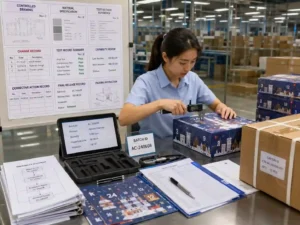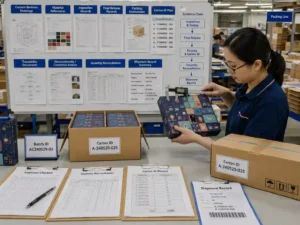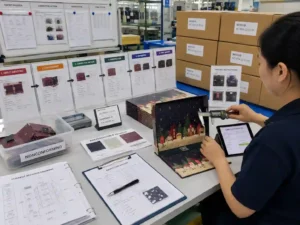
For overseas buyers, the choice between flat packing and assembled packing is not only about freight cost. It affects box structure, insert stability, product fit, labor planning, damage risk, carton size, and the final quotation.
This guide explains flat packing vs assembled packing advent calendar boxes from a B2B purchasing angle, especially for projects using paperboard inserts, EVA, foam, molded pulp trays, fragile products, and multi-compartment layouts.
If your team is preparing a seasonal packaging RFQ, Giftpackpro can help review structure, insert type, artwork, sample details, and export packing through its custom advent calendar box services.
What Flat Packing and Assembled Packing Mean
Flat packing
Flat packing means the advent calendar boxes are shipped in a collapsed or semi-collapsed format. The buyer, co-packer, warehouse, or fulfillment team assembles the box before filling products.
This method is common for paperboard door-style calendars, folding carton calendars, sleeves, trays, and certain foldable rigid structures. It can reduce shipping volume, but it requires clear assembly instructions and more work at the destination.
Assembled packing
Assembled packing means the box structure is already formed before export. Drawer boxes, rigid book-style calendars, magnetic rigid boxes, or complex multi-layer structures are often shipped assembled because the shape, alignment, and insert position are harder to rebuild later.
Assembled packing usually takes more carton space, but it can improve presentation consistency and reduce destination-side assembly errors.
Why Packing Method Matters for Inserts and Product Fit
The real decision is not simply “flat is cheaper” or “assembled is safer.” For advent calendar packaging, the insert system decides much of the risk.
Paperboard dividers, EVA inserts, foam inserts, molded pulp trays, and custom compartments all behave differently during transport. A tray that looks stable in a sample room may shift after vibration, stacking pressure, or carton handling.
When comparing flat packing vs assembled packing advent calendar boxes, buyers should confirm how the insert is packed, where the products will be loaded, and whether the box will be filled before or after international shipment.
Paperboard inserts
Paperboard inserts are cost-effective and suitable for lightweight products such as stationery, small toys, sachets, sample cards, and small accessories. They are easier to recycle and can match paper-based packaging goals.
For flat packing, paperboard inserts may be shipped separately and assembled during filling. This works well when the compartments are simple and the buyer has a packing line that can follow clear folding steps.
For assembled packing, paperboard inserts can be fixed inside the box before export. This is better when the numbered doors must align precisely with each compartment.
EVA and foam inserts
EVA and foam inserts are used when products need cushioning, scratch protection, or a premium fitted look. They are common for cosmetics, glass bottles, candles, small electronics, and fragile gift items.
Flat packing may not be ideal if the EVA or foam insert has a thick profile that cannot be stored efficiently in a collapsed box. In many cases, the insert needs to be packed separately, which adds sorting and assembly steps.
Assembled packing is often safer for thick EVA or foam inserts because the cavity position is already controlled at the factory. The trade-off is higher shipping volume.
Molded pulp trays
Molded pulp trays are useful when buyers want a paper-based cushioning option. They can fit bottles, jars, small gift items, and fragile products while supporting recyclable packaging goals.
However, molded pulp tray tolerance must be checked carefully. If the tray is too loose, products may move. If it is too tight, filling becomes slow or the product may be difficult to remove.
For buyers with sustainability requirements, it is also useful to check material claims with official sources such as FSC when paper sourcing is part of the project specification.
Comparison Table: Flat Packing vs Assembled Packing
| Decision Point | Flat Packing | Assembled Packing | B2B Buying Advice |
|---|---|---|---|
| Shipping volume | Usually lower because boxes are collapsed or semi-collapsed. | Usually higher because boxes occupy their final shape. | Ask for master carton dimensions and estimated CBM before comparing unit price. |
| Labor at destination | Requires assembly before filling or retail distribution. | Needs less assembly after arrival. | Confirm who will assemble: factory, co-packer, warehouse, or buyer team. |
| Insert control | Insert may be packed separately and installed later. | Insert can be pre-positioned and checked before shipment. | Use assembled packing for complex inserts or tight compartment alignment. |
| Fragile product protection | Depends heavily on later assembly accuracy. | Usually more controlled before export. | For glass, candles, cosmetics, or delicate items, request fit and drop-test review. |
| Factory QC | Factory can check print, cutting, creasing, and flat components. | Factory can check final shape, insert placement, drawer movement, and door alignment. | Define inspection points in the purchase order before bulk production. |
| Quotation accuracy | Needs assembly method, folding steps, and packing count. | Needs carton protection, inner packing, and pallet plan. | Compare total landed cost, not only EXW or FOB unit price. |
When Flat Packing Is a Better Choice
Flat packing is suitable when the structure is simple, the product weight is light, and the buyer has a reliable filling or assembly team at the destination.
For example, a 24-door paperboard calendar for stationery samples may work well with flat packing. The box panels, paperboard dividers, and outer sleeves can be shipped efficiently, then assembled before product filling.
Flat packing is also practical when the buyer wants to reduce container space for large orders. For seasonal programs, lower shipping volume may help when multiple SKUs are shipped together.
Best-fit flat packing projects
Flat packing usually works for paperboard calendars, lightweight product sets, simple door-opening layouts, sleeve-and-tray structures, foldable rigid boxes, and projects where the buyer already has a packing line.
It is less suitable when the insert is thick, the product is fragile, or the visual presentation depends on factory-controlled alignment.
Buyers can review more structure options through custom advent calendar box products before deciding whether flat packing is realistic for the selected box type.
When Assembled Packing Is a Better Choice
Assembled packing is better when the advent calendar box has drawers, rigid walls, book-style opening, magnetic closure, multiple layers, or tight product cavities.
For example, a beauty advent calendar with glass ampoules, small jars, and sample bottles may need EVA or molded pulp inserts installed in advance. If the box is shipped flat and assembled later without enough control, the product fit may become inconsistent.
Assembled packing also helps when the retail buyer expects a premium unboxing experience. Drawer smoothness, door perforation, insert position, and printed artwork alignment can all be checked before export.
Best-fit assembled packing projects
Assembled packing usually works better for rigid drawer calendars, magnetic gift calendars, fragile products, heavy items, premium retail sets, and projects with strict appearance requirements.
The main disadvantage is space. Master cartons become larger, pallet quantity may increase, and freight cost may rise. For this reason, buyers should request both packing options during quotation when the structure allows it.
Customization Process: How Packing Method Affects Development
The packing method should be discussed during the structure and insert design stage, not after artwork approval. If the box is designed first and the packing method is decided later, the supplier may need to adjust the dieline, insert height, carton size, or assembly steps.
Giftpackpro usually recommends confirming product dimensions, product weight, insert material, box structure, filling method, and export packing before finalizing the sample. Buyers can start with request a custom quote if they already have product samples, rough dimensions, or a seasonal launch schedule.
Step 1: Confirm product dimensions and tolerance
Each product should be measured by length, width, height, weight, and special shape. For bottles, caps and shoulders matter. For jars, the lid diameter may be wider than the base. For irregular items, a paper template or 3D sample can help.
Buyers should not only provide the product’s outer carton size. The insert needs the real item size, including any protective bag, sleeve, label, or cap.
Step 2: Choose insert material
Paperboard is suitable for lighter items and cost-sensitive programs. EVA or foam can protect fragile products and create a premium fitted look. Molded pulp can support paper-based packaging goals while providing cushioning.
The right insert depends on product weight, fragility, surface finish, sustainability target, retail price point, and filling method.
Step 3: Decide where products will be filled
If products are filled at the supplier’s factory, assembled packing may be more efficient because the factory can control the box, insert, and product placement together.
If products are filled by the buyer, co-packer, or local warehouse, flat packing may reduce freight volume, but assembly training and clear packing instructions become important.
Step 4: Test sample assembly
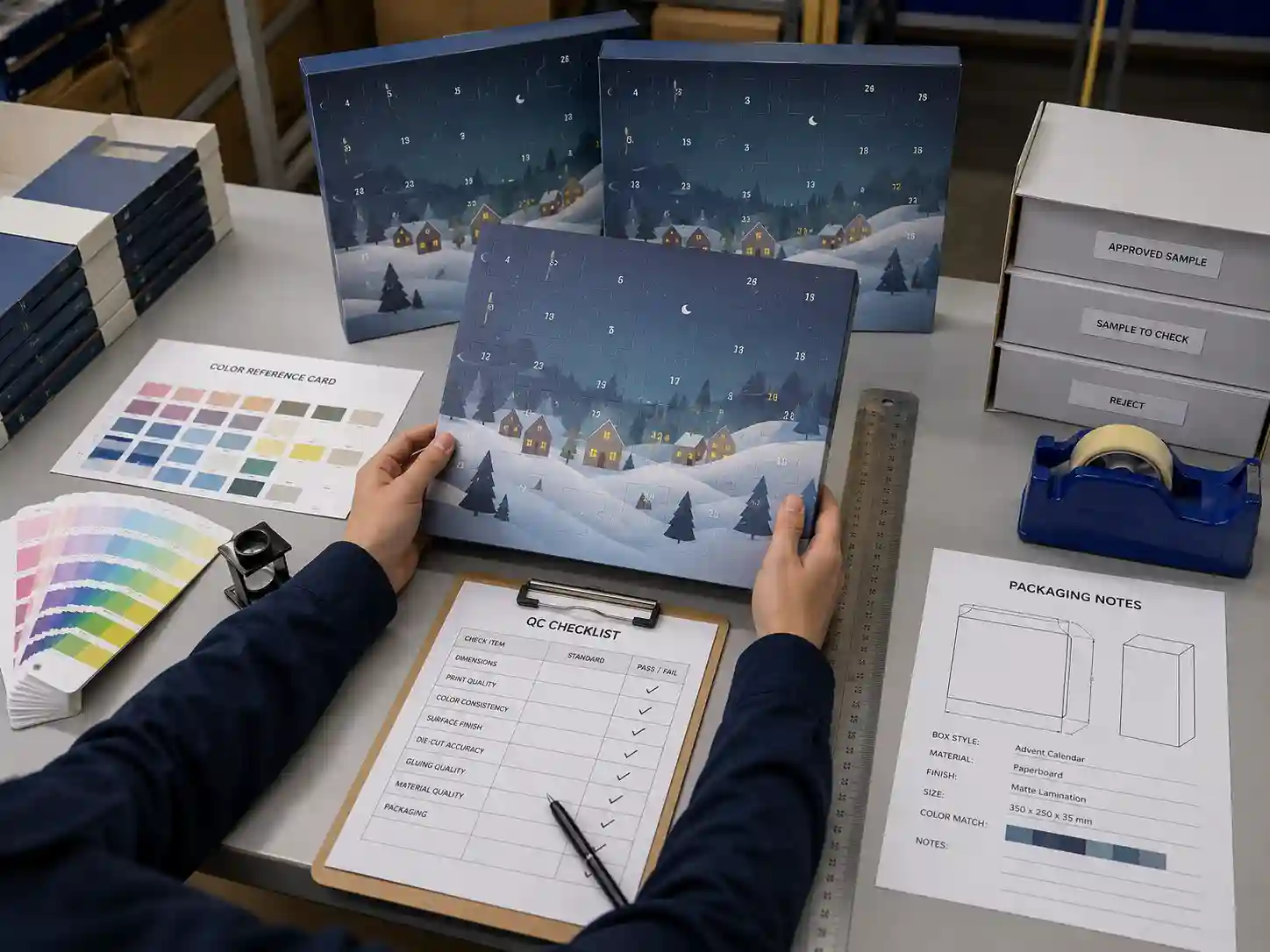
Before bulk production, buyers should request a white sample or printed sample and check assembly time, insert fit, door alignment, drawer movement, and product removal.
For more guidance on structure, inserts, artwork, and sampling, buyers can read advent calendar box buying guides or review the available custom advent calendar box services.
Quality Control Points Before Export Packing
Quality control should cover both the box itself and the packing method. For flat packing, the focus is on accurate cutting, creasing, folding performance, printed panel alignment, and completeness of components.
For assembled packing, QC should also check final box shape, glue strength, drawer sliding, magnetic closure, door perforation, compartment position, and insert stability.
Quality management systems such as ISO 9001 can provide a useful reference point when buyers evaluate supplier processes, although each project still needs its own inspection checklist.
Fit testing for fragile products
Fragile products need more than a visual check. A good fit test should confirm that the product does not shake inside the compartment, does not press too tightly against the printed surface, and can be removed by the end user without damaging the box.
For glass bottles, candles, small electronics, and premium cosmetics, buyers should ask whether the supplier can test insert depth, side clearance, top clearance, and product movement inside the master carton.
Color and artwork consistency
Packing method can affect surface protection. Flat-packed sheets may rub against each other if the carton is not separated properly. Assembled boxes may need inner protection to avoid corner damage, scuffing, or pressure marks.
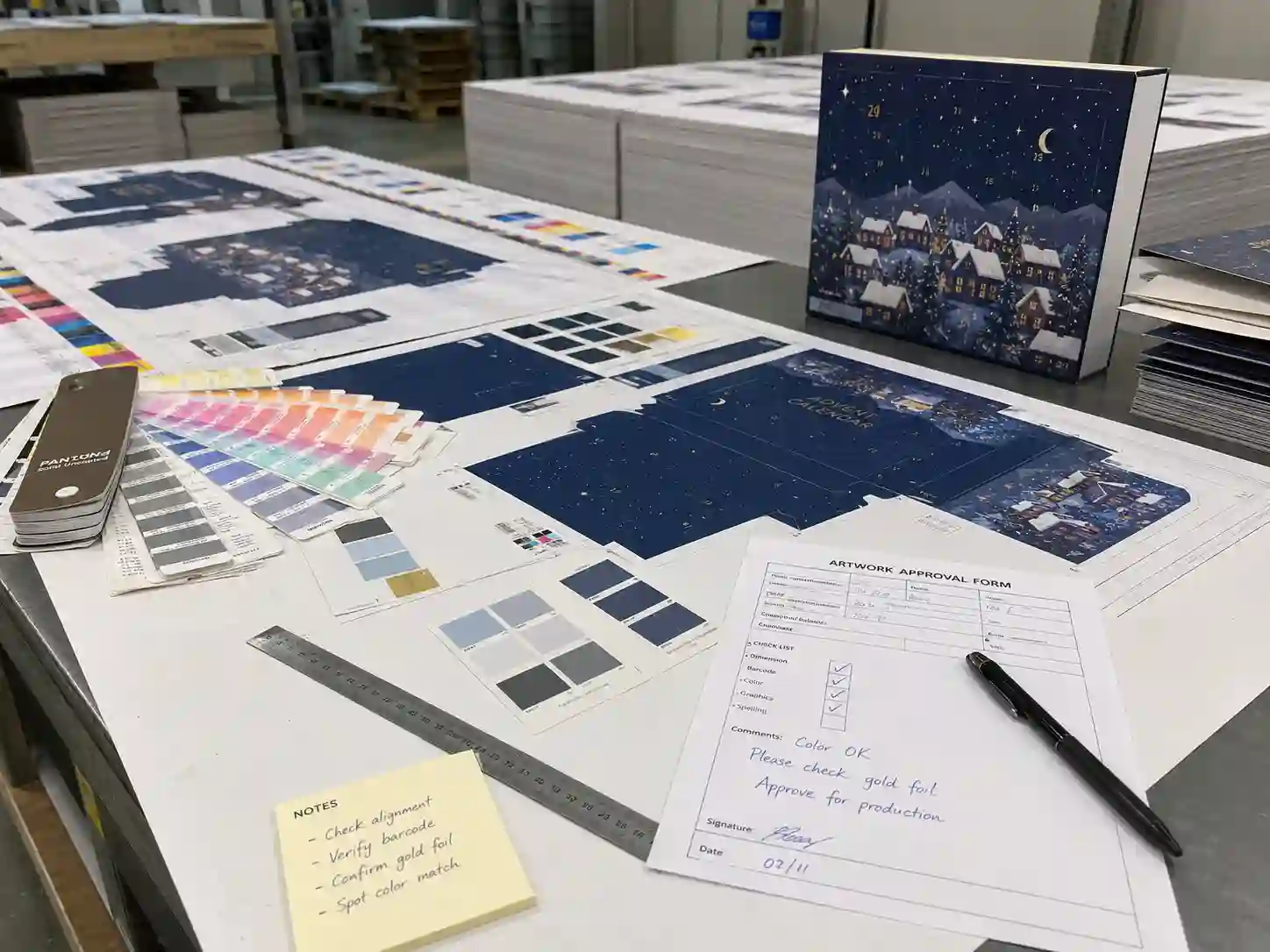
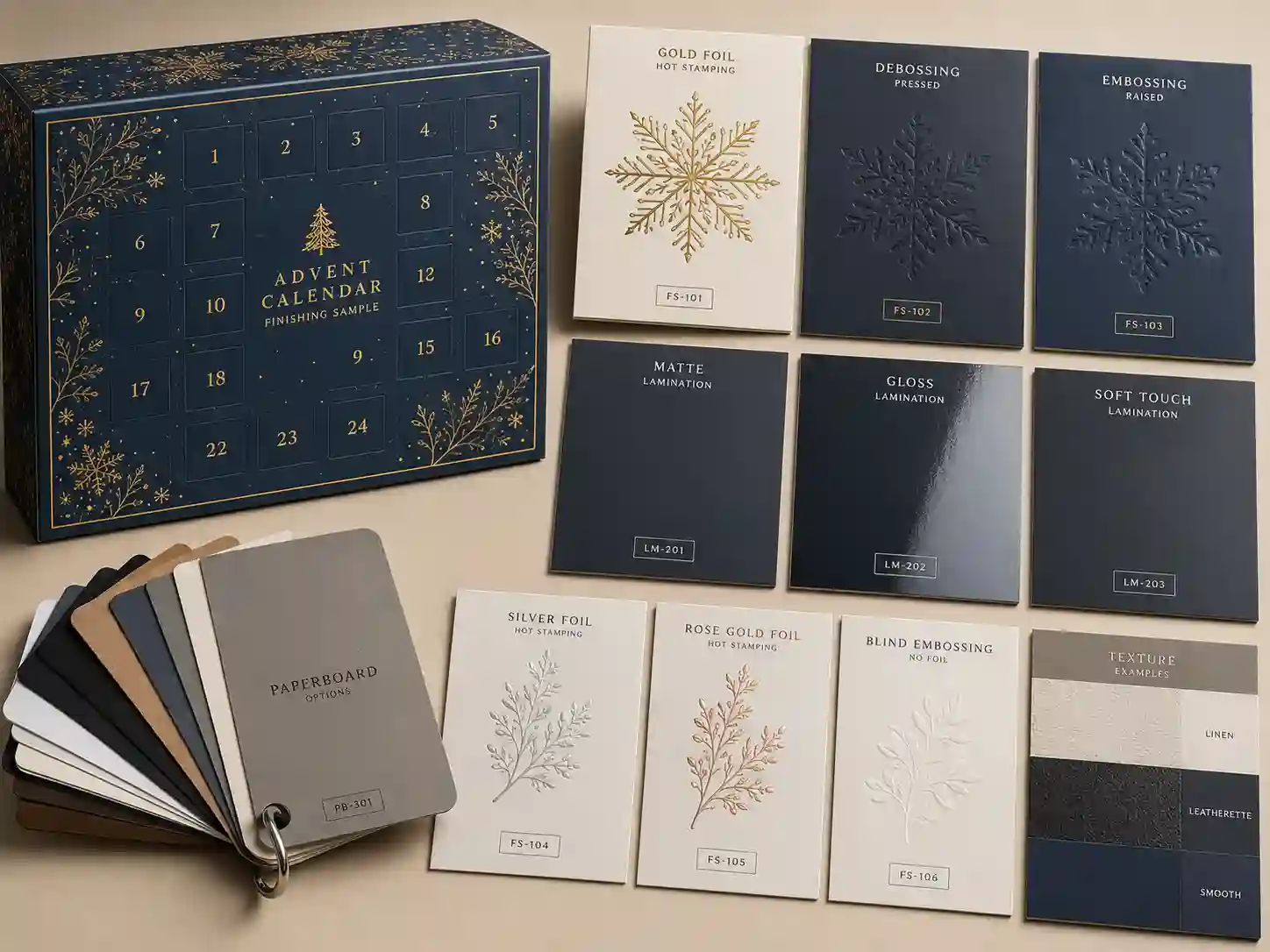
Artwork approval should include CMYK values, Pantone references when needed, surface finishing, lamination type, foil stamping position, embossing depth, and acceptable color tolerance.
Export carton planning
For flat packing, carton planning should show how panels, inserts, sleeves, and accessories are grouped. Missing or mixed components can slow down the buyer’s assembly line.
For assembled packing, carton planning should focus on corner protection, stacking strength, carton quantity per layer, pallet height, shipping marks, and whether the final carton can pass the buyer’s warehouse handling requirements.
Quote Preparation: What Buyers Should Send to the Supplier
A clear RFQ helps the supplier compare flat packing vs assembled packing advent calendar boxes accurately. Without enough information, the quotation may look attractive at first but change after sampling.
To get a useful quotation, prepare the following details:
- Box style: drawer, door-opening, book-style rigid, sleeve tray, foldable rigid, or custom structure.
- Finished box size and compartment quantity.
- Product dimensions, weight, fragility level, and filling sequence.
- Preferred insert material: paperboard, EVA, foam, molded pulp, or mixed materials.
- Artwork files, color requirements, surface finishing, and logo treatment.
- Expected order quantity, target MOQ, delivery window, and destination country.
- Preferred packing method: flat packing, assembled packing, or both for comparison.
- Any retail compliance, labeling, shipping mark, or palletizing requirements.
If the project is still early, buyers can ask the Giftpackpro packaging factory to suggest a practical structure based on product size and market positioning.
Common Buyer Scenarios
Scenario 1: Lightweight stationery calendar
A buyer plans a 24-compartment stationery calendar with stickers, clips, small cards, and pens. The products are light and not highly fragile. Flat packing may be a good option because paperboard inserts and panels can be assembled locally with manageable labor.
Scenario 2: Beauty calendar with glass bottles
A beauty brand needs a premium advent calendar with small glass bottles and jars. EVA, foam, or molded pulp inserts may be needed. Assembled packing is often safer because the factory can check insert position, product fit, and drawer or door alignment before export.
Scenario 3: Mixed gift set for retail buyers
A wholesaler needs several SKUs for different retail channels. Some calendars are simple paperboard styles, while others use rigid boxes and premium inserts. In this case, the buyer may use flat packing for simple SKUs and assembled packing for high-value SKUs.
How to Make the Final Decision
Flat packing is usually better when shipping volume, storage efficiency, and destination-side flexibility are the main priorities. Assembled packing is usually better when structure, presentation, insert stability, and fragile product protection are more important.
The best decision comes from sample testing, not assumptions. Buyers should compare sample assembly time, carton size, insert stability, product movement, and damage risk before confirming bulk production.
As a custom advent calendar boxes manufacturer, Giftpackpro supports custom structures, insert planning, artwork development, sample checking, bulk production, and export packing. To compare options for your project, send your product sizes and packing target through request a custom quote.