Choosing sustainable advent calendar box materials is not only a material decision. For B2B buyers, it also affects structure, insert design, artwork limits, sample testing, MOQ, packing method, shipping cost, and how confidently a supplier can quote bulk production.
A buyer may ask for recyclable paper, FSC-certified board, plastic-free inserts, or reduced packaging weight. But the final choice still needs to match the product weight, compartment size, door-opening method, shelf presentation, and export packing plan. This guide explains how to compare materials before sending an RFQ to a custom advent calendar boxes manufacturer.
Start with the Advent Calendar Box Structure
Material selection should begin with structure. The same paper material can perform very differently in a drawer-style calendar, a door-opening paperboard calendar, a rigid book-style box, or a fold-out display calendar.
For example, a lightweight paperboard structure may work well for small stationery, tea sachets, or flat samples. A rigid board structure is usually more suitable for heavier beauty products, glass jars, candles, accessories, or premium retail gift sets. If the product weight is underestimated, even a sustainable material choice can create quality problems during storage, shelf display, and international shipping.
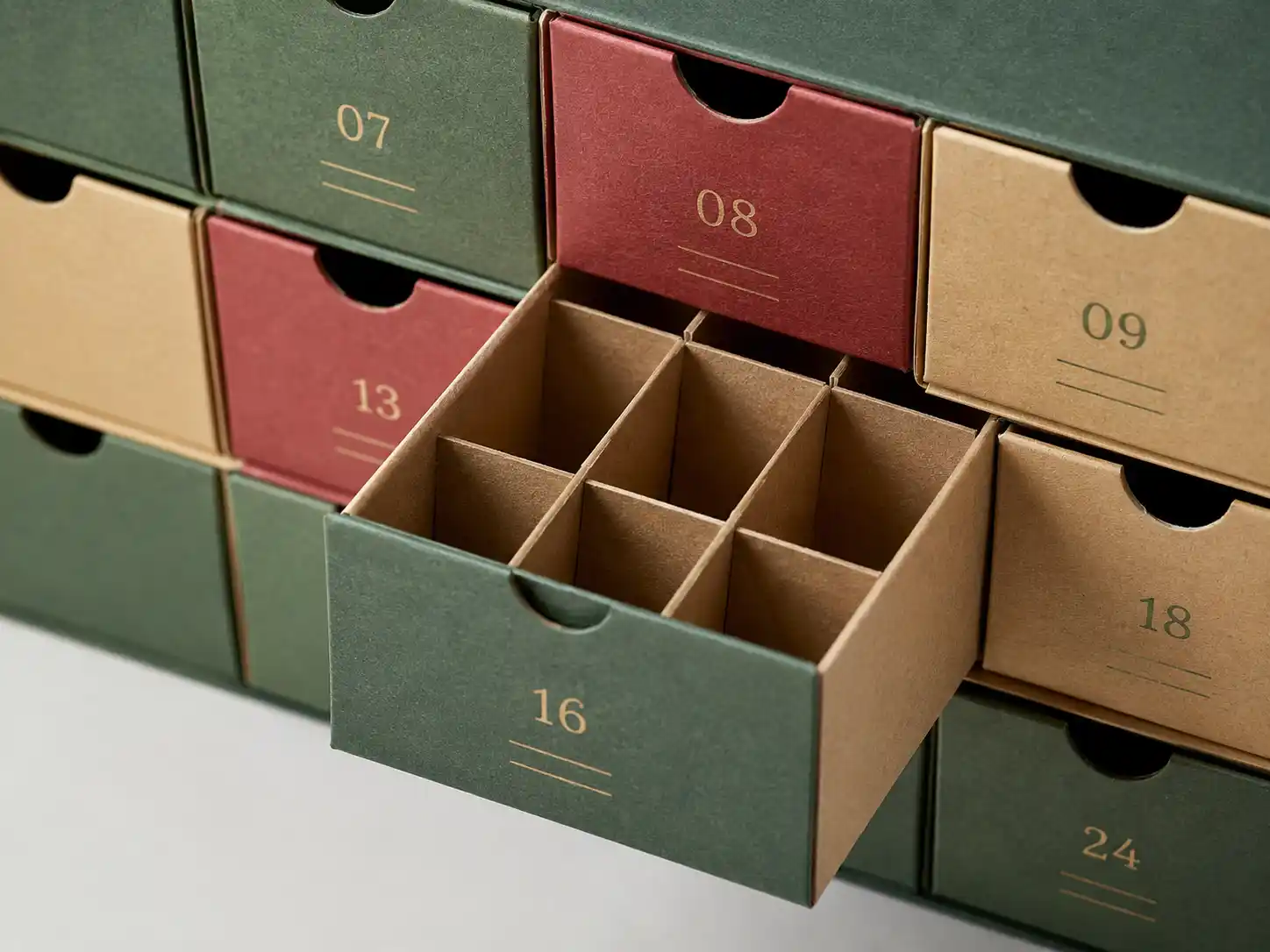
Drawer-Style Advent Calendar Boxes
Drawer calendars often use rigid greyboard or thick paperboard because each drawer must slide smoothly and maintain shape. When buyers request more sustainable options, the supplier can review recycled greyboard, FSC-certified paper wrapping, soy-based or water-based ink options, and reduced plastic lamination.
The key point is fit tolerance. If the board is too soft, drawers may deform. If the wrap paper is too thick, drawer movement may become tight. For drawer structures, buyers should provide product weight, drawer quantity, drawer opening direction, and whether each drawer needs an internal divider.
Door-Opening Paperboard Calendars
Door-opening calendars are common for lightweight products because they can be efficient in material use and bulk packing. The dieline is important because each door needs a clean tear line, reliable perforation, and enough board strength around the window.
For this structure, sustainable material planning should focus on paperboard grade, grammage, coating, tear performance, and whether the calendar can be flat packed. If the buyer wants to reduce plastic use, paperboard inserts or molded pulp trays may replace PET trays in some product categories.
Rigid Book-Style Calendars
Rigid book-style boxes give a premium feel but use more material than simple paperboard calendars. They are often selected for beauty, fragrance, jewelry, luxury gift packs, and seasonal retail campaigns.
To make this structure more responsible, buyers can discuss FSC-certified wrapping paper, recycled greyboard, paper-based inserts, removable trays, and packaging dimensions that reduce empty space. Giftpackpro can review these decisions as part of custom advent calendar box services before sample development.
Fold-Out and Display-Ready Calendars
Fold-out calendars need careful balance between visual presentation and structural stability. They may include panels, hinges, display wings, product windows, or multiple layers of compartments.
For B2B retail buyers, the main question is not only whether the material is recyclable. The supplier should also test whether the display can stand correctly, hold product weight, resist bending, and pack efficiently into master cartons.
Compare Sustainable Material Options
There is no single best material for all advent calendar projects. The best choice depends on product category, structure, order quantity, printing effect, budget, and destination market requirements.
| Material Option | Best Use | B2B Buying Notes |
|---|---|---|
| FSC-certified paperboard | Door-opening calendars, folding cartons, sleeves, outer wraps | Good for buyers who need responsible sourcing claims. Confirm certificate scope, paper thickness, print finish, and MOQ before quoting. |
| Recycled greyboard | Rigid drawer boxes, book-style calendars, premium gift sets | Strong for rigid structures. Check board density, surface smoothness, edge quality, and wrapping paper compatibility. |
| Kraft paperboard | Natural-look calendars, simple retail gift packs, eco-positioned campaigns | Works well for minimal artwork, but color printing may appear less bright than coated white paper. |
| Molded pulp insert | Products needing shaped support with reduced plastic use | Useful for some cosmetics, jars, or accessories. Tooling, fit tolerance, and surface texture should be confirmed early. |
| Paperboard divider insert | Lightweight products, sample kits, stationery, snacks, sachets | Efficient for flat packing and easy recycling. Product size accuracy is critical for insert stability. |
Check Certification and Compliance Requirements Early
If sustainability claims will appear on packaging artwork, product pages, retail listings, or buyer documents, confirm the required proof before production. For paper sourcing, many buyers refer to FSC certification. For food-related products, buyers should also review official guidance such as the FDA food contact substances guidance when packaging may contact food directly.
Not every advent calendar box needs the same documentation. A cosmetic sample calendar, toy calendar, chocolate calendar, and stationery calendar may require different material, ink, glue, coating, and contact-safety considerations. The buyer should tell the supplier the product category and destination market before sample making.
Match Insert Materials with Product Size and Layout
Insert choice is one of the most important parts of sustainable advent calendar box materials planning. Inserts control product protection, user opening experience, assembly speed, and shipping safety.
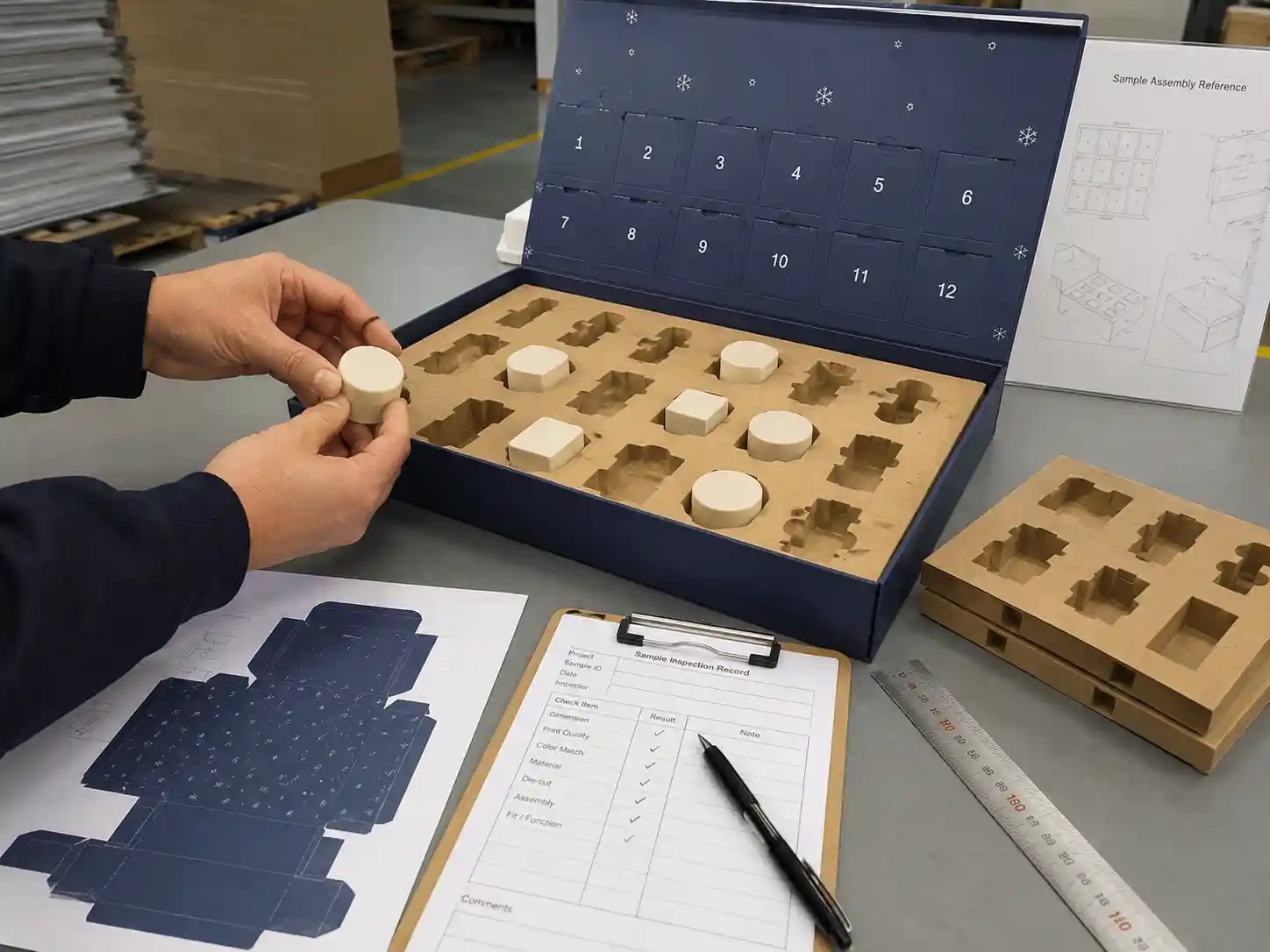
For paperboard dividers, the buyer should provide product length, width, height, weight, and whether the product is fragile. For molded pulp, EVA alternatives, or other shaped inserts, the buyer should confirm whether a custom mold is needed. For rigid drawer calendars, the inner drawer size should be checked before the outer box dieline is finalized.
When reviewing custom advent calendar box products, buyers should compare structure and insert options together, not separately. A beautiful outer box can still fail if the insert is loose, difficult to assemble, or not suitable for export transport.
Practical Example: Beauty Sample Calendar
A beauty brand may need 24 compartments for small bottles, tubes, jars, and sachets. The buyer wants a premium look and reduced plastic. A supplier may suggest a rigid book-style box with recycled greyboard, FSC paper wrap, and paperboard or molded pulp inserts.
Before quotation, the buyer should provide sample product sizes, product weight per compartment, artwork direction, opening style, and whether the box will be shipped empty or pre-filled. These details affect insert tooling, assembly labor, carton size, and lead time.
Practical Example: Snack or Tea Calendar
A tea or snack calendar may use paperboard because the products are usually lighter. If the product has direct food contact, the inner packaging and food-contact layer must be reviewed separately from the outer display box.
For this type of project, buyers often care about flat packing, fast assembly, retail shelf appearance, and clear numbered doors. Paperboard dividers can be efficient, but door perforation and product movement should be tested with real or dummy samples.
Plan the Dieline Before Confirming the Material
A dieline is not just a printing template. It decides compartment layout, opening direction, folding method, glue area, insert position, carton efficiency, and how the product sits inside the calendar.
If buyers choose sustainable materials without checking the dieline, they may face avoidable problems such as weak door edges, tight drawers, wasted space, higher freight cost, or inserts that cannot be assembled efficiently. This is why a structured review through custom advent calendar box services is useful before approving a sample.
Key Dieline Questions for Buyers
Before asking for a price, prepare answers to these questions:
- How many compartments are needed: 12, 24, 25, or another layout?
- Will the box use drawers, tear-open doors, a book-style opening, or a fold-out structure?
- What is the largest product size and heaviest product weight?
- Will products be packed by the factory, by the buyer, or by a third-party filling partner?
- Does the box need to stand on a retail shelf, hang, or ship as a gift set?
- Are there sustainability requirements such as FSC paper, recyclable inserts, or reduced plastic?
Printing and Finishing Choices Affect Recyclability
Material choice is only one part of sustainability. Printing and finishing decisions can also affect recyclability, cost, appearance, and production lead time.
Matte lamination, gloss lamination, foil stamping, UV coating, glitter, magnets, ribbons, and plastic windows may improve presentation, but they can also make recycling more complicated. Buyers who want a more sustainable structure should ask the supplier to review alternative finishes such as water-based coating, minimal foil area, paper-based closures, and simpler print coverage.
This does not mean every premium calendar must look plain. It means the design should use finishing with purpose. A strong paper texture, clean dieline, accurate color, and good insert fit often create a more professional result than excessive decoration.
Sample Testing Before Bulk Production
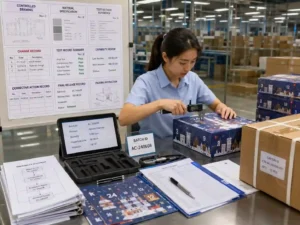
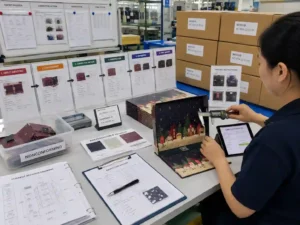
A sustainable material plan should be tested with real dimensions before mass production. A white sample can confirm structure and insert fit. A printed sample can confirm color, surface finish, artwork alignment, door cutting, drawer movement, and general shelf appearance.
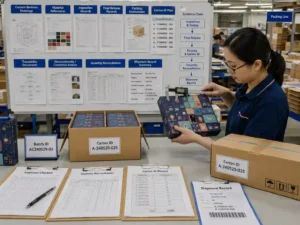
For B2B buyers, sample approval should include more than a visual check. Ask the supplier to test product loading, opening function, carton packing, compression risk, edge quality, glue strength, and barcode or shipping mark position. You can also review related advent calendar box buying guides to prepare a better sample checklist.
What to Send for Accurate Sampling
For faster sample development, send product dummies, size drawings, product weights, artwork files, target quantity, destination country, preferred material, and any certification requirements. If exact products are not ready, provide the maximum size range and weight range for each compartment.
This allows the supplier to check whether paperboard, rigid board, molded pulp, or divider inserts are realistic before bulk pricing is finalized.
QC and Export Packing for Sustainable Advent Calendar Box Materials
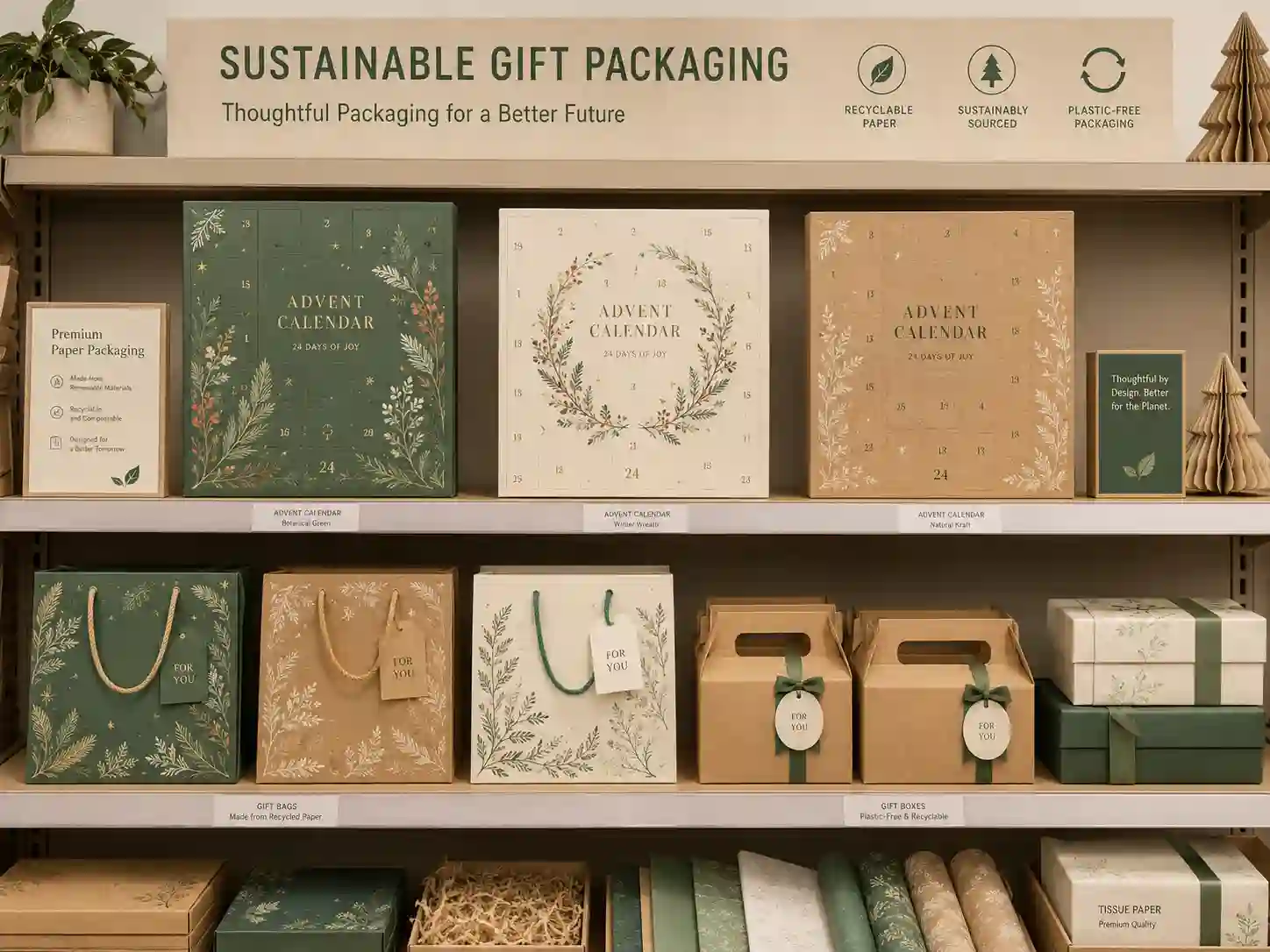
Quality control is especially important when using sustainable advent calendar box materials because recycled content, paper texture, coating choice, and insert structure can all influence consistency. A reliable inspection plan should cover incoming paper, printing color, die-cut accuracy, glue position, assembly strength, insert fit, and finished carton packing.
Export packing should also be discussed early. A box that looks good on a sample table may still need stronger master cartons, corner protection, pallet labels, or revised carton quantity to reduce damage during shipment.
Common QC Checkpoints
For drawer structures, check drawer sliding, drawer gap, wrapping edge, and handle strength. For door-opening calendars, check perforation depth, opening force, numbered door position, and product movement. For rigid book-style boxes, check hinge strength, magnet position if used, corner finishing, and closure alignment.
Giftpackpro packaging factory can support structure review, sample checking, and export packing discussion when buyers need a custom seasonal packaging project. Learn more about the Giftpackpro packaging factory when evaluating supplier capability.
Quote-Preparation Advice for B2B Buyers
A clear RFQ helps the supplier recommend the right material and avoids inaccurate pricing. Sustainable material requests should be specific. Instead of only writing “eco-friendly advent calendar box,” include structure, size, insert type, material preference, quantity, artwork status, packing method, and delivery market.
For example, a strong RFQ may say: “We need 5,000 pcs of 24-compartment drawer advent calendar boxes for cosmetic samples. Please quote recycled greyboard with FSC paper wrap, paperboard inserts, printed sample, export master cartons, and sea shipment packing.”
Another RFQ may say: “We need a flat-packed door-opening paperboard advent calendar for tea sachets, 12 compartments, kraft look, recyclable paper insert, simple CMYK printing, and carton packing suitable for EU retail distribution.”
When details are still uncertain, buyers can request a custom quote and send product sizes first. The supplier can then suggest whether paperboard, rigid board, molded pulp, or another insert structure is more practical.
Final Material Selection Checklist
Before confirming sustainable advent calendar box materials, review these points with your supplier:
- Box structure: drawer, door-opening, rigid book-style, sleeve, or fold-out.
- Outer material: paperboard, rigid board, recycled greyboard, kraft paper, or coated paper.
- Insert material: paperboard divider, molded pulp, removable tray, or other custom insert.
- Artwork and finish: CMYK, spot color, coating, foil, embossing, or reduced finishing.
- Sample plan: white sample, printed sample, product dummy testing, and approval timeline.
- Bulk production: MOQ, lead time, assembly method, QC standard, and packing plan.
- Export details: master carton size, pallet requirements, shipping marks, and destination market.
Sustainable packaging works best when material, structure, dieline, insert, printing, and logistics are planned together. For overseas brands, wholesalers, gift companies, and retail buyers, the most practical approach is to define the product layout first, then compare material options with a supplier who understands custom seasonal paper packaging. Giftpackpro can help buyers review structure, sample requirements, and quotation details for custom advent calendar box projects through its custom advent calendar box services, custom advent calendar box products, and request a custom quote pages.