How to Design Advent Calendar Boxes with Removable Inserts
Removable inserts advent calendar boxes are designed so the inner tray, divider, or product-holding structure can be taken out without damaging the outer calendar box. For B2B buyers, this structure is useful when one calendar design must support different product sets, seasonal campaigns, or refill-style packing workflows.
Unlike a fixed glue-in tray, a removable insert gives the buyer more flexibility during sampling, production, filling, inspection, and export packing. It also helps purchasing teams compare suppliers more clearly because the quote can separate the outer box structure from the insert material, insert size, and assembly method.
This guide explains how to plan removable inserts for custom advent calendar projects, including structure selection, insert materials, artwork, samples, quality control, and RFQ details. If you are comparing suppliers, it can also be used together with other advent calendar box buying guides.
What Are Removable Inserts in Advent Calendar Boxes?
A removable insert is the internal part that holds products inside an advent calendar box. It may be a paperboard tray, corrugated divider, molded pulp tray, EVA insert, foam insert, or a mixed-material structure. The key point is that the insert is not permanently fixed to the outer box.
In many B2B projects, the outer calendar box carries the brand artwork, numbered doors, drawers, sleeves, or magnetic closure. The removable insert controls product placement, protection, filling efficiency, and user opening experience.
For brands, wholesalers, and retail buyers, this means one outer structure can sometimes be adapted for several SKUs. For example, a beauty calendar may use one printed rigid box but different removable inserts for skincare tubes, small bottles, sachets, or mini accessories.
Where Removable Inserts Work Best
Removable inserts are especially useful when products have different sizes, shapes, or packing sequences. They are also helpful when buyers want the calendar box to feel premium but still need practical bulk filling and export handling.
Common B2B Applications
Beauty and skincare calendars often use removable paperboard, EVA, or foam inserts because bottles, jars, and tubes need stable positioning. Snack and candy calendars may use food-contact-safe paperboard or molded pulp depending on the product packaging. Stationery, toy, and gift-set calendars can use paperboard dividers or folded tray systems.
For buyers sourcing from a custom advent calendar boxes manufacturer, the first discussion should not only be about the outside design. The insert must match the product weight, product size, door layout, packing method, and expected shipping route.
When a Fixed Insert May Be Better
A removable insert is not always the best choice. If the product set is fixed, the box has many small windows, or the outer box relies on the insert for structural strength, a fixed insert may reduce movement and simplify assembly.
For lower-cost mass retail programs, a glued-in paperboard insert may also be easier to control in production. The right choice depends on the balance between flexibility, protection, assembly time, and unit cost.
Main Structures for Advent Calendar Boxes with Removable Inserts
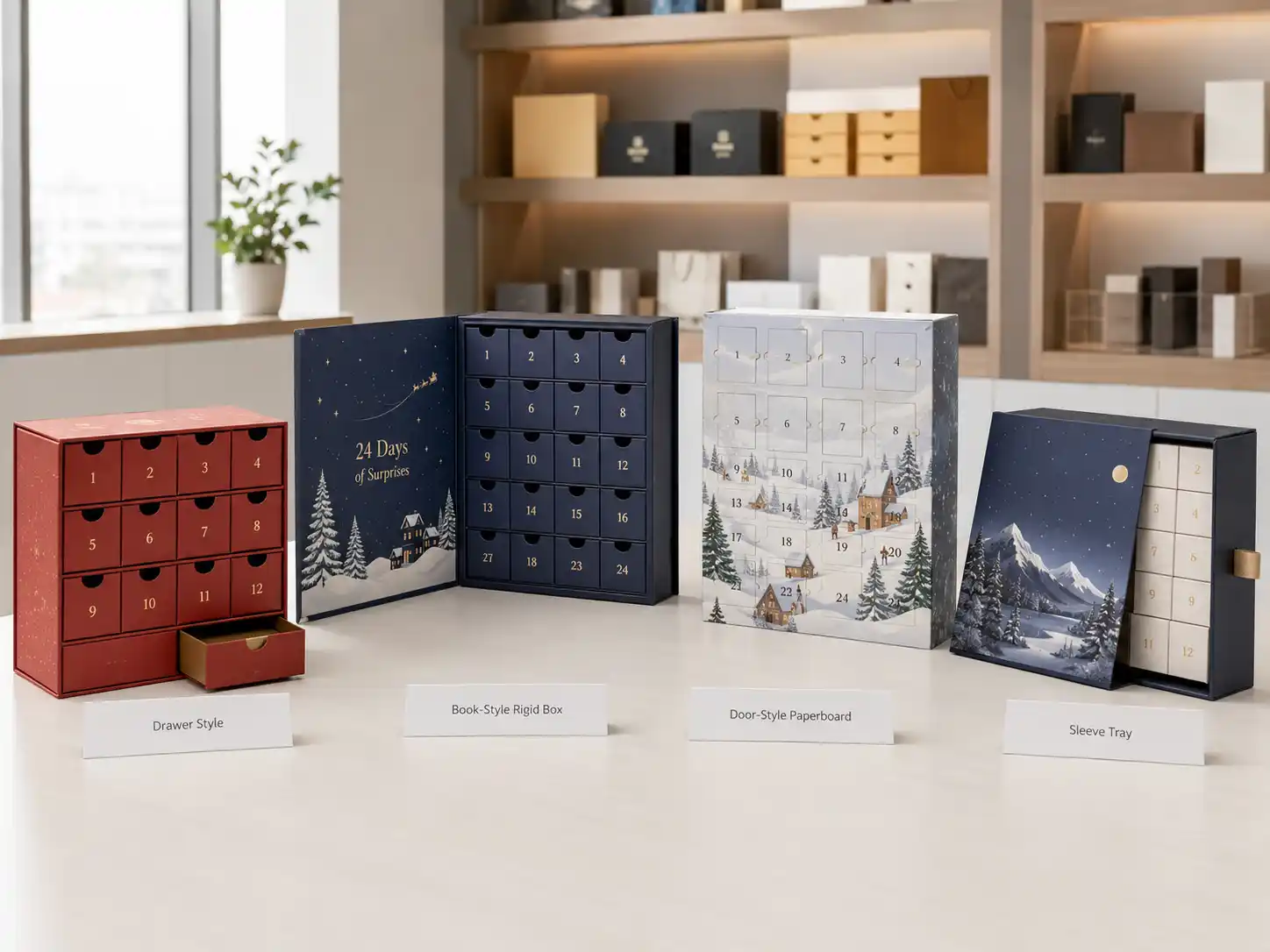
The outer box structure determines how the insert is loaded, removed, and inspected. Buyers should confirm this before approving artwork because door position, drawer direction, and insert depth can affect the final dieline.
| Box Structure | Best Insert Type | Typical Buyer Use | Quote Notes |
|---|---|---|---|
| Book-style rigid calendar box | Paperboard tray, EVA, foam, molded pulp | Beauty, wellness, premium gift sets | Confirm hinge strength, insert thickness, and magnetic closure gap. |
| Drawer advent calendar box | Removable drawer dividers or product trays | Jewelry, cosmetics, stationery, small gifts | Confirm drawer tolerance, pull ribbon, and bulk assembly cost. |
| Door-style paperboard calendar | Folded paperboard insert or molded pulp | Snacks, candy, toys, promotional items | Confirm numbered door position and product access direction. |
| Sleeve and tray calendar | Removable tray insert | Retail sets needing clean shelf presentation | Confirm sleeve fit, tray pull direction, and carton packing method. |
Choosing the Right Insert Material
Insert material affects cost, protection, appearance, sustainability claims, and lead time. It should be chosen after checking product size, weight, fragility, surface finish, and whether the product has direct or indirect contact with the insert.
Paperboard Inserts
Paperboard inserts are common for light products such as cosmetics samples, mini gifts, stationery, or small packaged snacks. They can be printed, folded, and cut to match the outer artwork. They are also easier to align with paper-based packaging goals.
If the project needs FSC-certified paper materials, buyers can review official information from the Forest Stewardship Council and ask the supplier whether FSC material and documentation are available for the specific order.
Corrugated Inserts
Corrugated inserts are useful when products are heavier or when the box needs more support during export shipping. They are not usually as refined as paperboard or EVA inserts, but they provide better cushioning and stacking strength for some product types.
Molded Pulp Inserts
Molded pulp is often selected for eco-positioned packaging, fragile items, or products that need custom cavity shapes. It can look clean and practical, but buyers should confirm tooling cost, surface texture, color tolerance, and drying stability before approving mass production.
EVA and Foam Inserts
EVA and foam inserts are suitable for premium gift sets, glass bottles, delicate accessories, and products that require a tight fit. They provide a neat presentation, but they may increase cost and may not match every sustainability target.
If the project will be sold in the EU, buyers should also check relevant packaging and recycling responsibilities through official sources such as the European Commission packaging waste guidance.
How to Design the Insert Around the Product
The insert should be designed from real product dimensions, not from estimated catalog sizes. Small changes in bottle cap height, tube diameter, blister pack thickness, or sachet edge size can affect the cavity fit.
Before asking for a sample, prepare the product length, width, height, weight, opening direction, and any fragile areas. If products are not ready yet, provide 3D files, technical drawings, or dummy samples with the same size and weight.
Allow Proper Tolerance
A tight insert can look premium, but if it is too tight, products may be difficult to load or remove. A loose insert may reduce filling speed problems, but it can cause movement during shipping.
For bulk production, tolerance should be tested with real products and actual printed materials. Paper thickness, lamination, folding pressure, humidity, and hand assembly can all affect the final fit.
Match Door or Drawer Position
For numbered door calendars, every cavity must line up with the correct door. For drawer calendars, each removable tray or divider must match the drawer depth and pull direction. This is why insert design should be checked together with the full dieline, not as a separate part at the end.
Buyers who need support from structure planning to bulk order can review custom advent calendar box services before sending RFQ files.
Customization Details That Affect the Insert
Artwork is not only for the outside box. In many projects, the insert also needs printing, color matching, numbering, product labels, or simple position marks for the filling team.
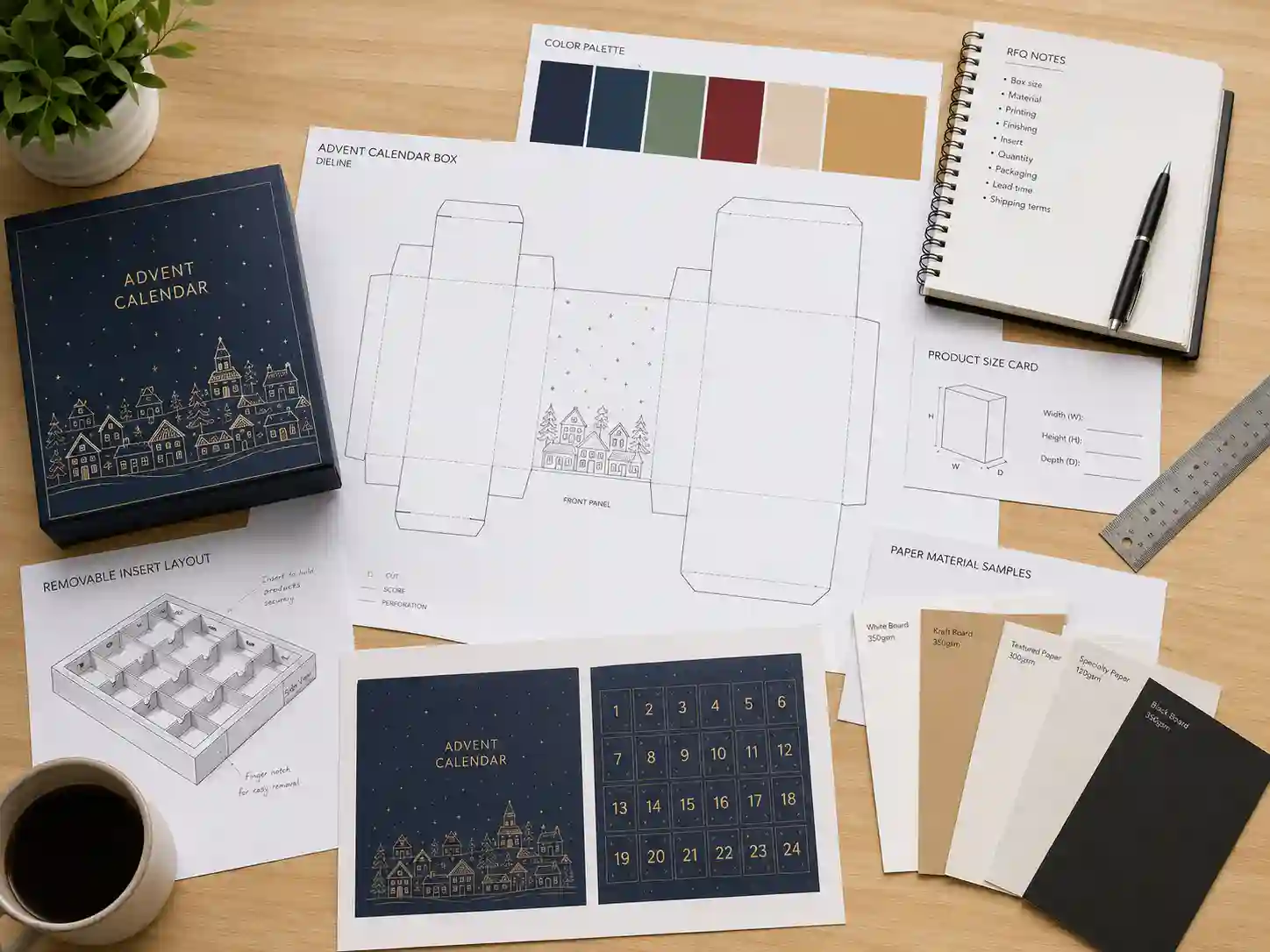
Artwork and Printing
If the insert is visible when the calendar is opened, its color and finish should match the outer box. A white insert can look clean, but a printed insert may support the brand story and make the product set feel more organized.
For paperboard inserts, buyers should confirm CMYK printing, spot color, lamination, varnish, foil stamping, embossing, or debossing requirements. For EVA, foam, or molded pulp, decoration options are more limited and should be checked early.
Numbering and Product Sequence
In B2B filling, the product sequence matters. If Day 1, Day 12, and Day 24 must hold specific products, the insert should include clear cavity numbers or a packing guide. This helps reduce mistakes during kitting and inspection.
A simple filling map can be included in the sample approval file. For complex projects, Giftpackpro can help buyers review whether the box structure, insert layout, and filling sequence are practical before mass production.
Surface Finish and Insert Thickness
Thicker insert material improves support but reduces internal space. Lamination, paper wrapping, and folded edges may also change the fit. For drawer structures, even a small thickness increase can cause drawers to feel tight.
Before approving production, buyers should request a structural sample and a printed sample if the project requires strict color matching. You can compare available options through custom advent calendar box products and then refine the final structure with the supplier.
Sample Development Process
For removable inserts advent calendar boxes, sampling should confirm both appearance and function. A beautiful sample is not enough if the insert shifts during packing or if products cannot be loaded efficiently.
Step 1: Confirm Product Data
Prepare product dimensions, weight, quantity, product order, and any special handling notes. If the products are fragile, liquid-filled, sharp-edged, or irregularly shaped, mention this in the RFQ.
Step 2: Choose Outer Structure
Select the main box type: book-style, drawer, door-style, sleeve and tray, or another custom structure. The structure should fit the retail channel, shelf display plan, product value, and shipping method.
Step 3: Build Insert Layout
The supplier creates an insert layout based on product sizes and calendar opening logic. For large product sets, the first layout may need adjustment before sampling.
Step 4: Produce a White Sample
A white sample is useful for checking size, cavity fit, opening direction, and assembly logic. It is usually faster and cheaper than a printed sample.
Step 5: Approve Printed Sample
The printed sample checks artwork position, color, finish, numbering, insert appearance, and overall presentation. Buyers should test loading and unloading with real products before approval.
If you are preparing a first project, the advent calendar box buying guides section can help your team understand structure, inserts, packing, and quotation details before sending files.
Quality Control Points for Removable Inserts
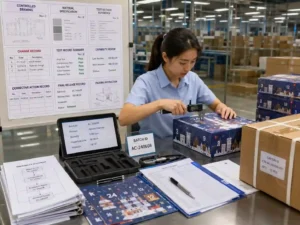
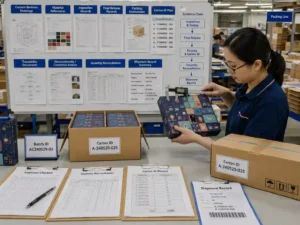
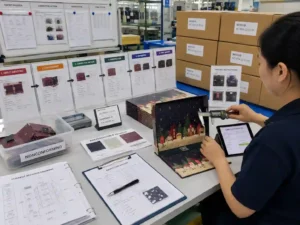
Quality control should cover both the outer calendar box and the removable insert. A strong outer box cannot solve problems caused by poor insert fit, weak folding, or wrong cavity position.
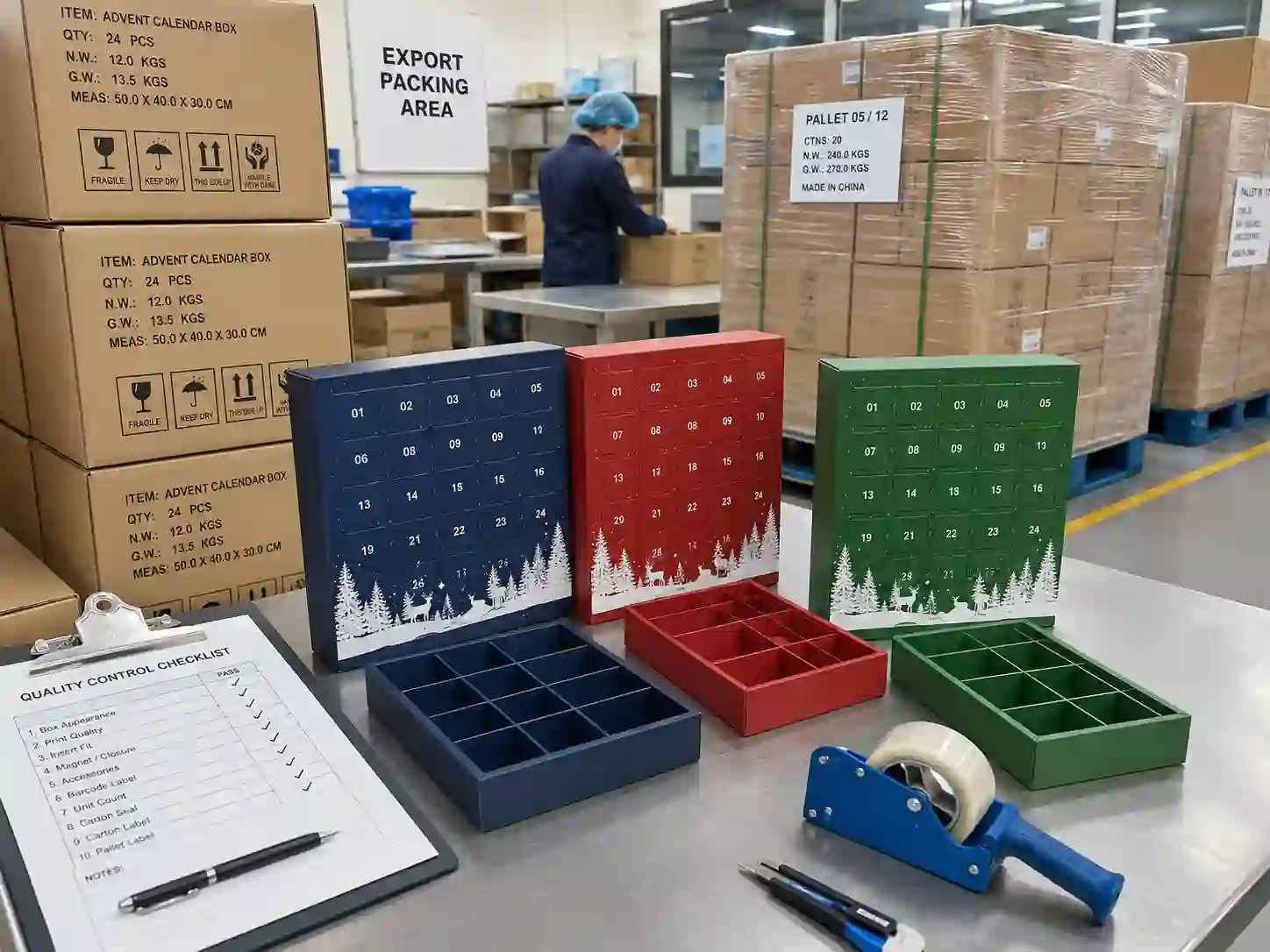
Key QC Checks
Check product cavity size, insert flatness, glue position if any partial fixing is used, paper cracking, edge quality, color matching, and whether the insert can be removed without tearing the box.
For drawer calendars, test drawer sliding after the insert is loaded. For door calendars, check whether products sit behind the correct windows. For rigid book-style boxes, confirm that the insert does not block closure or cause the lid to lift.
Bulk Production Tolerance
Buyers should not approve bulk production based only on visual photos. A pre-production sample or sealed golden sample is useful for checking final materials, printing, finishing, and insert fit.
The Giftpackpro packaging factory can support custom paper packaging projects that require structure review, sample confirmation, production inspection, and export packing planning.
Export Packing and Shipping Considerations
Removable inserts can affect export packing because the insert may be shipped inside the box, separately stacked, or partially assembled. Each method changes carton size, labor cost, and damage risk.
Flat Packing
Flat packing can reduce shipping volume for some paperboard structures. However, it may require more labor at the filling location. Buyers should confirm whether the insert can be folded easily and whether assembly instructions are needed.
Assembled Packing
Assembled packing is better when the calendar box is complex, premium, or easily damaged during local assembly. The unit cost and shipping volume may be higher, but the packing quality is easier to control.
Master Cartons and Shipping Marks
For export orders, confirm master carton size, quantity per carton, gross weight, net weight, shipping marks, pallet requirements, and drop-test expectations. If the calendar contains fragile products, the insert and master carton must work together.
When requesting a quotation, buyers can use request a custom quote to provide product dimensions, artwork files, target quantity, preferred material, and packing method.
RFQ Checklist for Buyers
A clear RFQ helps suppliers quote faster and more accurately. It also reduces the risk of comparing offers that are not based on the same structure or material level.
Information to Prepare
Include the outer box style, finished size, product quantity, product dimensions, product weight, insert material preference, printing requirements, finishing requirements, sample request, order quantity, destination country, and expected delivery schedule.
If your team is unsure about the best insert material, ask the supplier to quote two options. For example, compare paperboard insert versus EVA insert, or molded pulp insert versus corrugated insert. This makes supplier comparison more practical than asking for only the lowest unit price.
Files to Send
Send artwork files, brand guidelines, product photos, product drawings, dieline if available, and any retail compliance requirements. If the product set is not finalized, mark which dimensions are confirmed and which are still estimated.
For custom projects, Giftpackpro can review the structure, insert layout, artwork, sample plan, MOQ, lead time, quality control points, and export packing details through its custom advent calendar box services.
Supplier Comparison: What to Check Beyond Price
When comparing suppliers, do not only compare the unit price. Removable inserts advent calendar boxes involve structure engineering, material selection, sampling, assembly, and packing control.
Ask whether the supplier can create a custom dieline, provide a white sample, test real product fit, manage printed sample approval, control insert tolerance, and suggest export packing. Also confirm whether the quote includes insert tooling, sample cost, printing plates, finishing, assembly labor, inner packing, and master cartons.
A supplier with practical advent calendar experience should be able to explain why one insert material is better than another for your product set. They should also be able to point out risks before mass production, not after the goods are finished.
Final Buying Advice
Removable inserts give advent calendar boxes more flexibility, but they must be planned early. The insert affects the dieline, artwork, sample timeline, packing method, carton size, and final quote.
For a smoother project, start with product data, choose the outer structure, compare insert materials, test the sample with real products, and confirm export packing before bulk production. This approach helps buyers avoid unclear quotations and makes supplier comparison much easier.
If you are preparing a new seasonal packaging project, review custom advent calendar box products, learn from advent calendar box buying guides, or request a custom quote with your product list and target order details.