
Window advent calendar boxes are used when buyers want each product, compartment, or daily gift to feel planned before the box is opened. For B2B packaging projects, the main decision is not only the window shape. It is the full structure: outer box, compartment layout, insert material, opening method, artwork, dieline, packing method, and sample approval standard.
For brands, wholesalers, gift companies, and retail buyers, a good window calendar box should protect the products, support the display plan, and remain practical for bulk production. This guide explains the structure choices and quote details buyers should prepare before working with a custom advent calendar boxes manufacturer.
What Are Window Advent Calendar Boxes?
Window advent calendar boxes are seasonal gift boxes with visible or semi-visible openings, cut-out windows, numbered doors, drawer fronts, or display panels. The “window” can mean a transparent PET window, a die-cut paper window, a small product-viewing area, or a door-opening panel that reveals one item at a time.
In B2B use, these boxes are usually customized for product launches, Christmas campaigns, beauty sets, food gifts, toy collections, tea samplers, stationery kits, corporate gifting, and retail shelf promotions. Buyers usually care about three things first: whether the structure fits the product, whether the box can be produced consistently, and whether the final packed goods can survive export shipping.
Common Structures for Window Advent Calendar Boxes
The best structure depends on the product weight, retail channel, target price level, and the way the customer will open the box. Before confirming artwork, buyers should decide how the items will sit inside the box.
Drawer-Style Calendar Boxes
Drawer-style window advent calendar boxes use small drawers or pull-out compartments. They are useful for cosmetics, jewelry, tea bags, small toys, candles, confectionery, and accessory sets.
The advantage is strong presentation value. Each drawer can carry a number, printed pattern, ribbon puller, or small viewing window. The challenge is tolerance control. If the drawer fit is too tight, opening feels rough. If it is too loose, the box may look cheap or shift during transport.
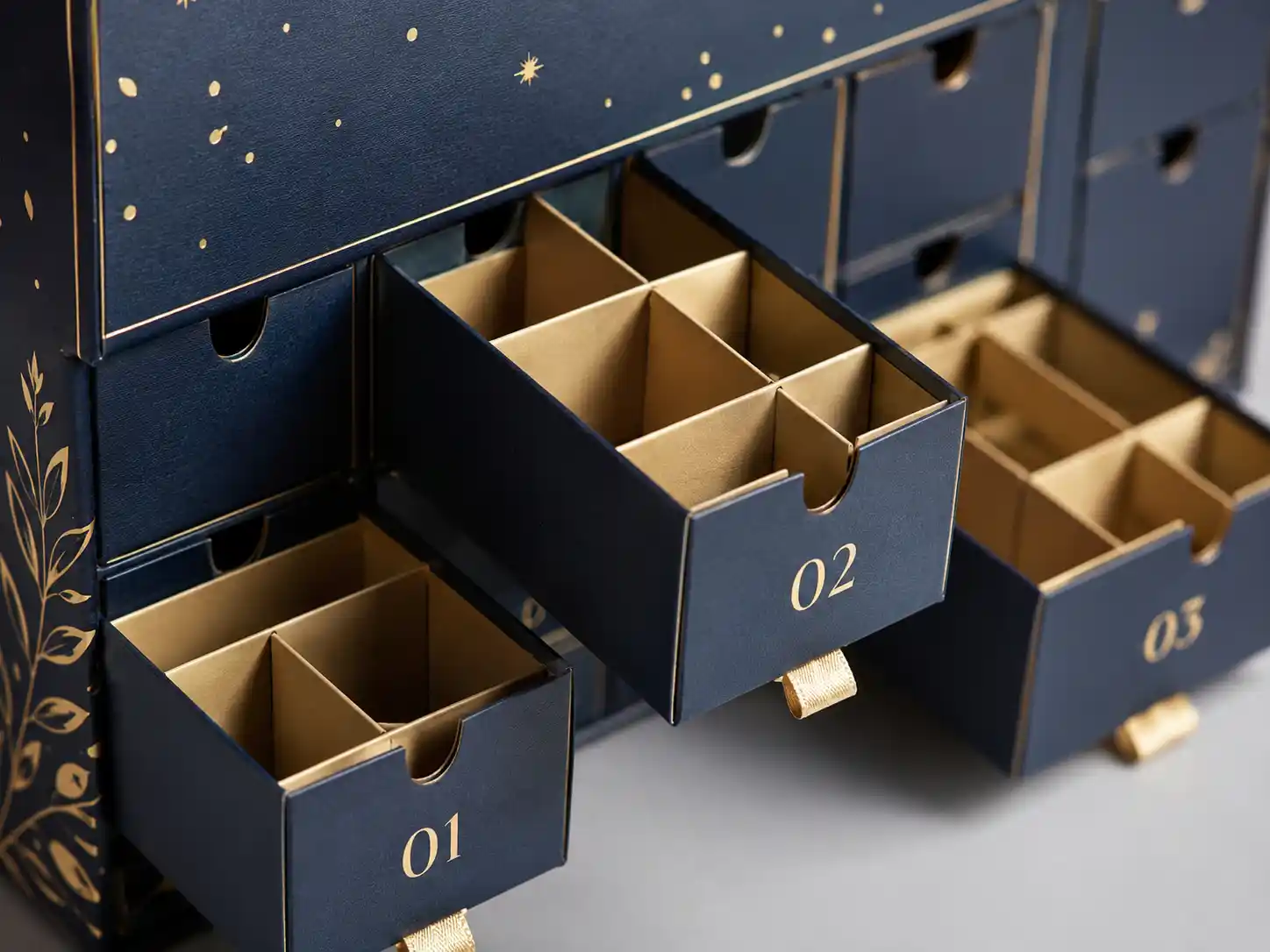
Door-Opening Calendar Boxes
Door-opening boxes are usually made with paperboard or corrugated board. Each day is opened by pressing or tearing a perforated door. This option works well for lightweight products and high-volume campaigns where cost control matters.
For door-opening boxes, buyers should check the perforation strength during sampling. The door should open cleanly without damaging nearby graphics. This is especially important when the front panel has full-color printing, foil details, or dense holiday artwork.
Rigid Window Calendar Boxes
Rigid window calendar boxes are made with greyboard wrapped by printed paper. They are often selected for premium beauty sets, fragrance discovery kits, luxury food gifts, corporate gifts, and higher-value retail sets.
Rigid structures can support book-style opening, magnetic closure, drawer modules, double-door opening, or fold-out panels. They look premium, but they also need more planning time for structure, material, wrapping, inner support, and export packing. Buyers can review related structures in custom advent calendar box products before choosing a direction.
Paperboard and Folding Carton Calendar Boxes
Paperboard calendar boxes are lighter and more cost-efficient. They are suitable for high-volume promotional sets, supermarket programs, small snacks, tea sachets, stationery items, and mini toy collections.
Paperboard structures need careful support design. A large front window or too many cut lines can reduce panel strength. For this reason, the dieline should balance window visibility with enough paper area for load-bearing and shelf stability.
Fold-Out Calendar Boxes
Fold-out window advent calendar boxes open like a book, gatefold display, or multi-panel presentation box. They are often used when buyers want more visual storytelling or a larger unboxing layout.
Fold-out designs can look impressive on retail shelves and social media, but they need extra attention to hinge strength, magnet position, ribbon direction, and carton size. A structure that looks good in a rendering may become difficult to pack if the panels are too wide or too heavy.
How to Choose the Right Structure
| Structure Type | Best For | Key Buyer Check | Common Risk |
|---|---|---|---|
| Drawer-style | Cosmetics, tea, jewelry, accessories, small gifts | Drawer tolerance, puller strength, insert fit | Drawers too tight or shifting in transit |
| Door-opening paperboard | Snacks, toys, stationery, lightweight samples | Perforation strength and opening test | Doors tearing unevenly or weakening the front panel |
| Rigid book-style | Premium gifting, beauty kits, fragrance sets | Greyboard thickness, magnet alignment, hinge durability | Higher unit cost and larger export carton volume |
| Fold-out structure | Retail display campaigns and gift collections | Panel balance, fold line, final packed size | Panels bending or packing inefficiently |
| Paperboard window box | High-volume seasonal promotions | Window size, PET film, paper strength | Large windows reducing box stability |
Window and Layout Decisions Buyers Should Confirm Early
Window design affects both appearance and production. A large viewing window can help show the product, but it also reduces paper strength. A small window may be safer for structure, but it may not show enough product value on the shelf.
For most B2B projects, buyers should confirm these points before requesting a sample:
- Whether the window needs transparent PET film or only a die-cut opening.
- Whether the products must be visible before opening.
- Whether each compartment needs a number, icon, color block, or product name.
- Whether the box will stand upright, lie flat, or sit in a retail display tray.
- Whether the box will be packed with products at the factory or by the buyer later.
If food, cosmetics, or children’s products are involved, the material and safety requirements should be discussed early. For paper sourcing, buyers may review the official FSC website when FSC-certified paper is required. For management system requirements, buyers can also check ISO 9001 quality management information before setting supplier documentation expectations.
Insert Planning for Window Advent Calendar Boxes
The insert is not a small detail. It decides how the products stay in place, how the windows look, and how much protection the box provides during handling. A beautiful outer box can still fail if the products move inside each compartment.
Paperboard Inserts
Paperboard inserts are commonly used for lightweight products. They are cost-friendly, printable, and recyclable in many markets depending on local rules and coatings. They work well for tea, stationery, small candy packs, sachets, and sample cards.
Corrugated Inserts
Corrugated inserts provide better strength and are useful for heavier products. They can be used for candles, small jars, glass bottles, or product sets with mixed weights.
EVA, Foam, or Molded Pulp Inserts
EVA or foam inserts are often used when a premium fit is needed, especially for fragrance, beauty tools, delicate items, and gift sets with shaped products. Molded pulp can be a useful option when buyers want a more paper-based protection solution.
Giftpackpro can support different insert directions through custom advent calendar box services, but the best insert choice should be based on product size, product weight, packing method, and the buyer’s retail requirements.
Dieline Decisions That Affect Production
The dieline controls the shape, fold lines, window cuts, door openings, drawer dimensions, glue areas, and insert position. For window advent calendar boxes, the dieline should be reviewed before artwork is finalized.
Buyers often send artwork first, then discover later that the layout does not match the real box structure. This creates extra sample rounds and delays. A better process is to confirm product dimensions, compartment count, box structure, opening method, and packing direction first. Then the supplier can prepare a working dieline for design.
Key Dieline Checks
- Are all 12, 24, or custom compartments large enough for the real products?
- Do windows or doors leave enough paper area around the edge?
- Do drawer fronts have enough space for numbers and puller positions?
- Are glue flaps, fold lines, and magnet areas away from key artwork?
- Will the final box fit the export carton and pallet plan?
Buyers who are not sure which structure fits their product can compare options in the advent calendar box buying guides section before preparing a quote request.
Customization Options for B2B Projects
Window advent calendar boxes can be customized in structure, material, printing, finish, insert, and packing. The goal is not to add every finish possible. The goal is to choose details that support the product value and still work in mass production.
Printing and Surface Finishing
Common options include CMYK printing, Pantone color matching, matte lamination, gloss lamination, soft-touch finish, foil stamping, embossing, debossing, spot UV, and textured paper wrapping.
For seasonal campaigns, buyers often use numbered doors, icons, product illustrations, simple holiday graphics, or neutral premium patterns. For private label projects, generic artwork can be used during sampling before final brand artwork is approved.
Window Materials
Transparent PET windows are useful when the product should be visible. However, buyers should confirm whether the retail market has any recycling or material restrictions. A no-film die-cut window may be better for some paper-based packaging goals, but it offers less dust protection.
Sample Approval Process
A physical sample should be checked for structure, opening feel, insert fit, color, finishing, barcode position, packing method, and carton strength. Photos and videos are useful, but they do not fully replace a sample when drawer movement, door opening, or magnet alignment matters.
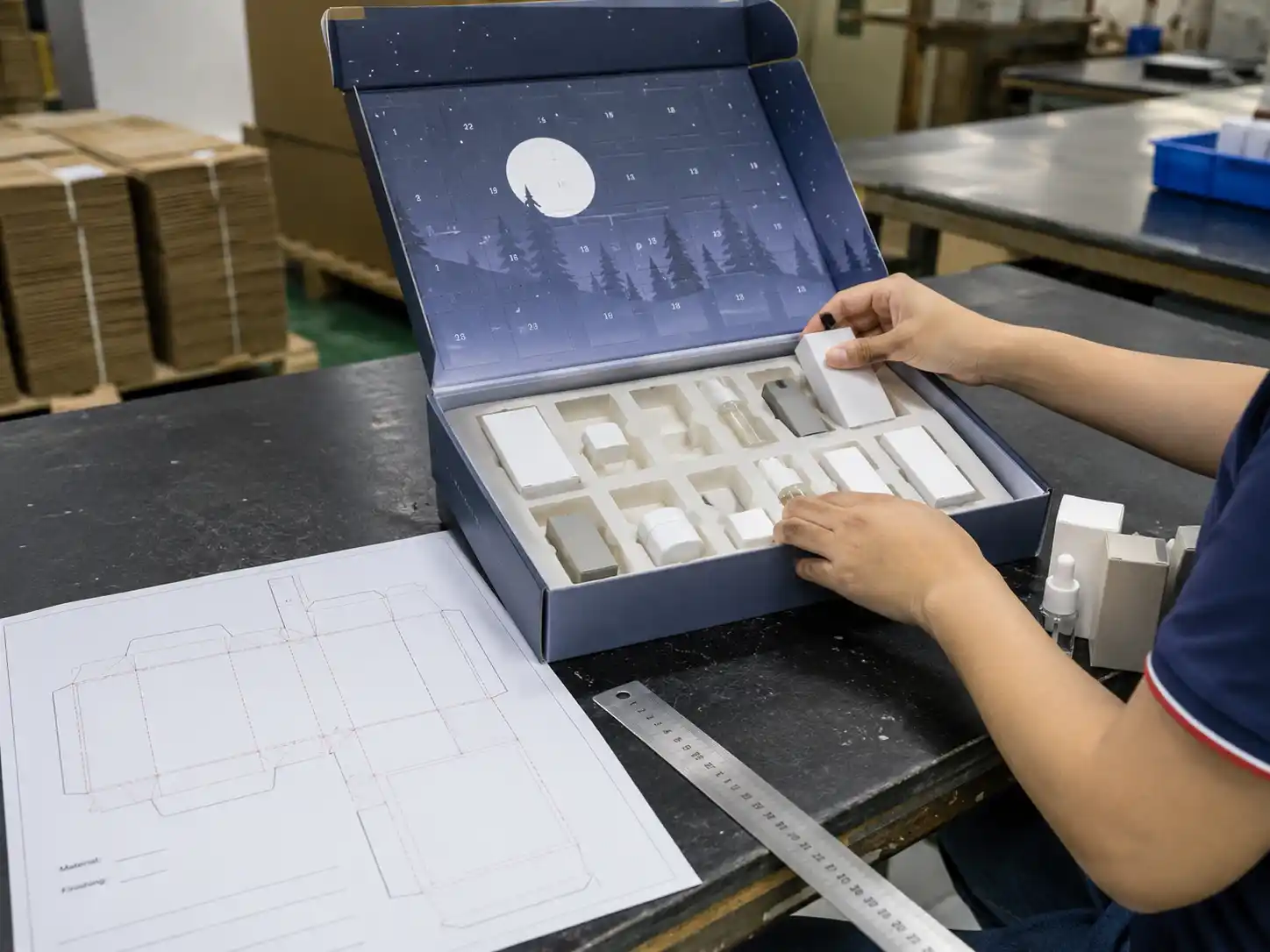
For buyers preparing a new seasonal packaging project, the easiest next step is to share product dimensions, product weight, target quantity, box style reference, artwork status, market country, and preferred shipping plan through request a custom quote.
Size, MOQ, and Lead Time Considerations
Window advent calendar boxes are usually custom projects, so size and structure affect cost more than buyers expect. A small change in depth, drawer count, board thickness, or insert material can affect paper usage, tooling, labor time, carton size, and shipping volume.
MOQ often depends on structure, material, printing method, and finishing. For many custom advent calendar box projects, MOQ may start around 300–500 pieces, but this can change depending on box type and production complexity. Buyers should confirm MOQ with the supplier before finalizing artwork.
Lead time should include structure discussion, dieline preparation, artwork adjustment, sampling, sample shipping, sample approval, bulk production, QC, export packing, and shipment booking. Rushing the sampling stage can create bigger problems during mass production.
Quality Control Points Before Export
QC for window advent calendar boxes should cover both appearance and structure. A printed box may look fine on a table, but the real test is whether the finished packed box opens properly, protects the products, and fits the export carton plan.
Practical QC Checklist
- Check drawer movement, door opening, and window edge cleanliness.
- Check insert fit with real products or accurate product dummies.
- Check color consistency against approved sample or Pantone reference.
- Check lamination, foil, embossing, and glue areas.
- Check magnet strength or ribbon pullers if used.
- Check barcode, warning text, carton mark, and shipping label position.
- Run carton drop or compression checks when required by the buyer.
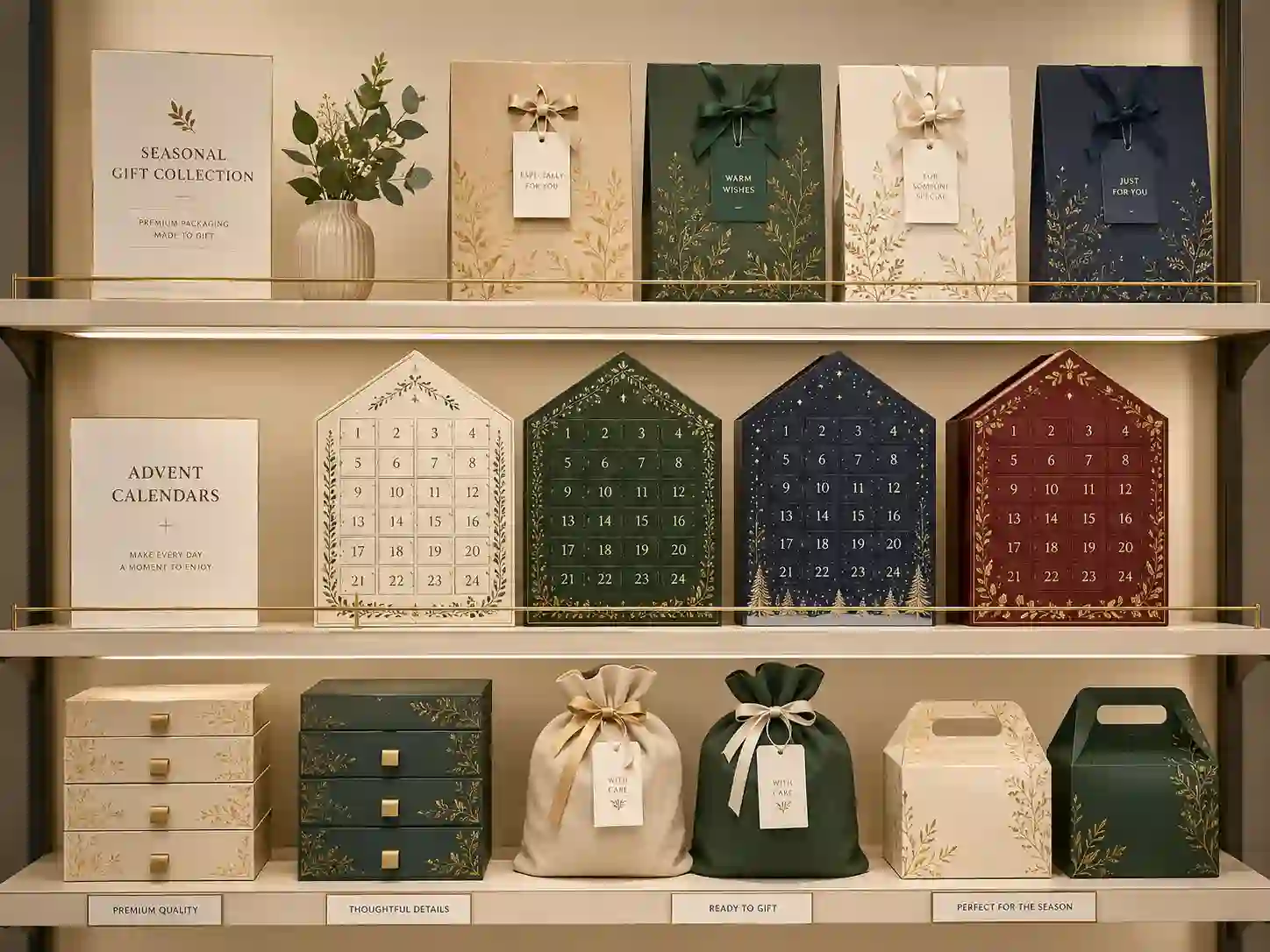
Export packing should be planned before bulk production. Some rigid calendar boxes need protective corners, tissue wrapping, individual polybags, inner cartons, or stronger master cartons. If the packed box is heavy, pallet stacking and carton compression should be reviewed early with the Giftpackpro packaging factory.
Quote Preparation: What Buyers Should Send
A complete quote request helps reduce back-and-forth messages and makes supplier comparison more accurate. For window advent calendar boxes, buyers should avoid asking only for “a 24-day calendar box price.” That is not enough information for a reliable quote.
Prepare these details when possible:
- Product type, size, and weight for each item.
- Number of compartments, such as 12, 24, 25, or custom count.
- Preferred structure: drawer, door-opening, rigid, paperboard, fold-out, or mixed structure.
- Window style: transparent PET window, die-cut window, numbered door, or open display panel.
- Target quantity and expected reorder plan.
- Artwork status: finished artwork, rough layout, or need for dieline support.
- Market country and any certification or labeling requirements.
- Packing method: empty boxes, packed with products, inner carton, master carton, or palletized shipment.
- Target launch date or delivery window.
Giftpackpro works with B2B buyers who need structure planning, sample review, bulk production, and export packing for seasonal paper gift packaging. Buyers can start from custom advent calendar box services, review custom advent calendar box products, or use the request a custom quote page when the product dimensions are ready.
Final Buyer Tips
Window advent calendar boxes should be planned from the inside out. Start with product size, weight, and opening sequence. Then choose the structure, insert, window type, dieline, artwork, and export packing method.
A strong sample approval process can prevent many problems before mass production. For B2B buyers, the best result usually comes from clear product information, practical structure choices, and early discussion with an experienced custom advent calendar boxes manufacturer.
For more structure and seasonal packaging planning topics, visit the advent calendar box buying guides section.


