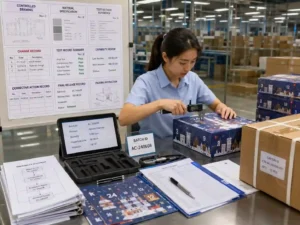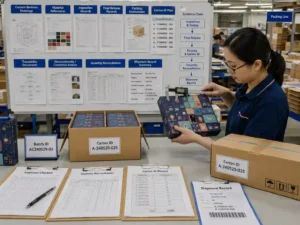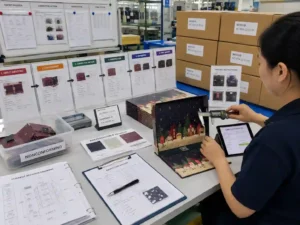
Magnetic closure advent calendar boxes are often chosen when a brand needs a more premium opening experience, stronger shelf presence, and a reusable rigid structure. For B2B packaging projects, the main question is not only how the box looks, but whether the structure, insert, artwork, sampling plan, bulk production method, and export packing can support the full project.
This guide explains how to customize magnetic closure advent calendar boxes for brands, wholesalers, gift companies, and retail buying teams preparing a real packaging quotation. It is written for buyers who need clear supplier comparison points before moving to sample development or mass production.
What Are Magnetic Closure Advent Calendar Boxes?
Magnetic closure advent calendar boxes are rigid paperboard calendar boxes that use hidden magnets to close the main cover or book-style opening panel. Inside, the box can include drawers, numbered compartments, paperboard trays, EVA inserts, foam inserts, or molded pulp inserts, depending on the product category.
Compared with simple folding carton calendar boxes, magnetic closure structures usually require thicker greyboard, wrapped paper, accurate magnet positioning, and more careful hand assembly. This makes them suitable for beauty sets, tea collections, jewelry gifts, candle sets, chocolate assortments, corporate gifts, and other seasonal retail projects where presentation matters.
Common Structures for Magnetic Closure Advent Calendar Boxes
The structure should be confirmed before artwork starts. A beautiful design can fail if the inner tray cannot hold the product, if the magnet pull is too weak, or if the box becomes too heavy for export cartons.
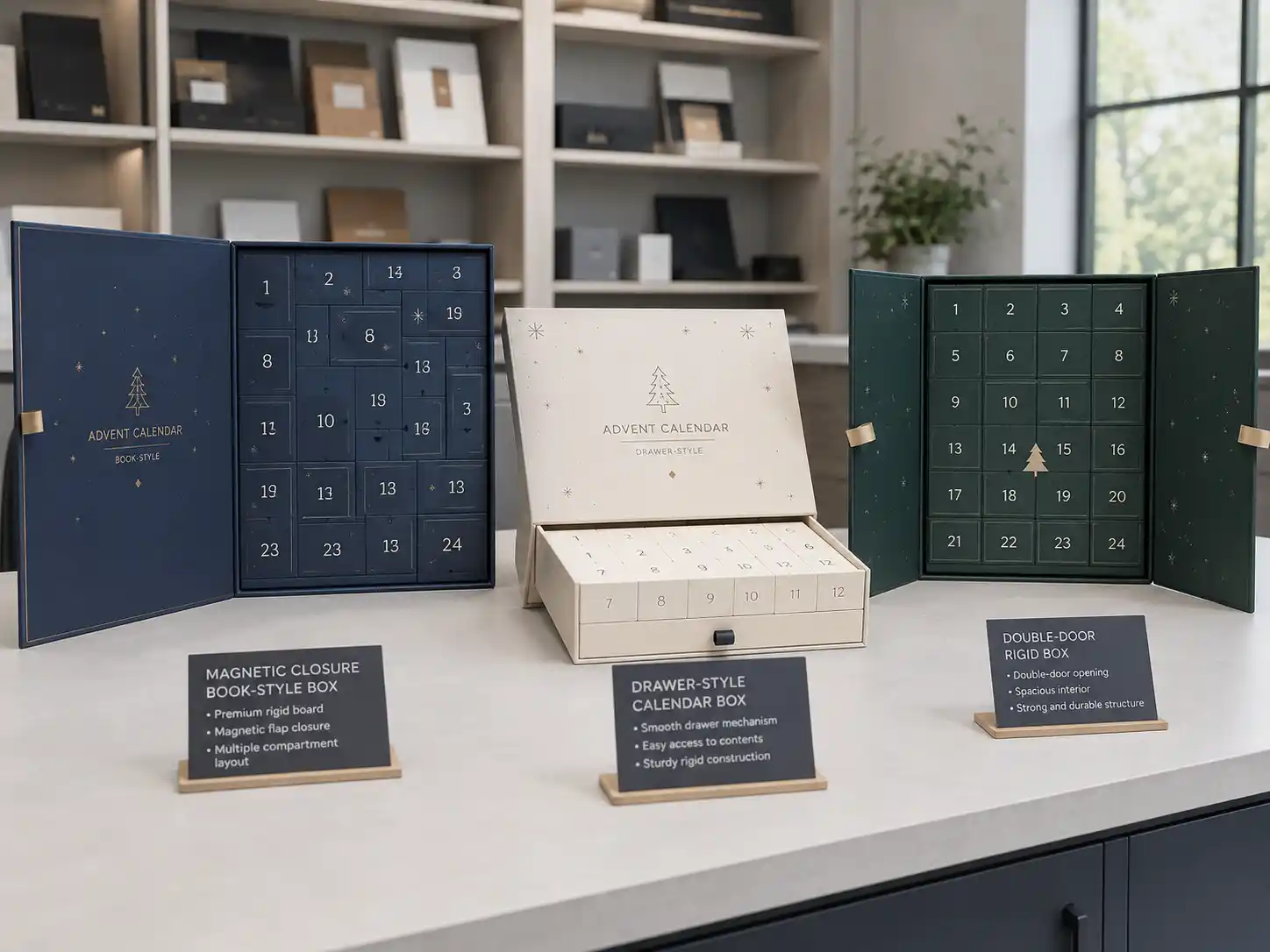
Book-Style Magnetic Closure Calendar Box
A book-style structure opens like a premium gift box. It is commonly used for cosmetics, skincare, fragrance samples, jewelry, and corporate gift projects. The cover gives a large branding area, while the inside can hold 12, 24, or custom-numbered compartments.
Double-Door Magnetic Closure Calendar Box
A double-door structure creates a stronger display effect when opened on a retail counter or campaign table. It is useful when the buyer wants a more decorative presentation or needs two product zones inside one calendar box.
Drawer-Based Magnetic Closure Calendar Box
Some magnetic closure advent calendar boxes combine a rigid outer case with pull-out drawers. This structure works well for small gifts, tea bags, chocolate pieces, mini bottles, or promotional samples. Drawer accuracy is important because tight drawers can slow packing, while loose drawers may feel low quality.
Hybrid Rigid Calendar Structure
For complex B2B projects, a supplier may combine a magnetic closure cover, inner tray, removable drawer section, and paperboard insert. This gives more flexibility, but it also increases sampling time and unit cost. Buyers should confirm whether the supplier has handled similar custom structures before.
Buyers comparing options can review custom advent calendar box products to understand different structure directions, or contact Giftpackpro as a custom advent calendar boxes manufacturer when a new structure needs engineering support.
How to Choose the Right Structure for Your Product
The right structure depends on product size, product weight, retail channel, opening experience, and packing method. A lightweight paperboard insert may work for tea sachets, but it may not be enough for glass jars, candles, or small bottles.
| Project Factor | What to Confirm | Why It Matters |
|---|---|---|
| Product size | Length, width, height, and tolerance for every item | Accurate dimensions help the supplier design compartments that fit correctly. |
| Product weight | Single item weight and total loaded box weight | Heavy products may need reinforced greyboard, stronger inserts, or smaller carton packing. |
| Opening style | Book-style, double-door, drawer, or hybrid opening | The opening experience affects sampling, artwork layout, and assembly time. |
| Insert type | Paperboard, corrugated, EVA, foam, molded pulp, or custom tray | The insert controls product protection, appearance, and packing speed. |
| Retail channel | E-commerce, wholesale, retail shelf, gift set, or promotional campaign | Different channels need different carton strength, display effect, and barcode positions. |
| Export packing | Carton size, loading method, shipping mark, and protection plan | Good export packing reduces damage risk during international transport. |
Insert Customization: The Part Buyers Should Not Leave Too Late
The insert is often more important than the outside artwork. If the insert is wrong, products can move during shipping, doors may not close smoothly, or the calendar may look empty after packing.
Paperboard Inserts
Paperboard inserts are common for lightweight products such as tea bags, small stationery items, sachets, candy, or flat accessories. They are cost-efficient and can be printed or color-matched with the outer box.
Corrugated Inserts
Corrugated inserts offer better strength for heavier product sets. They are useful when the calendar box must hold multiple small bottles, jars, candles, or promotional items with different weights.
EVA, Foam, or Molded Pulp Inserts
EVA and foam are often used when the product requires a more fitted premium look. Molded pulp may be considered when buyers want a paper-based insert option. The final choice should depend on protection needs, budget, sustainability goals, and the required appearance.
If your team is unsure which insert fits your product, the custom advent calendar box services page can help clarify which details are usually needed before starting a structure proposal.
Artwork and Printing Customization
Magnetic closure advent calendar boxes have more artwork zones than simple boxes. A buyer may need artwork for the outer cover, spine, back panel, inside cover, drawer fronts, numbered doors, inner tray, insert labels, and shipping carton marks.
Before sending artwork, confirm the dieline version with the supplier. Do not place final artwork on an old dieline after structure changes. Even a small adjustment to board thickness, magnet position, or drawer size can change the printable area.
Common Surface Finishes
Common finish options include matte lamination, gloss lamination, soft-touch lamination, spot UV, foil stamping, embossing, debossing, textured paper, and special paper wrapping. For B2B quote comparison, buyers should list the required finish clearly instead of asking for a general “premium” box.
Color Control
For seasonal campaigns, brand color accuracy can be important. Buyers should provide Pantone references, CMYK values, or approved physical samples. For repeat orders, ask whether the supplier keeps color records from previous production.
For paper and responsible sourcing discussions, buyers can review official information from FSC. For quality management expectations, ISO 9001 quality management is also a useful reference when checking supplier systems.
Customization Process for B2B Projects
A smooth project usually starts with clear product information, not with artwork only. The supplier needs enough details to judge whether the magnetic closure structure is practical, how the insert should be built, and how the box will be packed for export.
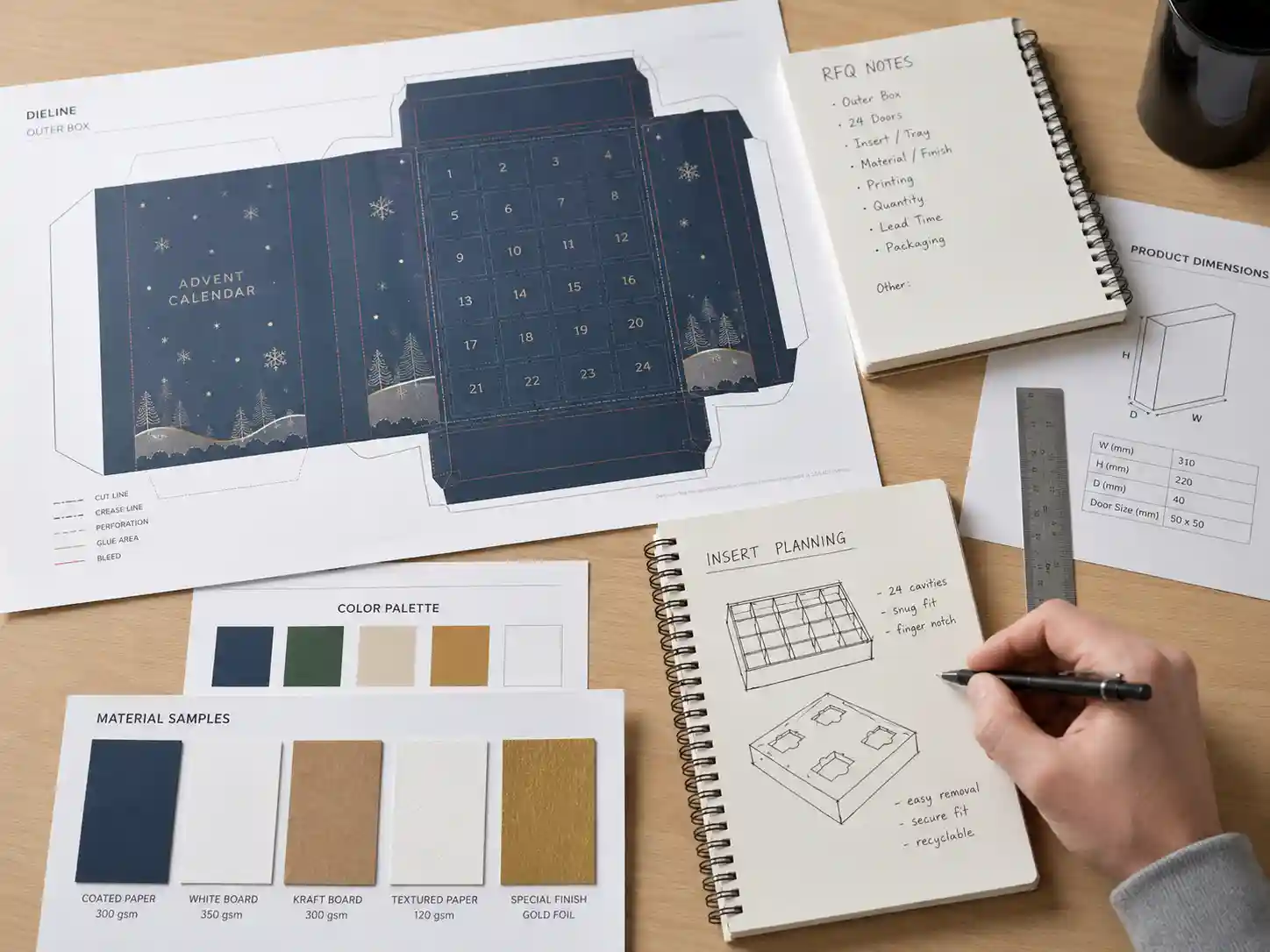
Step 1: Confirm Product Details
Prepare product dimensions, product weight, product photos, packing quantity, market destination, expected retail channel, and target launch date. If there are multiple SKUs inside one calendar, create a simple list for all items.
Step 2: Select Structure and Insert Direction
Decide whether the project should use a book-style magnetic box, double-door magnetic box, drawer calendar, or hybrid structure. Then confirm whether the insert should be paperboard, corrugated, EVA, foam, molded pulp, or another custom solution.
Step 3: Request a Dieline and Cost Estimate
After the structure is clear, the supplier can prepare a dieline and estimate. If you need support at this stage, you can request a custom quote with the main product details, quantity, and expected delivery plan.
Step 4: Make a White Sample or Printed Sample
A white sample helps check structure, size, insert fit, magnet alignment, opening feel, and packing method. A printed sample adds artwork, color, finishing, and brand presentation checks.
Step 5: Approve Bulk Production Details
Before mass production, approve the final dieline, material, board thickness, magnet position, insert design, printing file, surface finish, packing method, carton marks, and inspection standard.
MOQ, Lead Time, and Bulk Production Planning
MOQ for custom magnetic closure advent calendar boxes is usually higher than simple stock packaging because the structure needs custom board cutting, printing, wrapping, magnets, inserts, assembly, and packing. For many B2B projects, the MOQ may depend on box size, printing method, insert type, and material purchasing requirements.
Lead time should include dieline confirmation, sample making, sample approval, material preparation, printing, surface finishing, die cutting, rigid box assembly, insert assembly, final packing, and export arrangement. Buyers should avoid treating the sample approval date and shipping date as the same planning point.
For seasonal projects, it is safer to start early. Advent calendar projects can become crowded before peak production months, especially when several brands request 12-day or 24-day custom structures at the same time.
What to Prepare Before Requesting a Quote
A clear RFQ saves time and makes supplier comparison easier. If three suppliers receive three different levels of detail, their quotations will not be easy to compare.
Basic RFQ Checklist
Prepare the following information before contacting a supplier:
- Box style: book-style magnetic closure, double-door, drawer, or custom structure
- Calendar format: 12 days, 24 days, 25 days, or custom quantity
- Product dimensions and weight for each item
- Insert preference: paperboard, corrugated, EVA, foam, molded pulp, or supplier recommendation
- Printing requirements: CMYK, Pantone, foil, embossing, spot UV, special paper, or lamination
- Estimated order quantity and target MOQ range
- Destination country and shipping method if known
- Sample requirement: white sample, printed sample, or pre-production sample
- Target launch date or required delivery window
- Export carton requirements and shipping mark information
You can also browse more advent calendar box buying guides if your team is still comparing structure options, production planning points, or quote requirements.
How to Compare Suppliers for Magnetic Closure Advent Calendar Boxes
Do not compare suppliers only by unit price. Magnetic closure advent calendar boxes involve structure engineering, material control, hand assembly, insert fitting, and export packing. A low quote can become expensive if the sample fails, the insert needs redesign, or the carton packing is not suitable for shipping.
Check Structure Experience
Ask whether the supplier has made similar rigid calendar boxes, magnetic closure gift boxes, drawer calendars, or multi-compartment seasonal packaging. Photos of previous non-branded samples can help confirm capability without exposing client designs.
Check Sampling Communication
A good supplier should explain what the sample will prove. For example, one sample may check structure only, while another sample may check final printing and finishing. Buyers should understand this difference before approving the project timeline.
Check Quality Control Points
For this type of packaging, QC should include board thickness, magnet placement, glue control, wrapping alignment, drawer movement, insert fit, printing color, surface finish, carton packing, and shipping marks.
Check Export Packing
Export packing should protect the box corners, surface finish, and magnetic closure structure. The supplier should recommend carton size, quantity per carton, protective bag, corner protection if needed, and palletizing options for larger orders.
Giftpackpro works as a Giftpackpro packaging factory for custom seasonal paper gift packaging projects, so buyers can discuss structure, sample, inserts, QC, and export packing in one project flow.
Quality Control and Export Packing Details
For B2B buyers, a good magnetic closure box is not only attractive in a sample photo. It must be repeatable in bulk production and stable during export shipping.
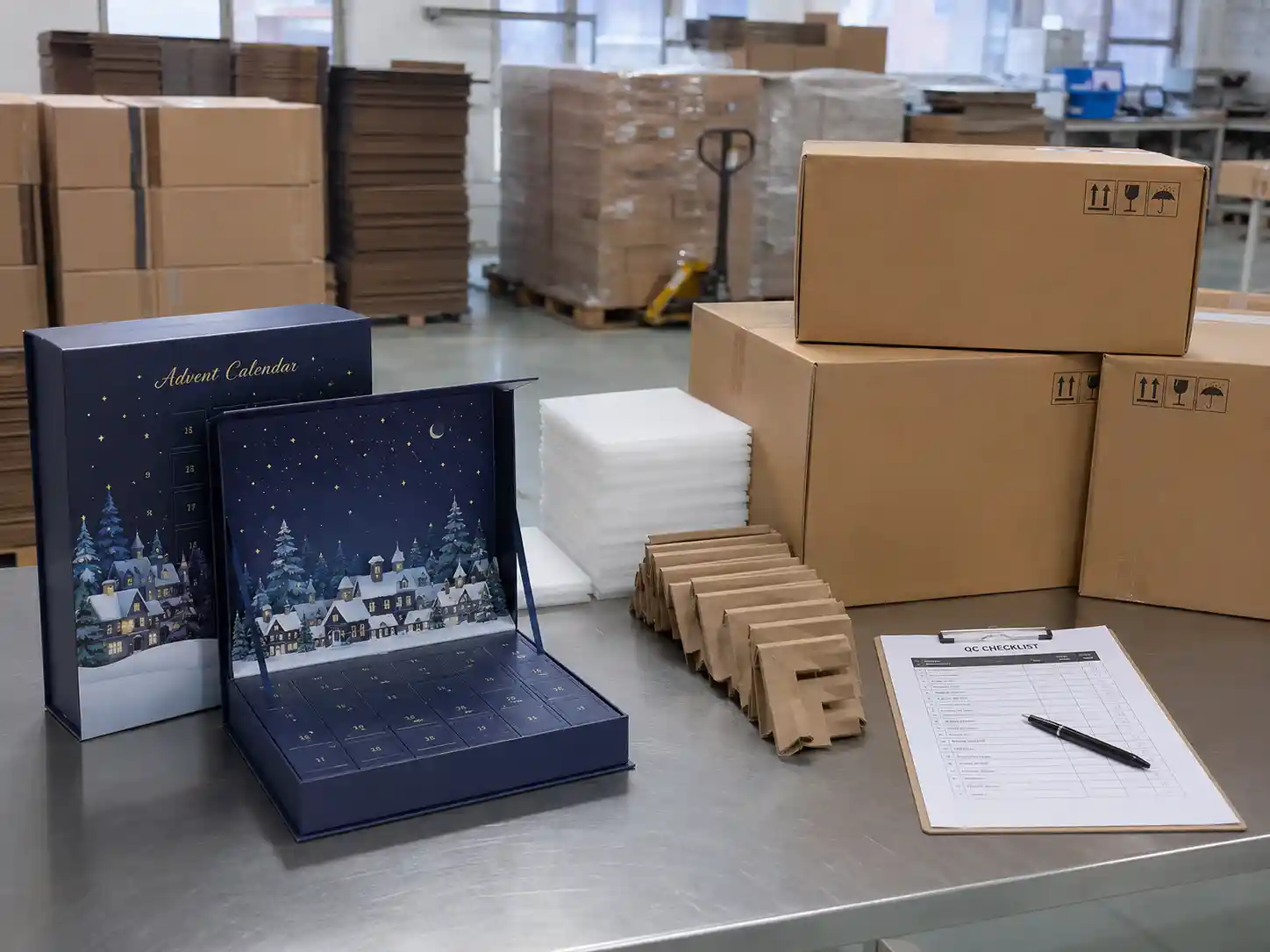
Pre-Production Checks
Before bulk production, check the approved sample against the final purchase order. Confirm the box size, material, board thickness, magnet strength, insert layout, printed artwork, surface finish, barcode position, and carton mark file.
In-Production Checks
During production, the supplier should check printing color, lamination quality, die-cutting accuracy, wrapping position, glue marks, magnet alignment, and assembly consistency. Small errors can become visible when the box has large flat panels and a premium finish.
Final Inspection
Final inspection should include appearance, opening and closing function, drawer movement if included, insert fit, quantity, carton packing, shipping marks, and random carton checks. Buyers can request inspection photos or videos before shipment when needed.
Practical B2B Examples
Beauty Brand Launch Set
A skincare brand may choose a book-style magnetic closure calendar with 24 compartments. The insert may combine paperboard dividers and EVA zones for heavier jars. The buyer should provide bottle dimensions, jar weight, artwork files, Pantone references, and the expected retail channel.
Tea and Coffee Gift Program
A tea company may use a drawer-based magnetic closure advent calendar box. Each drawer can hold sachets, capsules, or small packets. The RFQ should include the product thickness, drawer quantity, expected drawer pull direction, and whether the inner drawers need printed fronts.
Corporate Gift Project
A corporate gift company may need a double-door magnetic calendar for mixed items. Since product sizes may vary, the supplier should receive a full product list early. This helps avoid insert redesign after the sample stage.
When to Contact Giftpackpro
Contact Giftpackpro when your team needs help turning a seasonal packaging idea into a practical production plan. A useful inquiry usually includes product size, product weight, structure preference, quantity, artwork status, sample needs, and destination market.
Buyers who already know their structure can go directly to request a custom quote. Buyers who are still comparing options can review custom advent calendar box services, check custom advent calendar box products, or read more advent calendar box buying guides before preparing the RFQ.
Final Takeaway
Customizing magnetic closure advent calendar boxes is a structure-driven B2B packaging project. The best results come from confirming the product fit, insert plan, artwork zones, sample process, MOQ, production timeline, QC standard, and export packing before bulk production starts.
A clear RFQ helps the supplier quote accurately and helps the buyer compare suppliers fairly. For premium seasonal packaging projects, that preparation can reduce delays, sample revisions, and avoidable production risks.