
Custom door-opening advent calendar boxes need more than a nice printed surface. For B2B buyers, the real work is confirming the structure, insert fit, artwork position, sample quality, packing method, and production details before bulk orders begin.
This guide explains how to customize door-opening advent calendar boxes through blank samples, printed samples, sample approval, revision control, and pre-production checks. It is written for brands, wholesalers, gift companies, and purchasing teams preparing seasonal packaging projects with a factory partner.
Why Sampling Matters for Door-Opening Advent Calendar Boxes
Door-opening advent calendar boxes usually contain many small compartments, numbered doors, paperboard layers, inserts, and printed panels. A small error in board thickness, door cutting, insert height, or product cavity size can affect the full customer experience and increase production risk.
Before placing a bulk order, buyers should use the sample stage to answer practical questions: Can the product fit the cavity? Are the doors easy to open? Does the box stay flat after assembly? Is the insert strong enough? Are the colors close to the approved artwork? Can the final packing method protect the box during export shipping?
Giftpackpro supports overseas buyers as a custom advent calendar boxes manufacturer for B2B seasonal packaging projects. The sampling stage helps both the buyer and factory confirm the same technical standard before mass production.
Start with the Product and Box Structure
The structure should be planned around the product first, not only around the outside box size. Door-opening advent calendar boxes can be used for cosmetics, chocolate, tea, candles, jewelry, small gifts, toys, stationery, and promotional kits. Each product category has different requirements for cavity size, insert strength, door position, and packing protection.
Key Structure Details to Confirm
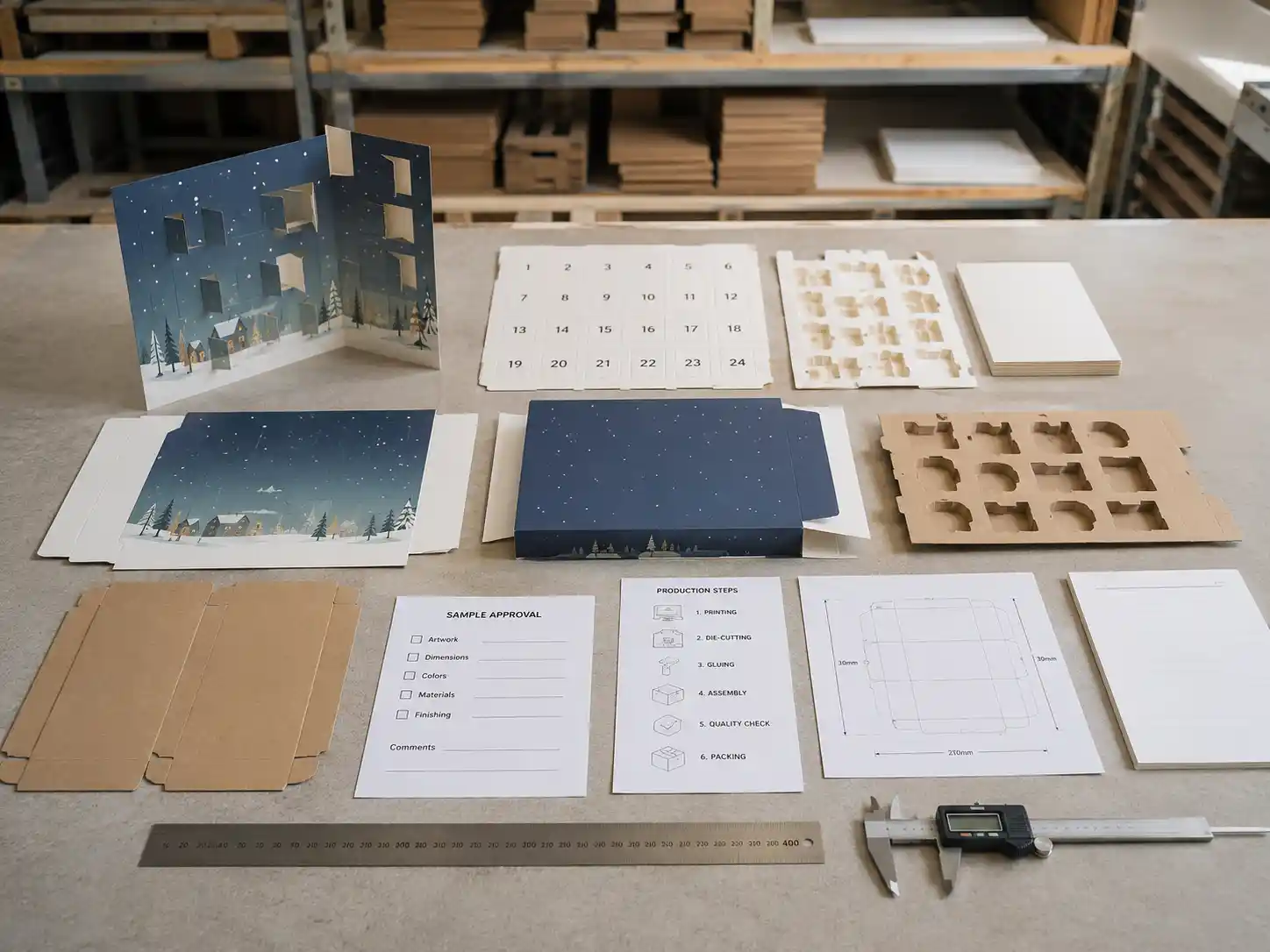
For a B2B packaging project, the buyer should prepare product dimensions, product weight, quantity per set, retail display requirements, and shipping method. This allows the packaging team to recommend the right greyboard thickness, paperboard grade, insert type, and carton packing plan.
Common structure points include the outer rigid board, front printed panel, numbered opening doors, inner tray, paperboard insert, divider system, magnetic closure, ribbon pull, sleeve, or book-style opening. Not every project needs every feature. A simple structure can reduce cost and lead time, while a premium structure can improve presentation for high-value products.
Buyers comparing different structures can review custom advent calendar box products to understand common formats before starting a sample request.
Blank Sample vs. Printed Sample: What Is the Difference?
A blank sample is mainly used to test structure. It is usually made without final printing, or with simple white, kraft, or plain material. This is useful when the buyer needs to check the box size, door opening, insert fit, assembly method, and product placement before investing in full color printing.
A printed sample is used to confirm appearance and production details. It helps check CMYK or Pantone color direction, logo position, door numbering, surface finishing, artwork alignment, lamination, foil stamping, embossing, or spot UV. For projects with retail buyer approval, the printed sample is often the version shown to the buyer’s internal team or retail customer.
| Sample Type | Main Purpose | Best Time to Use | What Buyers Should Check |
|---|---|---|---|
| Blank Structure Sample | Confirm box size, structure, insert fit, and opening method | Early development stage | Product fit, door strength, insert height, folding, assembly, and stability |
| Printed Sample | Confirm artwork, color, finishing, and final appearance | After structure is approved | Color tone, logo position, number layout, lamination, foil, embossing, and cutting accuracy |
| Pre-Production Sample | Confirm final approved standard before bulk production | Before mass production starts | Material, artwork, insert, packing method, carton marks, and quality standard |
Customization Options Buyers Should Decide Early
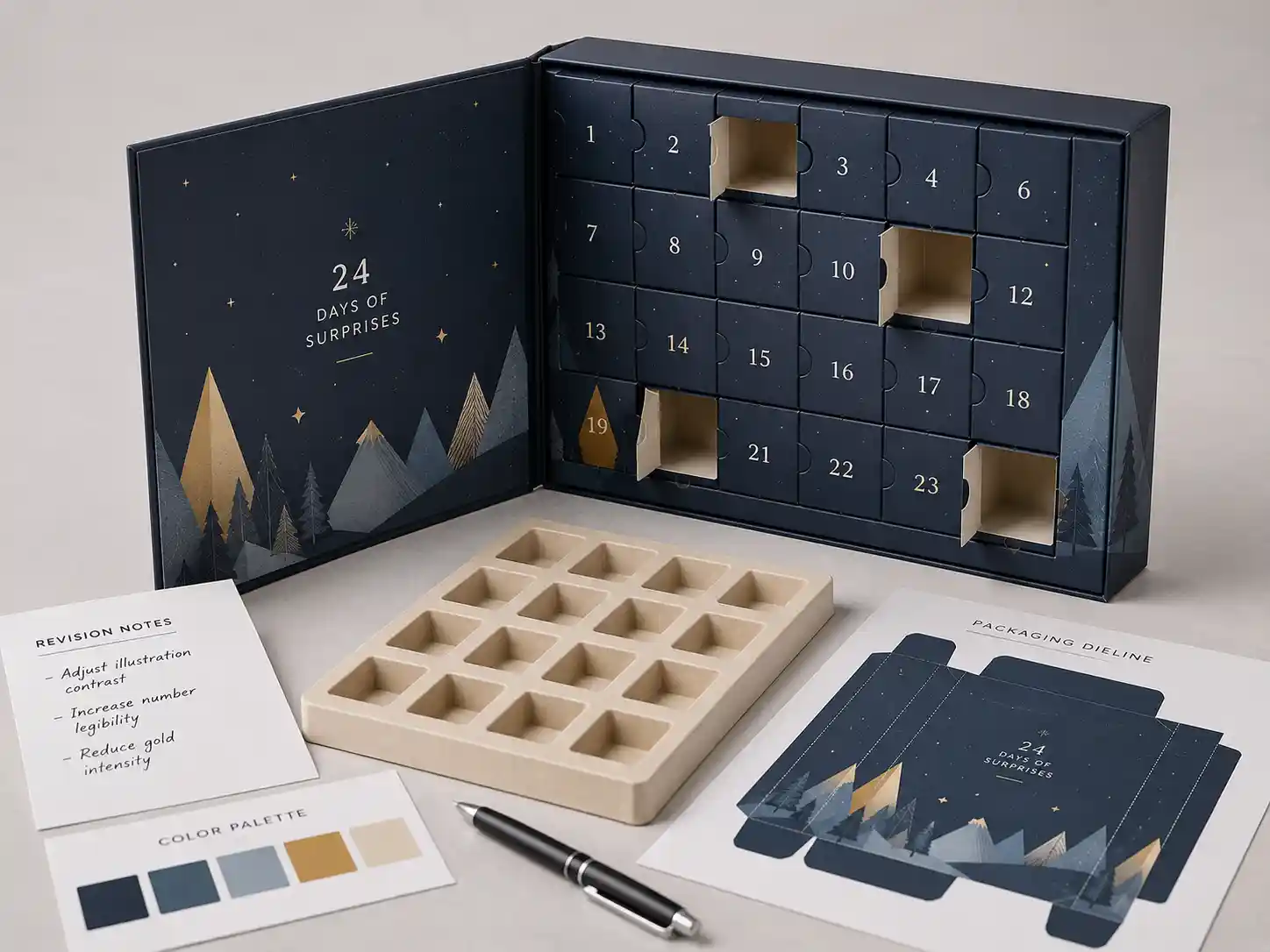
Customization is easier when the buyer confirms priorities early. For door-opening advent calendar boxes, the main options include size, shape, door quantity, cavity layout, material, insert type, printing, surface finishing, and packing method.
1. Box Size and Door Layout
The number of doors should match the product plan. Common layouts include 12-day, 24-day, and 25-day formats, but B2B projects can also use custom door counts for product launches, corporate gift sets, sampling campaigns, or retail promotions.
Buyers should avoid choosing the door layout only for visual reasons. The cavity must leave enough space for the product, insert wall, opening tolerance, and paperboard strength. If the door is too small or too close to the product, the buyer may face opening damage or product movement during shipping.
2. Insert Type
Insert selection affects both presentation and cost. Paperboard inserts are common for lightweight products. Corrugated inserts can support heavier items. Molded pulp may be considered for certain sustainable packaging directions. EVA or foam may be used when the product needs stronger protection, although material choices should match the buyer’s market and compliance needs.
For food, chocolate, tea, or products that may touch packaging surfaces, buyers should discuss food-contact requirements early. The U.S. FDA provides guidance on packaging and food contact substances, which can help buyers understand why material confirmation matters.
3. Printing and Finishing
Most B2B door-opening advent calendar boxes use CMYK printing, Pantone color matching, matte or gloss lamination, foil stamping, embossing, debossing, spot UV, or textured paper. Premium finishing can improve shelf appeal, but each extra process affects cost, sample time, and production control.
For FSC-related sourcing needs, buyers should confirm certification requirements before quotation. The Forest Stewardship Council explains paper and packaging certification information on its official FSC paper and packaging page.
Buyers can review available custom advent calendar box services to plan structure, printing, finishing, sampling, and production steps with one clear specification.
Sample Approval Process for B2B Projects
A clear approval process prevents confusion between the buyer, designer, factory, and purchasing team. The best practice is to approve the structure first, then approve artwork, then approve the final pre-production standard.
Step 1: Submit Product and Packaging Requirements
The buyer should send product size, product weight, quantity per set, target box style, desired door count, artwork files if available, order quantity, target market, and deadline. If the buyer has a reference sample, photos and measurements are helpful, but the factory should still create a customized dieline instead of copying an existing branded design.
Step 2: Review Dieline and Structure Plan
The dieline should show outer size, door position, insert layout, folding lines, cutting lines, glue areas, and artwork areas. Buyers should check whether product cavities match the actual product dimensions, especially for bottles, jars, candles, chocolates, or irregular-shaped items.
Step 3: Make and Test the Blank Sample
The blank sample is useful for checking practical performance. Open and close the doors several times. Put the real products inside the cavities. Shake the sample gently to see if the products move too much. Check whether the box bends, bulges, or becomes difficult to close after loading.
Step 4: Revise the Structure if Needed
Revisions are normal at this stage. The insert may need deeper cavities. The door size may need adjustment. The board thickness may need improvement. The product sequence may need to change. The goal is to solve these issues before printing plates, bulk material purchase, and mass production.
Step 5: Confirm Printed Sample
After structure approval, the printed sample checks the full visual effect. Buyers should compare artwork files, color references, surface finishing, logo position, door numbering, barcode area, legal text, warning text if required, and any retail display requirements.
For buyers who need factory background, production support, and export experience, the Giftpackpro packaging factory page can help purchasing teams understand the supplier profile before starting a custom project.
Practical B2B Examples
Cosmetics Advent Calendar Project
A skincare brand may need 24 cavities for mini bottles, tubes, jars, and sachets. The buyer should provide real product dimensions and confirm whether the insert needs different cavity depths. A printed sample is important because cosmetics packaging often requires accurate brand color, clean typography, and premium finishing.
Chocolate or Tea Gift Set
A chocolate or tea buyer should confirm whether direct food contact is involved. If products are individually wrapped, the insert and box requirements may be different from unwrapped items. The sample should test cavity tightness, door opening, and whether the product can be removed without damaging the printed door.
Retail Promotional Gift Kit
A wholesaler or retail buyer may use door-opening advent calendar boxes for mixed small gifts. In this case, the supplier needs a final product list early. If the products are still changing, the buyer can use a blank sample first and delay the printed sample until the final product assortment is confirmed.
Pre-Production Checks Before Bulk Manufacturing
Before mass production starts, the buyer and factory should confirm one approved standard. This prevents disputes caused by old artwork files, outdated sample photos, or unclear revision notes.
Recommended Pre-Production Checklist
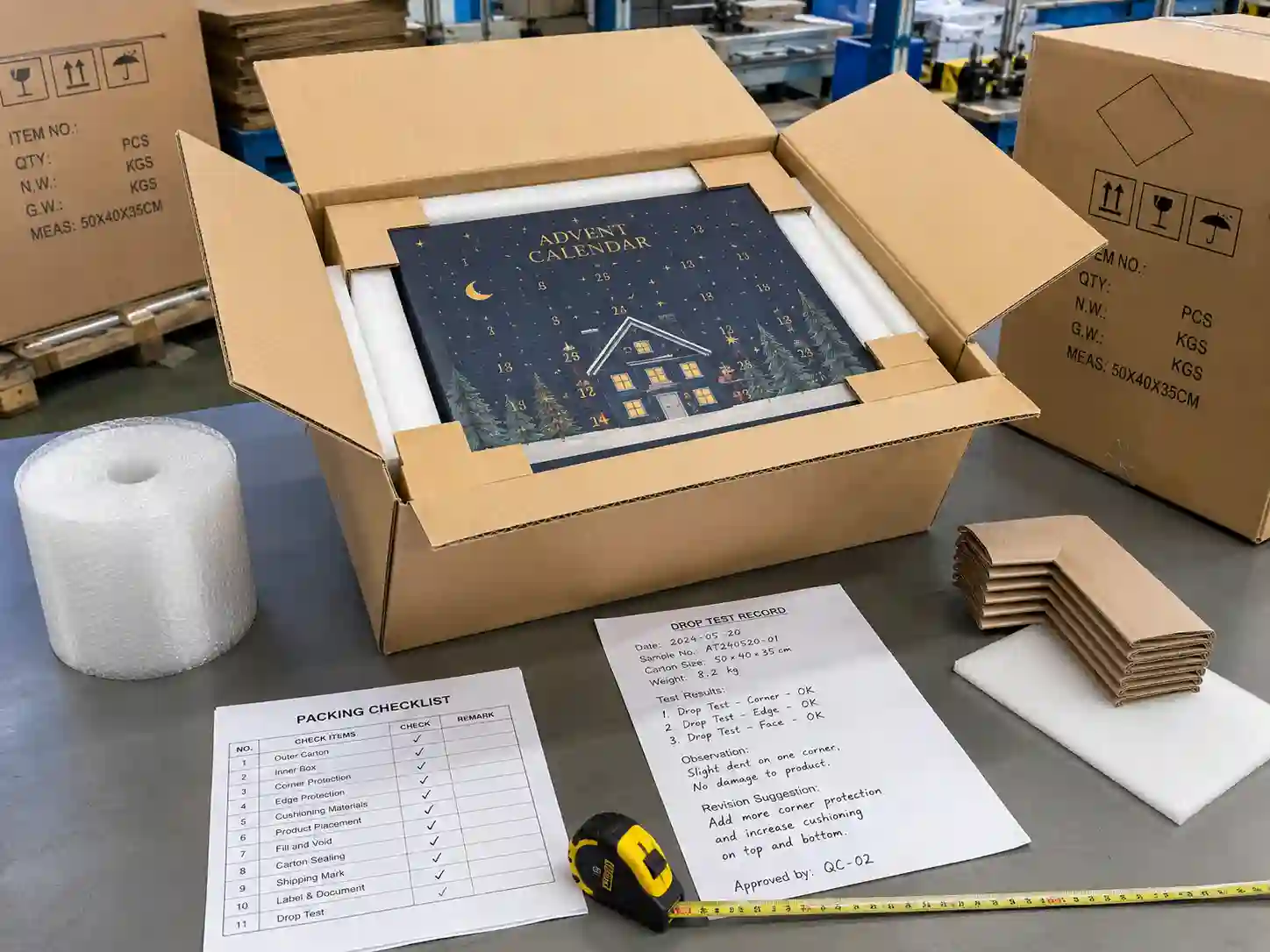
Confirm the final dieline, board thickness, paper material, printing method, Pantone or CMYK color direction, finishing process, insert material, product cavity size, door numbering, barcode position, carton size, shipping marks, packing method, and approved sample photos.
Buyers should also confirm whether the order will be shipped flat-packed, semi-assembled, or fully assembled. Flat packing can reduce shipping volume for some structures, while assembled packing may reduce buyer-side labor. The right choice depends on structure, product loading plan, labor cost, and export carton strength.
Quote Preparation Advice for Buyers
A clear quote request helps the factory calculate cost faster and avoid repeated questions. For door-opening advent calendar boxes, the quotation should not be based only on outside size. The supplier also needs structure, insert, printing, finishing, sample type, packing method, order quantity, and destination details.
When preparing a quote, include the expected quantity, product dimensions, product weight, box style, number of doors, material preference, artwork status, finishing requirements, sample requirement, target delivery date, and shipping destination. If the project is still early, share a target budget range so the packaging team can recommend a practical structure.
MOQ often depends on structure, material, printing, finishing, and assembly complexity. For many custom seasonal packaging projects, buyers should discuss MOQ early instead of waiting until the printed sample stage. Giftpackpro can help review project details through request a custom quote when buyers are ready to compare structure and production options.
Common Mistakes to Avoid
One common mistake is approving artwork before confirming the structure. If the insert or door layout changes later, the artwork may need to be adjusted again. Another mistake is using estimated product sizes instead of real product measurements. Even a few millimeters can affect cavity fit, door opening, and box closing.
Buyers should also avoid adding too many premium finishes without checking the budget. Foil stamping, embossing, special paper, magnetic closure, and complex inserts can all improve presentation, but they may increase sample cost, unit cost, and production time.
For more planning topics, buyers can read advent calendar box buying guides to compare structure, materials, MOQ, sample development, production checks, and export packing before starting a new seasonal packaging project.
How Giftpackpro Supports Custom Sampling
Giftpackpro works with B2B buyers to plan structure, sample development, artwork checks, insert fit, bulk production, and export packing for custom advent calendar packaging. For door-opening advent calendar boxes, the goal is to make the sample stage practical, measurable, and easy for purchasing teams to approve.
Buyers can start with a blank structure sample when the product assortment is not final. They can move to a printed sample when artwork, finishing, and retail presentation need approval. Before mass production, both sides should confirm one final pre-production sample and use it as the quality reference.
A well-managed sampling process reduces avoidable changes during bulk manufacturing and helps buyers prepare a cleaner quotation request. For seasonal packaging projects with fixed retail timelines, this early preparation is often the difference between a smooth order and a rushed production schedule.


