Book-Style Advent Calendar Boxes: Structure, Uses, and Buyer Tips
Book-style advent calendar boxes are often chosen by brands that want a premium opening experience, strong visual display value, and organized product placement. For B2B buyers, the key is not only the outside appearance. The structure, insert accuracy, printing control, assembly method, and export packing all affect the final result.
This guide explains how book-style advent calendar boxes are built, where they are commonly used, and what purchasing teams should check before confirming samples and bulk production.
What Are Book-Style Advent Calendar Boxes?
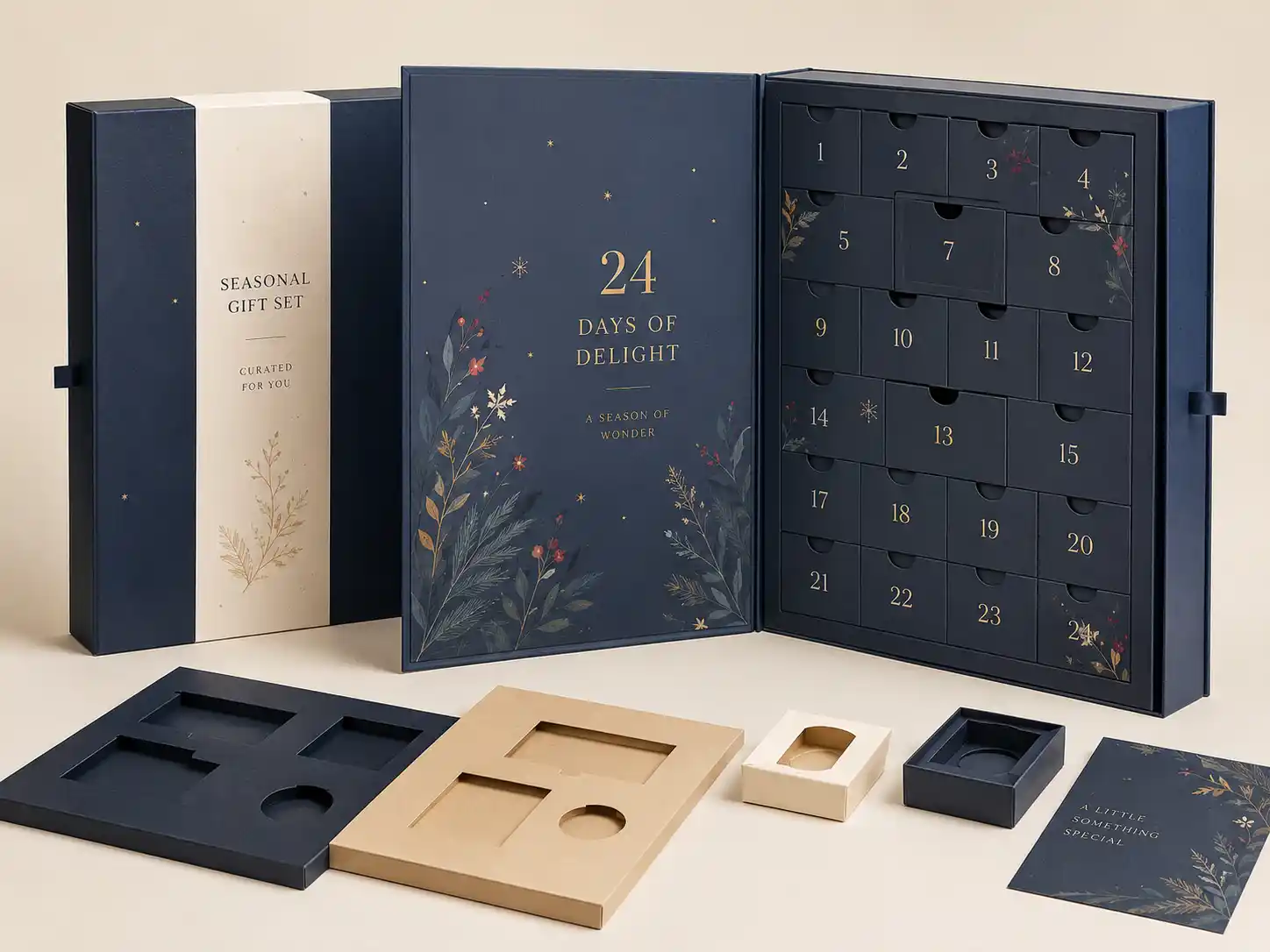
Book-style advent calendar boxes open like a hard-cover book. The outside usually uses a rigid board structure with printed wrapped paper. Inside, the box may include numbered doors, drawers, paperboard trays, foam inserts, molded pulp inserts, or other custom compartments.
This format is suitable for seasonal product launches, limited gift sets, retail promotions, influencer kits, and brand campaign packaging. Compared with a simple folding carton, the book-style format gives buyers more space for artwork, product storytelling, and structured product arrangement.
For buyers comparing different formats, Giftpackpro provides custom advent calendar box products that can be adjusted by size, compartment layout, insert material, surface finish, and packing method.
Common Uses for Book-Style Advent Calendar Boxes
Book-style advent calendar boxes are especially useful when the product set needs to look organized and easy to present. The flat front cover gives enough space for seasonal artwork, while the inside layout can guide users through multiple products in a planned order.
Beauty and Skincare Gift Sets
For cosmetics, skincare, fragrance samples, and beauty accessories, buyers often need accurate insert fit. Small bottles, jars, tubes, and sachets may have different heights and shapes. The insert must hold each item securely without making the box too tight to open.
Candle, Tea, Coffee, and Lifestyle Products
Candles, tea bags, coffee capsules, and lifestyle gifts often need a more stable internal structure. If the contents are heavy, the rigid board thickness, hinge reinforcement, and carton packing plan should be reviewed during sampling.
Corporate and Retail Promotional Kits
For gift companies, wholesalers, and retail buyers, book-style packaging can support private label seasonal campaigns. The same outer structure may be reused with different artwork, insert layouts, or product combinations for different markets.
Main Structure Options Buyers Should Compare
Before requesting a quote, buyers should decide whether the project needs a door-opening style, drawer style, tray style, or mixed structure. Each choice affects tooling, labor, packing volume, and sample time.
| Structure Area | Common Options | Buyer Checkpoints |
|---|---|---|
| Outer case | Rigid board book case, magnetic closure, ribbon closure, sleeve cover | Board thickness, hinge strength, opening angle, cover flatness |
| Inside layout | Numbered doors, drawers, trays, stepped compartments | Product order, compartment size, user opening experience |
| Insert material | Paperboard, corrugated board, EVA, foam, molded pulp | Product weight, sustainability target, fit tolerance, cost |
| Printing finish | CMYK printing, spot color, matte lamination, foil, embossing | Color match, coating durability, artwork registration |
| Export packing | Flat pack, assembled pack, inner carton, master carton | Freight volume, corner protection, drop-test risk, shipping marks |
Production Steps for Book-Style Advent Calendar Boxes
For overseas buyers, production control starts before mass production. A clear project brief helps the factory check whether the structure, artwork, insert, and packing plan are suitable for bulk order.
1. Product Measurement and Layout Planning
The buyer should provide product dimensions, weight, quantity, and preferred display order. For mixed product sets, each item should be measured separately. Small differences can affect the insert fit and the door size.
If the products are still under development, the buyer can provide estimated dimensions first. However, the final sample should be checked with real products before mass production.
2. Dieline and Structure Design
The packaging team creates a dieline based on the selected book-style structure. This includes the outer case, hinge, inner tray, door panels, drawer units, or insert layout. For projects handled through custom advent calendar box services, this stage is important because it connects creative design with factory production limits.
3. Artwork Preparation and Printing Proof
Artwork should be prepared according to the dieline, including bleed, safe area, cut lines, fold lines, and numbered door positions. Buyers should check text size, barcode placement, color references, and legal marks before approving printing.
For projects requiring certified paper materials, buyers may review information from the official FSC website and confirm whether FSC-certified material is needed for the order.
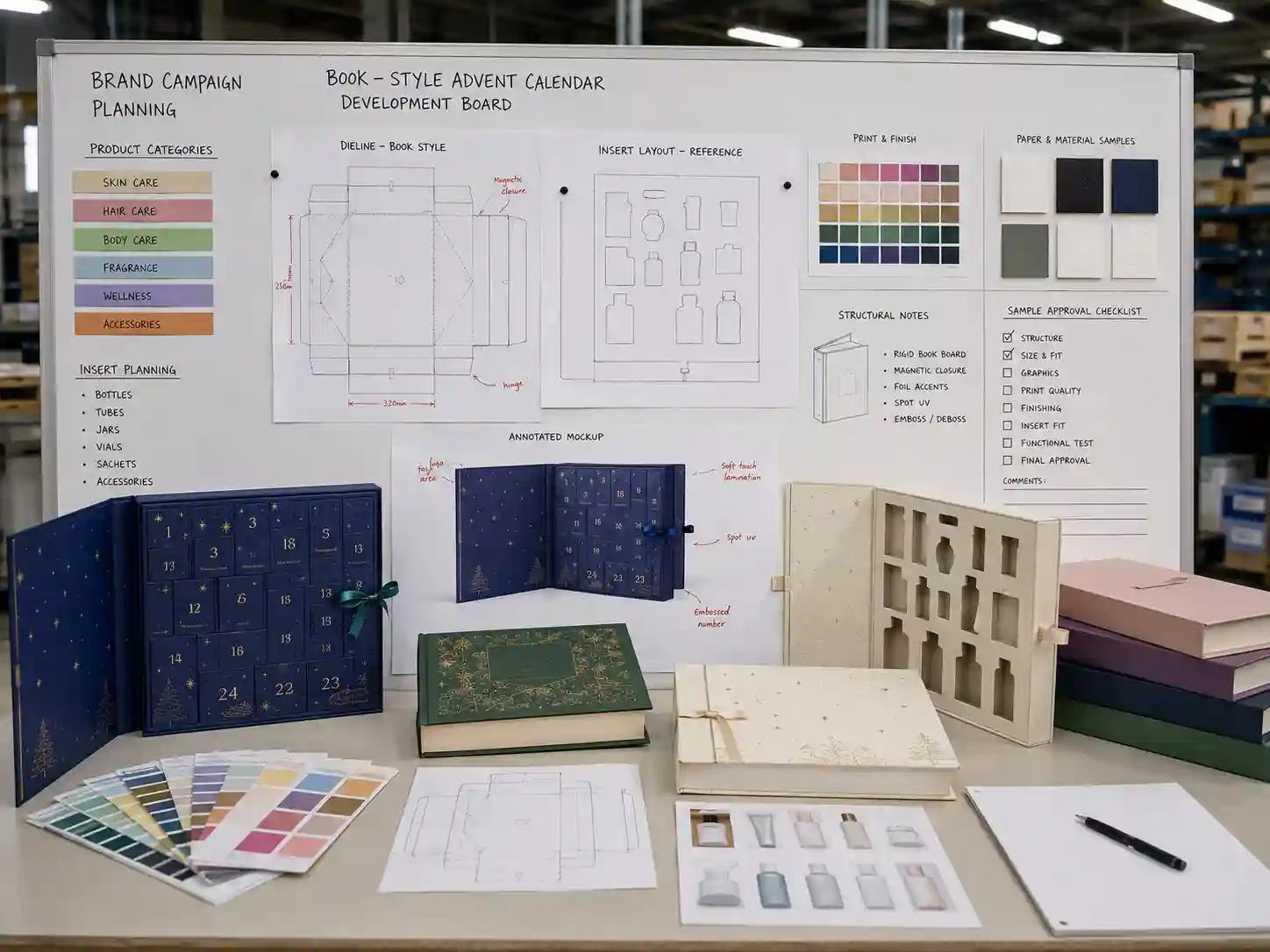
4. Sample Making and Fit Testing
A physical sample is the best way to confirm the structure. The sample should be tested with real products, not only empty compartments. Buyers should open and close the box several times, check whether the cover stays aligned, and confirm whether each product can be removed easily.
Giftpackpro usually suggests confirming the sample before bulk production because small issues in hinge tension, insert depth, or door perforation can become expensive to correct after mass production starts.
5. Bulk Production and Assembly Control
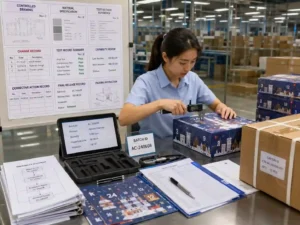
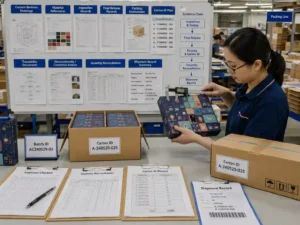
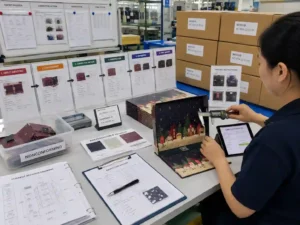
Bulk production may include printing, lamination, board mounting, die cutting, hand assembly, insert placement, numbering checks, cleaning, and packing. Book-style advent calendar boxes often require more manual assembly than standard folding cartons, so process control matters.
Buyers should ask whether the factory will use a pre-production sample, production checklist, and in-line inspection during assembly. These controls help reduce mixed panels, wrong door sequence, glue marks, and insert position errors.
Quality Control Points for Month 08 Production Review
Month 08 production planning is often the stage when many seasonal packaging projects move from sample approval into mass production. At this point, buyers should focus on inspection points, assembly stability, insert fit, printing checks, and export durability.
Printing and Color Checks
Printing should be checked against the approved proof or color reference. Important areas include front cover artwork, spine alignment, inside graphics, numbered doors, and any premium finish such as foil stamping or embossing.
Common printing issues include color shift, scratches, poor lamination, inaccurate numbering, visible glue stains, and misaligned wrap paper. For brand campaigns, buyers should define acceptable color tolerance before bulk production.
Insert Fit and Product Holding Strength
Insert fit is one of the most important quality points for book-style advent calendar boxes. If the insert is too loose, products may move during shipping. If it is too tight, products may be hard to remove or the insert may deform.
For heavy products, the factory may need stronger paperboard, corrugated support, or reinforced inner trays. For fragile products, the buyer may need added protection or individual wrapping inside the box.
Opening, Closing, and Hinge Durability
The book-style hinge should open smoothly without cracking, warping, or pulling the wrapped paper. Magnetic closure or ribbon closure should also be checked after repeated opening. A good-looking sample is not enough if the hinge becomes weak during handling.
For retail and e-commerce projects, durability testing should include basic handling, carton movement, and repeated opening. Buyers can also ask about the factory quality management process and compare it with general standards such as ISO 9001 quality management.
Export Packing and Shipping Control
Book-style advent calendar boxes can be shipped fully assembled, semi-assembled, or flat packed depending on the structure. The right method depends on labor cost, shipping volume, product protection, and the buyer’s packing plan.
Assembled packing gives the buyer a ready-to-use box but increases carton volume. Flat packing may reduce freight volume, but it requires the buyer or co-packer to complete assembly. Semi-assembled packing is sometimes used when the outer book case is finished and the insert is packed separately.
Master Carton Protection
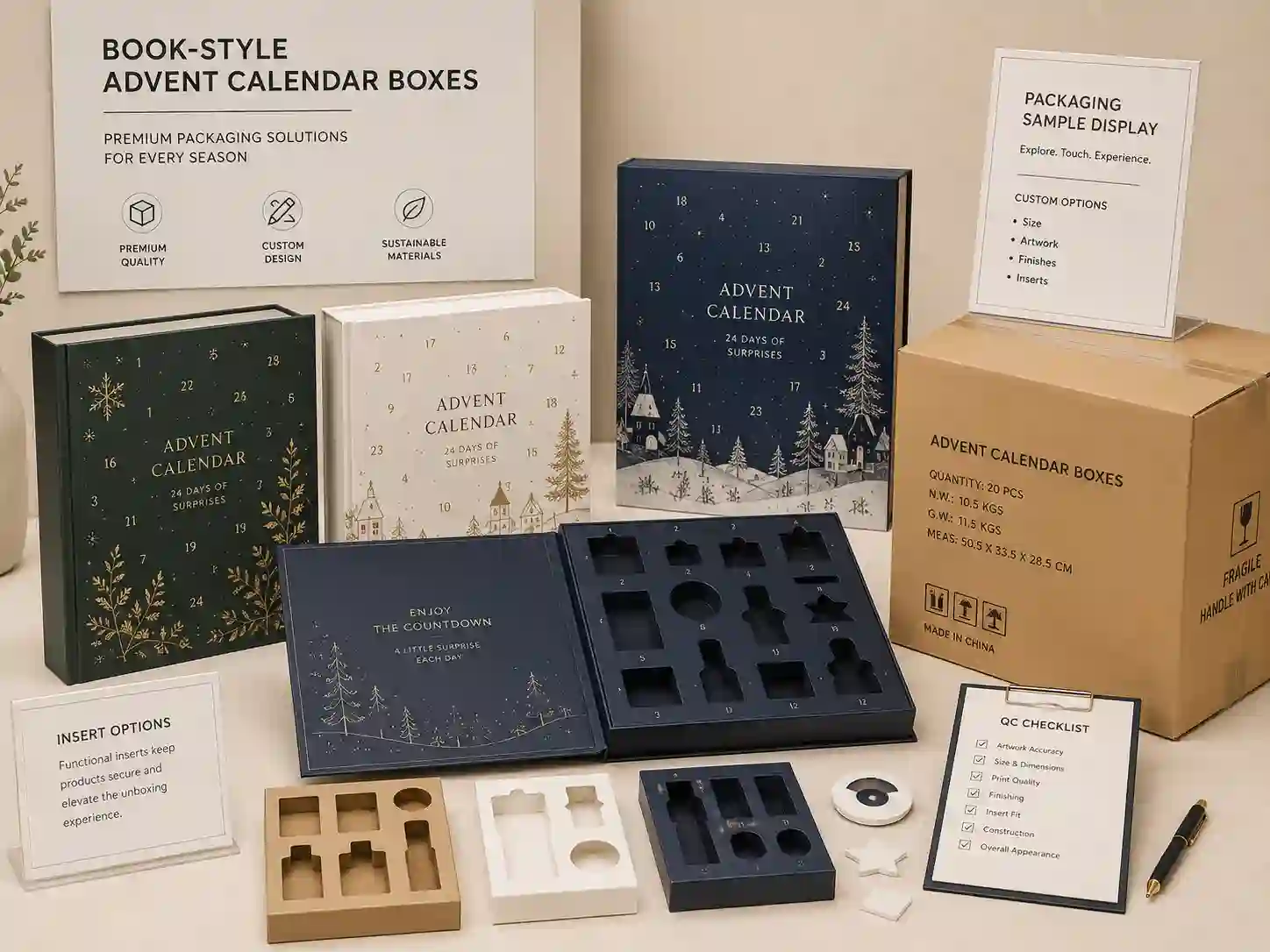
For export orders, the master carton should protect corners, printed surfaces, and internal structures. Buyers should confirm carton size, quantity per carton, gross weight, shipping mark, pallet plan, and whether extra corner protection is needed.
If the box has foil stamping, matte lamination, soft-touch finish, or dark solid color printing, surface scratching should be checked carefully. Protective paper, polybag, tissue paper, or inner sleeves may be needed depending on the finish.
Quote Preparation Advice for Buyers
A clear quotation request saves time and reduces back-and-forth communication. When buyers contact a custom advent calendar boxes manufacturer, the most useful information is the structure, size, quantity, artwork status, insert requirement, and shipping destination.
For faster review, include these details when you request a custom quote:
- Box style: book-style, drawer, door-opening, tray, or mixed structure.
- Outer size or product dimensions if the box size is not fixed.
- Number of compartments, doors, drawers, or product positions.
- Product weight and whether real products will be packed inside before shipping.
- Insert material preference, such as paperboard, corrugated board, EVA, foam, or molded pulp.
- Printing requirements, including CMYK, spot color, foil, embossing, lamination, or special paper.
- Target order quantity and expected delivery schedule.
- Export packing preference, shipping destination, and whether pallet packing is required.
MOQ and Lead Time Considerations
MOQ depends on structure, size, printing method, material, and finishing process. For many custom rigid advent calendar projects, the practical MOQ is usually higher than standard folding cartons because board mounting, die cutting, and hand assembly require setup time.
Lead time also depends on sample approval speed. A project with finished artwork, final product dimensions, and confirmed insert material can move faster than a project still changing the product list or visual design.
Buyers can review more advent calendar box buying guides before confirming the project brief. If the project includes multiple SKUs or seasonal campaign versions, it is useful to prepare one master structure and adjust artwork or inserts for each version.
When to Choose Giftpackpro for This Structure
Giftpackpro focuses on B2B custom advent calendar boxes and seasonal paper gift packaging for overseas brands, wholesalers, gift companies, retail buyers, and purchasing teams. For book-style advent calendar boxes, the main value is matching structure design with practical production control.
Buyers can use custom advent calendar box services for structure planning, sample making, artwork checking, insert discussion, bulk production, and export packing support. They can also learn more about the Giftpackpro packaging factory when reviewing factory capability and order communication.
Final Buyer Tips
Book-style advent calendar boxes work best when the structure, artwork, insert, and packing plan are reviewed together. A premium outside design will not solve problems caused by poor insert fit, weak hinges, wrong door sequence, or unsuitable export packing.
Before approving bulk production, check the sample with real products, confirm the printing proof, review the assembly method, and clarify carton packing details. These steps help purchasing teams control quality before the order moves into mass production.
For buyers planning a seasonal campaign, the safest approach is to prepare the product list early, confirm the structure before artwork finalization, and keep enough time for sample testing. This makes book-style advent calendar boxes easier to produce, inspect, pack, and deliver for overseas retail or wholesale projects.