
How to Reduce Risk When Ordering Custom Advent Calendar Boxes
Ordering seasonal packaging is not only about choosing a beautiful box. For overseas brands, wholesalers, gift companies, and retail buyers, the bigger question is how to control custom advent calendar boxes risk before sampling, bulk production, and export shipment.
Risk usually comes from unclear structure, weak inserts, wrong dielines, artwork mistakes, unrealistic timelines, and incomplete quotation details. A good supplier should help you check these points early, not after mass production has started.
This guide explains the main risk areas buyers should review when ordering custom advent calendar boxes for retail, promotional, gifting, and seasonal product programs.
1. Start With the Right Box Structure
The box structure affects cost, lead time, product protection, shelf appearance, and packing efficiency. Before asking for a price, decide how the product will be opened, displayed, filled, and shipped.
If you are still comparing structures, reviewing custom advent calendar box products can help you understand common formats before requesting a quote.
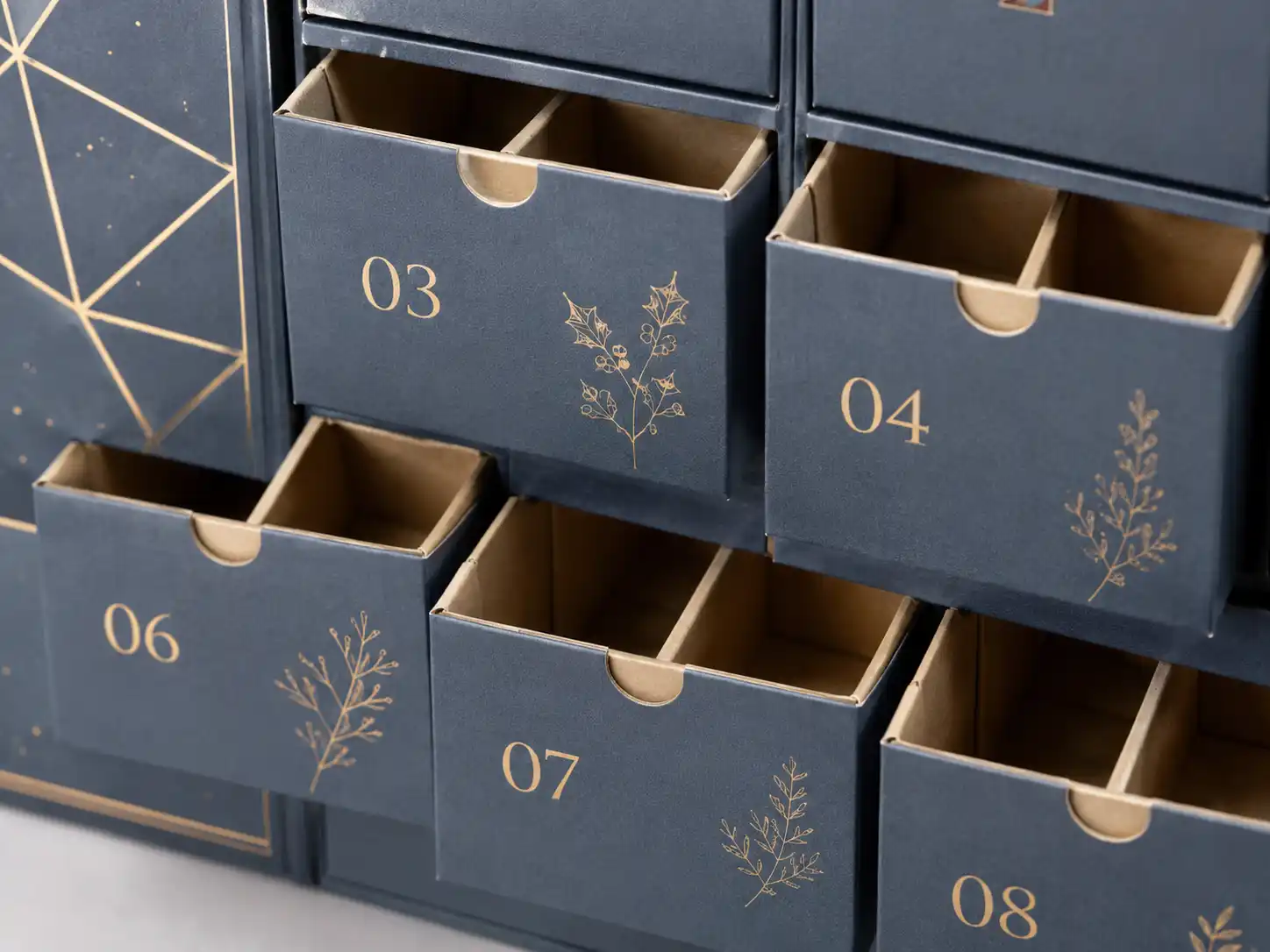
Drawer-Style Advent Calendar Boxes
Drawer-style boxes are popular for premium gift sets. Each small drawer can hold one product, sample, toy, cosmetic item, chocolate, candle, stationery item, or promotional gift.
The main risk is drawer fit. If the drawer is too tight, the customer experience feels poor. If it is too loose, drawers may move during transport. For this style, buyers should confirm drawer size, pull-tab design, divider strength, and insert tolerance during the sample stage.
Door-Opening Advent Calendar Boxes
Door-opening boxes are useful when the buyer wants a flat front panel with numbered windows. They are common for retail promotions because the front artwork is highly visible.
The risk is tearing strength. If the paperboard is too weak or the cutting line is not controlled well, doors may open too easily or break during handling. Ask your supplier to test opening performance on the physical sample.
Rigid Book-Style Advent Calendar Boxes
Rigid book-style boxes give a premium look and are often used for beauty, fragrance, lifestyle, and high-value gift programs. They can include magnetic closure, printed wrap, trays, drawers, or layered inserts.
The risk is usually cost and production time. Rigid structures need more material, handwork, drying time, and quality checks. Buyers should confirm MOQ, sample time, bulk lead time, and export carton size before approving this option.
Folding Paperboard Advent Calendar Boxes
Folding paperboard structures are better when buyers need lighter weight, lower freight cost, and simpler assembly. They can work well for flat-packed retail packaging or promotional kits.
The risk is load-bearing strength. Thin paperboard may look fine in photos but fail when products are inserted. Product weight, insert design, and stacking method must be checked before bulk production.
Fold-Out or Multi-Panel Layouts
Fold-out layouts create a stronger unboxing effect and allow several panels to show artwork, brand messages, or product instructions. They are useful for seasonal campaigns and gift sets with multiple small items.
The risk is alignment. If the dieline, hinge line, or panel thickness is not controlled, the box may not close flat. Buyers should ask for a white sample or printed sample before final approval.
2. Match the Layout to the Product Set
A safe advent calendar project starts with the product list. Do not design the box before confirming the number of items, item dimensions, weight, fragile points, and packing direction.
For example, a 12-day candle calendar may need deeper cavities and stronger dividers. A 24-day cosmetic sample calendar may need mixed cavity sizes. A chocolate calendar may need food-contact material review and better heat control during logistics.
When discussing custom advent calendar box services, prepare a product list with length, width, height, weight, and quantity for each item. This helps the factory suggest a realistic structure instead of guessing from photos.
3. Confirm Inserts Before Confirming the Outer Box
Many buyers focus on the outside artwork first. In production, the insert often decides whether the project succeeds. The insert controls product position, protection, opening experience, and packing speed.
Common insert options include paperboard dividers, greyboard trays, molded pulp inserts, EVA foam, PET trays, and mixed-material inserts. The best choice depends on product weight, value, fragility, sustainability requirements, and budget.
| Risk Area | What Can Go Wrong | How to Reduce the Risk |
|---|---|---|
| Box structure | The box looks good but is too weak, too expensive, or hard to pack. | Confirm drawer, door-opening, rigid, paperboard, or fold-out structure before artwork. |
| Insert fit | Products move, fall out, or cannot be inserted smoothly. | Provide real product dimensions and test insert fit with samples or product dummies. |
| Dieline | Artwork does not align with windows, drawers, doors, or fold lines. | Approve the factory dieline before design and check bleed, safe area, and numbering. |
| Material | Paperboard is too thin, too heavy, or unsuitable for the product. | Ask for material recommendations based on weight, structure, and retail use. |
| Timeline | Sampling, artwork revision, production, or shipping misses the seasonal deadline. | Confirm sample time, production time, inspection time, and export schedule early. |
| Export packing | Boxes arrive crushed, scuffed, or difficult to count in the warehouse. | Review carton packing method, carton marks, pallet plan, and QC checklist. |
4. Control Dieline and Artwork Risk
Dieline mistakes are one of the most common causes of delay. An advent calendar box has more structural details than a normal gift box. It may include doors, drawers, windows, pull tabs, hidden compartments, dividers, inserts, numbering, and fold lines.
Before placing final artwork, ask the supplier to provide the correct dieline. Your designer should check bleed, safe area, cut line, crease line, glue area, opening direction, and number position.
Do not move structural lines in the artwork file unless the factory confirms the change. A small adjustment may affect closing, opening, assembly, or insert fit.
Quote Preparation Tip
When sending an RFQ, include the expected quantity, product list, box size, structure reference, printing method, finish, insert type, destination country, and required delivery time. If you need help preparing these details, you can request a custom quote with your project information.
5. Review Customization Choices With Production in Mind
Customization can improve the retail effect, but every option adds cost, time, or production risk. Buyers should choose finishes based on brand needs, not only appearance.
Common options include matte lamination, gloss lamination, soft-touch film, foil stamping, embossing, debossing, spot UV, ribbon pullers, magnetic closure, printed sleeves, paperboard inserts, and retail display cartons.
For example, foil stamping can make a premium seasonal gift box look stronger on the shelf. However, foil position must be checked carefully on textured paper or dark artwork. Spot UV can highlight numbers or graphics, but it requires accurate registration. Soft-touch film feels premium, but buyers should check scuff resistance for export handling.
Giftpackpro can support structure, material, sample, and production discussion for seasonal paper packaging projects. You can also review more advent calendar box buying guides before finalizing your specification.
6. Check Material, Certification, and Compliance Needs
Material risk depends on product type and market requirements. For general gift products, the buyer may focus on paper grade, printing quality, and strength. For chocolates, snacks, cosmetics, or children-related items, additional review may be needed.
If your project needs responsible paper sourcing, you can review information from FSC. If your packaging program needs a quality management reference, ISO 9001 is a useful official source to understand quality management principles.
Buyers should tell the supplier whether the box will directly touch food, hold cosmetics, support fragile products, or be sold in a market with special packaging rules. This helps avoid late-stage material changes.
7. Do Not Skip the Sample Stage
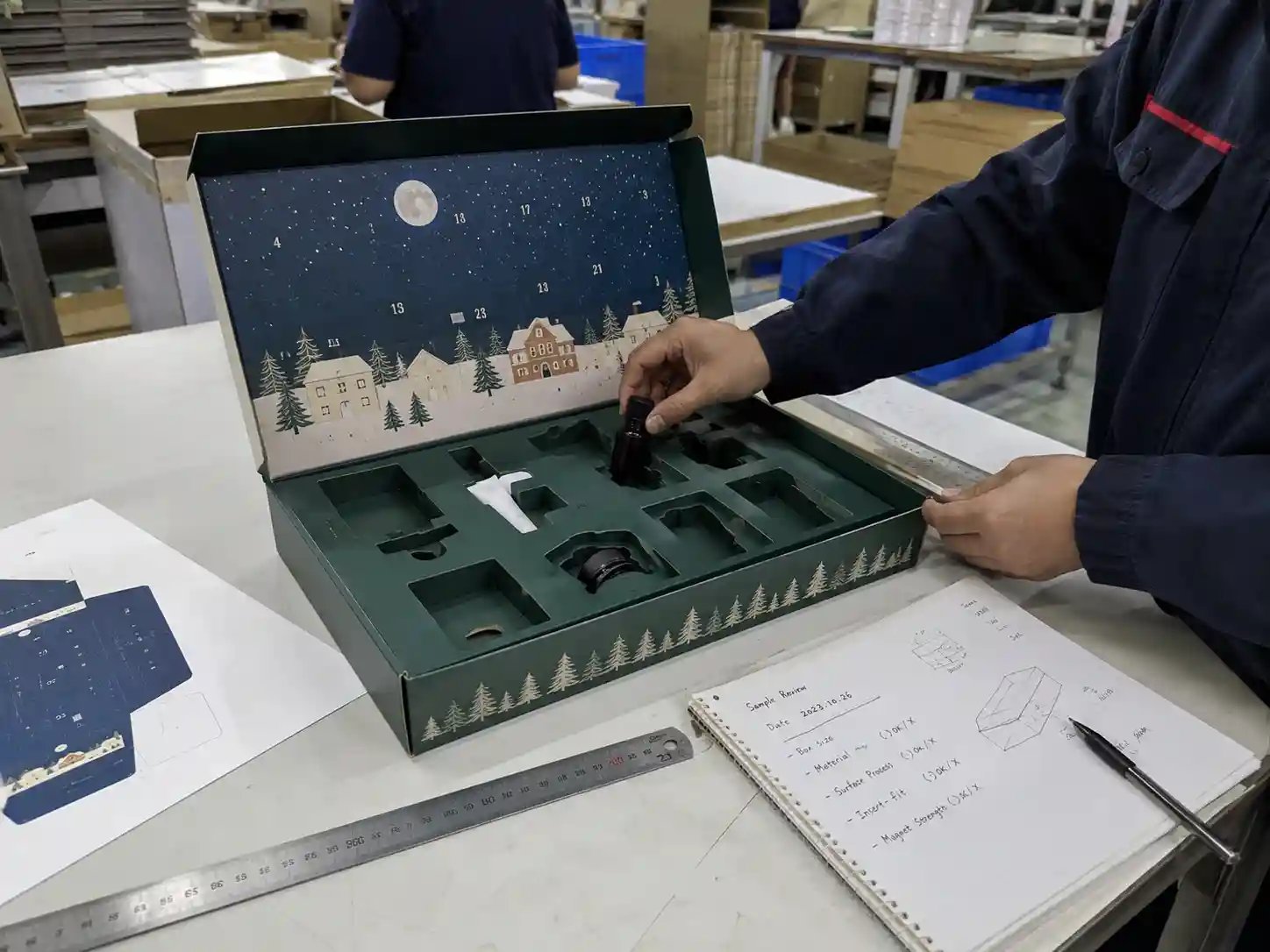
A digital mockup can show the design direction, but it cannot fully prove structure, opening feel, drawer fit, insert strength, color result, or packing efficiency. A physical sample is the safest way to check the project before bulk production.
For complex custom advent calendar boxes manufacturer projects, buyers should consider at least one structural sample and one printed sample. The structural sample checks size and function. The printed sample checks color, surface finish, artwork position, and opening experience.
What to Check on the Sample
Check whether each compartment fits the product correctly. Open and close the drawers or doors several times. Test whether products move after shaking gently. Review print color under normal lighting. Check if the box can be packed efficiently into export cartons.
If several departments need approval, collect all comments before asking the factory to revise the sample. Multiple small revisions can create unnecessary delay before mass production.
8. Build QC and Export Packing Into the Project
Quality control should not start only after production is finished. For advent calendar boxes, QC should cover material, printing, lamination, die-cutting, gluing, assembly, insert fit, drawer function, door opening, carton packing, and final appearance.
Export packing also matters. Seasonal packaging often has strict launch dates, so damaged cartons or unclear carton marks can create serious problems for the buyer’s warehouse and retail schedule.
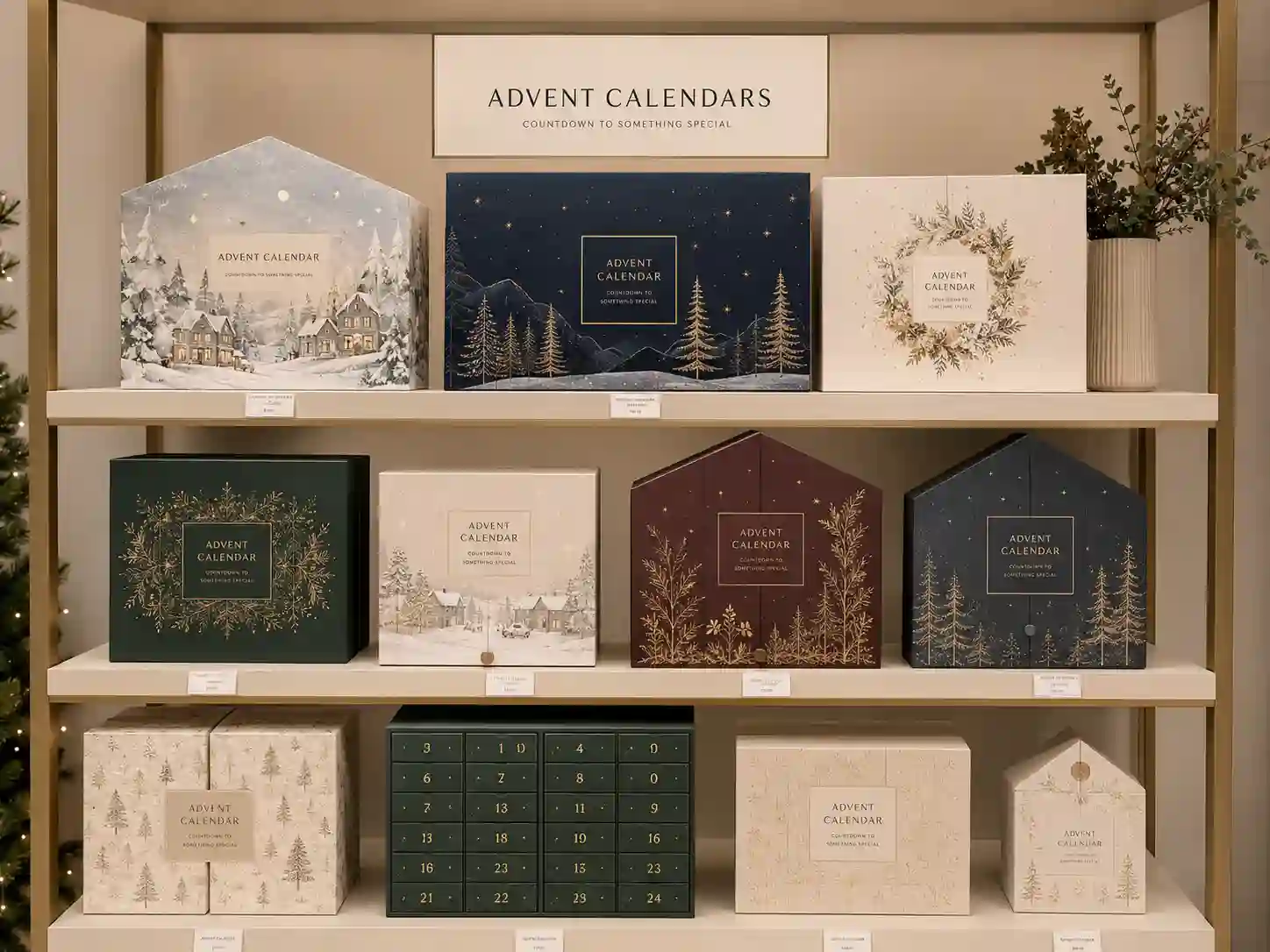
Ask the supplier how many units are packed per carton, whether inner protection is used, how carton marks are handled, and whether pallet packing is required. If the boxes are large or rigid, carton size and shipping volume can affect the final landed cost.
Buyers who need factory background can learn more about the Giftpackpro packaging factory before starting a seasonal packaging order.
9. Compare Quotations Carefully
A low unit price may not mean lower total risk. When comparing suppliers, check whether the quote includes the same structure, size, material, printing, finish, insert, sample cost, packing method, MOQ, lead time, and trade terms.
For example, one supplier may quote a paperboard calendar with simple dividers, while another quotes a rigid book-style box with drawer compartments. The two prices cannot be compared directly.
A complete quote for custom advent calendar boxes should include:
- Box structure and open style
- Final size or estimated size
- Material and paper thickness
- Printing method and color requirements
- Surface finish and special process
- Insert type and cavity layout
- MOQ and price breaks
- Sample cost and sample lead time
- Bulk production lead time
- Export carton packing details
- Shipping volume or carton size if available
If you are comparing several options, the custom advent calendar box services page can help you organize structure, material, sample, and production questions before you request a custom quote.
10. Practical Ways to Reduce Ordering Risk
The safest buying process is simple: confirm the product list, choose the structure, review the insert, approve the dieline, test the sample, lock the artwork, check the QC standard, and confirm export packing before bulk production.
Do not wait until the final artwork stage to discuss size, material, insert, or shipping requirements. These decisions affect cost, timeline, and production feasibility.
If your team is still comparing options, start with advent calendar box buying guides and product examples. Then send a clear RFQ to Giftpackpro with your product details, target quantity, market, deadline, and preferred structure.
Reducing custom advent calendar boxes risk is not about avoiding customization. It is about making each customization decision visible, testable, and ready for bulk production.


