Quick answer: The main difference between rigid and paperboard advent calendar boxes is the material construction, durability, appearance, cost structure, and production process. Rigid advent calendar boxes use thick greyboard wrapped with printed paper and are designed for premium retail presentation, luxury gift sets, and reusable structures. Paperboard advent calendar boxes use folding carton materials that are lighter, more flexible, and usually more cost-efficient for larger-volume campaigns. Buyers should compare structure, insert requirements, artwork complexity, sampling process, MOQ, lead time, QC standards, and export packing before selecting the right solution.
For brands, wholesalers, and retail buyers sourcing rigid vs paperboard advent calendar boxes, the decision is not only about appearance. The correct packaging choice affects shelf presentation, e-commerce shipping performance, production planning, and total project cost.
What is the difference between rigid and paperboard advent calendar boxes?
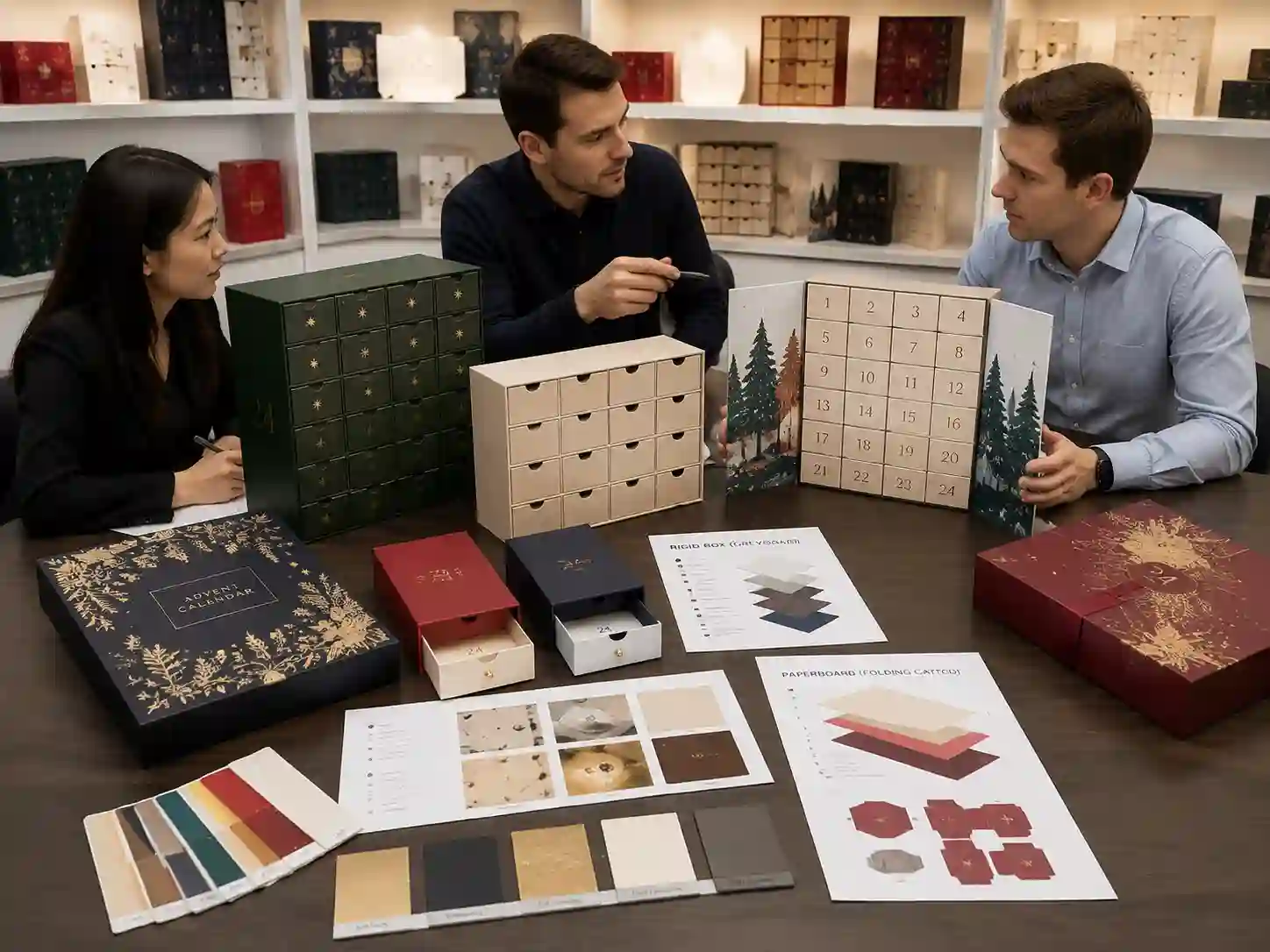
Rigid advent calendar boxes are premium box structures made from thick greyboard covered with printed paper, while paperboard advent calendar boxes are folding carton structures made from paperboard sheets that are printed, die-cut, creased, and folded.
| Comparison Factor | Rigid Advent Calendar Boxes | Paperboard Advent Calendar Boxes |
|---|---|---|
| Core material | Greyboard with wrapped paper surface | Folding paperboard or carton board |
| Structure strength | Higher rigidity and dimensional stability | Lighter structure with less compression resistance |
| Premium appearance | Suitable for luxury gift sets and high-end retail | Suitable for promotional campaigns and efficient packaging |
| Common structures | Drawer box, magnetic box, hinged lid, book-style box | Folding carton, window carton, pop-up or folding calendar |
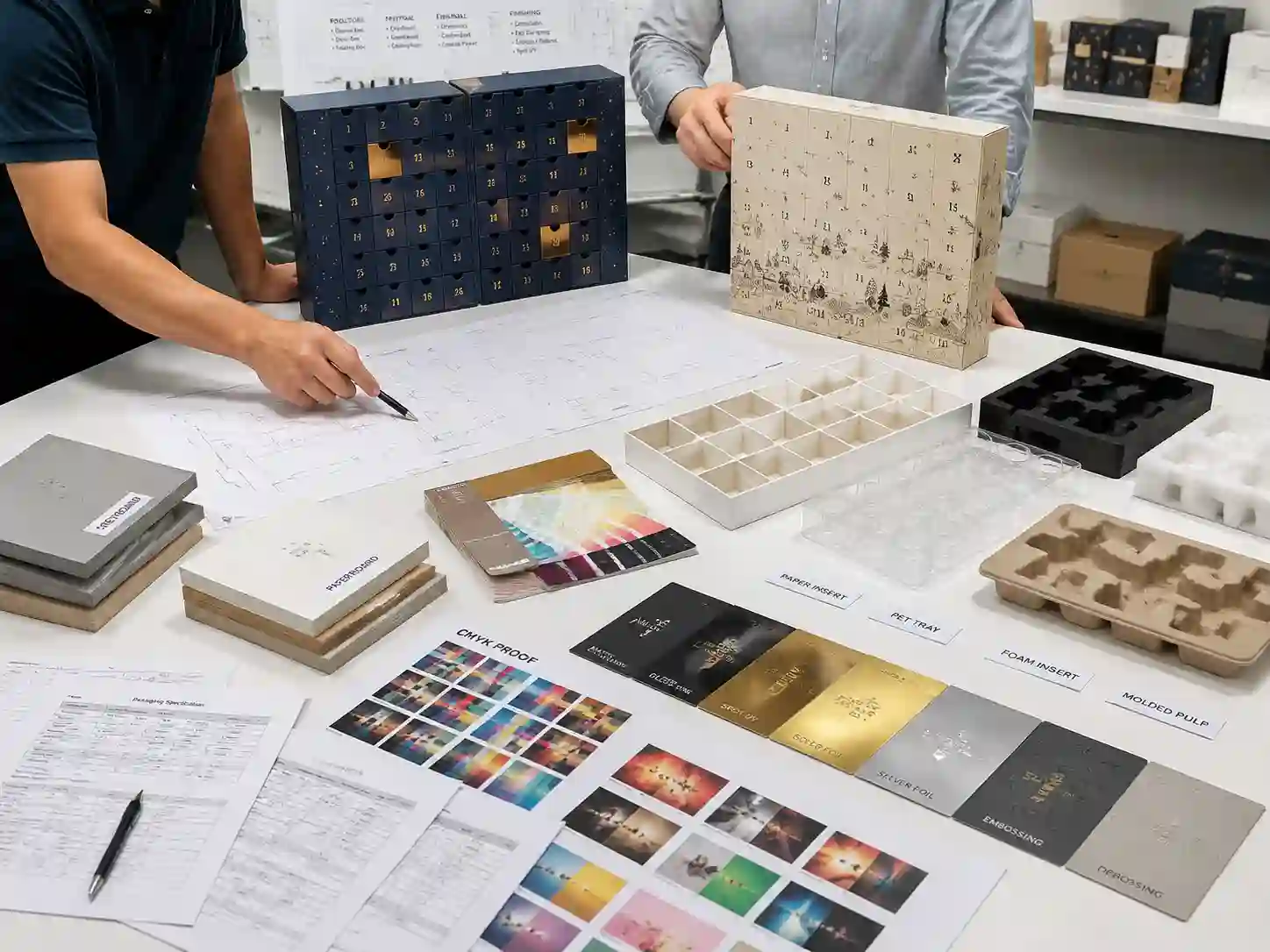
| Insert options | Paper insert, PET tray, EVA, foam, molded pulp | Mainly paper inserts or lightweight trays |
| Cost level | Higher material and labor cost | Lower cost for volume production |
| Production process | More hand assembly and wrapping steps | More automated die-cutting and folding processes |
Which advent calendar box structure is better for retail and e-commerce?
The better structure depends on the product value, sales channel, and campaign objective. Retail brands often choose rigid boxes when the packaging itself is part of the product experience, while e-commerce sellers may select paperboard structures when reducing shipping weight and cost is a priority.
- Premium beauty, skincare, fragrance, and luxury gift sets: Rigid structures provide stronger shelf impact and better protection for higher-value products.
- Large promotional campaigns: Paperboard structures can support efficient production and easier shipping for high-volume launches.
- Online gift sets: Both options can work, but insert design and export packing become critical because products experience more handling during transportation.
- Retail display programs: Rigid boxes often provide better standing stability, while paperboard designs may require stronger internal support.
Buyer tip: Do not compare only the empty box price. A lower-cost paperboard solution may require additional inserts or protective packing if the product inside needs stronger support.
How should buyers compare materials, inserts, and product protection?
The correct material and insert combination depends on the weight, shape, fragility, and presentation requirements of the products inside the advent calendar.
What inserts are commonly used for rigid and paperboard advent calendar boxes?
Rigid advent calendar boxes usually allow more insert options because the structure can support thicker and more customized internal components. Common solutions include:
- Paper inserts: Cost-effective and suitable for lightweight products.
- PET trays: Provide accurate compartment positioning and a clean product display.
- EVA inserts: Used when cushioning and premium presentation are required.
- Foam inserts: Suitable for delicate products requiring additional protection.
- Molded pulp inserts: Used when buyers need a fiber-based internal packaging option.
Paperboard advent calendar boxes can also use inserts, but buyers should confirm the structure strength and assembly tolerance early. A thin carton with an oversized insert may create folding problems, closing issues, or higher production waste.
Factory tip: Insert design should be confirmed together with the box dieline. Changing compartment sizes after artwork approval can affect the entire production process.
How do printing and finishing options differ between rigid and paperboard boxes?
Both rigid and paperboard advent calendar boxes can support custom artwork, but the manufacturing approach is different. Buyers should review printing samples and finishing effects before approving mass production.
- Dieline checking: Artwork must match the actual folding or wrapping structure.
- CMYK printing: Used for most custom graphics and full-color designs.
- Pantone color matching: Helps maintain consistent brand colors across production batches.
- Foil stamping: Adds metallic effects for premium designs.
- Embossing: Creates raised textures and visual depth.
- Spot UV: Highlights specific artwork areas.
- Matte lamination: Creates a soft premium surface.
- Gloss lamination: Adds shine and surface protection.
Rigid boxes usually show finishing details more clearly because the wrapped paper surface provides a stable base. Paperboard boxes can achieve excellent printing quality but require careful control of folding lines and surface handling.
What should buyers check before requesting a quotation?
A complete quotation request helps suppliers calculate structure, materials, production time, and packing requirements accurately. Buyers should prepare technical details before contacting a packaging factory.
Quotation preparation checklist for custom advent calendar boxes
- Box structure preference: rigid box, drawer box, door-opening box, or folding carton.
- Finished box dimensions and product compartment sizes.
- Product information: quantity, weight, shape, and protection requirements.
- Insert requirement: paper insert, PET tray, EVA, foam, or molded pulp.
- Artwork status: completed design, dieline requirement, or design assistance needed.
- Printing requirements: CMYK, Pantone colors, foil stamping, embossing, spot UV, or lamination.
- Required quantity and expected MOQ.
- Target delivery date and shipping destination.
- Sample requirement before mass production.
For buyers unfamiliar with packaging development, working with an experienced supplier that provides custom advent calendar box services can simplify structure selection, sampling, and production communication.
How do MOQ, samples, and lead time affect the decision?
Rigid and paperboard advent calendar boxes have different production requirements, which directly influence MOQ, sample cost, and lead time.
Rigid boxes typically involve more manual processes, including greyboard cutting, paper wrapping, assembly, and insert installation. Paperboard boxes generally use more folding carton production methods, which may support different volume requirements.
What should buyers know about sampling?
A professional sampling process normally includes prototype development, structure confirmation, material review, printing proof checking, and final approval before mass production.
- Confirm structure and dimensions.
- Review material samples.
- Check insert fitting and product placement.
- Approve artwork and finishing effects.
- Confirm the pre-production sample before bulk manufacturing.
QC tip: Never approve mass production based only on digital artwork. A physical sample reveals assembly tolerance, color appearance, closing performance, and insert fitting issues.
How should buyers select a reliable advent calendar box supplier?
The right supplier should provide more than manufacturing capacity. Buyers should evaluate communication, engineering support, sample quality, QC procedures, and export experience.
Supplier evaluation checklist
- Can the supplier recommend suitable structures based on product requirements?
- Can they provide clear dieline and artwork guidance?
- Do they support prototype and pre-production sample approval?
- Can they explain material and insert options?
- Do they have quality inspection procedures before shipment?
- Can they provide export packing solutions?
- Can they prepare accurate quotations with material, structure, and finishing details?
Buyers can review different custom advent calendar box products and compare possible structures before preparing an RFQ.
What are common mistakes when choosing rigid vs paperboard advent calendar boxes?
The most common mistake is selecting packaging based only on unit price without considering the complete supply chain requirements.
- Choosing the wrong structure: A lightweight carton may not support heavy products.
- Ignoring insert testing: Poor compartment fitting can damage products during transport.
- Approving artwork too early: Final artwork should follow confirmed dielines.
- Skipping physical samples: Digital files cannot verify assembly performance.
- Underestimating export packing: Advent calendar boxes require proper cartons, protection, and pallet planning.
How do QC and export packing affect final delivery quality?
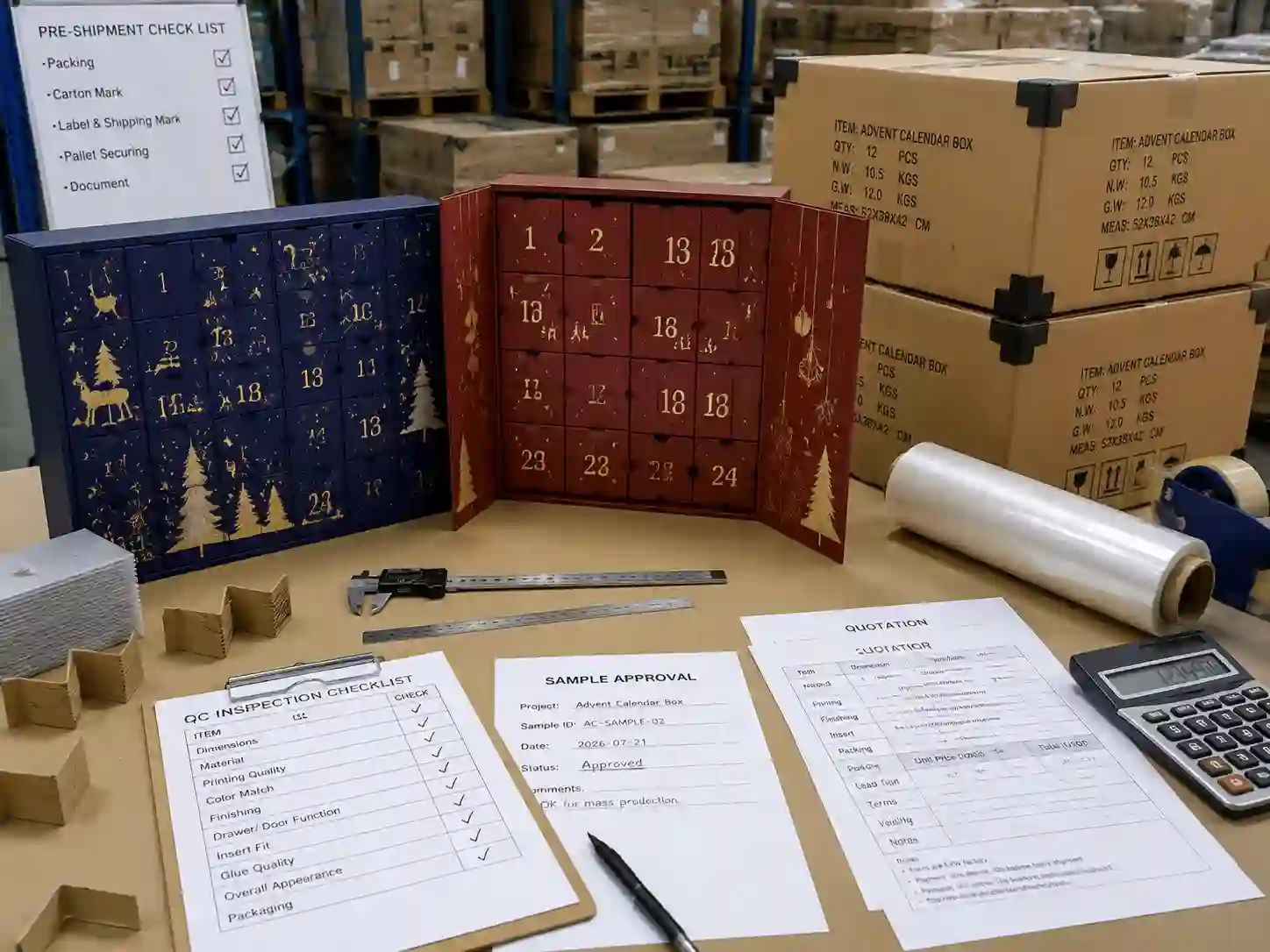
QC and export packing are critical because seasonal packaging projects often have strict launch deadlines. A packaging supplier should inspect structure, printing, assembly, inserts, and shipping preparation before delivery.
Key QC checkpoints for advent calendar boxes
- Box dimensions and structural accuracy.
- Drawer movement or door-opening performance.
- Color consistency against approved samples.
- Surface finishing quality.
- Insert position and product fit.
- Carton strength and export protection.
- Shipping marks and pallet organization.
For international shipments, buyers may also review packaging transport guidelines from organizations such as ISTA packaging testing resources and confirm material sourcing requirements through references such as FSC responsible forest management information.
Which option should buyers choose: rigid or paperboard advent calendar boxes?
The choice depends on product positioning, budget, campaign scale, and sales channel. Rigid advent calendar boxes are usually preferred for premium presentation, stronger structures, and luxury gift experiences. Paperboard advent calendar boxes are often selected for efficient production, lighter shipping, and larger promotional programs.
| Choose Rigid Boxes When | Choose Paperboard Boxes When |
|---|---|
| You need premium retail presentation | You need efficient large-volume production |
| Products require stronger protection | Shipping weight reduction is important |
| The packaging experience supports product value | The campaign requires cost control |
| You need advanced insert structures | You need flexible folding carton solutions |
FAQ: Rigid vs paperboard advent calendar boxes
Are rigid advent calendar boxes more expensive than paperboard boxes?
Yes, rigid boxes usually cost more because they use thicker materials and require additional manufacturing steps such as wrapping and assembly. However, the final quotation depends on size, inserts, printing, finishing, quantity, and packing requirements.
Can paperboard advent calendar boxes look premium?
Yes. High-quality printing, finishing techniques, and well-designed structures can create premium paperboard packaging. The final result depends on material selection, artwork execution, and production control.
Do rigid advent calendar boxes need inserts?
Many rigid advent calendar boxes use inserts because they improve product positioning, presentation, and protection. The insert type should match the product size and weight.
How early should buyers start a custom advent calendar box project?
Seasonal packaging projects should begin early enough to allow design, sampling, production, inspection, and international shipping. Exact timing depends on structure complexity, quantity, and supplier workflow.
Prepare your rigid or paperboard advent calendar box project with Giftpackpro
Before requesting a sample or quotation, prepare your target structure, product dimensions, quantity, artwork status, insert requirements, finishing preferences, delivery location, and campaign timeline.
Giftpackpro supports overseas buyers with custom packaging development, from structure discussion and sampling to bulk production, QC inspection, and export preparation. Learn more about our custom advent calendar boxes manufacturer capabilities, explore the Giftpackpro packaging factory, or browse additional advent calendar box buying guides before your next packaging project.
When you are ready to discuss your project requirements, you can request a custom quote with your box specifications, target quantity, artwork information, and delivery schedule.