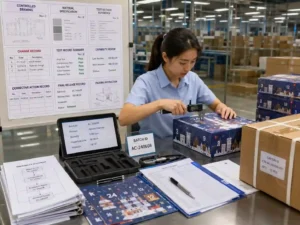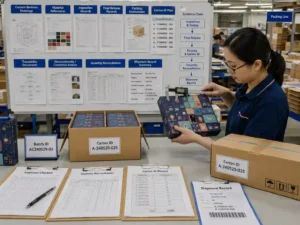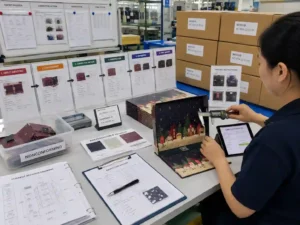
Quick answer: Drawer vs door advent calendar boxes mainly differ in opening structure, user experience, manufacturing complexity, insert design, and cost factors. Drawer advent calendar boxes use sliding compartments that provide strong organization and premium presentation, while door-opening advent calendar boxes use hinged panels or flap doors for a more traditional reveal experience. For importers, the right choice depends on product size, protection requirements, retail positioning, production budget, MOQ, and supplier capability. Before requesting a quotation, buyers should confirm dielines, insert requirements, materials, printing finishes, sampling process, QC standards, and export packing needs.
For brands, wholesalers, and retail buyers sourcing custom advent calendar boxes manufacturer solutions, choosing between drawer and door structures is not only a design decision. The structure affects tooling, assembly time, insert complexity, shipping volume, production lead time, and final quotation.
What is the difference between drawer and door advent calendar boxes?
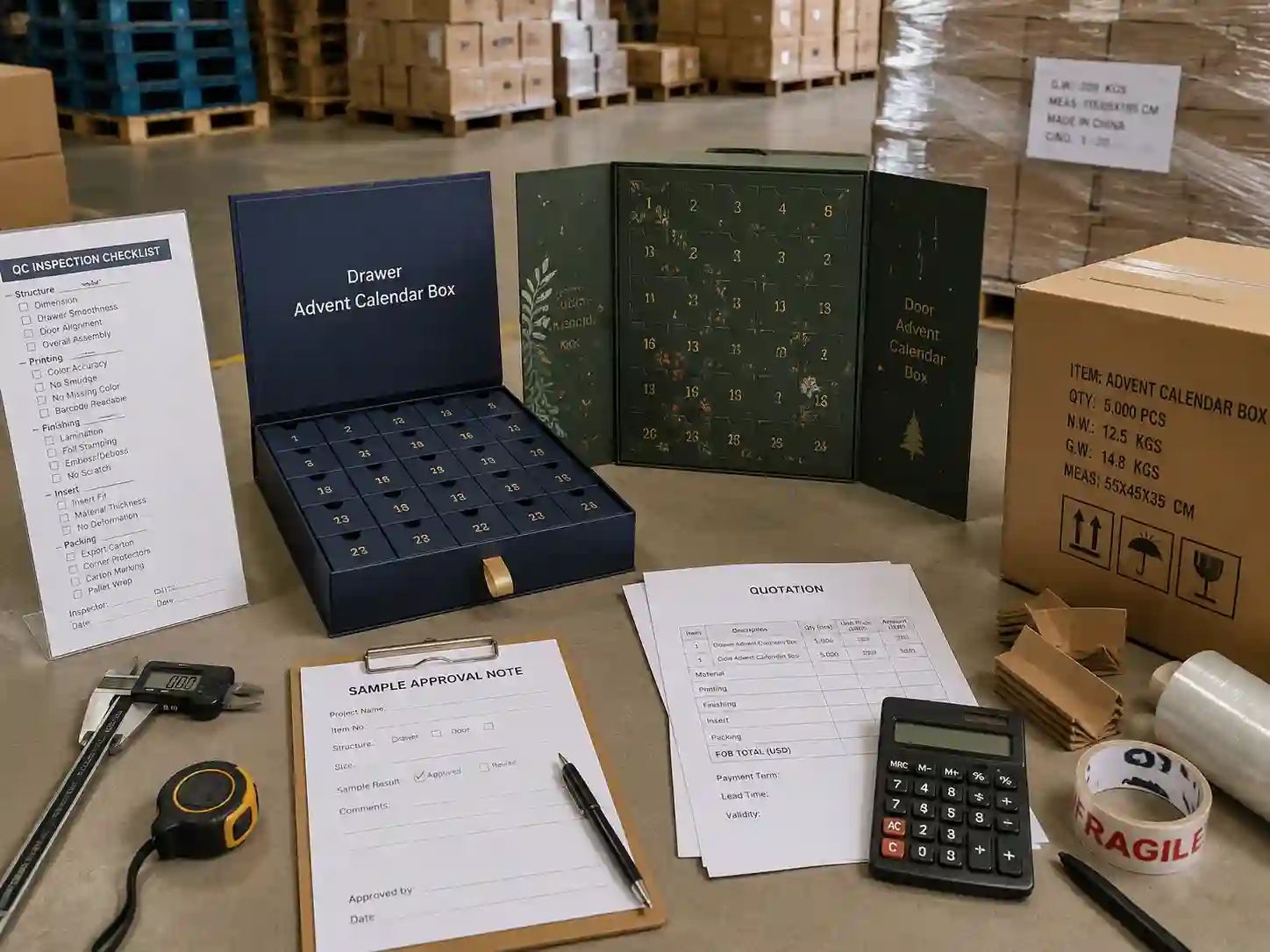
Drawer advent calendar boxes use sliding drawers or trays, while door-opening advent calendar boxes use hinged doors, panels, or flaps that open from the front. The main difference is how consumers access compartments and how factories engineer the internal structure.
| Comparison Factor | Drawer Advent Calendar Box | Door-Opening Advent Calendar Box |
|---|---|---|
| Opening method | Sliding drawers, pull-out trays, layered compartments | Hinged doors, front panels, magnetic or folding openings |
| Premium appearance | Often perceived as luxury due to rigid drawer construction | Creates a visual reveal through multiple opening sections |
| Typical materials | Greyboard rigid box, wrapped paper, paperboard drawer structures | Rigid board, folding carton, reinforced paperboard structures |
| Insert requirements | Requires accurate compartment sizing and drawer alignment | Requires door clearance, panel strength, and product retention |
| Manufacturing difficulty | Higher assembly precision due to sliding tolerance | Higher focus on hinge strength and opening performance |
| Best suited for | Beauty products, premium gifts, luxury retail campaigns | Chocolate, cosmetics, promotional collections, seasonal retail programs |
Buyer tip: The best structure is not always the most expensive option. Buyers should match the box structure with the product weight, shelf position, target market, and expected unboxing experience.

Which advent calendar box structure should importers choose?
The correct structure depends on the product inside, retail expectations, and production requirements. Drawer boxes are usually selected when buyers want stronger premium positioning, while door-opening boxes are often chosen when visual access and compartment visibility are priorities.
When should buyers choose drawer advent calendar boxes?
Drawer structures are suitable when the product requires a stable premium presentation. The sliding mechanism allows factories to create multiple layers, pull-out trays, and organized compartments.
- Beauty brands requiring individual cosmetic compartments
- Gift companies creating premium seasonal collections
- Retail programs where the packaging itself supports product value
- Products needing stronger protection from movement during transport
From a factory perspective, drawer boxes require careful testing of the inner and outer dimensions. A drawer that is too tight may create opening problems, while excessive clearance can make the packaging feel low quality.
When should buyers choose door-opening advent calendar boxes?
Door-opening structures are suitable when the opening experience and visual display are important. The front panel can reveal multiple sections and create a strong retail presentation.
- Chocolate and confectionery collections
- Promotional gift packaging
- Retail displays requiring quick product visibility
- Projects with more flexible budget targets
Factory tip: Door-opening boxes should be checked for hinge durability, panel alignment, and repeated opening performance before bulk production begins.
How do inserts affect drawer and door advent calendar box selection?
Insert design is one of the biggest differences between successful and problematic advent calendar packaging projects. The structure must work together with the insert to protect products and maintain a consistent customer experience.
Common insert options include:
- Paper inserts: Cost-effective and recyclable options for lightweight products.
- PET trays: Suitable when product visibility and precise positioning are required.
- EVA inserts: Used for premium products needing soft protection and a luxury feel.
- Foam inserts: Useful for fragile items requiring cushioning.
- Molded pulp inserts: Considered when buyers need a paper-based protective solution.
For drawer boxes, the insert must fit inside each sliding compartment without affecting drawer movement. For door-opening boxes, the insert must prevent products from falling when panels are opened vertically.
A professional supplier should review product dimensions, tolerance requirements, material thickness, and assembly method before finalizing the insert design.
What customization options affect the quotation?
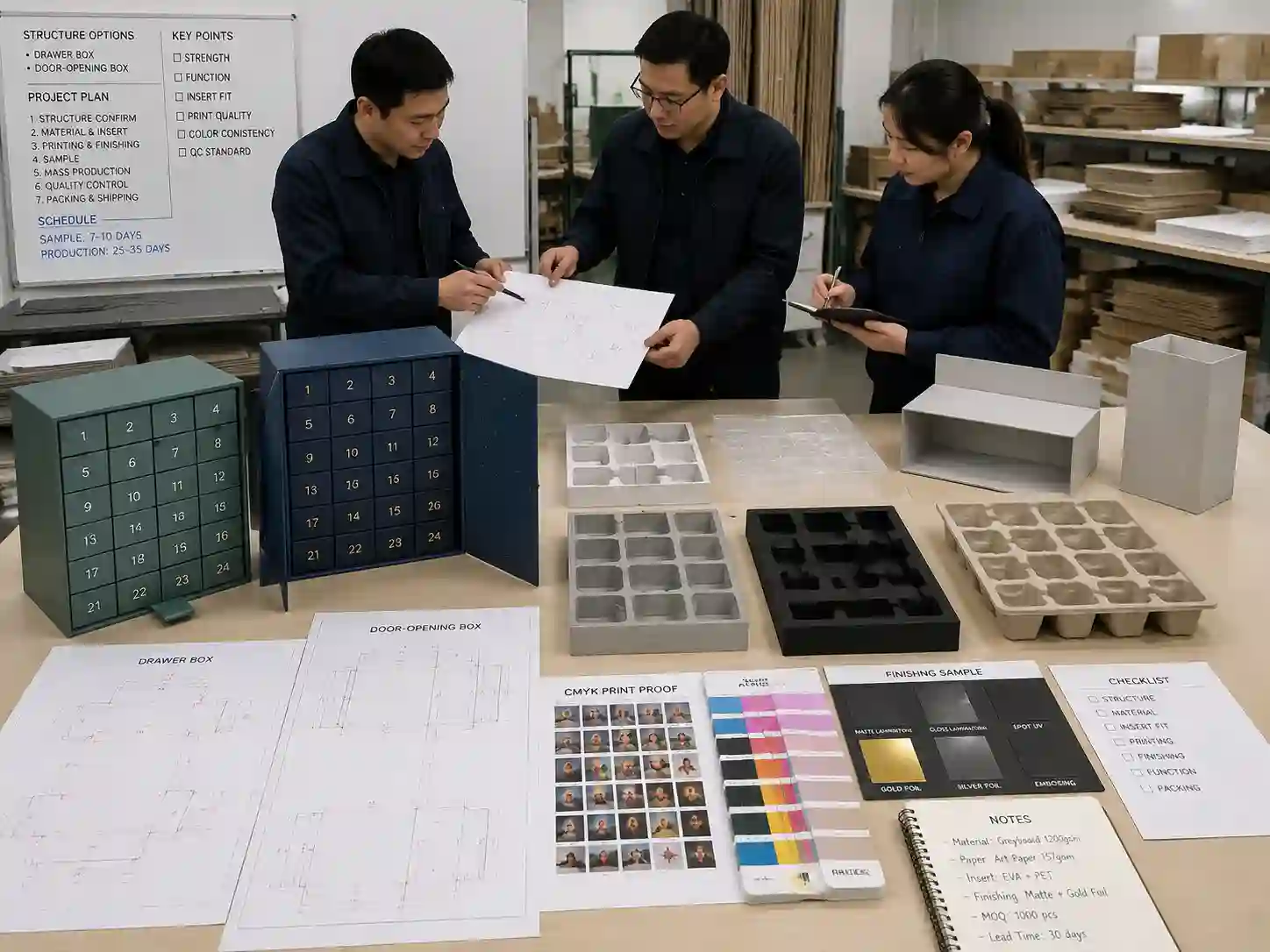
Custom advent calendar box pricing depends on more than box size. Structure, materials, printing, finishing, inserts, quantity, and production process all influence the final quotation.
| Cost Driver | Buyer Consideration |
|---|---|
| Material | Greyboard thickness, paperboard quality, wrapping paper selection, and reinforcement requirements |
| Printing | CMYK printing, Pantone color matching, proof approval, and artwork complexity |
| Finishing | Matte lamination, gloss lamination, foil stamping, embossing, and spot UV effects |
| Structure | Drawer mechanism, door panels, magnets, folding parts, and assembly requirements |
| Insert | Paper, PET, EVA, foam, or molded pulp solutions |
| Quantity | MOQ influences material purchasing, production setup, and unit cost |
Buyers should provide complete specifications before comparing quotations from different factories. A lower quotation may exclude important items such as sample fees, special finishing, insert tooling, or export packing requirements.
How should buyers compare suppliers for drawer vs door advent calendar boxes?
The best supplier is not always the factory offering the lowest unit price. Buyers should compare production capability, communication quality, sample accuracy, QC process, and export experience.
- Check structure capability: Ask whether the supplier has produced similar drawer or door-opening structures.
- Review sample quality: Confirm whether prototypes match approved drawings and product dimensions.
- Confirm communication process: Make sure artwork, dielines, materials, and changes are documented.
- Evaluate production planning: Discuss lead time, material preparation, assembly schedule, and shipping timeline.
- Review quality control: Understand inspection points before, during, and after production.
Giftpackpro provides buyers with structured support through custom advent calendar box services, helping purchasing teams manage development from artwork confirmation through production preparation.
What should buyers prepare before requesting a quotation?
A complete RFQ helps factories provide accurate pricing and prevents delays during development. Buyers should prepare the following information:
- Box structure preference: drawer, door-opening, folding carton, or rigid box
- Finished box dimensions and product dimensions
- Number of compartments required
- Insert material preference
- Paperboard or greyboard requirements
- Artwork files or design references
- Printing requirements including CMYK or Pantone colors
- Finishing requirements such as foil stamping, embossing, spot UV, matte lamination, or gloss lamination
- Target quantity and expected MOQ
- Delivery location and export packing requirements
Buyer checklist before quotation:
- Have all product sizes been confirmed?
- Has the opening structure been selected?
- Are insert materials approved?
- Is the artwork ready for dieline adaptation?
- Are sample approval and production timeline expectations clear?
How does sampling reduce production risk?
Sampling is the stage where buyers confirm whether the structure works before mass production. A proper prototype or pre-production sample allows factories and buyers to verify dimensions, materials, printing results, and assembly performance.
The sampling process usually includes:
- Dieline checking before production
- Material confirmation
- Printing proof review
- Insert fit testing
- Drawer sliding or door-opening testing
- Final sample approval before bulk manufacturing
QC tip: Never approve a large production order only from digital artwork. Physical samples reveal issues such as color differences, structural weakness, loose inserts, and assembly problems.
What quality control points matter during bulk production?
Quality control for advent calendar boxes should cover structure, appearance, function, and shipping protection. Buyers should confirm inspection standards before production begins.
- Material thickness inspection
- Printing color comparison with approved samples
- Foil stamping and embossing accuracy
- Drawer movement testing
- Door hinge and opening performance checks
- Insert fitting inspection
- Assembly alignment inspection
- Final packing inspection
Reliable suppliers should provide clear QC communication and approval points throughout production instead of only checking finished cartons.
How should advent calendar boxes be packed for export shipping?
Export packing protects finished packaging during international transportation. Buyers should discuss export carton strength, internal protection, pallet requirements, and shipping marks before production completion.
- Use suitable export cartons based on box size and weight
- Add corner protection when rigid boxes require extra support
- Confirm pallet stacking requirements
- Apply correct shipping marks and carton labels
- Review loading method for international shipment
For international sourcing projects, buyers can also review official packaging and logistics guidance from organizations such as ISTA packaging resources when evaluating transport protection requirements.
What mistakes should buyers avoid when sourcing drawer and door advent calendar boxes?
Most packaging problems happen because buyers confirm price before confirming structure and production details.
- Choosing a structure without testing the product fit
- Comparing quotations with different material specifications
- Ignoring insert tolerance requirements
- Skipping physical sample approval
- Changing artwork after mass production starts
- Not confirming export packing requirements early
Factory tip: Early communication about structure, materials, and production expectations usually reduces unexpected cost changes later.
Drawer vs door advent calendar boxes: which option is better for your project?
The better choice depends on your product category, budget, retail positioning, and supply chain requirements. Drawer boxes are usually preferred for premium presentations and complex compartment layouts, while door-opening boxes provide strong visual impact and flexible retail applications.
| If your priority is… | Recommended option |
|---|---|
| Luxury appearance and premium gifting | Drawer advent calendar box |
| Visible product reveal and easy access | Door-opening advent calendar box |
| Complex cosmetic or gift collections | Drawer structure with custom inserts |
| Cost control with attractive presentation | Door-opening or optimized paperboard structure |
FAQ: drawer vs door advent calendar boxes
Are drawer advent calendar boxes more expensive than door-opening boxes?
Drawer boxes can have higher production costs because sliding mechanisms require precise assembly and tighter tolerances. However, the final cost depends on materials, quantity, inserts, and finishing choices.
Which structure is better for cosmetic advent calendar packaging?
Drawer structures are commonly considered for cosmetics because they support organized compartments and premium presentation. The final choice depends on bottle size, weight, and insert requirements.
What information does a factory need to quote custom advent calendar boxes?
Factories typically need structure preference, dimensions, materials, insert requirements, artwork details, quantity, finishing options, shipping destination, and timeline expectations.
Should buyers request a sample before mass production?
Yes. A prototype or pre-production sample helps confirm structure, printing, insert fit, and assembly quality before bulk manufacturing.
Prepare your drawer or door advent calendar box project with Giftpackpro
Choosing between drawer and door advent calendar boxes requires more than selecting a visual style. Buyers need to evaluate structure, inserts, materials, sampling, QC, export packing, and supplier reliability together.
Before contacting a factory, prepare your product dimensions, preferred structure, quantity, artwork status, target market, and packaging requirements. You can explore more custom advent calendar box products, review additional advent calendar box buying guides, learn more about the Giftpackpro packaging factory, or request a custom quote with your project details.