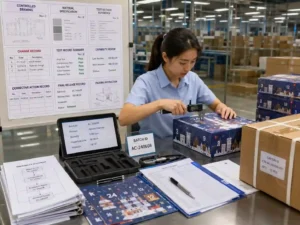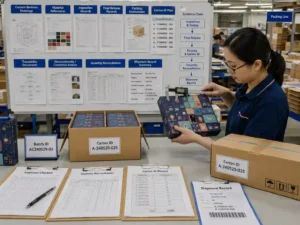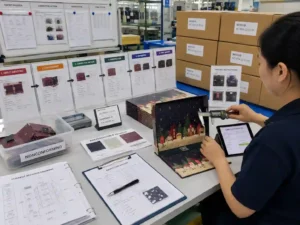
Quick answer: The difference between flat pack vs assembled calendar boxes is mainly the delivery format, assembly requirements, shipping efficiency, and production workflow. Flat pack calendar boxes are supplied unassembled to reduce storage and freight volume, while assembled calendar boxes arrive ready for filling or retail preparation. For B2B buyers, the right choice depends on box structure, insert complexity, labor cost, destination market, lead time, and quality requirements. Rigid drawer boxes, door-opening boxes, and premium folding structures often require different assembly considerations than simple paperboard designs.
For overseas brands, wholesalers, and retail buyers sourcing custom advent calendar boxes manufacturer solutions, choosing between flat pack and assembled formats affects the entire project: prototype development, quotation, production scheduling, QC inspection, export packing, and final fulfillment.
What should buyers understand about flat pack vs assembled calendar boxes?
The main difference is whether the box structure is delivered collapsed or fully formed. Flat pack boxes are manufactured with folding points, pre-scored panels, or partially prepared structures that allow efficient shipping and storage. Assembled calendar boxes are completed into their final three-dimensional shape before shipment, reducing customer assembly work but increasing packing volume.
| Comparison Point | Flat Pack Calendar Boxes | Assembled Calendar Boxes |
|---|---|---|
| Delivery format | Collapsed or partially folded for shipment | Fully assembled and ready for filling |
| Shipping efficiency | Higher carton utilization and lower freight volume | Requires more container and warehouse space |
| Assembly requirement | Buyer or fulfillment team may need final assembly | Factory completes assembly before delivery |
| Common structures | Folding carton, collapsible paperboard styles, some rigid structures | Rigid boxes, drawer boxes, complex premium structures |
| Labor cost after arrival | Higher local handling requirement | Lower local assembly labor |
| Shipping protection | Can reduce deformation risk during transport | Needs stronger export packing control |
Buyer tip: A lower factory unit price does not always mean a lower total project cost. Buyers should compare production cost, international freight, warehouse space, and assembly labor together.
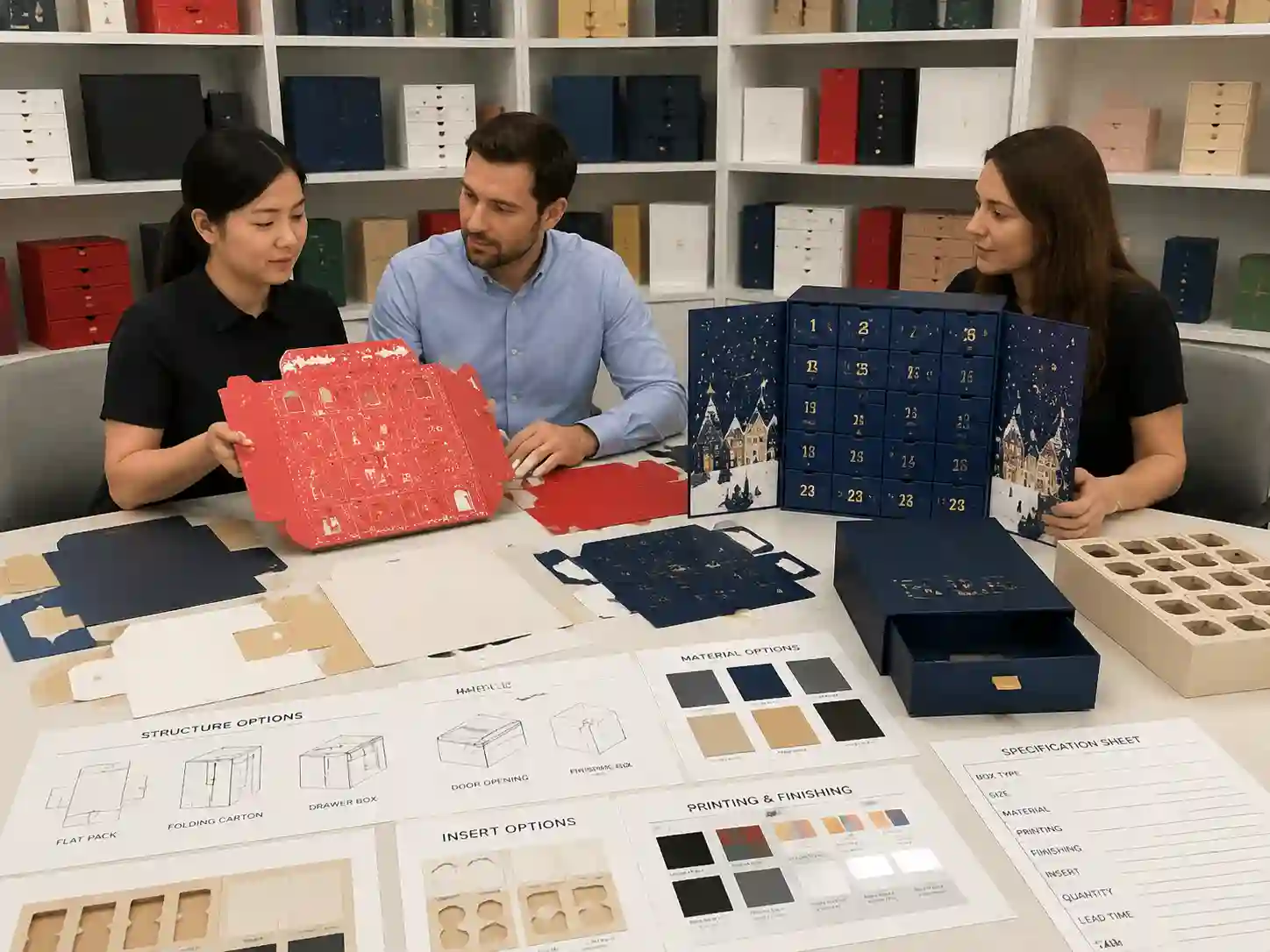
When should buyers choose flat pack calendar boxes?
Flat pack calendar boxes are usually suitable when shipping efficiency, warehouse space, and international logistics costs are major concerns. They are commonly selected by importers who have local fulfillment operations or who want to assemble packaging closer to the sales market.
What product types work well as flat pack structures?
Flat pack formats are often suitable for:
- Paperboard advent calendar boxes with folding panels
- Collapsible seasonal gift packaging
- Retail programs requiring large-volume storage before launch
- E-commerce packaging where warehouse efficiency matters
- Projects where buyers control final assembly or product filling
For example, a folding paperboard calendar box with printed artwork, a paper insert, and simple compartment construction can often be shipped flat to reduce export carton volume. However, buyers should confirm whether the folding structure maintains accurate alignment after assembly.
What risks should buyers check with flat pack boxes?
Flat pack packaging requires careful engineering because the final appearance depends on correct assembly. Buyers should confirm:
- Folding tolerance and panel alignment
- Glue strength and bonding areas
- Whether corners remain square after forming
- Insert installation steps
- Assembly instructions if needed
Factory tip: Request a physical prototype before bulk production. A flat pack sample should be folded, filled, closed, opened, and checked multiple times before approval.
When should buyers choose assembled calendar boxes?
Assembled calendar boxes are better when presentation quality, convenience, and complex construction are more important than minimizing freight volume. Premium packaging projects often choose assembled delivery because the buyer receives a finished structure that requires less handling.
Which calendar box structures usually require assembly?
Common assembled formats include:
- Rigid box calendar packaging made with greyboard and wrapped paper
- Drawer box structures with sliding compartments
- Door-opening boxes with hinged panels
- Luxury gift boxes with custom inserts
- Packaging requiring multiple finishing processes
Rigid box projects typically involve more manual production steps, including greyboard cutting, wrapping, corner forming, paper covering, insert fitting, and final inspection. Because of this, assembled delivery is often preferred for premium retail packaging where the opening experience and structural accuracy are important.
How do materials and inserts affect the flat pack or assembled decision?
The choice between flat pack and assembled packaging depends heavily on materials and internal components. Lightweight paperboard structures are generally easier to ship flat, while rigid structures and complex inserts often benefit from assembled delivery.
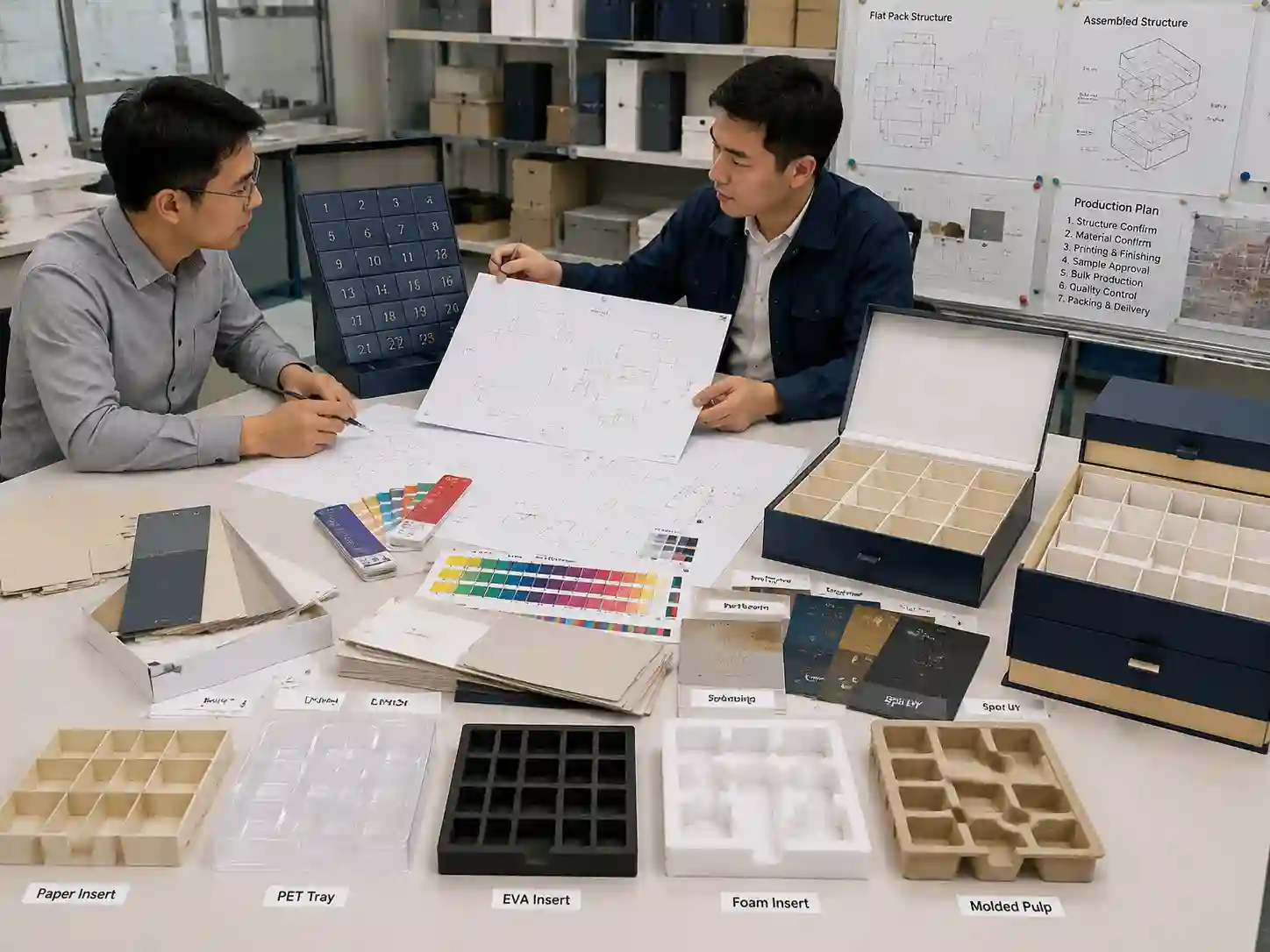
Key material and insert factors include:
- Paperboard: Suitable for folding carton structures where flat shipping is efficient.
- Greyboard: Common for rigid boxes that require stronger assembled construction.
- Paper insert: Cost-effective for lightweight products and simpler compartments.
- PET tray: Provides accurate product positioning but may affect packing height.
- EVA insert: Used for premium protection and presentation.
- Foam: Helps secure delicate products but requires precise cutting.
- Molded pulp: A structured option for protective and sustainability-focused packaging projects.
For custom advent calendar box products, buyers should evaluate whether the insert can be installed efficiently after shipment. A flat box with a complicated insert system may create more labor than expected.
How should buyers compare suppliers for flat pack and assembled calendar boxes?
Buyers should compare suppliers based on engineering capability, not only unit price. A reliable supplier should understand dieline development, assembly tolerance, insert fitting, printing requirements, and export preparation.
| Supplier Evaluation Area | Questions Buyers Should Ask |
|---|---|
| Structure development | Can the supplier review dielines and recommend improvements before production? |
| Sample process | Will the factory provide a prototype or pre-production sample for approval? |
| Printing control | Can the supplier confirm CMYK proof, Pantone matching, and finishing details? |
| Assembly quality | How does the factory check folding accuracy, drawer movement, and door opening? |
| Export preparation | How are cartons, pallets, corner protectors, and shipping marks handled? |
Giftpackpro provides custom advent calendar box services for buyers who need support with structure selection, artwork preparation, sampling, production, and export coordination.
What customization decisions affect quotation and lead time?
The quotation for flat pack and assembled calendar boxes depends on more than the box size. Buyers should prepare detailed project information before requesting pricing.
What information should be included in an RFQ?
- Box structure preference: flat pack, assembled, rigid box, folding carton, drawer box, or door-opening box.
- Finished dimensions and compartment layout.
- Product size, weight, and insert requirements.
- Material preference including paperboard, greyboard, or special boards.
- Artwork details and printing requirements.
- Finishing options such as foil stamping, embossing, spot UV, matte lamination, or gloss lamination.
- Estimated order quantity and target delivery schedule.
- Destination country and export packing requirements.
Buyer tip: Clear specifications help suppliers provide more accurate quotations. Missing details about inserts, assembly, or finishing can cause price changes later.
How does sampling and QC differ between flat pack and assembled boxes?
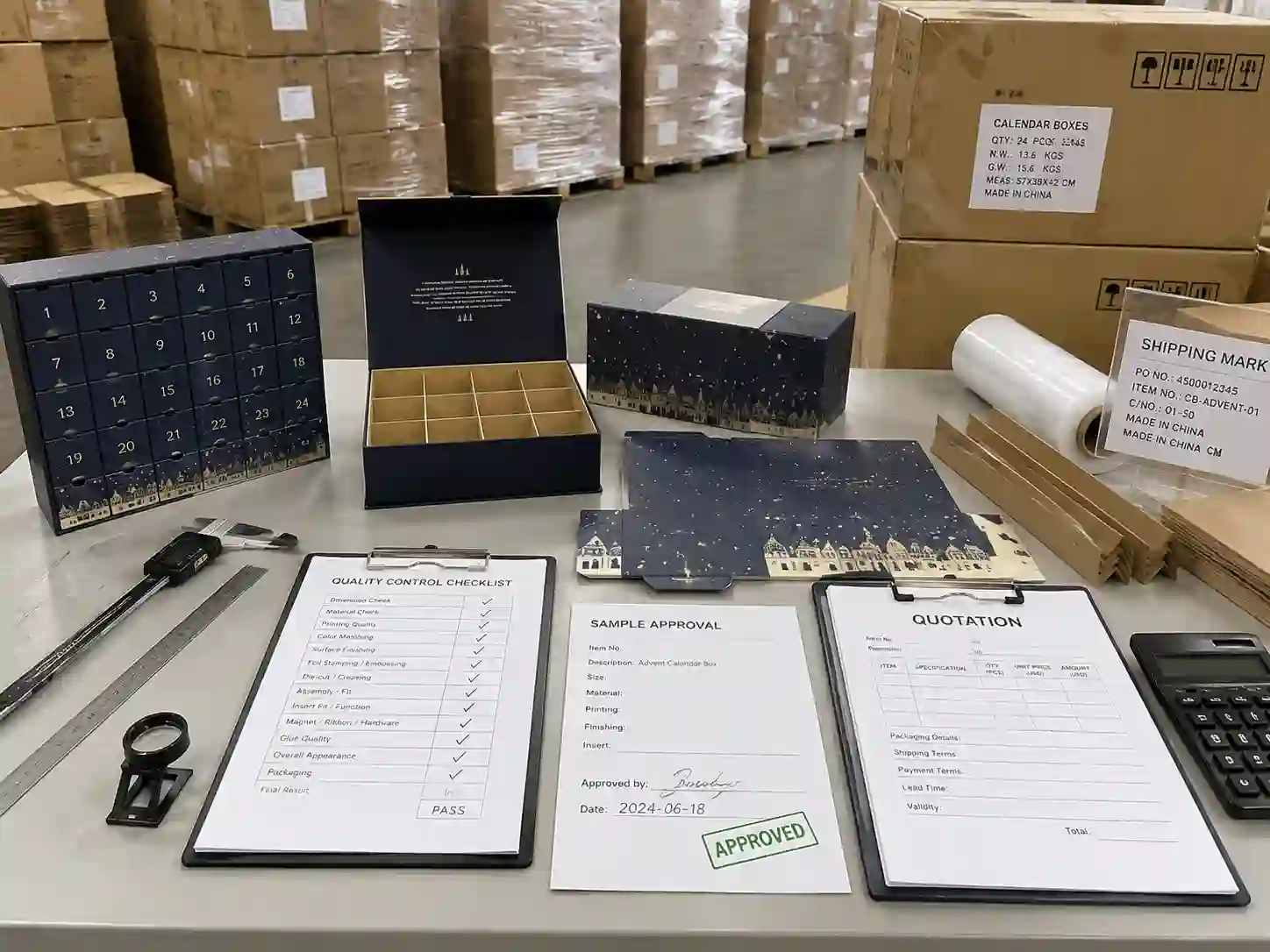
Sampling should verify the final production method, not only the printed appearance. Flat pack samples need assembly testing, while assembled samples need structural and shipping checks.
A professional approval process usually includes:
- Dieline checking before sample production
- Artwork verification with CMYK proof or Pantone references
- Material confirmation
- Insert fit testing
- Opening and closing function checks
- Assembly tolerance inspection
- Pre-production sample approval before mass production
QC tip: Buyers should inspect more than printing quality. A visually attractive calendar box can still fail if compartments do not fit products, drawers do not slide smoothly, or folding panels do not align.
How should buyers prepare export packing for each box type?
Export packing requirements are different because assembled boxes occupy more volume and may require additional protection. Flat pack boxes usually optimize carton space but require protection against crushing and moisture.
- Confirm export carton strength and internal arrangement.
- Use corner protection when rigid assembled boxes require extra support.
- Check pallet stacking method for large shipments.
- Confirm shipping marks before container loading.
- Review final inspection photos before shipment.
For international shipments, buyers can also review transport testing guidance from organizations such as ISTA packaging standards resources when planning distribution requirements.
What are common mistakes when choosing between flat pack and assembled calendar boxes?
The most common mistake is selecting the cheapest format without calculating the complete supply chain impact.
- Choosing flat pack packaging without considering local assembly labor.
- Selecting assembled boxes without calculating freight volume.
- Approving artwork before checking the dieline.
- Ignoring insert tolerance until mass production begins.
- Comparing supplier prices without reviewing sample quality.
- Not confirming export carton requirements early.
Another common issue is treating all calendar boxes as the same product. A lightweight paperboard calendar and a premium rigid drawer calendar have different production processes, cost structures, and quality checkpoints.
Flat pack vs assembled calendar boxes: which option is better for your project?
The better option depends on your sales model, product requirements, and supply chain plan. Choose flat pack calendar boxes when freight efficiency and storage savings are priorities. Choose assembled calendar boxes when premium presentation, structural complexity, and reduced local labor are more important.
| Choose Flat Pack If You Need | Choose Assembled If You Need |
|---|---|
| Lower shipping volume | Ready-to-fill packaging |
| Warehouse efficiency | Premium retail presentation |
| Local assembly capability | Complex rigid structures |
| Large volume seasonal programs | Less handling after arrival |
FAQ: Flat Pack vs Assembled Calendar Boxes
Are flat pack calendar boxes cheaper than assembled boxes?
Flat pack boxes often reduce freight and storage costs, but the total cost depends on assembly labor, structure complexity, inserts, and destination logistics.
Can rigid calendar boxes be shipped flat?
Some rigid structures can be designed for space-saving shipment, but many premium rigid boxes require assembled delivery because greyboard construction and finishing processes create fixed shapes.
Should buyers request a sample before ordering?
Yes. A sample helps verify structure, insert fit, artwork accuracy, finishing quality, and assembly performance before mass production.
What should I prepare before requesting a quotation?
Prepare box dimensions, structure preference, quantity, artwork status, insert requirements, destination, target timeline, and finishing requirements. Buyers can use request a custom quote to start a packaging discussion with complete project information.
Final recommendation for B2B buyers comparing calendar box formats
The decision between flat pack vs assembled calendar boxes should be based on the complete packaging workflow, from design and sampling to delivery and fulfillment. Buyers should evaluate structure, materials, inserts, production steps, QC requirements, and export packing before selecting a format.
Giftpackpro helps brands, wholesalers, and purchasing teams evaluate suitable calendar packaging structures through practical manufacturing guidance. Explore more advent calendar box buying guides or learn more about our Giftpackpro packaging factory capabilities before preparing your next project.