
Quick answer: CMYK and Pantone printing are two different ways to create colors on custom packaging. CMYK printing uses four process colors (cyan, magenta, yellow, and black) to produce images, gradients, and full-color artwork, while Pantone printing uses standardized spot colors to achieve more consistent brand colors. For custom advent calendar boxes, rigid boxes, and folding cartons, the better choice depends on artwork complexity, brand color requirements, budget, MOQ, sampling needs, and production control. Buyers should confirm printing method during the quotation stage because color accuracy, sample approval, and QC inspection standards directly affect the final packaging result.
For overseas brands and purchasing teams sourcing custom packaging, understanding CMYK vs Pantone printing boxes helps avoid unexpected color differences, production delays, and approval problems. Printing decisions should be considered together with box structure, materials, inserts, finishing, sampling, and export requirements.
What Is the Difference Between CMYK and Pantone Printing for Boxes?
CMYK printing creates colors by combining four standard ink colors, while Pantone printing applies specific pre-mixed colors based on a standardized color system. The main difference is that CMYK is flexible for detailed artwork, while Pantone provides stronger color consistency for specific brand colors.
| Comparison Point | CMYK Printing | Pantone Printing |
|---|---|---|
| Printing method | Uses four process colors: cyan, magenta, yellow, and black | Uses individually mixed spot colors |
| Best application | Photos, illustrations, gradients, complex artwork | Brand colors, simple graphics, color-critical designs |
| Color consistency | Depends on paper, machine settings, ink balance, and proofing | Higher consistency when the same Pantone reference is used |
| Typical packaging use | Full printed folding cartons and decorative packaging | Luxury rigid boxes, premium brand packaging, logo colors |
| Cost impact | Usually economical for full-color artwork | May increase cost when multiple spot colors are required |
| Sample importance | Essential for checking image quality and color balance | Essential for confirming exact spot color appearance |
Which Printing Method Is Better for Custom Advent Calendar Boxes?
The better printing method depends on the packaging purpose, artwork design, and buyer expectations. There is no universal winner between CMYK and Pantone because different box structures and markets require different color solutions.
When should buyers choose CMYK printing?
CMYK is usually suitable when the box artwork contains photographs, product images, illustrations, multiple colors, or realistic visual effects. Many custom advent calendar boxes use CMYK printing when the outer design requires detailed graphics across a large surface area.
- Full-color artwork with many design elements
- Product photography or lifestyle images
- Color gradients and complex illustrations
- Folding cartons with large printed areas
- Projects where flexible artwork changes are expected
For example, a paperboard advent calendar box featuring seasonal illustrations, multiple product windows, and decorative patterns may be more efficient with CMYK printing because the design relies on image reproduction rather than one fixed color.
When should buyers choose Pantone printing?
Pantone printing is preferred when a buyer needs a specific color to remain consistent across production batches, especially for recognizable brand colors, premium packaging, or minimalist designs.
- Luxury rigid box projects
- Single-color or limited-color packaging
- Corporate brand colors
- High-end retail packaging requiring strict approval
- Packaging where color matching is a key purchasing requirement
A rigid box with a specific signature color, foil stamping, embossing, or premium paper wrapping may benefit from Pantone color control because the visual impression depends heavily on accurate color reproduction.
How Do Materials Affect CMYK and Pantone Printing Results?
Printing performance depends not only on the ink system but also on the packaging material. The same color can appear different on coated paper, uncoated paper, greyboard wrapping paper, kraft paper, or textured specialty materials.
Custom packaging suppliers normally evaluate printing together with:
- Paperboard: commonly used for folding cartons and lightweight packaging.
- Greyboard: used for rigid boxes requiring a wrapped paper surface.
- Paper insert: affects the overall presentation but may require separate printing control.
- PET tray, EVA insert, foam, and molded pulp: may influence the color environment inside the package.
- Surface finishing: matte lamination, gloss lamination, spot UV, foil stamping, and embossing can change how colors appear.
Buyer tip: A color reference viewed on a computer screen is not enough for production approval. Buyers should review physical printed samples because monitor colors and printed colors are different.
How Should Buyers Compare CMYK and Pantone Options During Supplier Selection?
Buyers should compare printing methods based on the complete packaging requirement rather than only the unit price. A reliable supplier should explain how printing, materials, finishing, and QC procedures affect the final result.
| Buyer Question | Why It Matters |
|---|---|
| Does the artwork contain photos or gradients? | Determines whether CMYK reproduction is more suitable. |
| Is there a strict brand color requirement? | Helps decide if Pantone matching is necessary. |
| Will the box use foil stamping or embossing? | Finishing processes may affect color perception. |
| What material will be printed? | Different papers create different visual results. |
| Is a pre-production sample required? | Allows buyers to confirm color before mass production. |
When comparing suppliers, ask whether they provide artwork checking, dieline review, printing proof confirmation, prototype samples, and production QC reports. These steps are often more important than choosing the cheapest printing option.
What Should Buyers Confirm Before Ordering Printed Packaging Samples?
Before requesting a sample, buyers should prepare complete artwork information and define the color expectations. A supplier cannot accurately quote or produce packaging without clear printing specifications.
Sample preparation checklist
- Final artwork files with correct dieline placement
- Preferred color references, including Pantone numbers if required
- Material selection such as paperboard or greyboard wrapping paper
- Required finishing details such as foil stamping, embossing, or spot UV
- Box structure information, including rigid box, drawer box, or door-opening box style
- Insert requirements and product dimensions
- Target market and expected retail presentation level
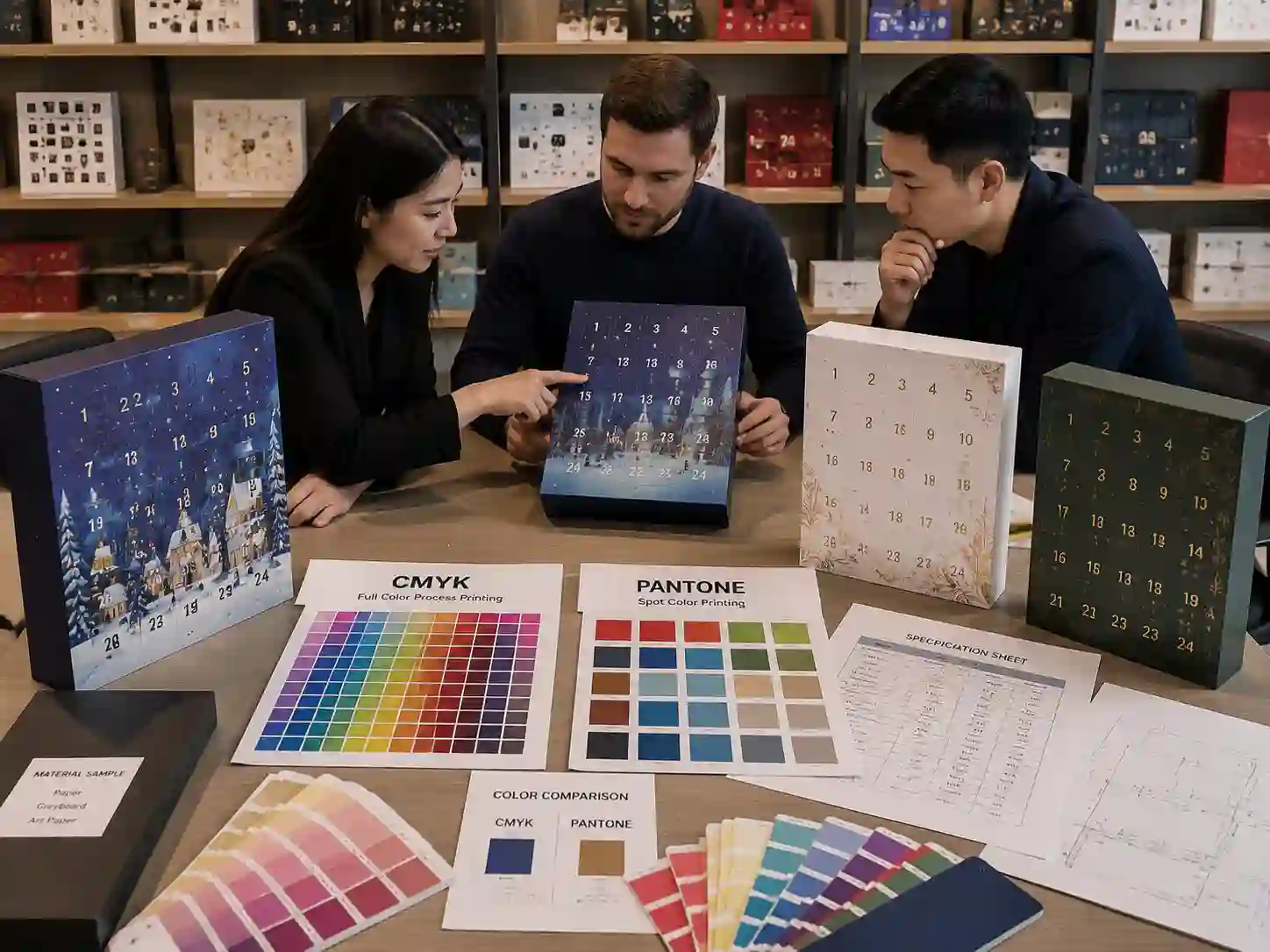
Factory tip: A professional supplier normally checks artwork positioning, bleed areas, color references, and printing limitations before making a prototype. This reduces the risk of discovering problems after mass production begins.
How Do CMYK and Pantone Printing Affect MOQ, Cost, and Lead Time?
Printing method can influence quotation details, but it is only one factor in packaging cost. MOQ, material selection, box structure, finishing, insert complexity, and production quantity usually have a larger combined impact.
- CMYK: often works efficiently for complex artwork and large-volume printed packaging.
- Pantone: may require additional setup or ink preparation for specific colors.
- Multiple Pantone colors: can increase printing complexity.
- Special finishes: such as foil stamping and embossing require additional production steps.
Lead time should also include artwork confirmation, dieline approval, sample production, sample review, bulk manufacturing, QC inspection, and export packing preparation.
How Does QC Check Printing Quality Before Bulk Shipment?
Printing QC ensures that approved samples and mass production results remain consistent. Buyers should confirm how the supplier manages color checks, material inspection, assembly tolerance, and final inspection.
Printing QC checklist for custom boxes
- Verify printed colors against approved sample references
- Check ink coverage and unwanted color variation
- Inspect alignment between artwork and box structure
- Confirm finishing quality after lamination, foil stamping, embossing, or spot UV
- Check assembly appearance and surface damage
- Review random samples during final inspection
For export orders, QC should also include packaging strength, insert fitting, carton protection, and shipping preparation. Printing quality alone does not guarantee a successful delivery if the box is damaged during transportation.
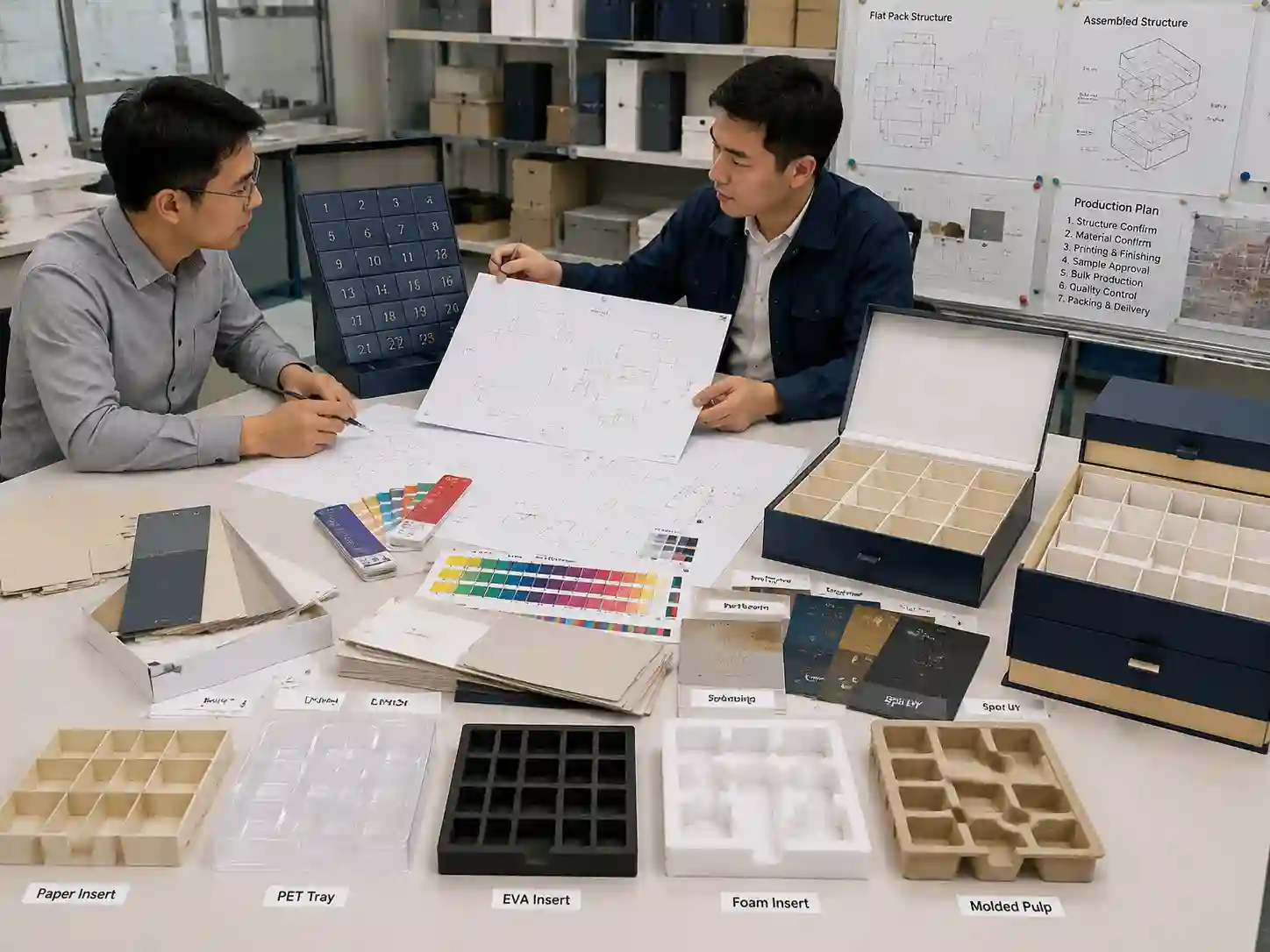
What Information Should Buyers Prepare for a Packaging Quotation?
A complete quotation request helps suppliers provide more accurate pricing and production recommendations. Buyers requesting custom advent calendar boxes should prepare:
- Box structure: rigid box, folding carton, drawer box, door-opening box, or other design.
- Box size and product dimensions.
- Material requirements such as greyboard, paperboard, or specialty paper.
- Printing requirement: CMYK, Pantone, or combination printing.
- Surface finishing requirements.
- Insert type: paper insert, PET tray, EVA insert, foam, or molded pulp.
- Quantity and expected MOQ.
- Target delivery date and shipping destination.
- Sample requirement and approval process.
Giftpackpro supports B2B buyers with custom advent calendar boxes manufacturer solutions, including packaging structure development, printing evaluation, sampling, and production planning. Buyers can also review custom advent calendar box products and learn about available custom advent calendar box services before preparing an RFQ.
What Common Mistakes Should Buyers Avoid When Choosing Printing?
Many packaging problems happen because printing decisions are made too late or without physical confirmation.
- Choosing colors only from a digital screen
- Ignoring how paper material changes color appearance
- Approving artwork without a dieline check
- Changing colors after sample approval
- Not confirming finishing effects before bulk production
- Comparing suppliers only by printing price
QC tip: The approved sample should become the production reference. Any major difference in color, finishing, structure, or assembly should be reviewed before shipment.
CMYK vs Pantone Printing Boxes: Which Option Should Buyers Choose?
CMYK is usually the practical choice for detailed artwork and full-color packaging, while Pantone is better when exact color matching is a priority. For custom packaging projects, the final decision should consider artwork complexity, materials, structure, finishing, MOQ, and quality expectations.
Buyers planning seasonal packaging projects can use additional advent calendar box buying guides to understand sourcing, sampling, and production decisions. For supplier evaluation, learning more about the Giftpackpro packaging factory approach can help purchasing teams compare manufacturing capabilities.
FAQ: CMYK vs Pantone Printing Boxes
Is Pantone printing more expensive than CMYK printing?
Not always. Cost depends on the number of colors, production quantity, material, finishing, and setup requirements. A single Pantone color may be efficient, while multiple spot colors can increase complexity.
Can a box use both CMYK and Pantone printing?
Yes. Some premium packaging uses CMYK for images and Pantone colors for specific brand elements or important design areas.
Should buyers request a sample before mass production?
Yes. A pre-production sample allows buyers to confirm color appearance, structure, insert fitting, and finishing before approving bulk production.
Does lamination affect printed colors?
Yes. Matte lamination, gloss lamination, and soft-touch finishes can change how colors are perceived. Physical sample approval is recommended.
How can buyers request a professional packaging quotation?
Prepare artwork, box specifications, printing requirements, quantity, timeline, and sample expectations before contacting a supplier. Buyers can request a custom quote with these details for a more accurate production evaluation.


