
Choosing the right advent calendar box suppliers is not only about finding a low unit price. For overseas B2B buyers, the real question is whether a supplier can understand your structure, insert, artwork, dieline, sample expectations, production schedule, quality requirements, and export packing needs before the seasonal deadline becomes tight.
An advent calendar box looks simple from the outside, but the sourcing work behind it can be complex. A drawer calendar, door-opening calendar, rigid paperboard calendar, or foldable paper box calendar may require different material thickness, insert design, printing method, assembly process, and packing solution. If these details are not compared clearly at the supplier selection stage, the quotation may look attractive but become risky later during sample approval or bulk production.
This guide is written for brands, importers, wholesalers, retail buyers, and sourcing teams comparing suppliers in China or other manufacturing markets. It focuses on practical purchasing checks, not holiday storytelling. If you are starting a new project, you can also review Giftpackpro as a custom advent calendar boxes manufacturer and explore our custom advent calendar box services for structure, sampling, and bulk production support.
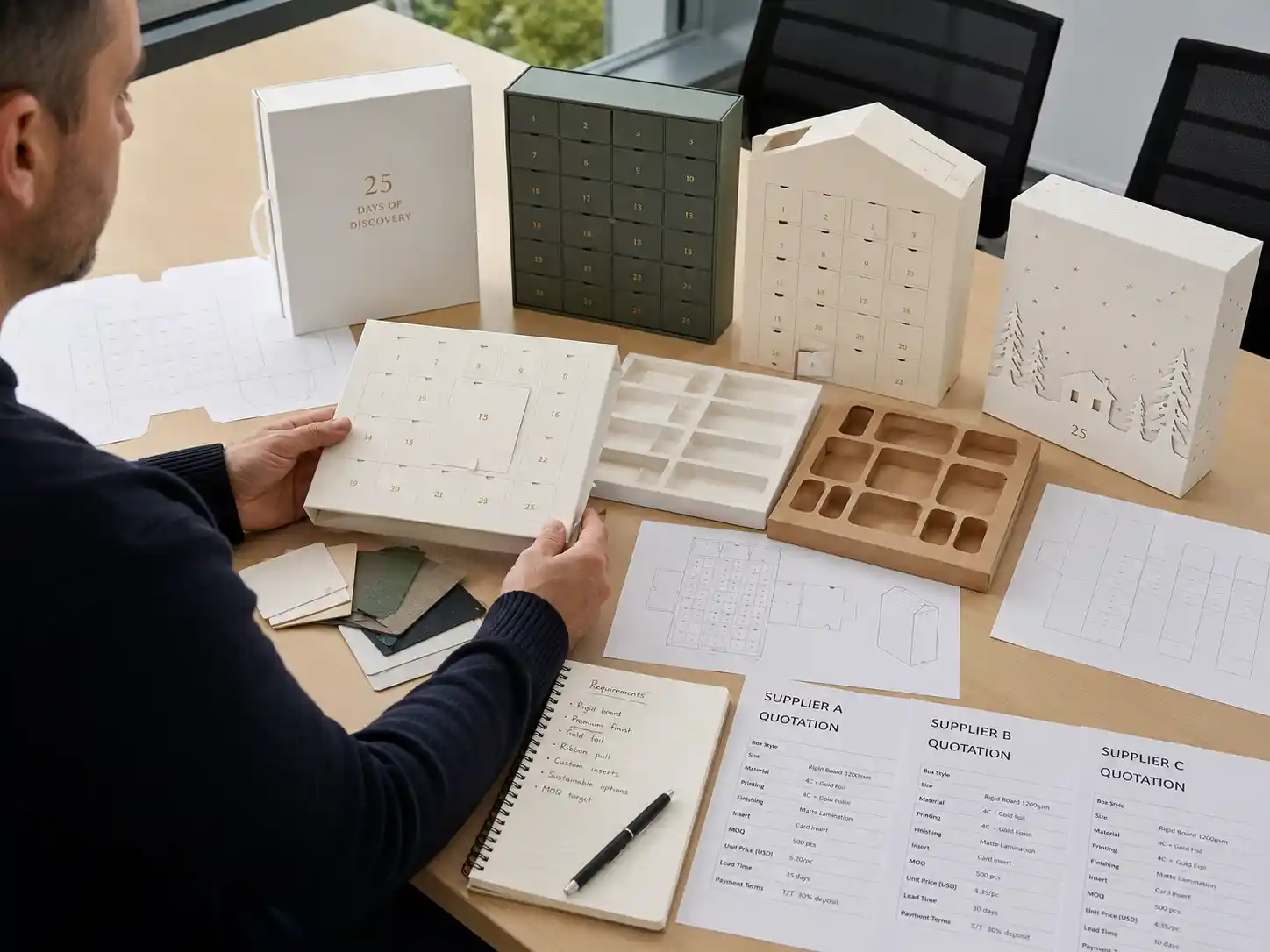
Start With the Box Structure, Not the Price
Before comparing quotations, first make sure every supplier is quoting the same structure. A small difference in structure can change material cost, labor cost, packing volume, sample difficulty, and production risk.
For example, a rigid drawer advent calendar box is usually more labor-intensive than a simple folding carton calendar. A calendar with many small compartments may require more insert testing than a large-window structure. A magnetic closure, ribbon puller, paper sleeve, plastic-free insert, or special surface finish can also affect both cost and lead time.
When you contact advent calendar box suppliers, provide the same basic information to each one:
- Box style, such as drawer, door-opening, book-style, foldable, or rigid box structure
- Approximate size and number of compartments
- Product type and estimated product weight for each cavity
- Preferred material, paperboard thickness, and insert material if known
- Artwork status, such as finished artwork, rough design, or blank prototype request
- Expected order quantity and target retail season
- Export packing, labeling, and carton requirements
If a supplier gives a price without asking about these details, be careful. They may be quoting a basic assumption instead of your actual project. That can cause price changes after the dieline, sample, or production file is reviewed.
Compare Dieline and Artwork Support
Artwork and dieline support are major differences between average suppliers and experienced packaging factories. For advent calendar boxes, the dieline must match the box structure, opening direction, insert layout, compartment size, and printing area. If the dieline is unclear, the final box may have alignment issues, folding problems, or inconsistent drawer positions.
Ask each supplier whether they can provide a custom dieline based on your product dimensions. Also ask how they handle artwork checking before sample production. A reliable supplier should be able to review bleed area, folding lines, cut lines, color areas, barcode location, retail warning labels if required, and the relationship between artwork and box structure.
For retail projects, barcode and supply-chain labeling may need to follow buyer or retailer requirements. You can refer to GS1 standards for general barcode and identification standards, but your final label requirements should always follow your retailer, marketplace, or importer instructions.
Check Insert Design and Product Fit
The insert is one of the most important parts of an advent calendar box project. It protects the products, keeps each item in position, and affects the opening experience. Poor insert design can make the calendar look cheap, even when the outer box looks attractive.
Different products require different insert solutions. Chocolates, cosmetics, mini bottles, toys, candles, jewelry, stationery, and sample kits all have different weight, shape, and protection needs. A paperboard tray may work for lightweight products, while heavier or fragile products may require a stronger structure or additional protective design.
When comparing advent calendar box suppliers, ask them to explain how they will test product fit. Ideally, you should provide actual product samples, dummy samples, or detailed product dimensions. A supplier should not guess the insert only from a general product description.
Sample Quality Matters More Than a Perfect Photo
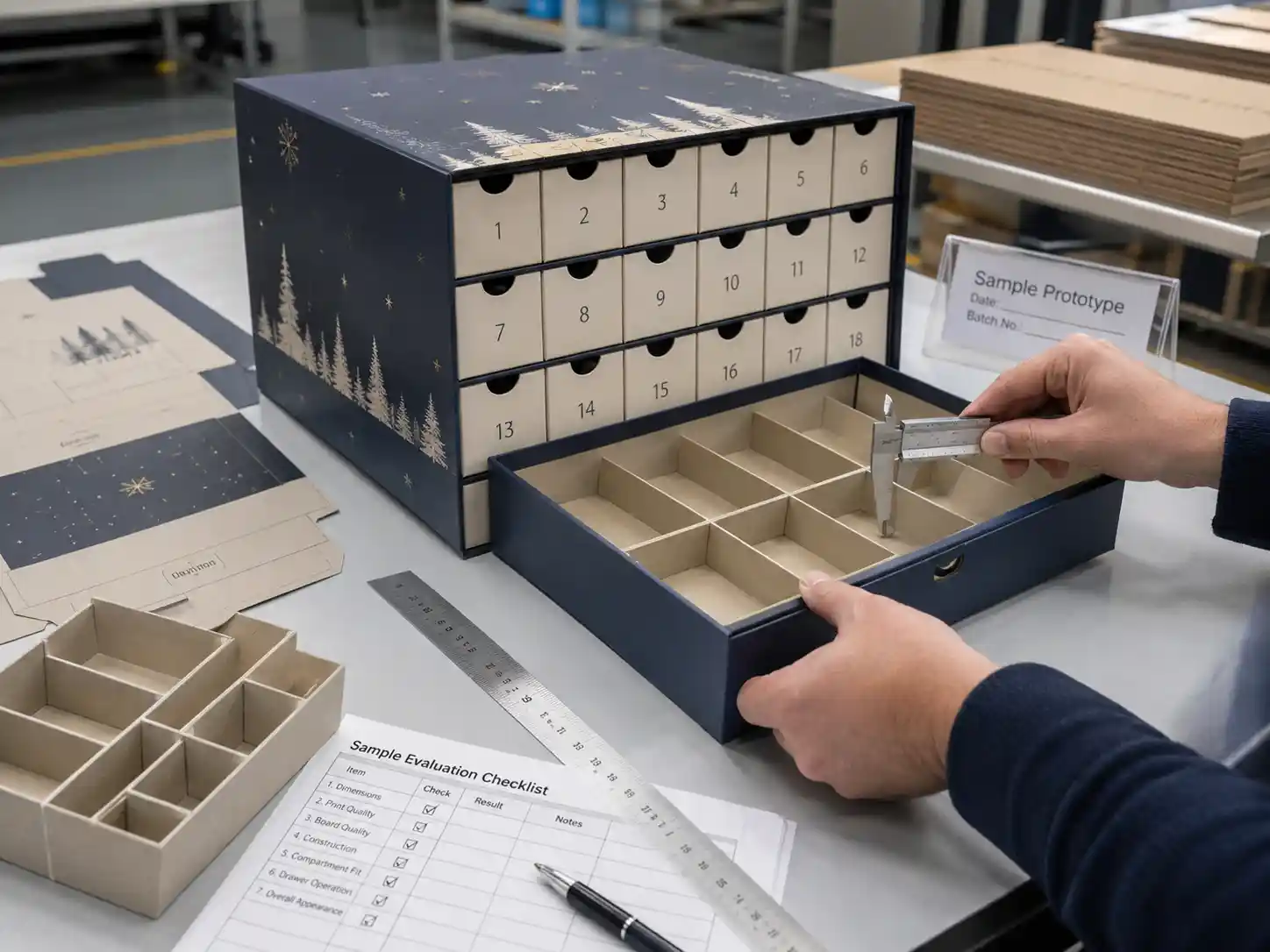
Supplier photos can help you understand general capability, but they should not replace a physical sample. A good sample helps you check structure, material feel, opening performance, printing accuracy, insert fit, and export packing logic before bulk production.
For first-time buyers, it is practical to start with a white dummy sample or structure sample before moving to a full printed sample. This can reduce misunderstanding about size, compartments, insert layout, and opening method. After the structure is confirmed, a printed sample can be used to check artwork, color, finish, and retail presentation.
Sample approval should be specific. Instead of saying “sample approved” too quickly, record what has been approved: structure, size, insert, artwork, material, printing finish, barcode position, carton method, or only the general concept. This avoids confusion when the supplier starts bulk production.
Quotation Comparison Table for Buyers
When comparing supplier quotations, do not only compare the unit price. Check what is included and what is excluded. A lower quote may not include sample cost, insert adjustment, surface finish, stronger export carton, barcode labeling, or extra packing instructions.
| Comparison Item | What to Check | Why It Matters |
|---|---|---|
| Box structure | Drawer, door-opening, rigid, foldable, sleeve, or book-style design | Different structures affect cost, assembly, durability, and retail appearance |
| Insert solution | Paperboard tray, molded pulp, folded insert, or custom compartment layout | Insert fit affects product protection and customer opening experience |
| Material and finish | Paperboard thickness, printing, lamination, foil, embossing, or matte finish | Small material changes can influence price, strength, and brand presentation |
| MOQ factors | Quantity based on structure, material, printing, and assembly complexity | MOQ may be usually around 300-500 pcs depending on structure, but it should be confirmed case by case |
| Sample process | White sample, printed sample, revision rounds, and approval method | Clear sampling reduces production mistakes before bulk order |
| Lead time planning | Sample timing, artwork approval, material preparation, production, packing, and shipping | Seasonal retail projects need early planning to avoid last-minute delays |
| Quality control | Structure checks, print checks, insert fit, assembly, carton strength, and packing inspection | Quality control helps reduce defects, returns, and retail complaints |
| Export packing | Master carton size, protection method, labeling, pallet plan, and loading needs | Packing affects shipping cost, storage, and arrival condition |
Ask About Quality Control Before Bulk Production
Quality control should not start after production is finished. It should be built into the whole project. For advent calendar boxes, common checks include board thickness, printing color, surface finish, glue position, drawer movement, door opening, insert fit, compartment accuracy, carton packing, and final appearance.
Ask suppliers how they inspect semi-finished and finished goods. A supplier does not need to use complicated language, but they should be able to explain their checking process clearly. You can also ask whether they can provide production photos, packing photos, or inspection notes for your order.
General quality terminology may refer to ISO standards, but buyers should not assume a supplier has any certification unless it is clearly provided and verified. For responsible paper sourcing, some buyers may ask about materials connected with FSC, but again, certification should not be claimed unless the supplier provides valid supporting documents for the specific project.
Review Export Packing and Shipping Readiness
Export packing is especially important for seasonal packaging. Advent calendar boxes may have decorative surfaces, multiple drawers, paper inserts, and large carton volume. If the packing method is weak, boxes may arrive with crushed corners, scratched surfaces, loose inserts, or damaged outer cartons.
When comparing advent calendar box suppliers, ask how they pack the finished goods. Check whether each box is individually protected, how many pieces go into one master carton, whether carton size is practical for storage and loading, and whether any barcode or shipping label area is needed.
If your products will be filled by another factory, co-packer, or fulfillment center, tell the supplier early. The box may need to be packed flat, semi-assembled, or fully assembled depending on your filling process. This detail can change both quotation and production planning.
Seasonal Planning: Do Not Compare Suppliers Too Late
Advent calendar box projects are seasonal by nature. Many buyers need packaging ready before holiday sales, retail display planning, or promotional launch schedules. That means supplier comparison should start early, especially if your project involves custom structure, printed samples, product inserts, or several rounds of artwork adjustment.
A practical sourcing timeline should include supplier comparison, quotation review, dieline creation, artwork preparation, sample making, sample revision, bulk production, quality control, export packing, shipping, customs, local delivery, product filling if needed, and final retail preparation.
If you wait until the sales season is close, suppliers may have less production capacity, material options may become limited, and shipping schedules may be harder to control. Early comparison gives you more room to test structure, improve the insert, and negotiate details without rushing the project.
How to Identify a Supplier That Understands B2B Buyers
A supplier that understands B2B buyers will usually ask better questions. They will care about product size, insert fit, carton strength, retail display requirements, packing method, artwork status, and delivery schedule. They will not treat an advent calendar box like a simple gift box with printing.
You can also judge suppliers by how they communicate. Do they explain assumptions in the quotation? Do they separate sample cost from bulk cost? Do they ask for product dimensions before confirming insert design? Do they warn you when a structure may increase labor cost or packing volume? Do they explain what is possible instead of promising everything?
For more project planning articles, visit our advent calendar box buying guides. To understand the factory background behind our packaging support, you can also visit the Giftpackpro packaging factory page.
Questions to Ask Before Choosing a Supplier
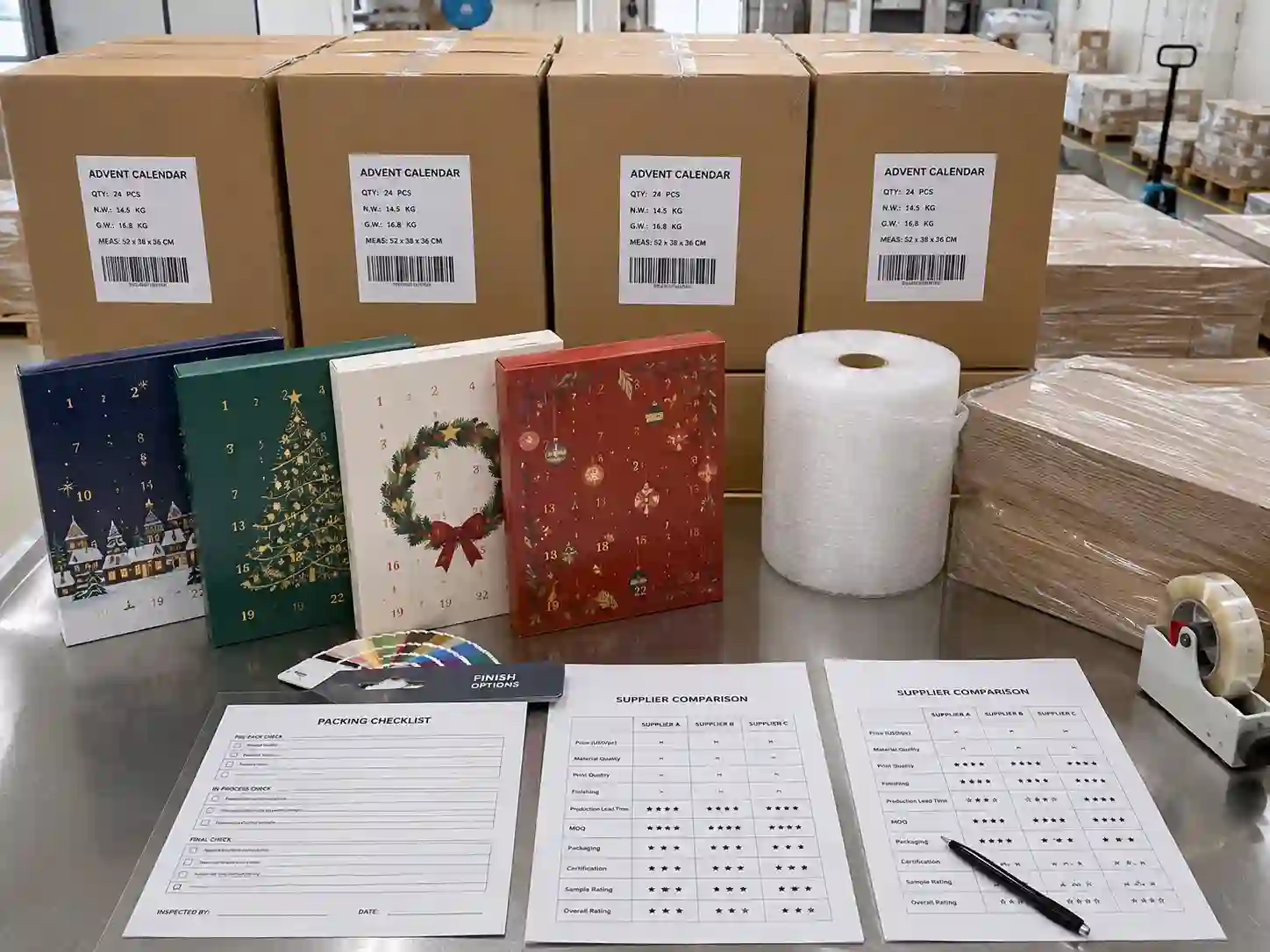
Before you choose a supplier, send a clear checklist. This helps you compare answers side by side and reduces misunderstandings.
- Can you make this box structure based on my product size and compartment plan?
- Can you provide a custom dieline before artwork preparation?
- What material and insert solution do you recommend for this product weight?
- What is included in the quotation and what is not included?
- How do you handle white samples, printed samples, and sample revisions?
- What factors affect MOQ for this structure?
- How do you inspect printing, assembly, insert fit, and export packing?
- Can you support barcode, carton label, or retailer packing instructions if provided?
- How should we plan the project schedule before the seasonal sales period?
If you want direct help with a project, you can request a custom quote and share your box size, product details, artwork status, and target order quantity.
FAQ: Comparing Advent Calendar Box Suppliers
What should I compare first when choosing advent calendar box suppliers?
Start with structure, insert design, material, and sample process before comparing unit price. If suppliers are quoting different structures or assumptions, the prices are not truly comparable.
Do I need a physical sample before bulk production?
Yes, for most custom advent calendar box projects, a sample is strongly recommended. A structure sample helps confirm size and insert fit, while a printed sample helps check artwork, finish, and presentation.
What affects MOQ for advent calendar boxes?
MOQ can depend on structure, material, printing method, insert complexity, finishing process, and assembly work. For some projects, MOQ is usually around 300-500 pcs depending on structure, but buyers should confirm based on the actual design.
How can I compare quotations from different suppliers?
Ask each supplier to quote the same structure, size, material, insert, printing finish, sample requirement, packing method, and quantity. Then compare what is included, not only the unit price.
Why is export packing important for advent calendar boxes?
Advent calendar boxes often have decorative surfaces and multiple compartments. Good export packing helps protect corners, printing, inserts, and overall appearance during shipping and storage.
Can one supplier handle both design support and bulk production?
Some suppliers can support dieline creation, sampling, artwork checking, production, quality control, and export packing. Buyers should confirm each service clearly before placing an order.
Need Custom Advent Calendar Boxes?
Giftpackpro supports overseas B2B buyers with custom advent calendar box structure planning, dieline support, sampling, insert development, bulk production, quality control, and export packing. If you are comparing advent calendar box suppliers for an upcoming seasonal retail project, share your product details, size requirements, artwork status, and order plan with us.
Contact us to request a custom quote for your next custom advent calendar box project.


