
For first-time overseas buyers, advent calendar box sampling is one of the most important steps before placing a bulk order. A sample is not only a visual reference. It helps you confirm the box structure, insert layout, artwork position, material feeling, opening experience, packing method, and practical production feasibility before seasonal retail planning moves too far.
If you are sourcing from a custom advent calendar boxes manufacturer, the sampling stage should be treated as a technical checkpoint, not just a decoration preview. A well-reviewed sample can reduce misunderstandings before mass production, especially when the project involves multiple drawers, doors, paperboard trays, rigid construction, printed sleeves, shaped windows, or mixed product compartments.
This guide explains how advent calendar box sampling works, what first-time buyers should prepare, what details to check, and how to use the sample to compare suppliers more professionally.
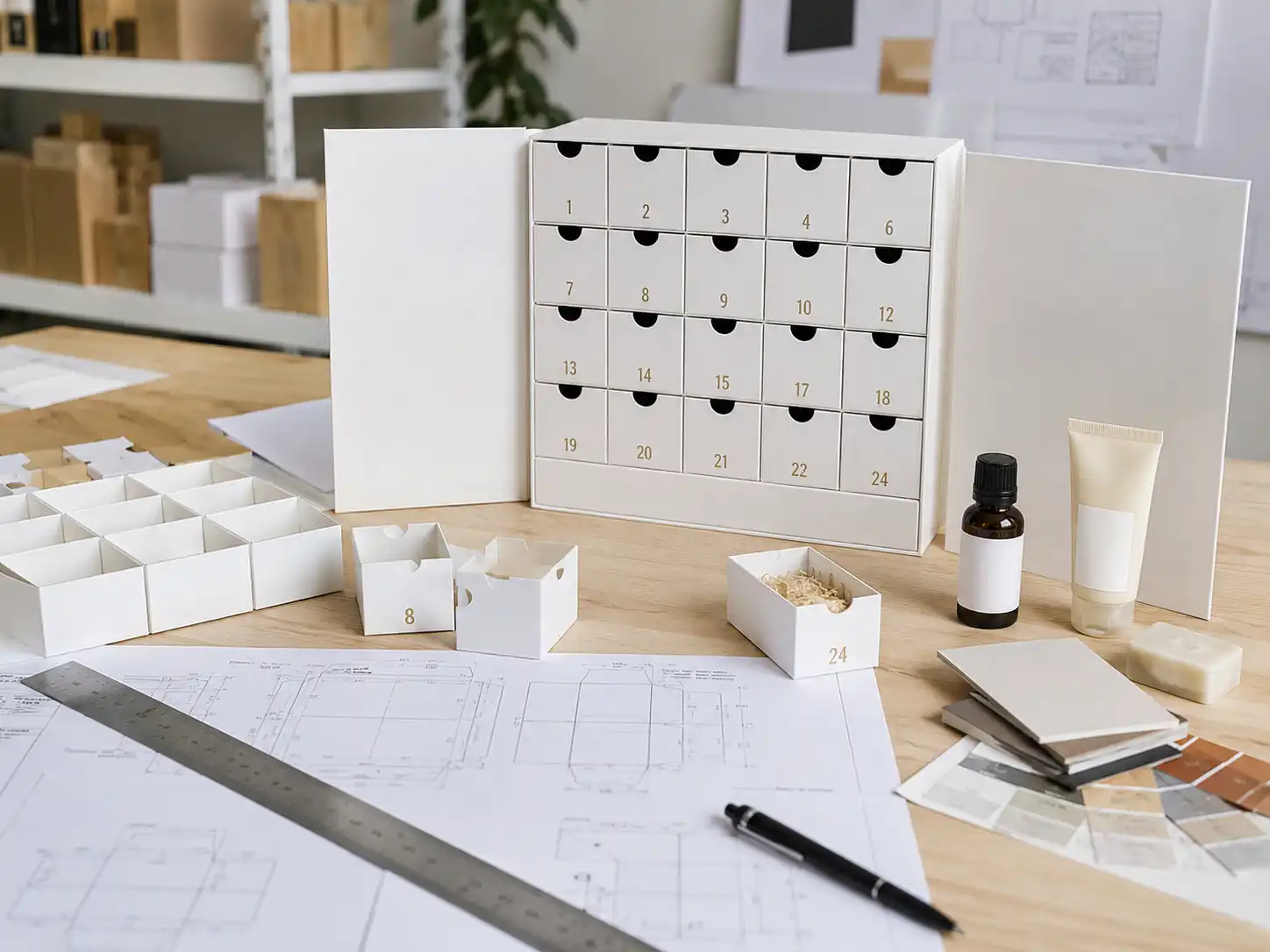
Why Sampling Matters Before Bulk Production
Advent calendar boxes are more complex than standard folding cartons or simple gift boxes. A calendar box may include 12, 24, or 25 compartments, removable drawers, perforated windows, magnetic closure, paperboard inserts, plastic-free tray options, ribbon pulls, printed sleeves, or a rigid outer shell. Each structural detail affects material usage, assembly time, packing volume, and final quotation.
Sampling helps buyers test whether the box can hold the intended products securely. It also helps confirm whether the design is realistic for factory production. A beautiful rendering can look perfect on screen, but the dieline, insert tolerance, folding direction, paper thickness, and product weight all need to work together in real packaging.
For first-time buyers, the sample stage is also useful for internal approval. Marketing teams can review the artwork. Product teams can test the fit. Purchasing teams can compare structure and cost. Retail teams can check whether the box is suitable for display, barcode placement, carton packing, and seasonal shelf planning.
What Buyers Should Prepare Before Requesting a Sample
Before asking for an advent calendar box sample, prepare as much practical project information as possible. This does not mean every detail must be final, but the factory needs enough information to suggest a workable structure and estimate sampling requirements.
- Target box type, such as drawer calendar box, door-opening calendar box, rigid advent calendar box, or paperboard calendar box.
- Approximate overall size and number of compartments.
- Product dimensions, product weight, and whether products are fragile, liquid, powder, food-related, or unusually shaped.
- Preferred material direction, such as paperboard, corrugated paper, greyboard, coated paper, kraft paper, or plastic-free insert options.
- Artwork status, including whether you already have a dieline design or need layout support.
- Expected order quantity. MOQ is usually around 300-500 pcs depending on structure, material, and production complexity.
- Target sales season and delivery window, especially for Christmas, beauty launches, retail gift sets, or promotional campaigns.
- Export packing requirements, including shipping carton limits, pallet needs, labeling, or warehouse requirements.
If you are still developing your concept, you can review custom advent calendar box services first to understand which parts of the project can be customized, including structure, insert, printing, finishing, and packing.
Common Sample Types for Advent Calendar Boxes
Not every sample has the same purpose. Some samples are made to test structure only. Others are made to review printed artwork and finishing. Knowing the difference can help you control expectations and communicate clearly with the supplier.
| Sample Type | Main Purpose | Best Used For | Buyer Notes |
|---|---|---|---|
| White Dummy Sample | Checks structure, size, insert fit, and opening method without final printing. | Early-stage structure confirmation and product fitting. | Useful before spending time on final artwork. Color and surface finish are not the focus. |
| Printed Digital Sample | Shows approximate artwork layout, color direction, and visual presentation. | Marketing review, sales presentation, and internal approval. | Digital sample color may not perfectly match bulk offset printing. Confirm color standards separately. |
| Material Reference Sample | Compares paper thickness, greyboard, coated paper, kraft paper, or insert material. | Material selection and supplier comparison. | Ask whether the sample material matches the intended bulk production material. |
| Pre-Production Sample | Confirms structure, artwork, material, finish, and packing approach before mass production. | Final approval before bulk order. | This is the most important sample for reducing production risk. |
Key Structural Details to Check During Sampling
The first thing to review is the physical structure. Do not approve a sample based only on the printed appearance. Advent calendar packaging must be strong enough to hold products, stable enough for transport, and convenient enough for consumers to open.
Box Strength and Stability
Check whether the outer box feels stable when filled with products. If the box is too soft, the calendar may deform during handling or export packing. Rigid boxes usually provide a premium feel, while paperboard or corrugated structures may be more suitable for lightweight products or cost-sensitive projects.
Insert Fit and Product Protection
The insert is one of the most important parts of advent calendar box sampling. A good insert should keep each item in position without making packing too difficult. If the compartments are too loose, products may move during shipping. If they are too tight, workers may struggle during assembly, and the box may become inefficient for bulk production.
Drawer or Door Opening Experience
If the calendar uses drawers, test whether each drawer slides smoothly and stays aligned. If it uses perforated doors, check whether the door opens cleanly without tearing the printed surface in an uncontrolled way. First-time buyers often focus on appearance, but the user opening experience is a key part of the final retail product.
Artwork and Dieline Alignment
Ask the supplier to provide or confirm the dieline before printing the sample. The dieline defines cutting, folding, bleed, safe area, glue area, window position, and compartment layout. During sample review, check whether key artwork elements are too close to fold lines, drawer edges, perforation lines, or cutting areas.
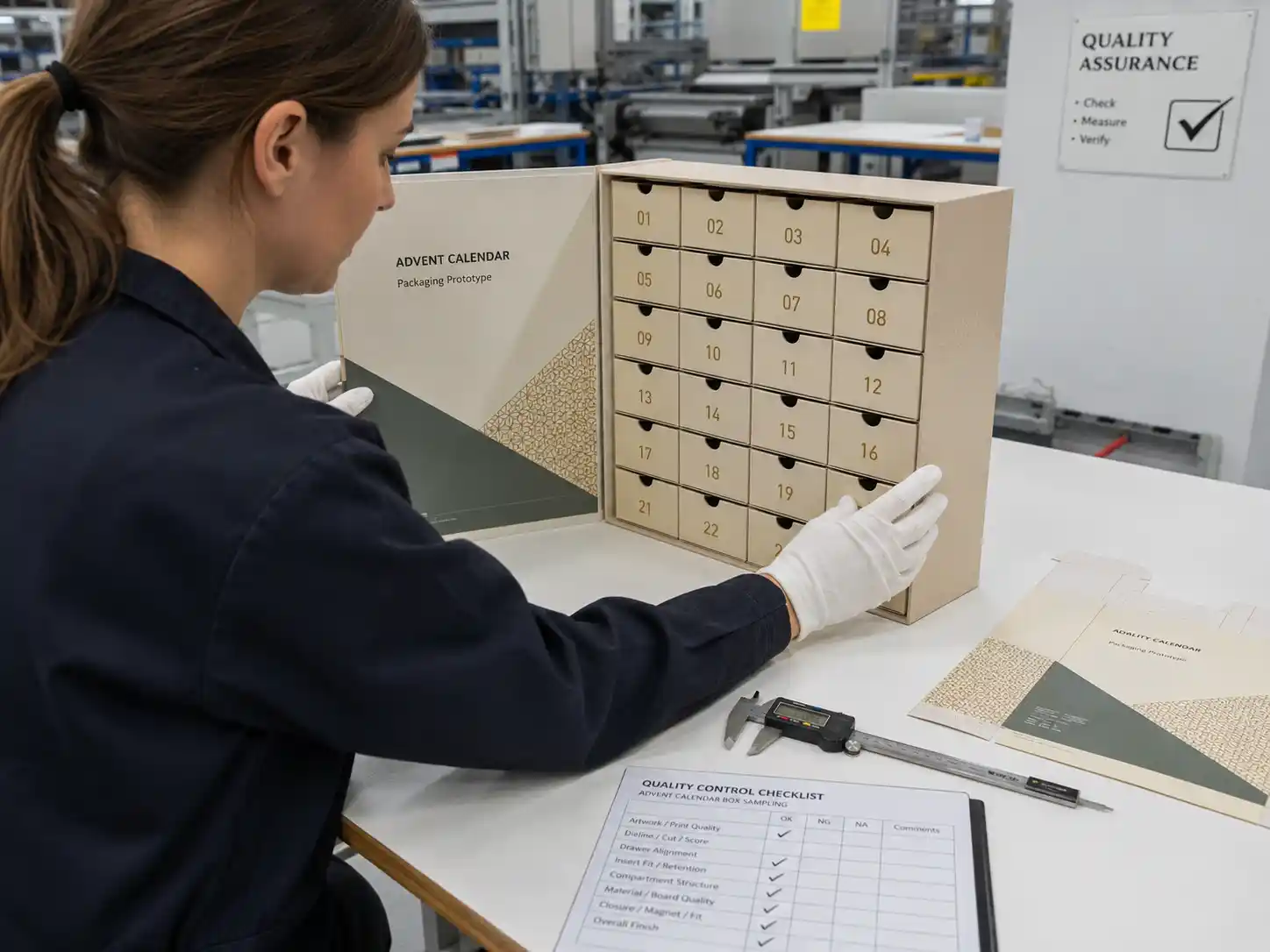
Artwork, Printing, and Finishing Checks
Artwork review is more than checking whether the design looks attractive. For B2B packaging buyers, artwork approval should include technical checks. Make sure the supplier understands the final printing method, color expectations, surface finishing, and retail labeling requirements.
If your project uses brand colors, provide color references or print standards where possible. A digital screen preview is not enough for accurate production communication. If your retail packaging requires barcodes or supply-chain labels, check placement, scanning area, and contrast. For general barcode and supply-chain labeling references, buyers may review GS1 standards.
Common finishing options may include matte lamination, gloss lamination, spot UV, foil stamping, embossing, debossing, textured paper, ribbon, handle, or window patching. Each option can affect cost, production complexity, and sample accuracy. Do not assume every finishing detail is included unless it is listed in the quotation and confirmed on the sample.
Material Selection and Responsible Paper Sourcing
Material choice affects structure, weight, appearance, and export packing. Rigid advent calendar boxes often use greyboard wrapped with printed paper. Folding paperboard calendar boxes may be lighter and easier to ship. Corrugated paper structures can be useful when strength and display stability are important.
Some buyers also ask about responsible paper sourcing. If this is important for your project, discuss it early and ask what paper options may be available. You can review general information from FSC when learning about responsible forest-related sourcing, but do not assume any factory certification or material claim unless the supplier provides valid documents for your order.
How Sampling Affects Quotation and MOQ
Sampling often reveals details that affect the final quotation. A small change in insert layout, paper thickness, drawer quantity, finishing, or export carton method can change the cost. For this reason, first-time buyers should avoid requesting a final bulk price from only a rough idea.
A more reliable quotation usually needs structure details, size, quantity range, material direction, printing requirements, finishing options, packing method, and destination-related export packing expectations. MOQ is usually around 300-500 pcs depending on structure, but complex rigid boxes, special finishing, custom inserts, or unusual materials may require different production planning.
When comparing suppliers, do not only compare the lowest unit price. Compare what is included: dieline support, sample type, material match, printing method, insert design, packing details, quality control process, communication speed, and ability to support seasonal deadlines. You can also browse more advent calendar box buying guides to build a stronger sourcing checklist before supplier comparison.
Quality Control Points to Review Before Approval
Before approving the sample, create a simple quality checklist. This helps your team avoid vague feedback and makes it easier for the factory to adjust the next version.
- Overall size matches the approved specification.
- Compartments fit the intended products with reasonable tolerance.
- Outer structure does not bend, collapse, or open unexpectedly.
- Drawers, doors, or windows open smoothly and consistently.
- Artwork is aligned with the dieline, folds, cuts, and edges.
- Printed text, barcode area, and retail information are clear.
- Surface finishing matches the approved requirement.
- Glue areas are clean and not visible in key display areas.
- Insert assembly is practical for bulk production.
- Export carton packing can protect the product during shipping.
For general quality terminology and management concepts, buyers can refer to ISO standards. This is useful background knowledge, but it should not replace your own project-specific quality checklist.
Planning Sampling Around Seasonal Retail Timelines
Advent calendar box projects are strongly seasonal. Many buyers need packaging ready before Christmas sales, beauty launch calendars, food gift campaigns, or promotional retail programs. If sampling begins too late, there may not be enough time for dieline adjustment, artwork revision, material confirmation, pre-production approval, bulk production, export packing, shipping, customs, and warehouse distribution.
First-time buyers should begin communication early, especially when the box requires a complex insert or multiple approval rounds. A simple structure may move faster than a premium rigid calendar box with drawers, foil stamping, and custom product cavities. Instead of asking only “how fast can you make it,” provide your launch date and ask the supplier to help identify possible risks.
You can learn more about the company background through the Giftpackpro packaging factory page and contact the team early if your project has seasonal delivery pressure.
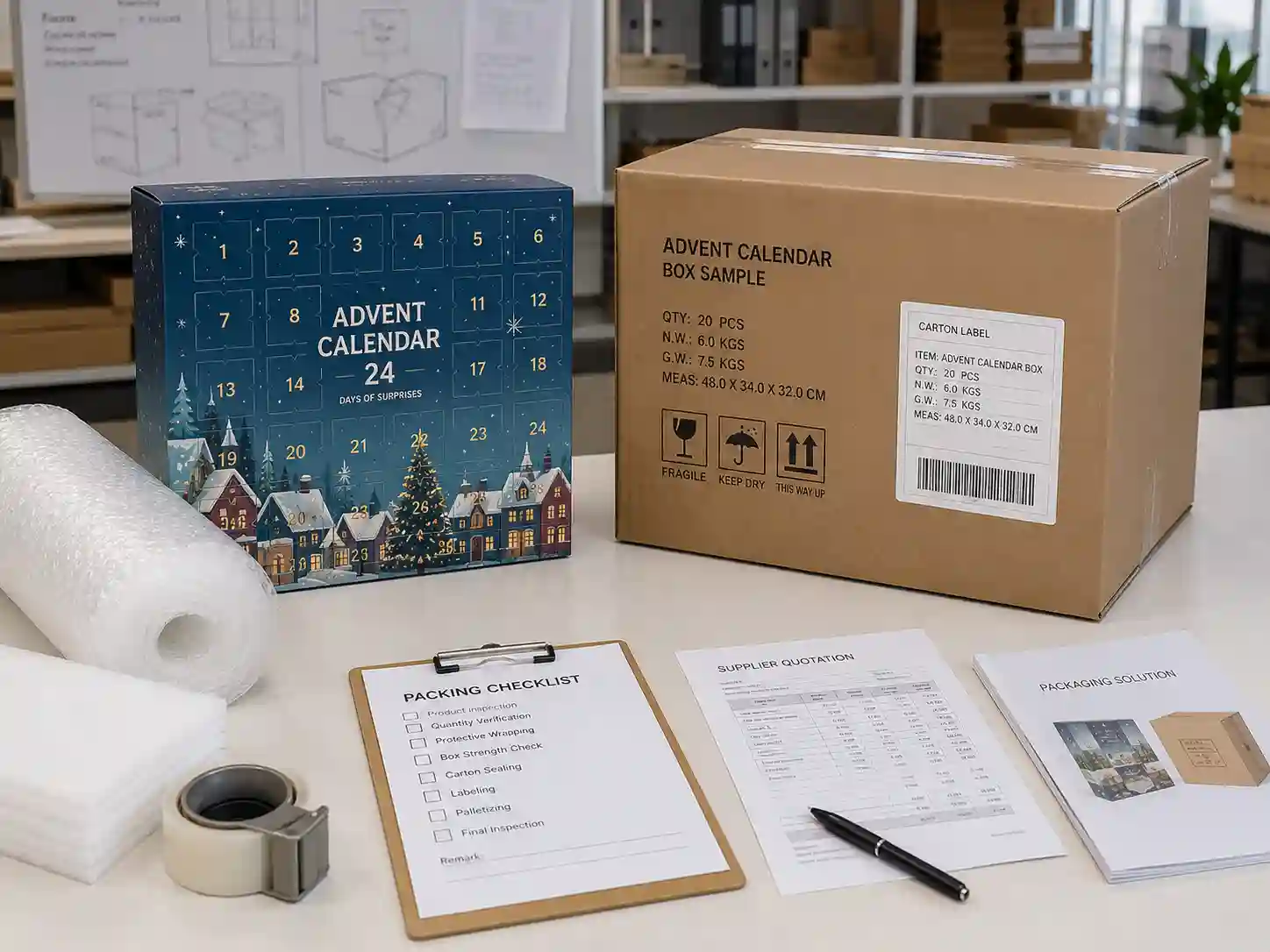
How to Give Clear Sample Feedback
Good feedback saves time. Instead of writing general comments like “make it better” or “the box feels wrong,” describe the exact issue and the required change. For example, “the drawer is too tight after the product is inserted,” “the logo is too close to the fold line,” or “the insert should hold the bottle more securely during shaking.”
Photos and videos are also helpful. Mark the problem area with arrows, circles, or short notes. If you are comparing two versions, name them clearly. For example, “Sample A has better drawer movement, but Sample B has better paper thickness.” This makes supplier communication faster and reduces the risk of misunderstanding before bulk production.
Questions to Ask Your Supplier Before Confirming the Sample
Before approving the sample, ask practical questions that connect the sample to mass production. This is especially important if you are comparing several suppliers.
- Will the bulk production material be the same as the sample material?
- Will the printing method be the same as the sample printing method?
- Are there any structure changes recommended before bulk production?
- Can the insert be assembled efficiently at scale?
- How will the finished boxes be packed for export?
- What information is required for a more accurate quotation?
- What parts of the sample may vary slightly during bulk production?
If your project is ready for supplier discussion, you can request a custom quote and share your product size, artwork status, target quantity, and preferred structure.
FAQ: Advent Calendar Box Sampling
Do I need a sample before ordering custom advent calendar boxes?
Yes, a sample is strongly recommended, especially for first-time buyers. Advent calendar boxes often include multiple compartments, inserts, doors, drawers, and printed details. Sampling helps confirm structure, product fit, artwork position, and packing feasibility before bulk production.
Can I request a sample without final artwork?
Yes. Many buyers start with a white dummy sample to confirm structure and insert fit before final artwork is ready. After the structure is approved, a printed sample or pre-production sample can be used for visual confirmation.
What information should I send for advent calendar box sampling?
Send the product dimensions, product weight, number of compartments, preferred box style, approximate quantity, artwork status, target sales season, and any export packing requirements. The more practical details you provide, the easier it is for the supplier to recommend a suitable structure.
Is the sample always identical to bulk production?
Not always. A white dummy sample or digital printed sample may differ from bulk production in color, material, or finishing method. Before approval, ask which details match the final production and which details are only for reference.
How should I compare samples from different suppliers?
Compare structure, insert fit, material feeling, print alignment, finishing quality, packing method, communication clarity, and whether the quotation includes the same requirements. The lowest price is not always the safest option for seasonal retail packaging.
Need Custom Advent Calendar Boxes?
Giftpackpro helps overseas buyers develop custom advent calendar boxes for seasonal retail, brand promotions, beauty sets, food gifts, and product launch campaigns. If you are preparing your first advent calendar box sampling project, share your structure idea, product size, artwork status, and order quantity range with our team. You can request a custom quote for practical sampling support and bulk production planning.


