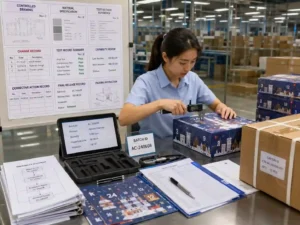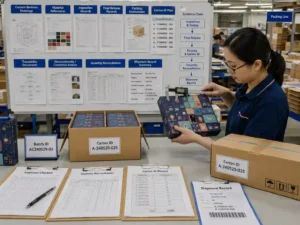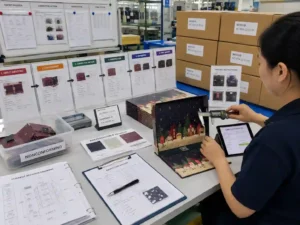
For importers, custom advent calendar boxes holiday campaigns are not only seasonal packaging. They are structured retail projects that involve box engineering, insert matching, artwork control, sampling, production planning, inspection, and export packing.
Brands choose this format because one box can combine product display, countdown experience, promotional storytelling, and retail shelf impact. But for purchasing teams, the real question is not only “Does it look attractive?” It is “Can the factory make it stable, repeatable, and export-ready before the seasonal deadline?”
This guide explains why brands use custom advent calendar boxes for holiday campaigns and how importers can compare China suppliers, quotations, communication quality, lead time, payment terms, and reliability before placing a bulk order.
Why Advent Calendar Boxes Work for B2B Holiday Campaigns
Advent calendar packaging is useful for beauty, skincare, candles, snacks, tea, coffee, toys, stationery, small gifts, and promotional product sets. A good structure turns multiple small items into one organized seasonal product.
For buyers, the value is practical. The packaging can support product separation, retail presentation, unboxing control, and brand campaign consistency. This is why many purchasing teams compare a custom advent calendar boxes manufacturer based on structure and production capability, not only unit price.
Common B2B Use Cases
Beauty brands often need rigid drawer boxes or door-opening boxes for skincare samples, fragrance miniatures, or cosmetic sets. Food and beverage brands may need paperboard inserts, coated paper, or food-contact packaging guidance depending on the product type. Gift companies may need flexible structures that can hold different product sizes under one campaign theme.
Retail buyers also care about shelf space and carton efficiency. A beautiful box that is too heavy, too fragile, or too difficult to pack can increase logistics risk during the peak holiday season.
Structure Is the First Supplier Comparison Point
Before comparing quotations, buyers should confirm the required structure. A small design change can affect material usage, labor cost, packing volume, sample time, and bulk production risk.
Common structures include rigid drawer advent calendar boxes, book-style boxes with numbered doors, foldable rigid boxes, sleeve boxes, and paperboard countdown boxes. Each structure has different requirements for board thickness, paper wrapping, glue control, die-cut accuracy, and insert design.
Drawer Style vs. Door Opening Style
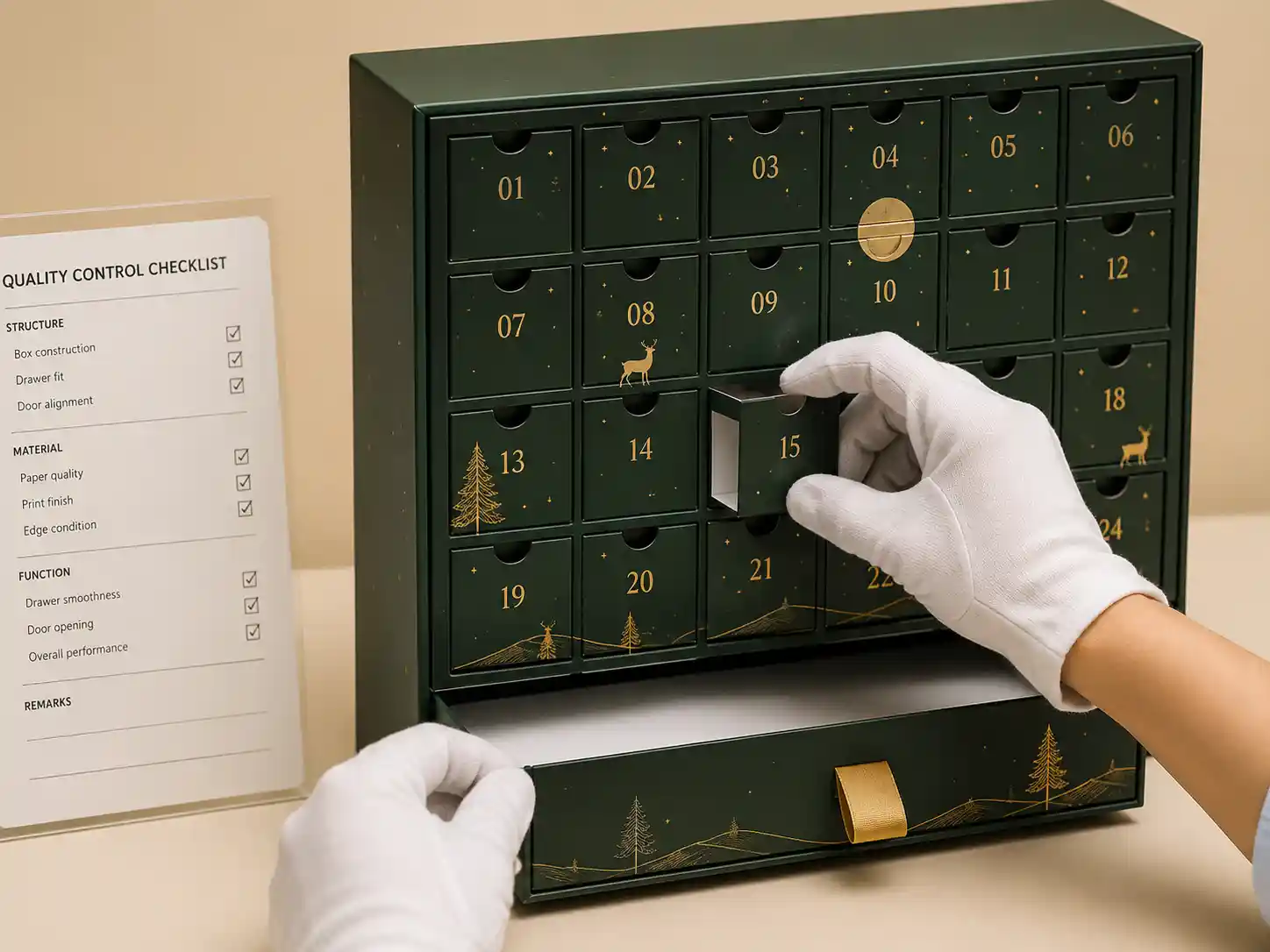
Drawer-style boxes are suitable for premium gift sets and products that need a stronger presentation. The buyer should check drawer sliding tolerance, ribbon strength, paper wrapping, and whether drawers remain smooth after loading product weight.
Door-opening styles are often used for lighter items and high-volume promotional campaigns. The buyer should check perforation strength, door opening performance, printing alignment, and whether the doors can open without tearing the surrounding area.
Insert Matching Matters
Inserts protect products and control the unboxing layout. Paperboard inserts, corrugated inserts, EVA inserts, foam inserts, and molded pulp inserts all have different cost and sustainability profiles. For many buyers, the right insert is the difference between a box that looks good in a sample room and one that survives export shipping.
If your team is still comparing options, the custom advent calendar box services page can help define structure, insert type, artwork preparation, sampling, and production steps before quotation.
How to Compare China Factories for Advent Calendar Projects
China sourcing can be efficient when the buyer prepares clear specifications and compares suppliers beyond the first quoted price. For seasonal packaging, a low quotation is not useful if the factory cannot control sample accuracy, artwork communication, production schedule, or pre-shipment inspection.
| Comparison Item | What Buyers Should Check | Why It Matters |
|---|---|---|
| Box structure | Drawer, door-opening, book-style, sleeve, foldable rigid, or paperboard format | Structure affects tooling, labor, material, packing volume, and lead time. |
| Material specification | Greyboard thickness, paper type, coating, lamination, insert material | Different materials can change strength, finish, and unit cost. |
| Artwork handling | Dieline accuracy, color control, logo placement, barcode area, warning text | Artwork mistakes can delay sampling and bulk production. |
| Sample process | White sample, printed sample, insert test, product loading test | Samples help confirm structure before bulk production starts. |
| QC process | Opening test, drawer sliding test, insert fit, carton drop concern, AQL inspection support | Holiday campaigns have limited time for rework after shipment. |
| Export packing | Flat packing, assembled packing, master carton size, shipping mark, pallet plan | Packing method affects freight cost and damage risk. |
Factory Capability Is More Than Machine List
A capable supplier should understand dielines, structure testing, paper wrapping, insert tolerance, color control, assembly efficiency, and export packing. A machine list alone does not prove the factory can manage a seasonal gift packaging project.
When reviewing a supplier, ask for similar project examples, sample photos, structure advice, and clear production checkpoints. A reliable supplier should be able to explain what may increase cost or risk before the order is confirmed.
Buyers can also review custom advent calendar box products to compare possible styles before sending a detailed RFQ.
Quotation Preparation: What to Send Before Asking for Price
A complete RFQ helps the supplier quote faster and more accurately. Without key details, suppliers may quote based on assumptions, and later the price changes after the structure, insert, or packing method becomes clear.
Basic RFQ Information
Prepare the box size, product size and weight, number of compartments, structure type, material preference, printing requirement, finish, insert type, estimated quantity, destination country, packing method, and expected delivery window.
If the product is not finalized, share product dummies or reference dimensions. For example, a skincare brand can provide bottle height, diameter, weight, and quantity per set. A tea brand can provide sachet size, bag count, and whether the calendar needs food-contact inner packaging.
Artwork and Dieline Details
Artwork should be prepared with clear dielines, bleed, color references, logo files, barcode positions, legal text, and numbering layout. For numbered advent calendar doors, the factory should confirm print alignment and die-cut position before sample approval.
For sustainability claims, buyers should avoid vague wording and use verifiable standards where needed. For example, brands can learn more about responsible forest certification from FSC. For quality management references, buyers can review ISO 9001 quality management.
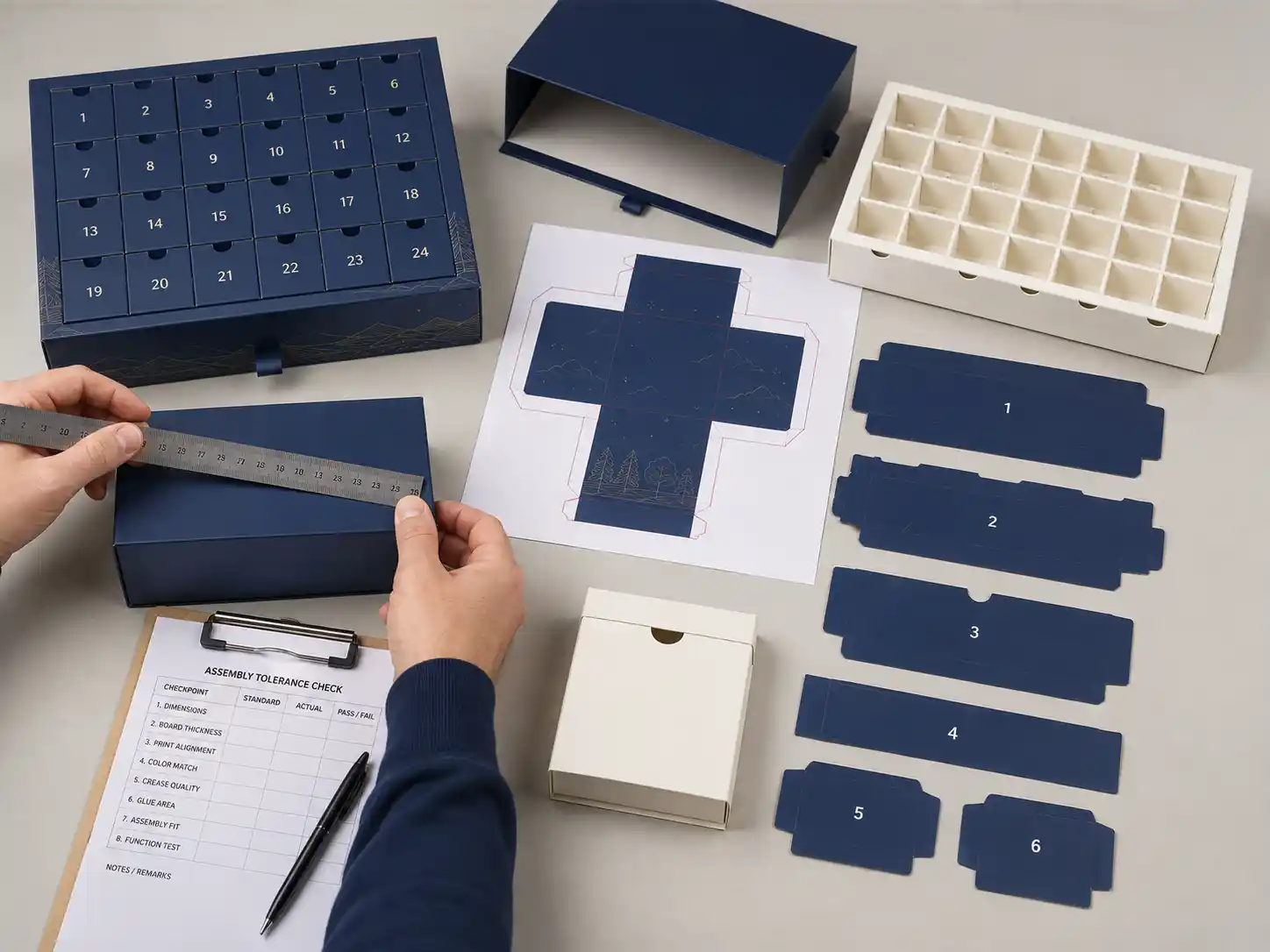
Customization Options That Affect Cost and Lead Time
Custom advent calendar boxes can include many upgrades, but every option should support the campaign goal. Too many finishes can increase cost, sample time, and production complexity.
Common Custom Options
Buyers often request custom size, printed artwork, numbered doors, magnetic closure, ribbon pulls, window cutouts, foil stamping, embossing, spot UV, matte lamination, soft-touch coating, paperboard inserts, EVA inserts, foam inserts, or molded pulp inserts.
For premium campaigns, rigid board and drawer structures may create stronger presentation. For larger promotional quantities, paperboard structures may help control cost and packing volume. The right choice depends on product weight, retail price point, campaign quantity, and shipping plan.
Sample Approval Should Include Function Testing
Sample approval should not stop at color and appearance. The buyer should test whether drawers slide smoothly, doors open cleanly, inserts hold the product correctly, and the box remains stable after loading.
Giftpackpro usually recommends checking the physical sample with actual or dummy products before mass production. This reduces the chance of finding fit problems after printed materials are already produced.
Lead Time Planning for Holiday Campaigns
Holiday packaging has a fixed selling window. Late delivery can affect retail launch, warehouse receiving, influencer kits, subscription boxes, and online promotion schedules.
Buyers should separate the timeline into design confirmation, dieline preparation, sample production, sample approval, artwork adjustment, bulk material purchasing, mass production, inspection, export packing, and shipping.
Why Early Confirmation Helps
In October sourcing and supplier comparison work, many importers are already reviewing next season’s quotation, sample plan, or supplier backup list. Early confirmation gives the factory more room to test structure, improve packing, and reserve production capacity.
For urgent projects, buyers should ask the factory which details can be simplified. Sometimes reducing special finishes, choosing a standard insert material, or confirming artwork faster can save time without damaging the campaign result.
Communication Quality Is a Real Sourcing Factor
For custom packaging, communication quality directly affects cost, sample accuracy, and delivery risk. A good supplier should not only say “yes.” The supplier should ask useful questions and identify unclear points before production.
Useful Supplier Questions
A reliable supplier may ask about product weight, compartment sequence, whether the box ships assembled or flat, whether the buyer needs retail-ready cartons, whether the inserts must be removable, and whether the product has special compliance or labeling needs.
If a supplier quotes quickly but ignores these details, the first price may not represent the final cost. Clear communication is especially important when comparing multiple China factories for the same holiday campaign.
For more sourcing and structure topics, buyers can read more advent calendar box buying guides before preparing a final supplier comparison sheet.
Payment, MOQ, and Reliability Checks
Payment terms and MOQ should be reviewed together with project complexity. A simple paperboard advent calendar may have a different MOQ from a rigid drawer calendar with several insert types and special finishes.
Many custom packaging projects use deposit and balance payment terms, but buyers should confirm the exact payment schedule, sample fee, tooling cost, bulk order terms, and inspection arrangement before production starts.
How to Check Supplier Reliability
Ask for clear quotation breakdowns, sample photos, production schedule, packing method, carton size estimate, and quality control checkpoints. A serious supplier should be able to explain what is included and what is not included.
Buyers can also review the Giftpackpro packaging factory background to understand factory experience, product range, customization support, and export packaging workflow.
Quality Control and Export Packing
QC for advent calendar boxes should focus on both appearance and function. Because the box has multiple doors, drawers, compartments, or inserts, small errors can become visible during customer use.
Key Inspection Points
Check color consistency, printing registration, surface scratches, paper wrapping, glue marks, edge finishing, door alignment, drawer movement, insert fit, compartment sequence, barcode readability, carton labels, and master carton strength.
For export packing, the buyer should confirm whether the boxes ship flat or assembled. Flat packing may reduce volume for some structures, while assembled packing may protect shape and reduce destination-side labor. The right answer depends on structure, quantity, product loading plan, and shipping method.
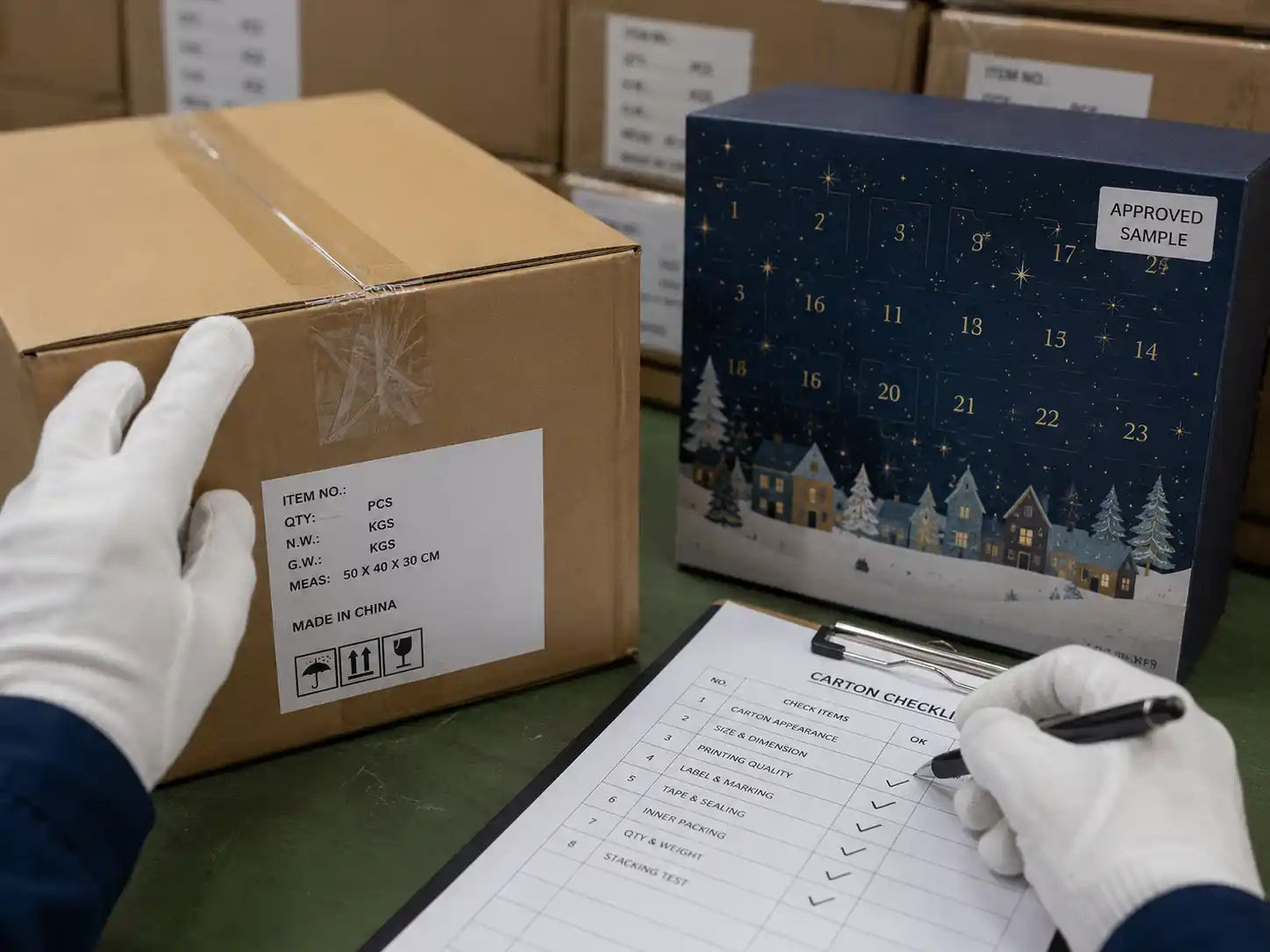
Practical Quote-Preparation Advice for Importers
Before sending an RFQ, prepare a simple supplier comparison sheet. Include supplier name, quoted structure, material, insert type, sample cost, tooling cost, MOQ, unit price, production lead time, packing method, carton size, payment terms, and communication notes.
Do not compare only the lowest unit price. A quotation with better structure advice, clearer sample process, and stronger QC support may reduce risk for a seasonal campaign.
Example RFQ Message
Here is a practical example buyers can adapt:
“We need a custom advent calendar box for a holiday campaign. The box should hold 24 small skincare items. Finished box size is approximately 300 x 220 x 80 mm. Each product weighs 20–60 g. We prefer a rigid drawer or door-opening structure with printed artwork, matte lamination, and paperboard or EVA insert options. Please quote 500, 1,000, and 3,000 pcs with sample cost, tooling cost, MOQ, lead time, packing method, carton size estimate, and payment terms.”
This type of RFQ helps the supplier understand the project clearly and return a more useful quotation.
When to Work with Giftpackpro
Giftpackpro works with overseas brands, wholesalers, gift companies, retail buyers, and purchasing teams that need custom advent calendar boxes and seasonal paper gift packaging. The focus is on structure, inserts, artwork support, sampling, bulk production, quality control, export packing, and quotation details.
If your team is comparing suppliers for a holiday campaign, start by preparing product dimensions, quantity range, structure preference, insert requirement, artwork status, and destination market. Then use the request a custom quote page to send the project details for review.
For buyers who need a full planning path, Giftpackpro can help review structure options, sample requirements, production feasibility, and export packing before bulk order confirmation through its custom advent calendar box services.