
How to Avoid Common Problems in Advent Calendar Box Production
Advent calendar box production problems usually start before mass production. The main causes are unclear structure requirements, weak insert planning, artwork errors, poor sample checking, or export packing that does not match the shipping method.
For overseas brands, wholesalers, gift companies, and retail buyers, these problems can affect launch timing, retail presentation, carton safety, and final cost. This guide explains how to reduce common risks before placing a bulk order with a custom advent calendar boxes manufacturer.
1. Confirm the Box Structure Before Artwork Starts
Many advent calendar box production problems happen when the structure is not confirmed early enough. A 24-day drawer calendar, a door-opening calendar, a rigid magnetic box, and a folding paperboard calendar all need different material thickness, insert design, and packing methods.
Before design work begins, buyers should confirm whether the box will be used for cosmetics, candles, chocolate, tea, toys, stationery, jewelry, or promotional gifts. Product size and weight directly affect greyboard thickness, drawer depth, paperboard strength, insert type, and carton packing.
Common structure issues to check
Buyers should avoid choosing a structure only by appearance. A beautiful calendar box can still fail if the drawers are too tight, the doors are too loose, or the insert cannot hold the product during shipping.
| Production Risk | Common Cause | How to Reduce the Problem |
|---|---|---|
| Drawer stuck or difficult to open | Insufficient tolerance between drawer and outer sleeve | Confirm sample testing with real product weight before bulk production |
| Door panel warping | Large panel area with weak paperboard or poor lamination balance | Review material thickness, paper direction, and surface finishing during sampling |
| Insert movement during transport | Insert holes or cavities are too loose | Send product samples or accurate product dimensions before insert die-cutting |
| Retail display damage | Assembled packing not strong enough for export handling | Use proper master cartons, corner protection, and pallet planning |
If your team is comparing different structures, review available custom advent calendar box products first, then ask the factory which structure is better for your product weight, target price, and retail display plan.
2. Choose Materials Based on Product Weight and Shipping Risk
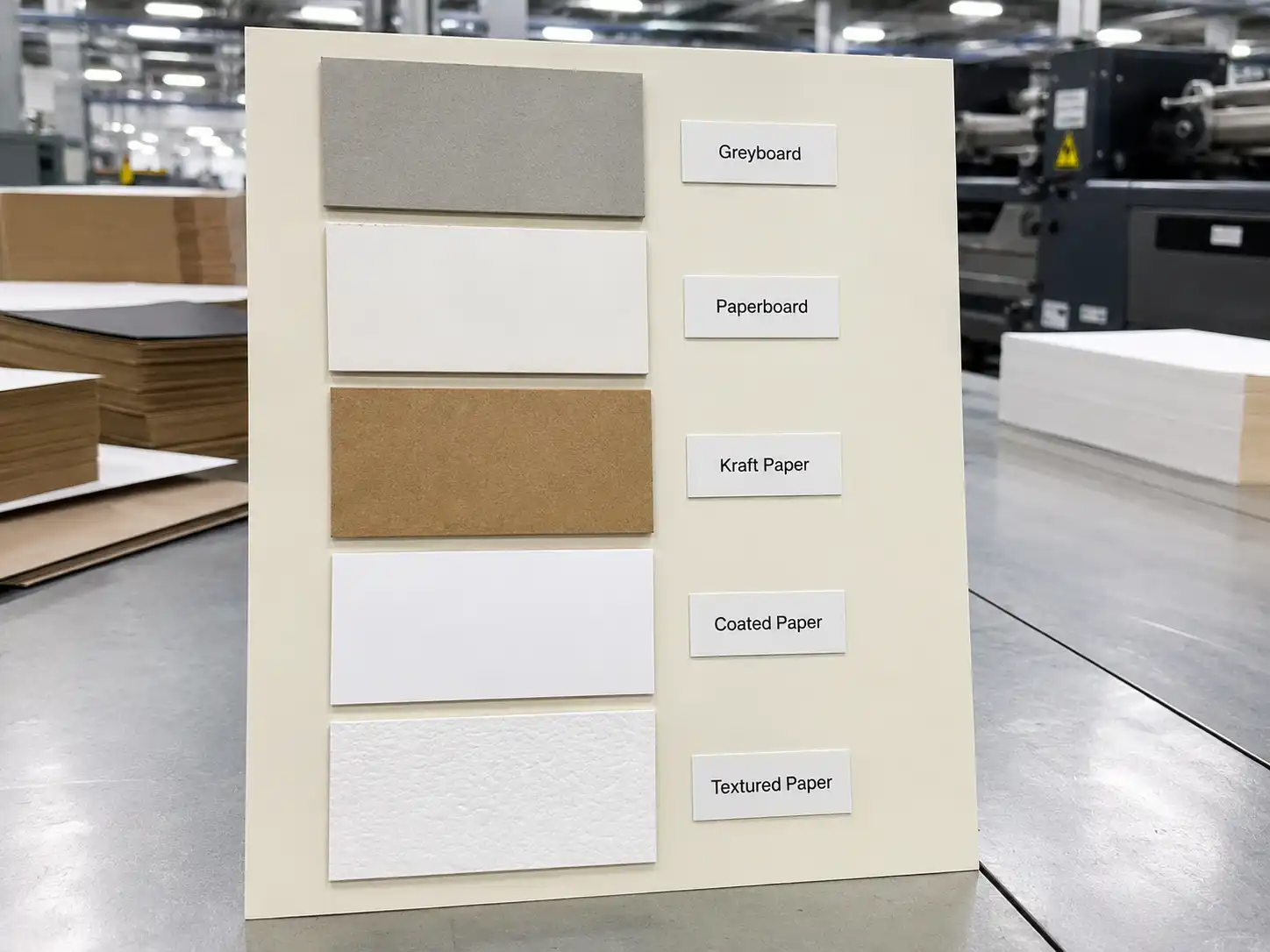
Material selection should not be based only on surface texture. Greyboard, paperboard, kraft paper, coated paper, textured paper, corrugated board, and specialty paper all affect box strength, print result, folding performance, and shipping durability.
For premium rigid advent calendar boxes, greyboard thickness is important because it supports the main structure. For lightweight promotional calendars, folding paperboard may help reduce packing volume and freight cost. For heavier products, reinforced inserts or thicker internal walls may be needed.
Useful material questions for quote preparation
When requesting custom advent calendar box services, buyers should prepare the product size, product weight, number of compartments, preferred structure, surface finishing, and expected packing method. This helps the supplier recommend a practical material combination instead of guessing.
If sustainability matters to your project, ask about paper sourcing, recyclable structure options, and FSC-related paper availability. Buyers can also review general information from the Forest Stewardship Council when preparing internal packaging requirements.
3. Plan Inserts Early, Not After the Box Is Designed
Inserts are one of the most common sources of advent calendar box production problems. The insert must match the product shape, weight, and unboxing method. A skincare bottle, candle jar, chocolate piece, tea sachet, toy part, and jewelry item all need different support.
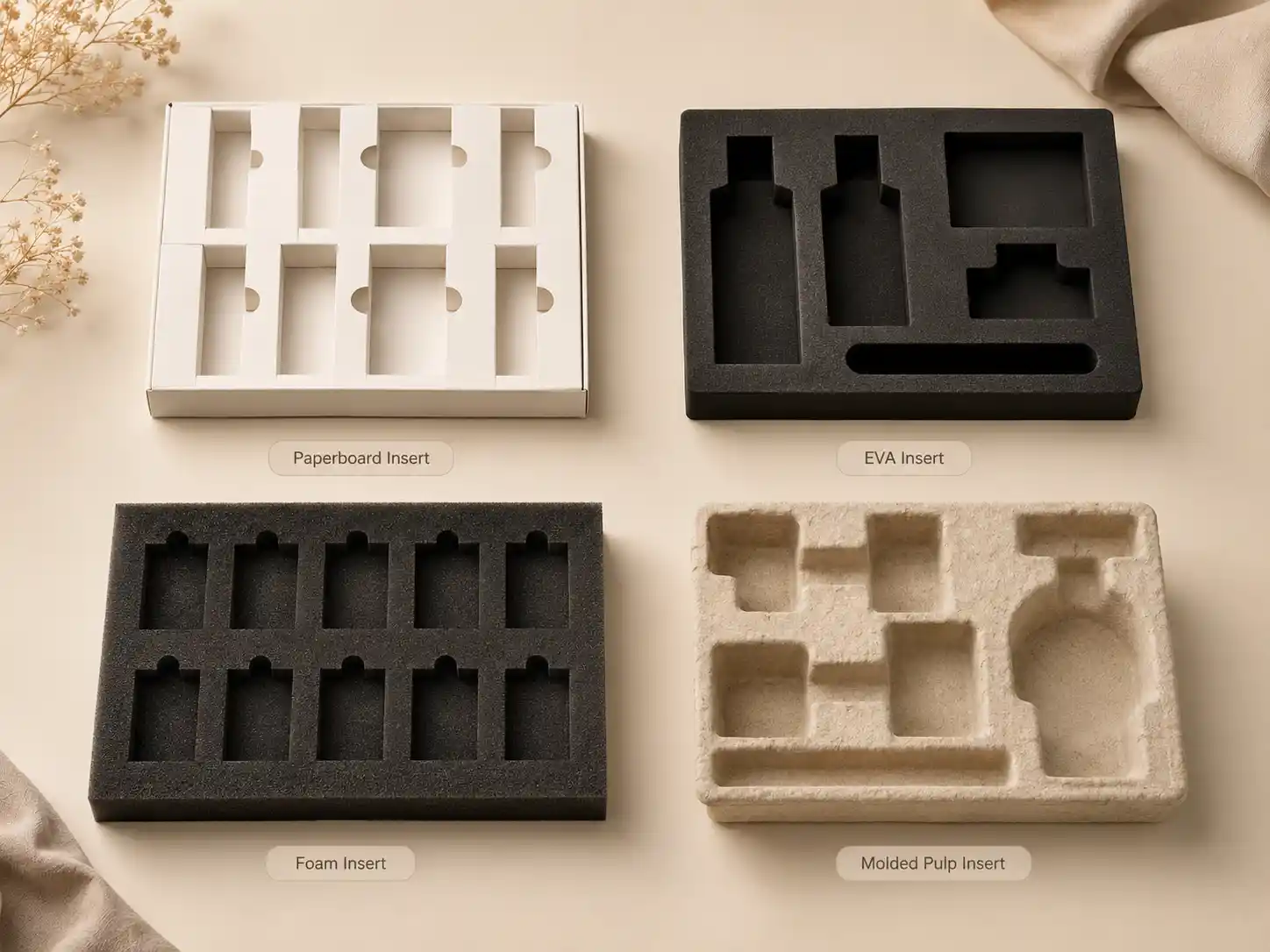
Common insert options include paperboard inserts, corrugated inserts, EVA, foam, molded pulp, and folded paper structures. Each option has different cost, protection level, appearance, and sustainability value.
Practical insert examples
For a cosmetic advent calendar, EVA or foam may hold bottles more firmly, but buyers should check whether the material fits their brand’s sustainability requirements. For a tea or stationery calendar, paperboard inserts may be more cost-effective and easier to recycle. For fragile candles or glass items, the supplier may suggest stronger cavities, extra dividers, or a more protective master carton.
Before sampling, send actual product samples whenever possible. If samples are not available, provide exact dimensions, product weight, bottle diameter, cap height, and any fragile areas. This step can prevent insert looseness, drawer pressure, and product movement during export shipping.
4. Check Artwork, Printing, and Surface Finishing Before Bulk Production
Artwork problems can delay production more than buyers expect. Common issues include low-resolution logos, wrong dieline placement, missing bleed, incorrect Pantone references, unreadable small text, and artwork that does not match the final box structure.
For advent calendar boxes, artwork alignment is especially important because the box may include numbered doors, drawers, sleeves, inner panels, inserts, and retail-facing display areas. Every printed surface should be checked on the sample, not only on the flat dieline.
Recommended artwork checklist
Before mass production, confirm dieline version, color mode, bleed, safe area, barcode location, warning text, retail label area, carton mark artwork, and final surface finishing. If the box uses foil stamping, embossing, debossing, spot UV, matte lamination, or textured paper, the sample should show how these finishes look on the real material.
Giftpackpro can support buyers from structure planning to artwork checking through custom advent calendar box services, but the buyer should still approve the final sample carefully before bulk production begins.
5. Use Samples to Test Real Assembly and Packing
A sample is not only for checking color. It should be used to test product fit, drawer movement, insert strength, assembly time, carton packing, and retail presentation. If the project is for a large holiday campaign, sample checking should be treated as a production risk control step.
Buyers should test how the box opens, how the products are loaded, whether the insert shifts, whether the box stands flat, and whether the final packed unit can handle normal warehouse movement. For assembled packing, the sample should also confirm whether the final unit is too bulky or fragile for export handling.
Flat packing vs assembled packing
Flat packing can reduce shipping volume, but it may require more assembly work at the destination. Assembled packing saves time for retailers or fulfillment teams, but it increases carton size and may need stronger export protection.
For importers, the right choice depends on labor cost, retail timeline, product loading method, and final distribution plan. If the calendar boxes will be delivered directly to retail stores, assembled packing may be useful. If the buyer has local assembly capacity, flat packing may reduce freight pressure.
6. Control Bulk Production With Clear QC Points
Bulk production should not rely only on final inspection. Better quality control starts from material checking, printing approval, die-cutting accuracy, gluing strength, insert fitting, assembly inspection, and carton packing review.
For advent calendar boxes, small errors can become expensive in bulk. A slightly tight drawer, weak glue point, wrong compartment number, or loose insert may affect thousands of units. That is why production files, approved samples, and QC standards should be confirmed before mass production.
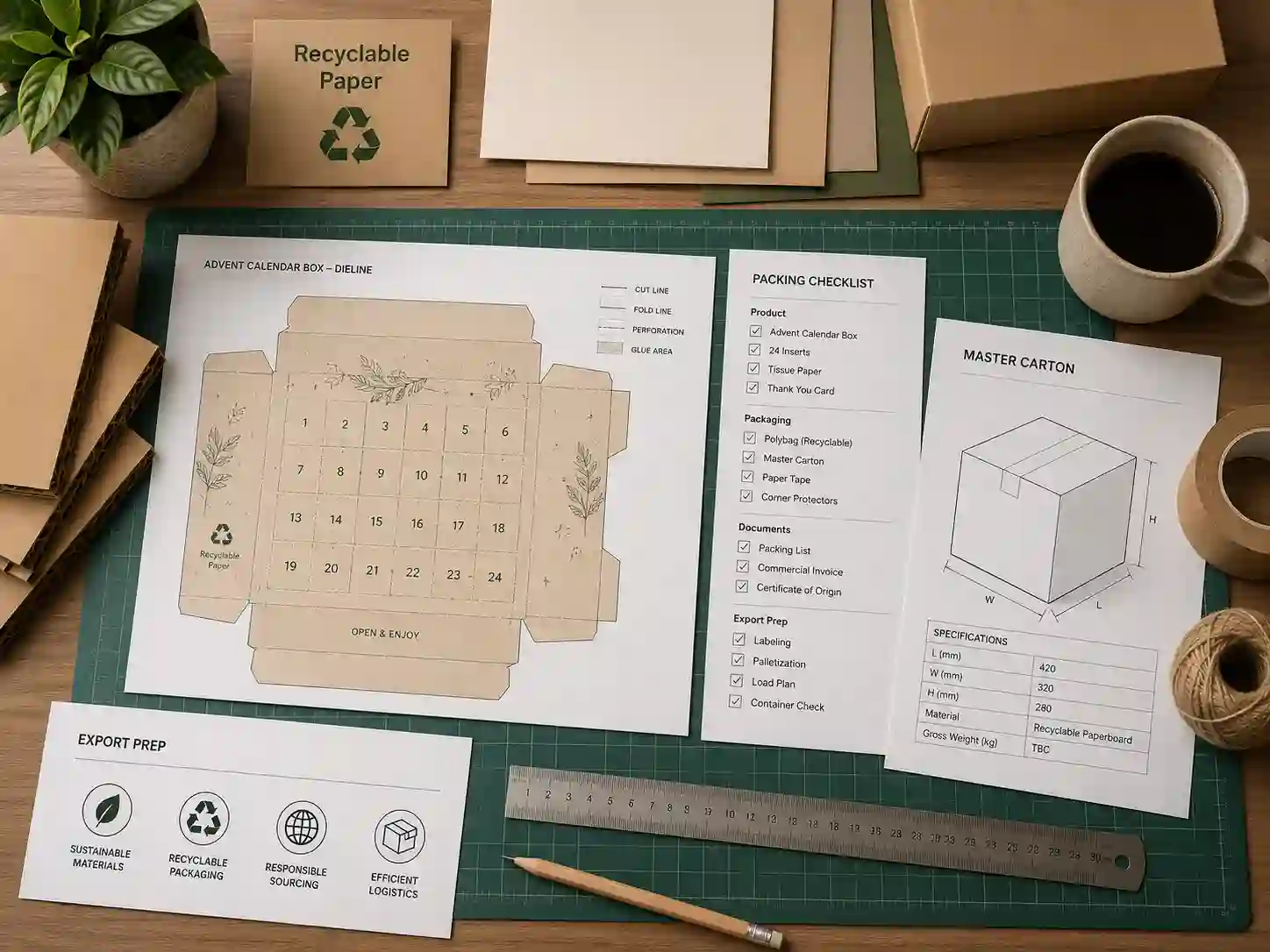
Important QC points for buyers
Buyers should confirm acceptable color tolerance, surface defect limits, drawer smoothness, insert fitting, glue strength, carton drop protection, label position, and shipping mark accuracy. If the products are food-related, cosmetic-related, or children-related, buyers should also check their own market compliance requirements before finalizing materials.
For general quality management planning, buyers can refer to official information from the ISO 9001 quality management page when building internal supplier evaluation standards.
7. Design Export Packing Around the Shipping Method
Export packing is a major part of reducing advent calendar box production problems. A strong box can still arrive damaged if the master carton, pallet, shipping mark, or loading method is not suitable.
Buyers should tell the supplier whether the goods will ship by sea, air, courier, warehouse transfer, or mixed distribution. The packing plan should match real handling conditions, not only factory storage conditions.
Master cartons and palletizing
Master cartons should match the box structure and packing method. For flat-packed units, cartons can usually be more compact. For assembled calendar boxes, the carton may need stronger corrugated board, better internal arrangement, and more careful stacking limits.
Palletizing should consider carton weight, carton size, stacking height, container loading, and warehouse unloading. For fragile surface finishes or premium rigid boxes, buyers can request extra protection such as separators, corner guards, inner cartons, or stronger outer cartons.
Shipping marks
Shipping marks should be clear and consistent. A useful shipping mark may include item number, carton number, quantity, gross weight, net weight, carton size, destination, handling symbols, and customer reference. Wrong or missing shipping marks can slow down warehouse receiving and increase sorting mistakes.
8. Prepare a Better Quote Request to Avoid Misunderstanding
A vague quote request often causes wrong pricing, missing details, and repeated revisions. For custom advent calendar boxes, the factory needs enough information to calculate material, printing, insert, labor, packing, and export carton cost.
When you request a custom quote, prepare the following information: box size, structure type, number of days or compartments, product size, product weight, order quantity, artwork status, surface finishing, insert preference, sample deadline, bulk delivery deadline, destination country, and preferred packing method.
If you are still comparing options, ask the Giftpackpro packaging factory for two or three structure suggestions. For example, one option may focus on premium presentation, one may focus on lower packing volume, and one may balance cost with display impact.
9. Common Buyer Mistakes to Avoid
Only comparing unit price
A lower unit price may not include the same material, insert strength, surface finishing, carton quality, or packing method. Buyers should compare quotes line by line, especially for rigid boxes, drawers, inserts, and assembled packing.
Approving artwork before structure
If artwork is finished before the dieline is confirmed, the design may need to be rebuilt. This is common when the buyer changes from drawer style to door-opening style, or from assembled packing to flat packing.
Ignoring carton and pallet details
Export packing affects damage rate, shipping cost, and warehouse receiving. Master carton size, carton weight, shipping marks, and pallet plan should be discussed before production, not after the goods are finished.
Leaving sample approval too late
Holiday packaging projects have tight timelines. Buyers should plan enough time for structure sample, printed sample, revision, approval, material purchase, bulk production, inspection, and export shipping.
10. Final Advice for Reducing Advent Calendar Box Production Problems
The best way to avoid advent calendar box production problems is to make structure, material, insert, artwork, sample, QC, and packing decisions early. Each decision affects the next step.
For B2B buyers, a successful project is not only about a good-looking box. It also needs stable production, clear communication, realistic lead time, safe export packing, and accurate quote preparation.
If your team is preparing a seasonal packaging project, you can review more advent calendar box buying guides, compare custom advent calendar box products, or request a custom quote with your product details, target quantity, and packing requirements.


