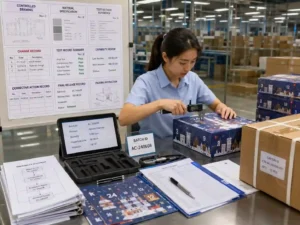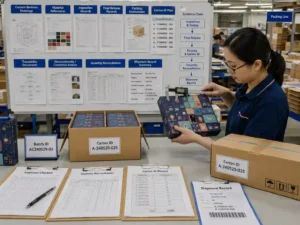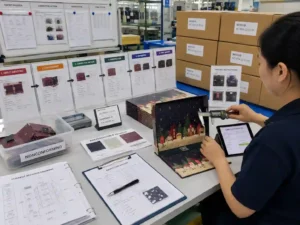
Choosing between matte vs gloss lamination boxes is not only a visual decision. For B2B advent calendar packaging, the lamination affects sample approval, artwork review, surface durability, barcode readability, export packing, and final shelf presentation.
For overseas brands, wholesalers, gift companies, and retail buyers, the best choice usually depends on product positioning, printing artwork, insert structure, handling conditions, and budget. This guide explains how to compare matte and gloss lamination during blank samples, printed samples, revisions, and pre-production checks.
Why Lamination Matters for Advent Calendar Boxes
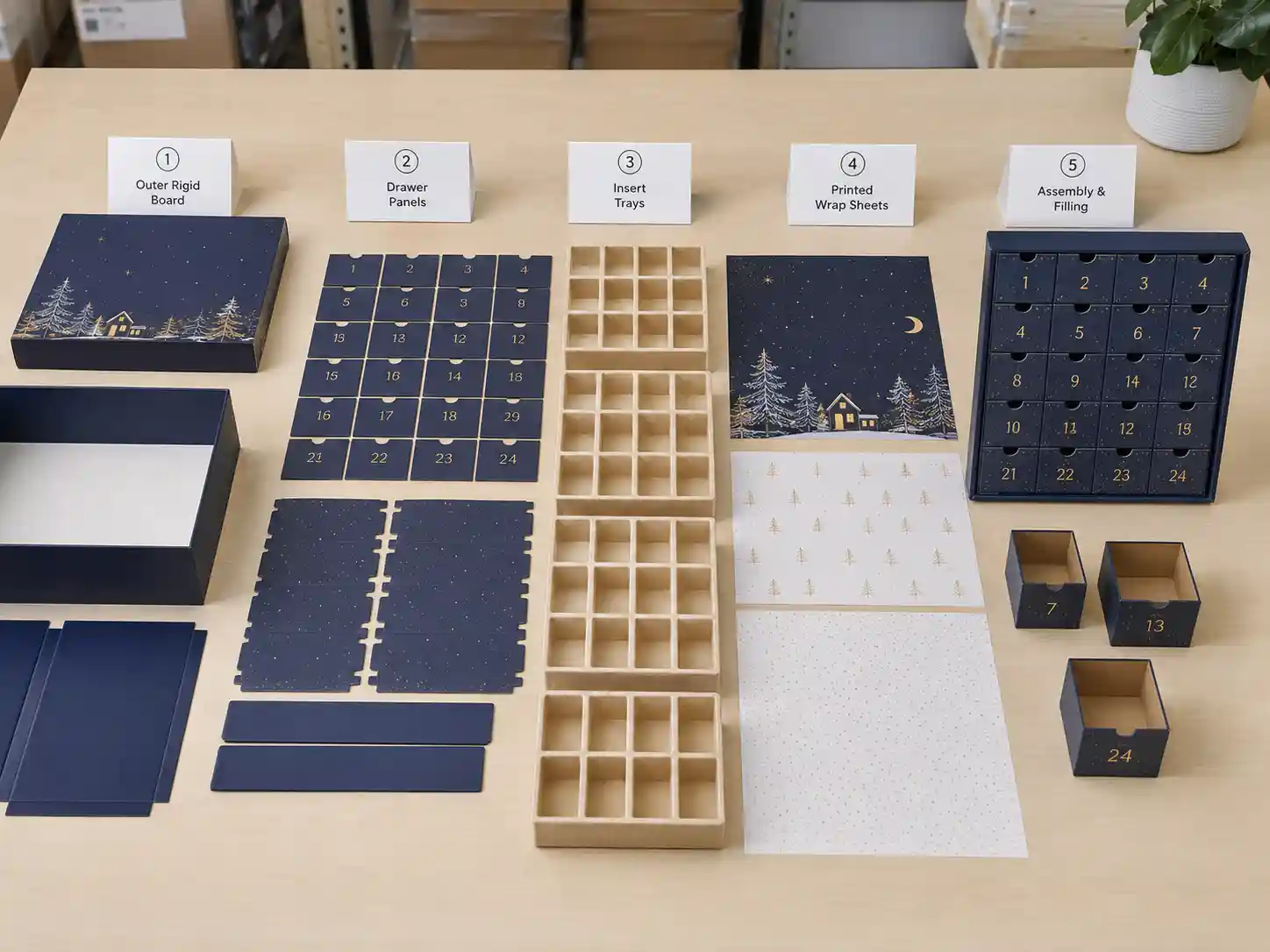
Advent calendar boxes often include many components: rigid board panels, drawers, door panels, paper wraps, inserts, ribbons, magnets, sleeves, or window areas. The surface finish must match both the structure and the way the box will be handled during filling, packing, shipping, and retail display.
When buyers compare matte vs gloss lamination boxes, they should avoid judging only from a digital mockup. A screen cannot show the real reflection, touch, fingerprint visibility, or color shift after lamination. That is why sampling is important before bulk production.
Giftpackpro supports B2B buyers with custom advent calendar box services including structure review, material selection, printing, finishing, insert planning, sampling, and pre-production confirmation.
Matte Lamination: Best for Premium and Low-Reflection Packaging
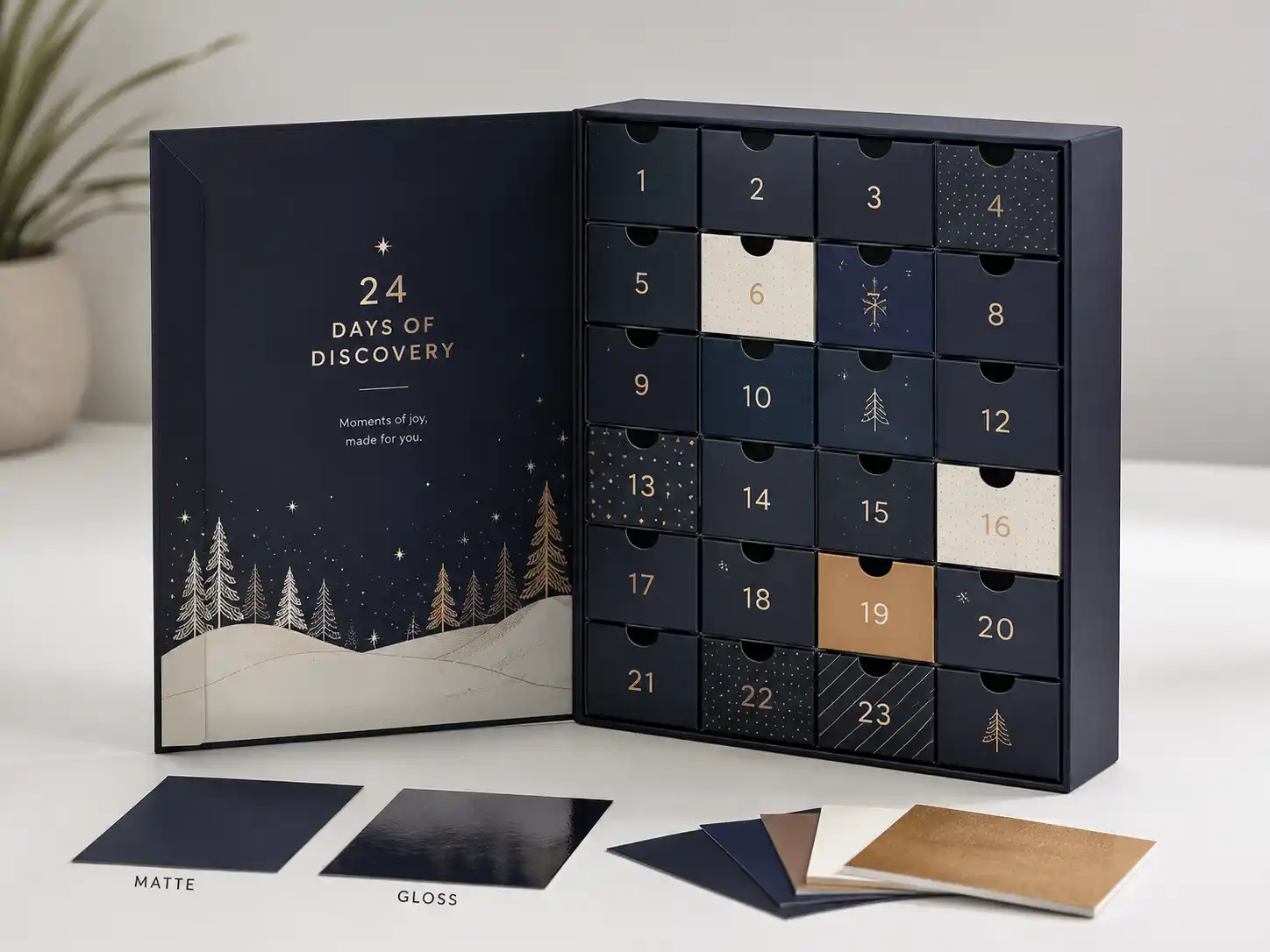
Matte lamination gives the printed surface a soft, non-glossy finish. It is often selected for rigid advent calendar boxes, beauty gift sets, premium seasonal packaging, and minimalist brand artwork.
Advantages of Matte Lamination
Matte lamination reduces strong reflection under studio lighting and retail lighting. This helps when the artwork uses soft colors, elegant typography, or luxury-style product photography.
For high-end advent calendars, matte lamination can make the packaging feel more refined. It also works well with additional finishing such as foil stamping, spot UV, embossing, debossing, or magnetic closure structures.
When comparing matte vs gloss lamination boxes for premium products, matte is often better when the buyer wants a calm surface, less glare, and a more understated brand impression.
Possible Limitations of Matte Lamination
Matte lamination may show fingerprints, rubbing marks, or surface scratches more clearly than expected, especially on dark colors such as black, navy, deep green, or burgundy. This does not mean matte is unsuitable, but it should be checked carefully during the printed sample stage.
Dark matte surfaces should be tested with real handling conditions. Buyers should open drawers, insert products, stack samples, and review the surface after normal use. This practical check is more useful than only looking at a flat printed sheet.
Gloss Lamination: Best for Bright Colors and Strong Shelf Impact
Gloss lamination gives the printed surface a shiny and reflective finish. It can make colors look brighter and more saturated, especially for colorful advent calendar artwork, children’s gift packaging, promotional calendars, and retail display packaging.
Advantages of Gloss Lamination
Gloss lamination is usually easier to wipe than matte lamination and can provide a clean, bright appearance. It is useful when the packaging design needs stronger visual impact in supermarkets, department stores, warehouse clubs, or promotional retail areas.
For artwork with vivid illustrations, product images, large color blocks, or festive graphics, gloss lamination can help the printed design stand out. When buyers compare matte vs gloss lamination boxes for colorful retail projects, gloss is often the safer option for brightness.
Possible Limitations of Gloss Lamination
Gloss surfaces create more reflection. This may affect product photography, barcode scanning, or readability of small text if the layout is not tested properly. For advent calendar boxes with many small labels, numbers, ingredient notes, or QR codes, the printed sample should be reviewed under different lighting angles.
Gloss can also look less premium for some luxury markets. If the product positioning is high-end skincare, fragrance, jewelry, or boutique gift packaging, matte lamination plus selected spot UV or foil may create a more controlled result.
Matte vs Gloss Lamination Boxes: Practical Comparison
| Comparison Point | Matte Lamination | Gloss Lamination | B2B Sampling Advice |
|---|---|---|---|
| Visual effect | Soft, low-reflection, premium feel | Bright, shiny, high color impact | Check both under office light and retail-style lighting. |
| Best use cases | Luxury rigid advent calendars, beauty packaging, minimalist designs | Promotional calendars, colorful artwork, strong shelf display | Match finish with brand positioning and retail channel. |
| Color appearance | May look slightly softer after lamination | Can make colors appear stronger and more saturated | Approve color from printed sample, not only digital proof. |
| Handling marks | May show fingerprints or rubbing on dark colors | Usually easier to wipe but more reflective | Test drawer opening, stacking, and packing before approval. |
| Finishing combination | Works well with foil, embossing, debossing, and spot UV | Works well for vivid full-color retail designs | Request a printed sample when using multiple finishing methods. |
How Lamination Affects Box Structure and Inserts
Advent calendar packaging is not only a printed outer shell. The structure may include drawers, doors, inner trays, dividers, sleeves, foam inserts, paperboard inserts, PET trays, or molded pulp inserts. Lamination must work with the folding, wrapping, gluing, and assembly process.
For rigid advent calendar boxes, the printed wrap paper is laminated before mounting onto greyboard or rigid board. If the box includes tight corners, drawer fronts, or folded edges, the factory should check whether the laminated paper wraps smoothly without cracking or lifting.
For paperboard door-style advent calendars, lamination must be tested around cutting lines, perforation lines, and opening windows. If the door panel needs to open cleanly, the sample should confirm that the finish does not peel at the edge.
Buyers reviewing custom advent calendar box products should compare structure, insert type, opening method, and lamination together. A finish that works well for a simple sleeve may not be ideal for a complex multi-drawer box.
Blank Sample vs Printed Sample: What to Check
For matte vs gloss lamination boxes, sampling should usually happen in two stages: blank sample and printed sample. Each stage answers a different question.
Blank Sample Check
A blank sample is used to confirm structure before full artwork printing. It may use plain paper, white paper, or available stock material. The purpose is to review size, opening method, insert fit, drawer movement, board thickness, loading space, and product placement.
At the blank sample stage, buyers should not focus too much on final surface finish. Instead, check whether the box structure is correct. For example, does the drawer slide smoothly? Does the insert hold the product securely? Is there enough clearance after filling? Is the magnetic closure strong enough?
Printed Sample Check
A printed sample is used to confirm artwork, color, lamination, finishing, barcode readability, and overall presentation. This is the stage where matte vs gloss lamination boxes should be compared with real printed panels.
For B2B purchasing teams, the printed sample is also the most important reference for internal approval. Brand managers, retail buyers, compliance teams, and procurement teams can review one physical sample before confirming mass production.
Artwork Preparation for Matte and Gloss Lamination
Artwork should be prepared with lamination in mind. A design that looks good on screen may change after printing and lamination. Matte lamination can soften contrast, while gloss lamination can increase reflection and make bright colors look stronger.
When preparing artwork, buyers should provide editable files, dielines, Pantone or CMYK color requirements, logo placement, barcode files, warning labels, product numbers, and any retailer-specific marking requirements.
If the project uses FSC-certified paper materials, buyers can check general certification information from the Forest Stewardship Council. For quality management expectations, many purchasing teams also refer to the ISO 9001 quality management standard.
Design Tips for Matte Lamination
For matte lamination, avoid extremely dark full-coverage artwork unless the buyer has checked fingerprint and rubbing performance on a printed sample. If dark artwork is required, consider adding spot UV, foil stamping, or a pattern texture to reduce visible handling marks.
Fine text should be checked carefully because matte surfaces may reduce contrast slightly. Small numbers on advent calendar doors or drawers must remain clear after lamination.
Design Tips for Gloss Lamination
For gloss lamination, avoid placing important small text or barcodes in areas with strong curved reflection. If the box has a glossy sleeve or front panel, test scanning and readability before approving bulk production.
Gloss lamination is useful for colorful artwork, but buyers should still check whether the surface looks too reflective for product photography or online listing images.
Sample Approval Process for B2B Buyers
A clear sample approval process reduces delays and avoids misunderstandings before bulk production. Giftpackpro usually recommends that buyers review structure, artwork, lamination, finishing, insert fit, packing method, and export carton details before giving final approval.
For custom advent calendar box services, the approval process should be practical and documented. A purchasing team should not approve only by message comments such as “looks good.” It is better to confirm each item in writing.
Recommended Approval Checklist
Before approving matte vs gloss lamination boxes for mass production, check the following points:
Confirm the final box dimensions, drawer or door size, insert cavity size, board thickness, paper material, lamination type, printing color, logo position, finishing method, barcode readability, inner packing, master carton size, and shipping mark.
If there are revisions, mark them clearly on the sample photos or dieline. Use version names such as V1, V2, and final approved version. This helps the factory, buyer, designer, and sales team stay aligned.
Common Revisions After Printed Samples
Printed samples often lead to small but important revisions. This is normal in custom packaging. The goal is to correct details before bulk production, not after the cartons are finished.
Typical Lamination-Related Revisions
For matte lamination, buyers may request a lighter background color, stronger logo contrast, less dark ink coverage, or an added spot UV area. For gloss lamination, buyers may request reduced reflection on barcode zones, adjusted color saturation, or a different layout for small text.
For both matte and gloss lamination boxes, buyers may revise drawer numbering, panel alignment, product cavity size, insert height, magnetic closure strength, or export packing method after reviewing the printed sample.
The advent calendar box buying guides on Giftpackpro are useful for buyers who need to understand packaging decisions before sending a final quotation request.
Pre-Production Checks Before Bulk Manufacturing
Pre-production checks are important because advent calendar boxes usually involve many repeated components. A small issue on one drawer, door, insert, or printed panel can become a large issue during mass production.
Before bulk manufacturing, the factory should confirm the approved sample, final artwork file, dieline, material specification, lamination type, finishing method, assembly method, packing method, and quality standard.
Quality Control Points
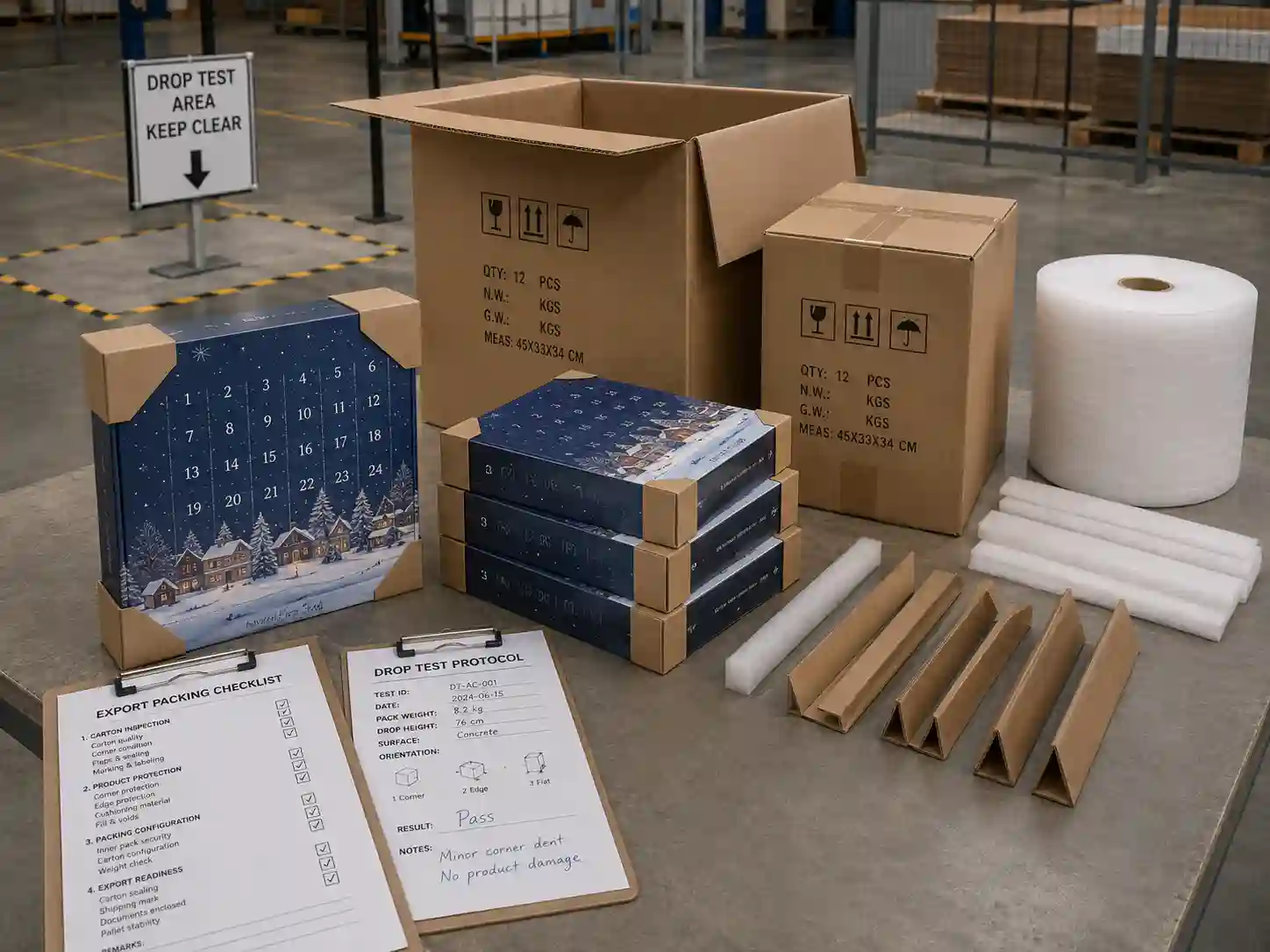
For matte vs gloss lamination boxes, quality control should include surface inspection, color consistency, lamination adhesion, edge wrapping, glue position, drawer movement, insert fit, barcode scanning, and carton drop-resistance checks according to the buyer’s packing needs.
For export orders, buyers should also confirm carton strength, pallet requirements, shipping marks, moisture protection, and loading plan. Advent calendar boxes with drawers or rigid structures may need extra protection to prevent corner damage during long-distance transportation.
MOQ, Lead Time, and Cost Considerations
Matte and gloss lamination are both common finishing options, but the total cost depends on box structure, material, printing coverage, finishing combination, insert type, order quantity, and packing requirements.
For example, a simple paperboard door-style calendar with gloss lamination may have a different cost structure from a rigid drawer advent calendar with matte lamination, foil stamping, and a custom molded insert.
MOQ can also vary by structure and material. Buyers should prepare realistic order quantities before asking for pricing. A factory quotation for 500 pieces may be very different from a quotation for 5,000 or 20,000 pieces because printing setup, material purchasing, labor, and packing efficiency change with volume.
What to Prepare Before Requesting a Quote
To receive an accurate quotation, buyers should prepare more than a product idea. The more complete the information, the faster the factory can estimate cost and lead time.
Before you request a custom quote, prepare the box style, dimensions, product size and weight, number of drawers or doors, insert requirement, material preference, matte or gloss lamination preference, printing artwork, finishing method, target quantity, delivery country, and required delivery date.
If the final structure is not confirmed, buyers can start by contacting a custom advent calendar boxes manufacturer with reference photos, product dimensions, and target retail channel. The factory can suggest suitable structures and sample options.
Example Quote Information
A clear inquiry may look like this: “We need a rigid drawer advent calendar box for 24 skincare products. Outer size is about 300 x 260 x 90 mm. We prefer matte lamination, gold foil logo, printed drawer fronts, and paperboard inserts. Please quote 1,000, 3,000, and 5,000 pieces with sample cost, sample lead time, bulk lead time, carton packing, and shipping carton size.”
This type of inquiry helps the Giftpackpro packaging factory check structure, materials, sampling route, and production feasibility more quickly.
Which Finish Should You Choose?
There is no single best answer for all projects. Matte lamination is often better for premium, elegant, low-reflection advent calendar packaging. Gloss lamination is often better for bright, colorful, promotional, and high-impact retail packaging.
The safest decision is to compare matte vs gloss lamination boxes through printed samples before bulk production. For important projects, buyers should approve the real sample under practical lighting and handling conditions, not only from photos.
Giftpackpro can help overseas buyers review structure, lamination, inserts, artwork, sampling, quality control, export packing, and quotation details for custom seasonal paper packaging projects. For more planning information, visit our advent calendar box buying guides or request a custom quote with your project details.