Choosing an advent calendar box manufacturer China buyers can trust is not only about finding a low unit price. For overseas brands, importers, retailers, and promotional product companies, the real question is whether the supplier can turn a seasonal packaging idea into stable bulk production before the sales window closes.
Advent calendar packaging usually involves more than a printed box. It may include drawer structures, numbered doors, paper inserts, rigid board, folding paperboard, dividers, ribbons, sleeves, trays, and export cartons. If one part is wrong, the finished box may look good in photos but fail during assembly, packing, retail display, or shipping.
This guide explains how to compare a China supplier from a practical B2B sourcing angle: structure, dieline, sample, artwork, MOQ, lead time, quality control, export packing, and quotation details. For more general product ideas, you can also review advent calendar box buying guides before starting a quote request.
Start with the Box Structure, Not the Price
Many buyers begin by asking for a unit price. That is understandable, but an accurate quotation depends on the structure first. A 24-drawer rigid advent calendar box, a door-opening paperboard calendar, and a foldable countdown box can all be called advent calendar boxes, yet the production process and cost drivers are very different.
Before you compare suppliers, decide what the box needs to do. Will it hold cosmetics, chocolate, tea, jewelry, toys, candles, stationery, or promotional samples? Does each compartment need to protect a different product size? Will the box stand on a shelf, ship as an individual gift set, or sit inside a larger retail carton?
A capable custom advent calendar boxes manufacturer should ask about structure, insert, product weight, display method, artwork coverage, and packing method before giving a final quotation. If a supplier only gives a fast price without checking these points, the number may change later after sampling.
Compare Manufacturer Types in China
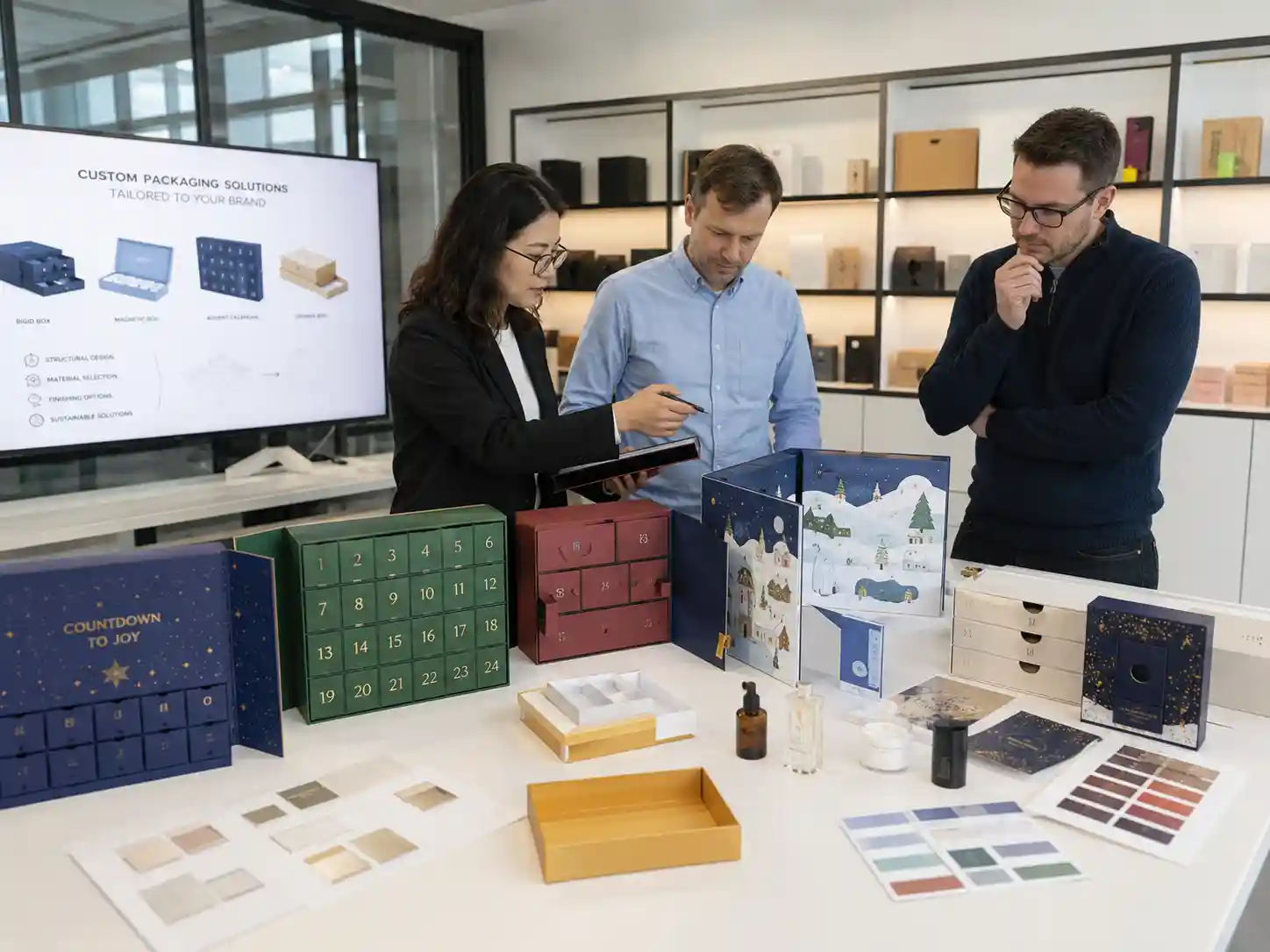
Not every supplier works the same way. Some companies focus on trading, some on printing, some on handmade rigid boxes, and some on integrated packaging development. For overseas B2B buyers, the right choice depends on your project complexity and how much technical support you need.
| Supplier Type | Best For | Possible Limitation | Questions to Ask |
|---|---|---|---|
| Trading company | Simple sourcing, many product categories, low internal workload | May rely on outside factories for structure, sampling, and QC | Who makes the sample and who controls bulk inspection? |
| Printing factory | Paperboard boxes, printed sleeves, flat packaging, simpler calendar designs | May be less experienced with complex inserts or handmade rigid structures | Can you make the full structure and insert, not only print the sheet? |
| Rigid box manufacturer | Premium countdown gift boxes, cosmetics calendars, jewelry calendars, luxury seasonal packs | Higher labor involvement and more structure-dependent MOQ factors | Can you provide dieline support and pre-production structure testing? |
| Integrated packaging factory | Custom structure, insert development, sampling, bulk production, export packing | May require clearer project details before quoting | Can you support structure, artwork check, sample revision, QC, and export packing? |
If your project uses a standard box with simple printing, many suppliers may be suitable. If your project includes drawers, doors, mixed product sizes, molded inserts, or seasonal retail deadlines, choose a factory that can discuss technical details clearly.
Check Experience with Advent Calendar Structures
An advent calendar looks simple from the outside, but the structure must work repeatedly. Drawers should slide smoothly without falling out. Numbered doors should open without tearing too easily. Inserts should hold the products in place. The outer box should stay square after packing.
When comparing an advent calendar box manufacturer China sourcing teams often focus on photos. Photos help, but they are not enough. Ask how the supplier checks drawer fit, door perforation, insert tolerance, board thickness, glue position, folding direction, and assembly sequence. These details affect the buyer experience and the packing speed.
For custom projects, ask whether the supplier can create or adjust the dieline. A dieline is the technical layout for cutting, folding, printing, and assembly. If your product sizes are still changing, the dieline may need revision before artwork is finalized. This is why structure approval should come before mass printing.
Prepare Clear Product and Packing Information
A manufacturer cannot quote accurately from a product name alone. Before requesting prices, prepare the product dimensions, approximate weight, quantity per calendar, preferred compartment layout, target retail market, artwork status, and shipping method if known.
For example, a cosmetics calendar may need different insert cavities for bottles, tubes, jars, and sample sachets. A chocolate calendar may need food-safe material discussion and temperature-aware packing considerations. A promotional product calendar may focus more on budget, flat packing, and fast assembly. Each project needs a different sourcing approach.
If you need design and development support, review the supplier’s custom advent calendar box services to see whether they can help with structure planning, sample making, artwork checking, and production coordination. The earlier you provide complete details, the fewer revisions you may need later.
Understand MOQ Factors Without Chasing a Fixed Number
MOQ is one of the most common questions, but it is also one of the most misunderstood. For custom advent calendar boxes, MOQ can depend on paper material, board thickness, printing method, finishing, insert type, labor process, and whether the structure is fully custom or partly standard.
Some simple paperboard projects may have a lower starting quantity. More complex rigid box projects, special finishing, custom inserts, or multiple sizes may require a higher practical quantity. If mentioning early-stage planning, it is safer to think in ranges, such as usually around 300-500 pcs depending on structure, rather than expecting one guaranteed MOQ for every project.
A good supplier should explain what drives the MOQ instead of only stating a number. Ask whether the MOQ is affected by material ordering, printing setup, handmade assembly, mold cost, or insert production. This helps you understand whether the quote is flexible or structure-dependent.
Review Sampling Before Bulk Production
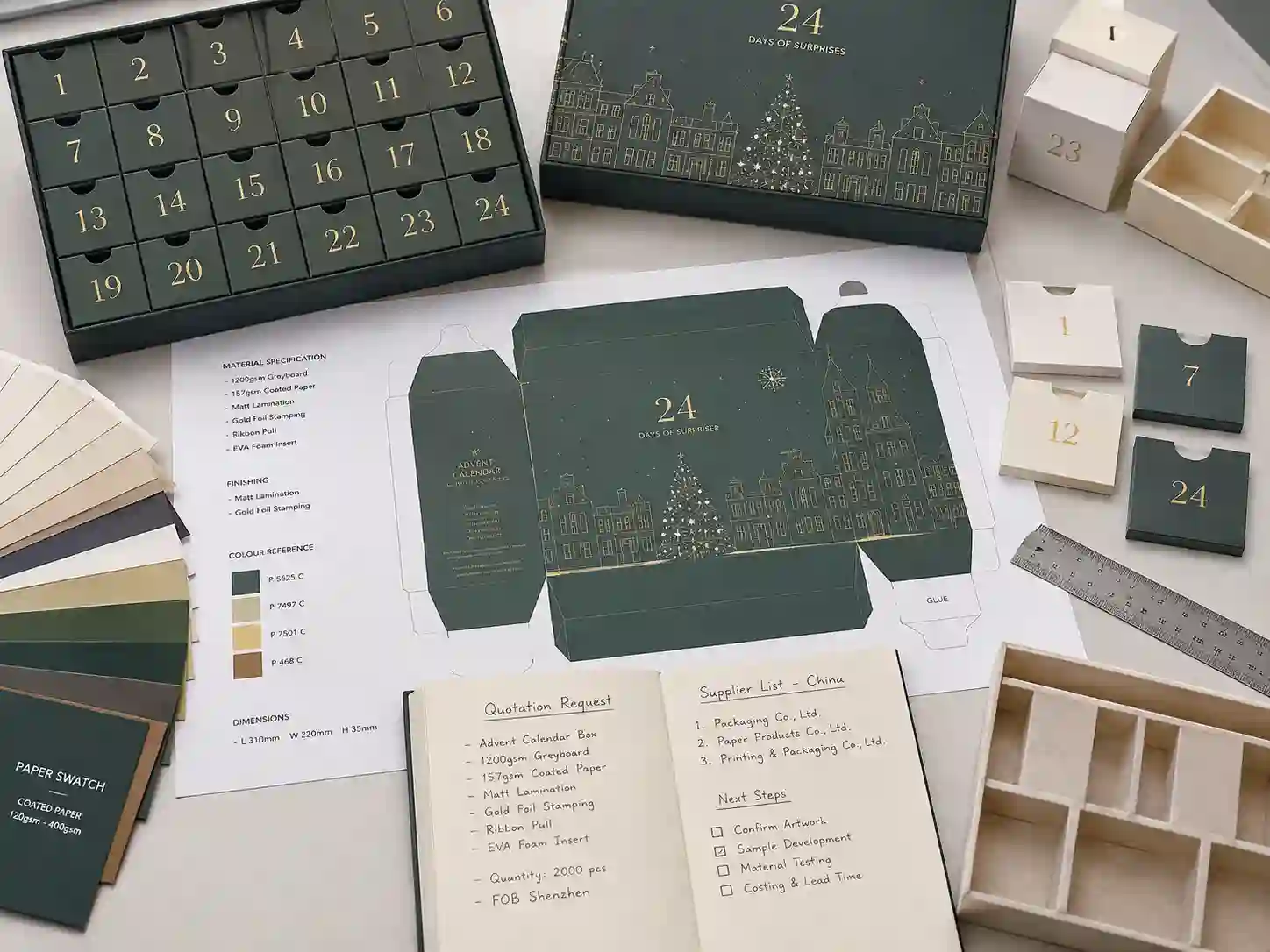
Sampling is the bridge between concept and production. For B2B buyers, it is not just a pretty mockup. It is a technical checkpoint for size, structure, insert fit, print direction, finishing effect, assembly method, and export packing.
There may be different sample stages. A white sample can confirm the structure before printing. A digital printed sample can show layout and general appearance. A pre-production sample can be closer to the final material, color, finishing, and packing method. Not every project needs every sample stage, but complex advent calendar boxes should not skip structure confirmation.
During sample review, check whether the drawers align, doors open cleanly, inserts fit the products, printed numbers are in the correct order, and the box can stand or stack properly. If the calendar will be packed with products inside, test the loaded sample, not only the empty box.
Ask About Artwork, Color, and Dieline Control
Overseas buyers often prepare artwork with a designer, then send it to the supplier for production. Before doing that, confirm the dieline is final. If the structure changes after artwork is finished, the artwork may need to be adjusted again.
Ask the manufacturer what file format they need, whether bleed and safe areas are required, how they handle color matching, and whether they can check the artwork before printing. For seasonal retail packaging, numbered doors, holiday graphics, product names, barcode areas, and warning labels may all need careful checking.
If your project uses retail barcodes or supply-chain labels, you can refer to GS1 standards for general barcode and identification concepts. Your supplier does not need to manage your brand’s barcode system, but they should leave correct artwork space and avoid covering required label areas.
Evaluate Quality Control Points
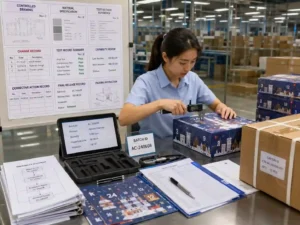
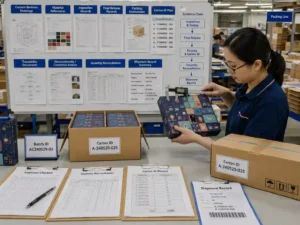
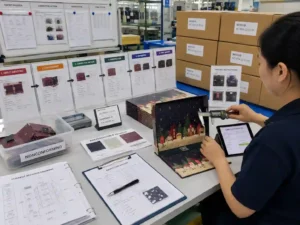
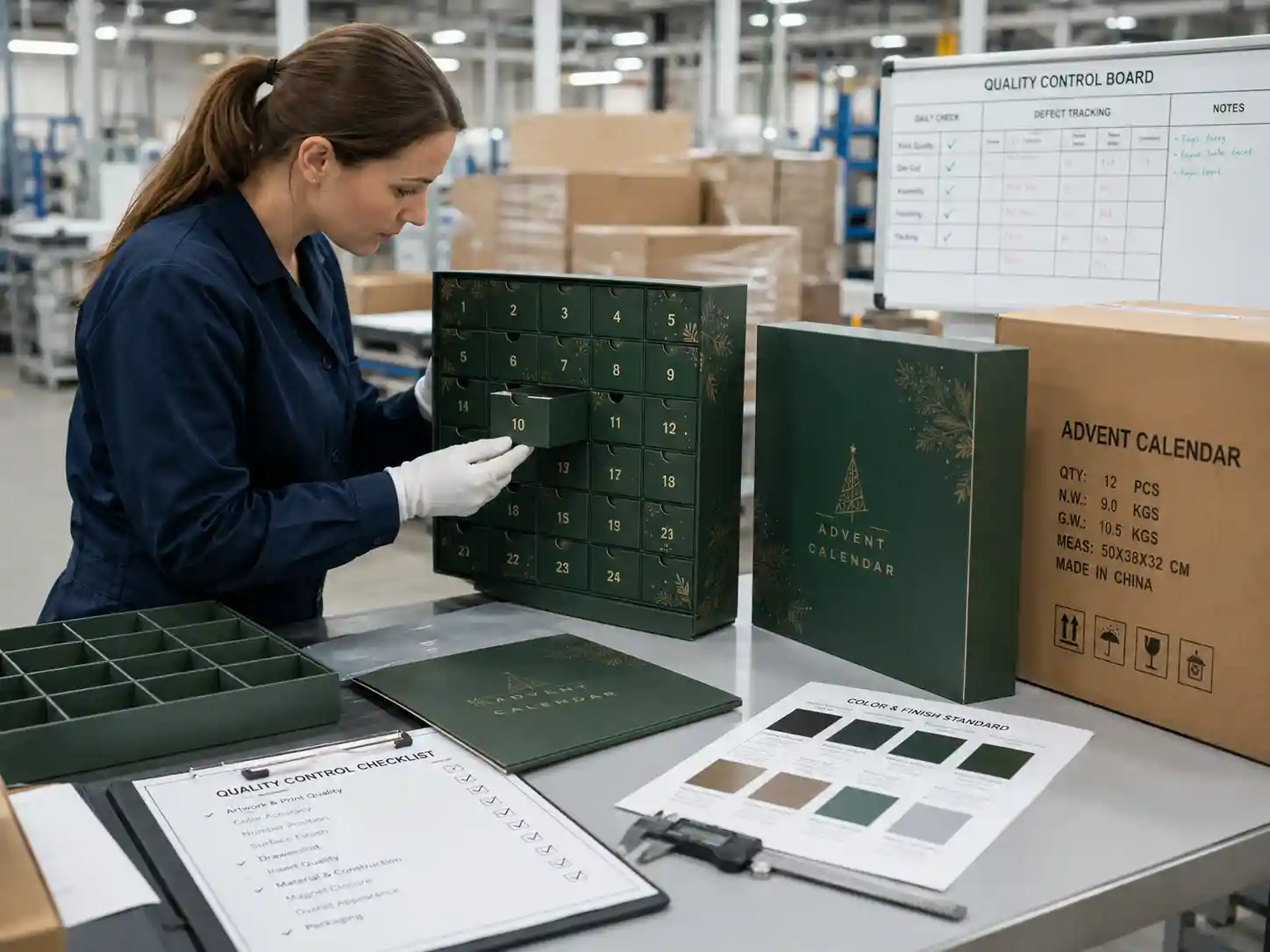
Quality control for advent calendar packaging should cover more than print color. A reliable factory should inspect structure, material, printing, finishing, cutting, folding, gluing, insert fit, packing, and carton condition. For complex seasonal packaging, small errors can multiply across many compartments.
Ask what the supplier checks before bulk production, during production, and before shipment. You can also ask for photos or videos during key stages, especially when you cannot visit the factory. If the supplier uses general quality terms, you may refer to ISO standards as a general reference for quality management language, but do not assume certification unless the supplier provides valid documents.
| Quality Check | Why It Matters | Buyer Tip |
|---|---|---|
| Material and board thickness | Affects strength, structure stability, and retail feel | Confirm material before approving the final sample |
| Drawer or door fit | Affects user experience and product protection | Test with actual product size and weight where possible |
| Print and finishing | Affects brand presentation and shelf appeal | Check logo, numbers, color, lamination, foil, or spot UV carefully |
| Insert fit | Keeps products in place during packing and shipping | Send accurate product dimensions early |
| Export carton packing | Protects finished boxes during international transport | Ask for carton size, packing method, and protection plan |
Think About Export Packing and Seasonal Timing
Advent calendar boxes are seasonal. A delay of a few weeks can affect retail launch, warehouse booking, promotion schedules, and online listing plans. This makes planning more important than squeezing every cent from the unit price.
When choosing a China manufacturer, ask how they pack the finished boxes for export. Are the boxes shipped assembled or flat-packed? Are inner cartons needed? Will the products be packed into the calendars in China, or will your team fill them later? Does the outer carton protect corners and printed surfaces?
Lead time also depends on sample approval, material preparation, printing, finishing, handmade assembly, QC, and packing. Avoid asking for a single production time before the structure is confirmed. Instead, ask the supplier to separate the timeline into sampling, sample revision, bulk production, inspection, and shipment preparation.
Compare Quotations the Right Way
A low quotation may not include the same scope as a higher quotation. Before comparing suppliers, make sure each quote is based on the same structure, size, material, printing, finishing, insert, quantity, packing method, and trade terms.
For example, one supplier may include the insert while another quotes only the outer box. One may include export cartons while another adds them later. One may base the price on a simple paperboard calendar while another assumes a rigid drawer structure. Without a shared specification, the price comparison is not reliable.
When you request a custom quote, include drawings, reference photos, product dimensions, quantity, artwork status, target market, and preferred packing method. If you are not sure about the structure, explain the intended use and ask for practical recommendations.
Look for Clear Communication and Factory Support
Good communication is a sourcing advantage. A professional packaging supplier should explain trade-offs in plain language, not only say yes to every request. If a structure may be too weak, too expensive, too difficult to assemble, or risky for shipping, the supplier should tell you early.
You can also review the company background, production focus, and support capability on the Giftpackpro packaging factory page. For a seasonal packaging project, the best partner is usually not the supplier with the fastest reply alone, but the one that can guide structure, sample, bulk production, and export packing with fewer surprises.
FAQ: Choosing an Advent Calendar Box Manufacturer in China
What should I send to get an accurate advent calendar box quotation?
Send the box size, product dimensions, product weight, compartment quantity, preferred structure, artwork status, order quantity, insert requirement, finishing preference, and packing method. If you only have a concept, send reference photos and explain the target product and retail use.
Is a rigid box better than a paperboard advent calendar?
Not always. Rigid boxes are suitable for premium gift sets, cosmetics, jewelry, and high-value seasonal campaigns. Paperboard calendars may be better for lighter products, cost-sensitive promotions, or projects that need easier flat packing. The right choice depends on product weight, budget, structure, and retail positioning.
Can I start with a small MOQ?
It depends on the structure, material, printing, finishing, and insert. Some projects may start around 300-500 pcs depending on structure, while complex custom rigid boxes or special materials may require higher quantities. Ask the manufacturer what specifically affects the MOQ.
Do I need a sample before bulk production?
For most custom advent calendar boxes, yes. A sample helps confirm structure, size, insert fit, artwork position, finishing effect, and packing method. For complex boxes with drawers, doors, or mixed product sizes, sampling is especially important.
How early should brands start sourcing seasonal advent calendar packaging?
Start as early as practical, especially if you need custom structure, multiple sample revisions, special finishing, or export shipping. The sourcing process should include structure planning, dieline confirmation, artwork checking, sampling, production, QC, packing, and logistics preparation.
How do I compare two China suppliers fairly?
Use the same specification sheet for both suppliers. Compare structure, material, printing, finishing, insert, sample process, QC checks, carton packing, communication, and quotation scope. A lower price is not always better if important parts are excluded.
Need Custom Advent Calendar Boxes?
If you are planning a seasonal retail project, promotional gift set, cosmetics calendar, food calendar, or brand campaign, Giftpackpro can help you discuss structure, insert, artwork, sampling, production, quality control, and export packing. Share your product size, target quantity, preferred style, and artwork status to request a custom quote for your custom advent calendar box project.