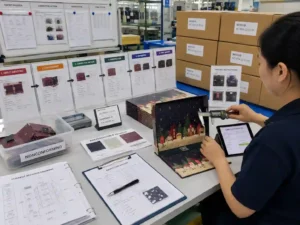
Numbered doors are one of the most important design and production details in custom advent calendar packaging. For B2B buyers, the goal is not only to make the numbers look attractive, but also to make sure every door opens correctly, matches the insert layout, survives bulk packing, and arrives without crushed corners or misaligned panels.
This guide explains how to add numbered doors to advent calendar boxes from structure design to artwork, sampling, quality control, export packing, and quotation preparation. It is written for overseas brands, wholesalers, gift companies, retail buyers, and purchasing teams planning bulk orders of numbered doors advent calendar boxes.
Why Numbered Doors Matter in Advent Calendar Box Production
Numbered doors affect both appearance and function. A calendar box may look simple from the outside, but each door must match the inner cavity, product position, opening direction, crease line, and cutting tolerance.
For custom projects, numbered doors usually connect with several production decisions:
- Box structure: door-style calendar, drawer calendar, book-style rigid calendar, or folding paperboard calendar.
- Insert layout: paperboard insert, molded pulp tray, EVA, foam, or custom compartment dividers.
- Artwork sequence: random number layout, ordered number layout, icon-based layout, or product-category grouping.
- Shipping method: flat packing, semi-assembled packing, or fully assembled master carton packing.
Working with a custom advent calendar boxes manufacturer helps buyers confirm these details before mass production starts.
Common Numbered Door Structures for Advent Calendar Boxes
The best numbered door design depends on product size, weight, retail display method, order quantity, and packing plan. A beauty set, snack set, toy set, stationery set, and promotional gift set may all need different door strength and insert support.
1. Perforated Paperboard Doors
Perforated paperboard doors are common for lightweight items. The number is printed on the outer panel, and the door opens along a pre-cut or half-cut line. This option is suitable for products such as sachets, mini stationery, small cosmetics, lightweight toys, and sample packs.
The key control point is tear strength. If the perforation is too weak, the door may break during packing or shipping. If it is too strong, the end user may have difficulty opening it.
2. Rigid Board Doors with Die-Cut Openings
Rigid board advent calendar boxes give a more premium presentation and stronger protection. The numbered door panel can be made with wrapped greyboard and die-cut openings, often combined with inner trays or paperboard compartments.
This structure is better for heavier or higher-value items. However, it also requires more accurate die-cutting, wrapping, and assembly control.
3. Drawer-Style Numbered Calendars
Drawer-style calendars use individual drawers with printed numbers on the drawer face. This structure gives better reusability and a premium retail appearance, but it usually increases material cost, labor time, and assembled packing volume.
Buyers can review available structures through custom advent calendar box products before deciding whether door-style or drawer-style construction fits their budget and shipping plan.
How to Plan the Number Layout
Number layout is not only a graphic design decision. It must match the die-line, door size, product sequence, and assembly direction.
Ordered Number Layout
An ordered layout places numbers in a clear sequence, such as left to right or top to bottom. This is easier for production checking because the QC team can quickly compare the printed sheet with the approved artwork.
Random Number Layout
A random layout creates a more dynamic retail appearance. It is common for beauty, toy, snack, and seasonal gift packaging. The risk is that artwork checking becomes more complex, especially when the box has many small doors.
Category-Based Number Layout
Some brands group doors by product type. For example, skincare items may be placed in larger doors, while small accessories use smaller doors. In this case, the number layout must follow the insert drawing, not only the visual design.
When preparing artwork, buyers should mark door numbers, cavity sizes, product names, and opening directions clearly. The custom advent calendar box services page can be used as a starting point when discussing design, sampling, and production support.
Material Choices for Numbered Doors
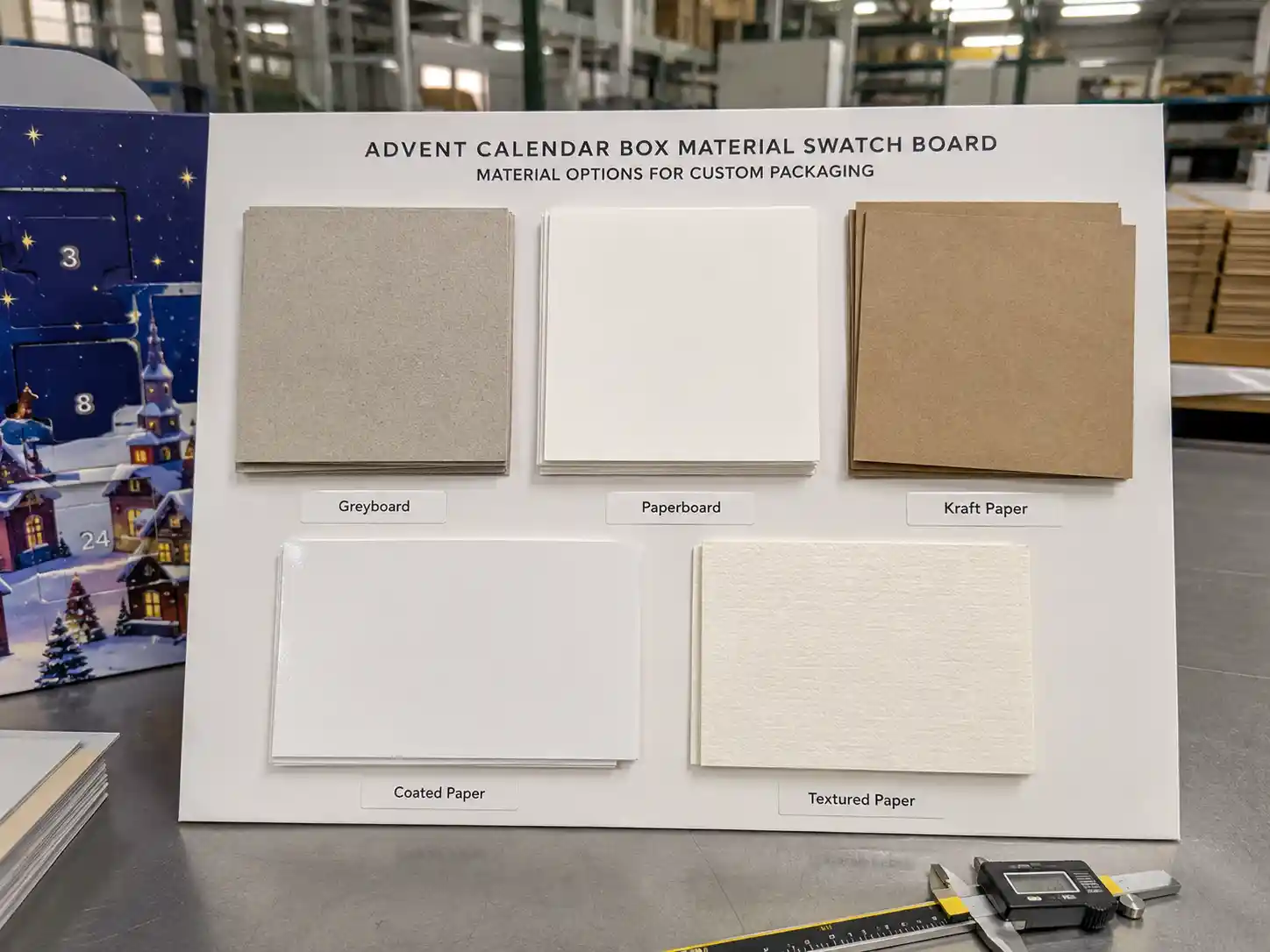
Material selection affects door opening quality, printing result, packing strength, and shipping durability. A low-cost material may reduce unit price, but it can also increase the risk of bent panels, weak doors, or damaged cartons during export shipping.
| Material Option | Best Use | Key Control Point | Export Packing Note |
|---|---|---|---|
| Paperboard | Lightweight door-style calendars | Perforation strength and folding accuracy | Often suitable for flat packing or semi-assembled packing |
| Greyboard Wrapped Paper | Premium rigid advent calendar boxes | Wrapping alignment and edge finishing | Usually packed assembled or with strong inner protection |
| Kraft Paper | Natural or recyclable packaging appearance | Ink color control on uncoated surface | Needs moisture control in master cartons |
| Coated Paper | Full-color retail artwork | Color matching and lamination adhesion | Protect printed surfaces from rubbing during shipment |
| Textured Paper | Premium gift packaging | Embossing, foil, and print clarity | Use separators or protective wrapping when needed |
If sustainability claims are important, buyers can refer to official resources from FSC when discussing certified paper options. For factory quality and environmental management discussions, official ISO 14001 information may also be useful.
Artwork and Printing Tips for Numbered Doors
Numbered doors require careful artwork preparation because each number sits on a functional panel. Small artwork mistakes can become expensive during bulk production.
Keep Numbers Away from Cut Lines
Numbers should not sit too close to die-cut lines, perforation lines, or folding creases. A safe margin helps avoid number cutting, cracking, or visual misalignment after assembly.
Use High Contrast for Readability
Retail buyers often need calendar boxes that are easy to understand at a glance. Low contrast numbers may look premium in design files but become difficult to read after printing, lamination, or textured paper application.
Confirm Special Finishing Early
Foil stamping, embossing, spot UV, matte lamination, and gloss lamination can all be used on numbered doors. However, these finishes must be planned with the die-line. If foil crosses a crease or perforation, cracking or uneven finishing may occur.
For more purchasing and design planning topics, buyers can review advent calendar box buying guides before preparing a new project brief.
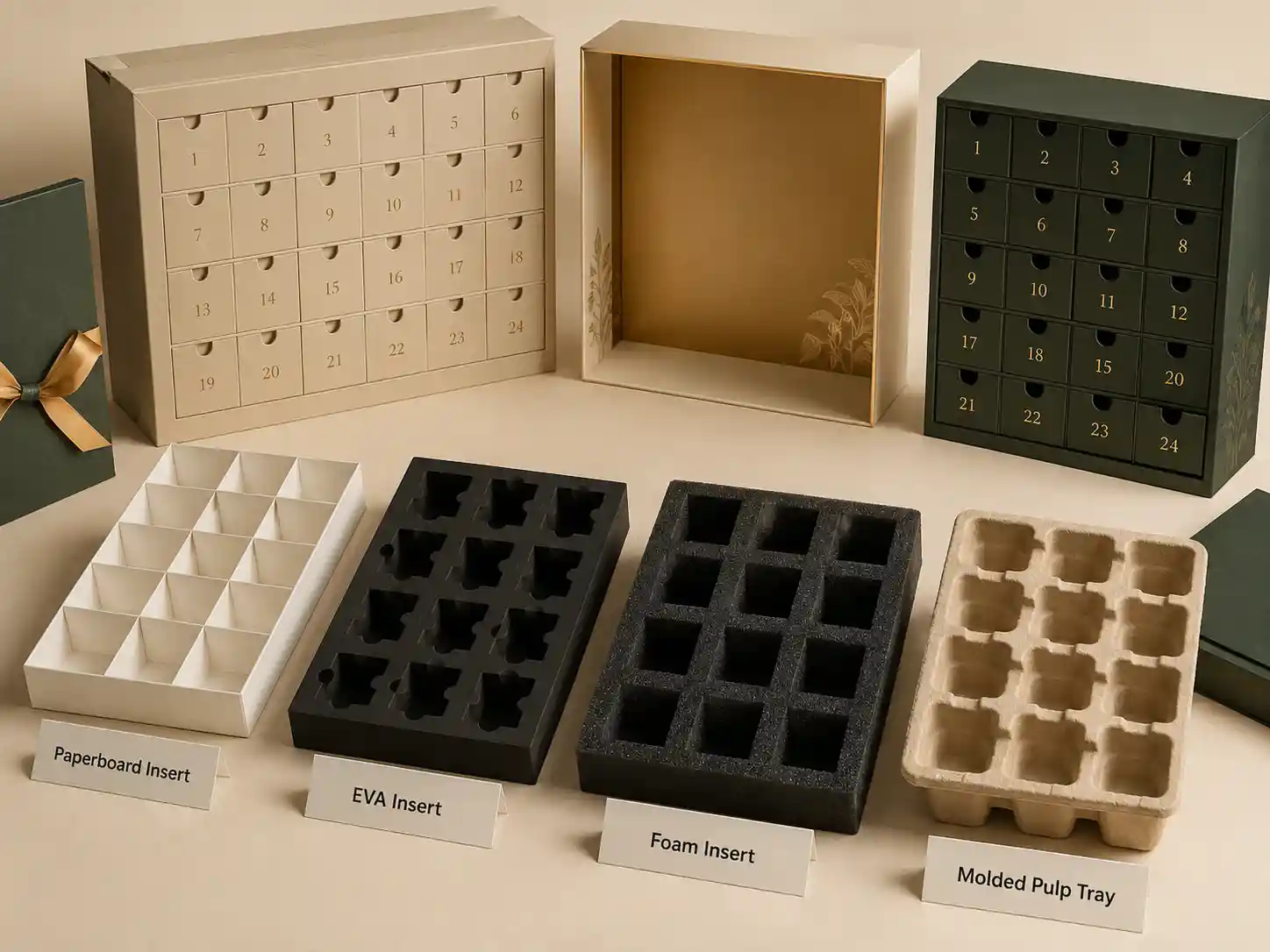
Insert Design Must Match the Numbered Doors
Every numbered door needs a matching compartment behind it. This is where many production problems happen. If the insert cavity is too shallow, the product may push against the door. If the cavity is too loose, the product may move during shipping and damage the printed panel.
Paperboard Inserts
Paperboard inserts are widely used for lightweight products and cost-sensitive projects. They can be flat packed in some structures, which helps reduce shipping volume.
EVA and Foam Inserts
EVA and foam inserts give stronger product holding performance for fragile or high-value items. They are often used for cosmetics, tools, electronics accessories, and premium sample kits. The buyer should confirm thickness, cavity tolerance, color, odor control, and export packing method.
Molded Pulp Inserts
Molded pulp is often selected for recyclable packaging projects. It can support sustainability positioning, but the cavity shape and surface texture should be checked with real products during sampling.
Giftpackpro can help review structure, insert matching, and sample approval through its custom advent calendar box services, especially when buyers need different insert options for the same outer box design.
Sampling Process for Numbered Doors Advent Calendar Boxes
Sampling is important because numbered doors combine artwork, structure, and function. A digital mockup is useful, but it cannot fully confirm door opening force, insert fit, carton strength, or surface finish.
Blank Structural Sample
A blank sample checks size, door position, insert fit, and opening method before full-color printing. This is useful when the buyer is still adjusting product size or gift set arrangement.
Printed Sample
A printed sample checks color, number readability, finishing effect, door alignment, and overall retail appearance. Buyers should test it with real products whenever possible.
Pre-Production Sample
A pre-production sample should match the final material, final printing, final insert, and final packing method. This sample becomes the production reference for bulk order QC.
Before approving the sample, buyers should confirm whether the final order will be flat packed, semi-assembled, or fully assembled. Packing style affects carton size, labor cost, unit freight cost, and damage risk.
Flat Packing vs Assembled Packing
Month 09 export packing and shipping planning should start before bulk production, not after the cartons are finished. The packing method directly affects carton volume, pallet quantity, and the risk of crushed corners or damaged numbered doors.
Flat Packing
Flat packing reduces shipping volume and can lower freight cost. It is suitable for some paperboard structures and simple calendar designs. The buyer should confirm whether local assembly is available at the destination.
Flat packing is not always suitable for rigid board calendars or complex insert systems. If the box needs precise factory assembly, flat packing may increase final handling problems.
Semi-Assembled Packing
Semi-assembled packing balances freight efficiency and factory control. Some parts are pre-folded or partially assembled, while final setup is completed later. This can work for promotional projects where shipping volume matters but product presentation still needs consistency.
Fully Assembled Packing
Fully assembled packing gives better control over shape and final presentation. It is often used for rigid advent calendar boxes, drawer calendars, and premium gift packaging. The trade-off is larger carton volume and higher shipping space.
Buyers can compare different structures from custom advent calendar box products and then request a custom quote based on the most realistic packing method.
Master Cartons, Palletizing, and Shipping Marks
Export packing should protect both the outer box and the numbered doors. A calendar box with many small perforated doors can be more sensitive to pressure than a standard gift box.
Master Carton Planning
Master cartons should match product weight, box size, and shipping route. For heavy assembled calendars, the carton should not be overloaded. For flat-packed items, the carton should prevent bending and edge crushing.
Inner Protection
Depending on the structure, protection may include corner guards, paper separators, polybags, tissue paper, EPE sheets, or custom carton partitions. The goal is to reduce rubbing, moisture exposure, and compression during transport.
Palletizing
Palletizing should consider carton direction, stacking height, edge protection, and stretch wrapping. Heavy cartons should not be placed on top of lighter cartons. If the numbered door panels face a pressure point, extra protection may be needed.
Shipping Marks
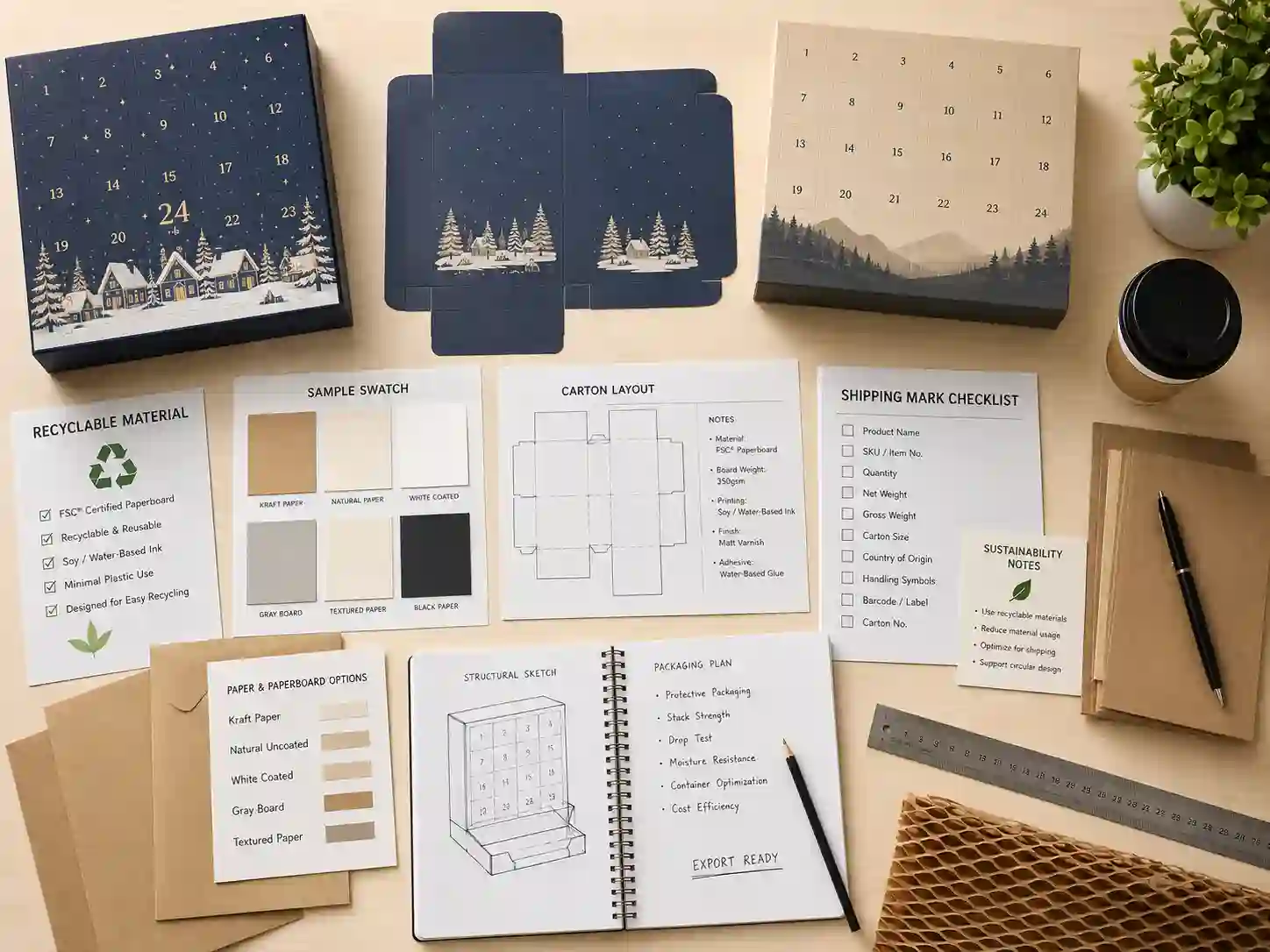
Shipping marks should be clear and consistent with the purchase order and carton label requirements. Common details include item number, carton number, quantity, gross weight, net weight, carton size, destination, and handling marks.
The Giftpackpro packaging factory can support carton planning, export packing checks, and production communication for B2B buyers who need consistent bulk delivery.
Quality Control Points Before Shipment
Quality control for numbered doors advent calendar boxes should cover structure, printing, insert fit, assembly, and export packing. The inspection should not only focus on appearance.
Door Opening Test
QC teams should open sample doors from different cartons to check tear strength, crease accuracy, and user experience. Doors should open cleanly without damaging nearby numbers or panels.
Number Sequence Check
The approved artwork should be compared with printed sheets and finished boxes. This is especially important for random number layouts and multi-SKU projects.
Insert Fit Check
Real products or product dummies should be placed inside cavities to confirm fit. The product should not press too hard against the door or move freely inside the compartment.
Carton Drop and Compression Awareness
For export orders, buyers should discuss carton strength, stacking method, and damage reduction. A simple packing change can sometimes reduce dents, corner damage, and panel deformation during shipping.
Buyers planning larger orders can request a custom quote with packing requirements included, instead of asking only for the unit box price.
What Buyers Should Prepare Before Requesting a Quote
A clear project brief helps the factory quote faster and more accurately. For numbered doors advent calendar boxes, buyers should prepare both design and logistics information.
- Box size, shape, and preferred structure.
- Number of doors, such as 12, 24, 25, or custom quantity.
- Product size and weight for each compartment.
- Insert preference: paperboard, EVA, foam, molded pulp, or open to suggestion.
- Printing method, color requirements, and finishing requirements.
- Flat packing, semi-assembled packing, or fully assembled packing preference.
- Order quantity, target delivery date, and destination country.
- Retail carton, master carton, pallet, and shipping mark requirements.
If the buyer does not have a final die-line yet, Giftpackpro can review product dimensions and suggest a workable structure through custom advent calendar box services.
Practical B2B Example
A cosmetics buyer wants 24 numbered doors for a seasonal sample set. Some products are small tubes, while others are jars and sachets. A simple equal-size door layout may look neat, but it may not fit the real product mix.
A better approach is to group products by size, create different cavity dimensions, then place numbers on the outer panel according to the insert layout. During sampling, the buyer should test door opening, product fit, and carton protection. For export, fully assembled packing may be safer if the rigid structure and insert position are difficult to assemble locally.
This type of planning helps reduce last-minute artwork changes, production delays, and shipping damage.
Final Checklist for Numbered Doors Advent Calendar Boxes
Before confirming bulk production, buyers should check the door structure, number layout, insert fit, sample approval, packing method, carton strength, pallet plan, and shipping marks. A good-looking calendar box is not enough. It must also be practical for assembly, inspection, warehousing, and export delivery.
For more project planning resources, visit the advent calendar box buying guides. To start a custom project with structure, insert, artwork, sample, MOQ, lead time, quality control, and export packing details, request a custom quote from Giftpackpro.