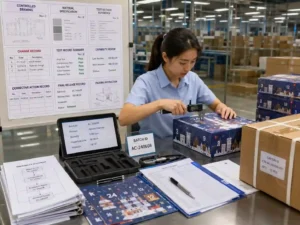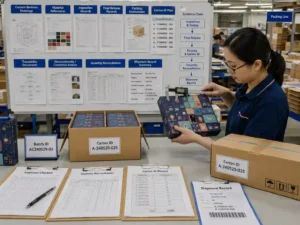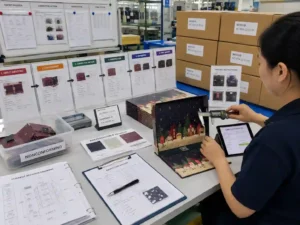
Brands should choose rigid advent calendar boxes when the product set needs stronger structure, better insert control, and a more premium retail presentation than a simple folding carton can provide.
For B2B buyers, the decision is not only about appearance. The real question is whether the box structure, insert material, compartment layout, artwork process, sample testing, and export packing can protect the products through sampling, bulk production, shipping, and retail handling.
This guide explains when rigid advent calendar boxes make sense, especially for projects involving paperboard inserts, EVA, foam, molded pulp, fragile products, multiple compartments, and fit testing.
When Rigid Advent Calendar Boxes Are the Better Choice
Rigid advent calendar boxes are usually suitable when the product value, product quantity, or retail positioning requires a stronger packaging format. They are commonly used for cosmetics, skincare, fragrance samples, candles, chocolates, tea, coffee, jewelry, small toys, stationery, and promotional gift sets.
If the buyer needs a stronger seasonal launch box with custom drawers, doors, trays, or product-specific compartments, working with a custom advent calendar boxes manufacturer can reduce the risk of weak structure, loose products, or poor shelf presentation.
Good Use Cases for Rigid Advent Calendar Boxes
Rigid structure is worth considering when the products are heavy, fragile, premium, or sold as a limited seasonal set. For example, a beauty brand may need 24 small compartments for skincare minis, while a chocolate brand may need food-safe inner packing and accurate cavity sizes. A tea brand may need paperboard dividers that keep sachets upright, while a fragrance brand may need foam or EVA protection for small glass bottles.
Rigid advent calendar boxes are also useful when the box itself is part of the retail value. If the buyer expects the packaging to be photographed, displayed in store, used for influencer seeding, or shipped as a gift set, rigid board can support a cleaner finish and stronger first impression.
How Product Fit Decides the Insert Material
The insert is often more important than the outer box. A premium rigid shell cannot solve a poor fit problem inside. For Month 03 planning, brands should focus on inserts and product fit before finalizing artwork or confirming bulk order details.
Common insert options include paperboard, corrugated board, EVA, foam, molded pulp, and hybrid insert systems. Each material has different cost, protection, sustainability, and visual effects.
| Insert Material | Best For | B2B Notes |
|---|---|---|
| Paperboard insert | Light products, sachets, small boxes, tea, stationery, beauty samples | Good for printed surfaces and recyclable paper-based projects. Fit accuracy depends on die-cut design. |
| Corrugated insert | Heavier items, larger compartments, retail gift packs | Stronger than thin paperboard. Useful when product weight is uneven across the box. |
| EVA insert | Glass bottles, cosmetics, fragrance, premium fragile products | Clean fit and strong protection. Higher cost and usually requires accurate product samples. |
| Foam insert | Fragile items, irregular shapes, protective presentation | Useful for cushioning. Buyers should confirm color, density, odor, and surface finish. |
| Molded pulp insert | Eco-focused projects, candles, jars, molded cavities | Good paper-based option for protective cavities. Tooling and shape limits should be checked early. |
Paperboard Inserts
Paperboard inserts are a practical choice for many rigid advent calendar boxes because they are lightweight, printable, and suitable for many small products. They work well for tea sachets, stationery, small cartons, wrapped candies, beauty sachets, and product samples with simple shapes.
However, paperboard inserts need accurate die-line planning. If the product is too loose, it may move during shipping. If the cavity is too tight, workers may struggle during packing, which can slow production and create quality problems.
EVA and Foam Inserts
EVA and foam are often used when the products are fragile or need a more secure fit. They are common for fragrance samples, small glass jars, cosmetic bottles, essential oil sets, and premium promotional kits.
For these projects, buyers should provide real product samples or accurate 3D dimensions. Small differences in bottle cap size, shoulder shape, or label thickness can affect the final fit. Before mass production, it is better to test the insert with actual filled products, not only empty dummies.
Molded Pulp Inserts
Molded pulp is useful when the buyer wants a paper-based protective insert with shaped cavities. It can be a good option for candles, jars, cups, small containers, and eco-focused seasonal gift sets.
The buyer should confirm whether the molded pulp surface will be visible after opening. If the insert is visible, color, texture, and cavity neatness matter more. If it is mainly hidden, the focus can be protection, assembly speed, and packing efficiency.
Compartment Design: Why Small Details Matter
Rigid advent calendar boxes often include 12, 24, or 25 compartments, but the number alone does not define the design. The real structure depends on product size, product sequence, opening style, weight distribution, and the buyer’s retail plan.
A 24-door calendar for lightweight tea sachets may use a paperboard grid. A 12-drawer calendar for candles may need thicker board, stronger drawer walls, and pull tabs. A skincare set with bottles, tubes, and jars may need different cavity depths within the same box.
Buyers comparing custom advent calendar box products should look beyond the outer shape. The internal layout should be reviewed together with product dimensions, packing order, and shipping method.
Fragile Product Planning
Fragile products need more than a premium-looking box. Glass, ceramic, thin plastic, and filled containers should be tested for movement, drop risk, edge pressure, and contact between products.
For example, a fragrance mini bottle may need EVA or foam to hold the neck and base. A small candle jar may need molded pulp or corrugated support around the side wall. A chocolate product may need cavity control plus food-contact packaging consideration. Buyers can review official guidance such as the FDA food-contact substances information when food-contact requirements are relevant to the project.
Customization Options That Affect Cost and Lead Time
Rigid advent calendar boxes usually involve several custom decisions: board thickness, outer wrap paper, printing method, surface finish, insert material, drawer or door structure, magnets, ribbons, handles, and export carton plan.
Before requesting a quote, buyers should decide whether the priority is retail appearance, product protection, faster production, lower unit cost, or stronger sustainability messaging. Giftpackpro can then recommend suitable custom advent calendar box services based on the product set and launch schedule.
Artwork and Surface Finishing
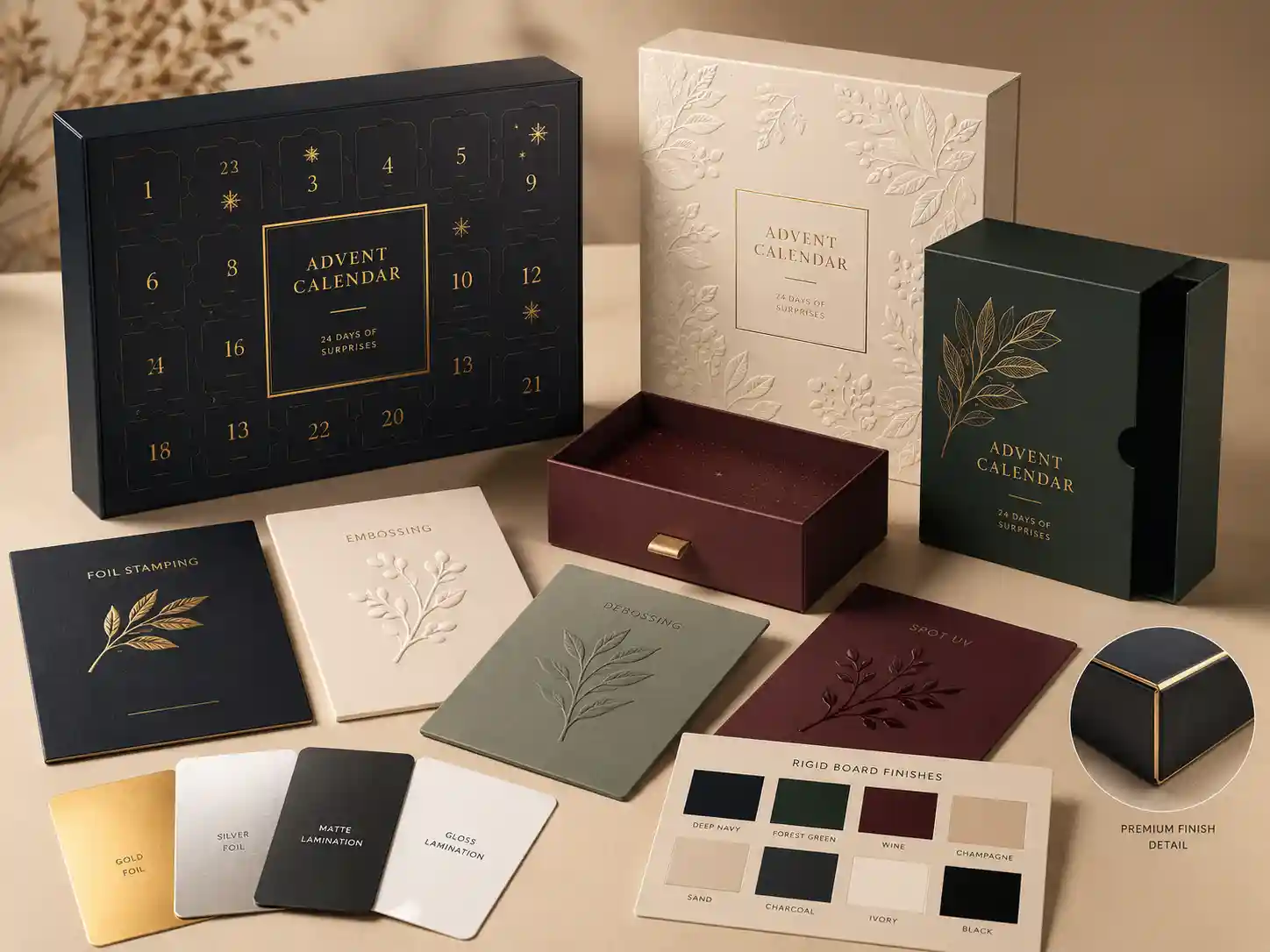
Common artwork processes include CMYK printing, Pantone color matching, matte lamination, gloss lamination, soft-touch lamination, foil stamping, embossing, debossing, spot UV, and textured paper wrapping.
Premium finishes can improve the retail look, but they also affect sampling time, cost, and quality control. Foil stamping and embossing require accurate positioning. Dark colors may show scratches more easily. Soft-touch surfaces can feel premium but may need extra handling care during packing and export.
For brand consistency, buyers should provide artwork files, Pantone references, logo rules, and any retail guideline documents before proofing. For paper sourcing or chain-of-custody questions, buyers may also review the official FSC website and confirm certification needs before placing the order.
Sample Process Before Bulk Production
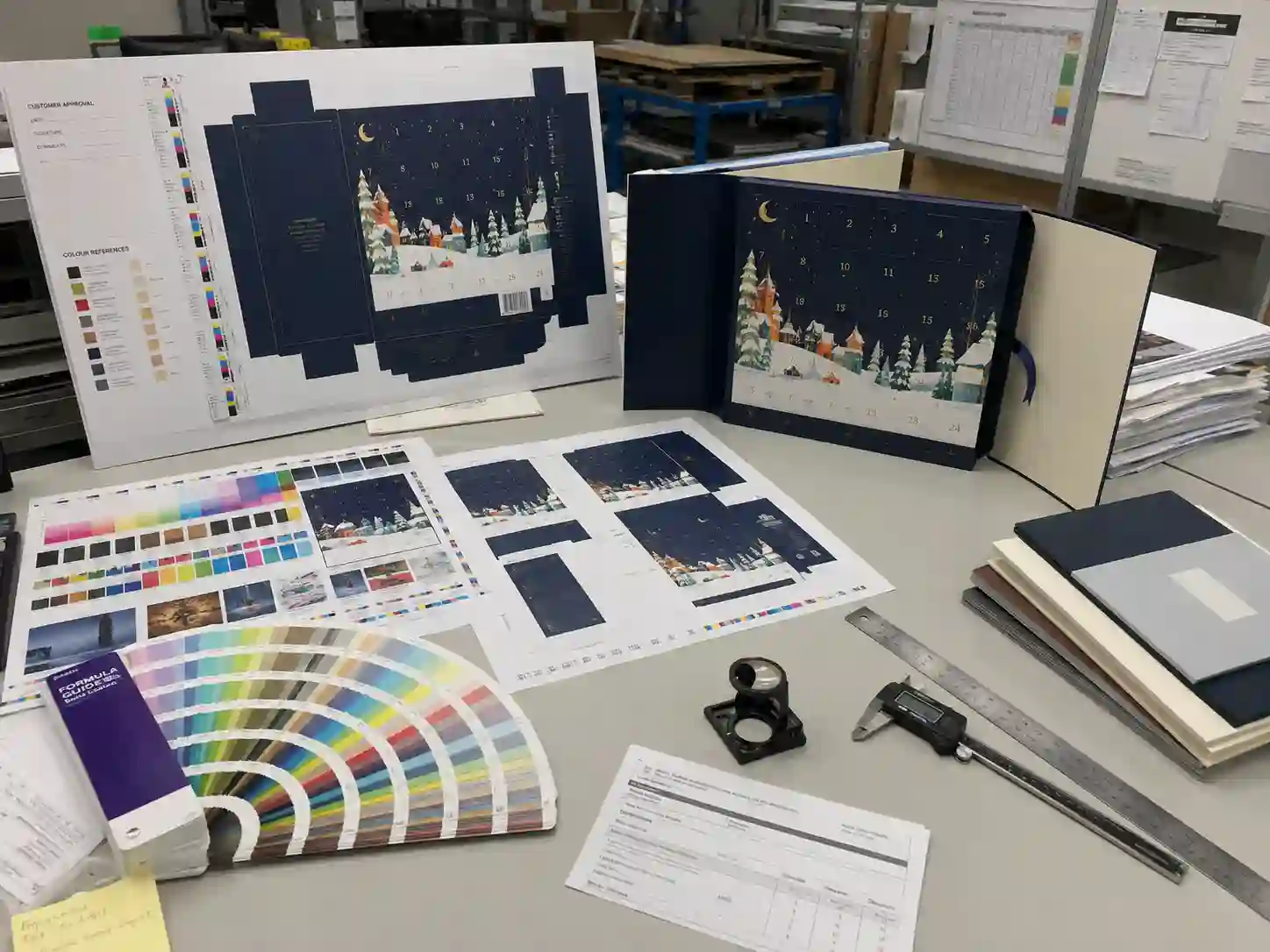
A sample is not only for checking the look of the box. It should also check opening experience, product fit, insert strength, drawer movement, door tearing, magnet hold, ribbon length, color accuracy, and export packing assumptions.
For rigid advent calendar boxes, a practical sample process may include a white sample for structure, a printed sample for color and finishing, and a pre-production sample before mass production. The exact process depends on complexity, MOQ, and launch deadline.
Buyers can also use the advent calendar box buying guides to prepare internal questions before contacting a supplier. This helps purchasing, marketing, and product teams align before the quotation stage.
MOQ, Lead Time, and Bulk Production Planning
MOQ depends on structure, material, printing, finish, and production setup. Simple paperboard insert projects may be easier to start, while complex rigid drawer calendars with EVA or molded pulp inserts often require more setup time and clearer technical files.
Lead time should include artwork confirmation, sample making, sample shipping, sample revision, material purchasing, printing, surface finishing, hand assembly, insert production, quality control, export packing, and international shipping.
Brands planning seasonal launches should not treat rigid advent calendar boxes as a last-minute packaging item. These projects include more manual assembly and more quality checkpoints than standard cartons.
Practical B2B Example
A skincare brand wants a 24-day calendar with tubes, jars, sachets, and small bottles. The buyer asks for a premium rigid box with drawers and gold foil. In this case, the supplier needs product dimensions, product weights, artwork files, drawer sequence, insert preference, target quantity, destination country, and required delivery date before giving a reliable quote.
If the buyer only sends a rough photo and asks for a fast price, the quote may miss key details. Insert material, board thickness, finishing, assembly method, and packing method can all change the final cost.
Quality Control, Export Packing, and Fit Testing
Quality control for rigid advent calendar boxes should cover both appearance and function. A beautiful box that fails during packing or shipping can still damage the buyer’s launch schedule.
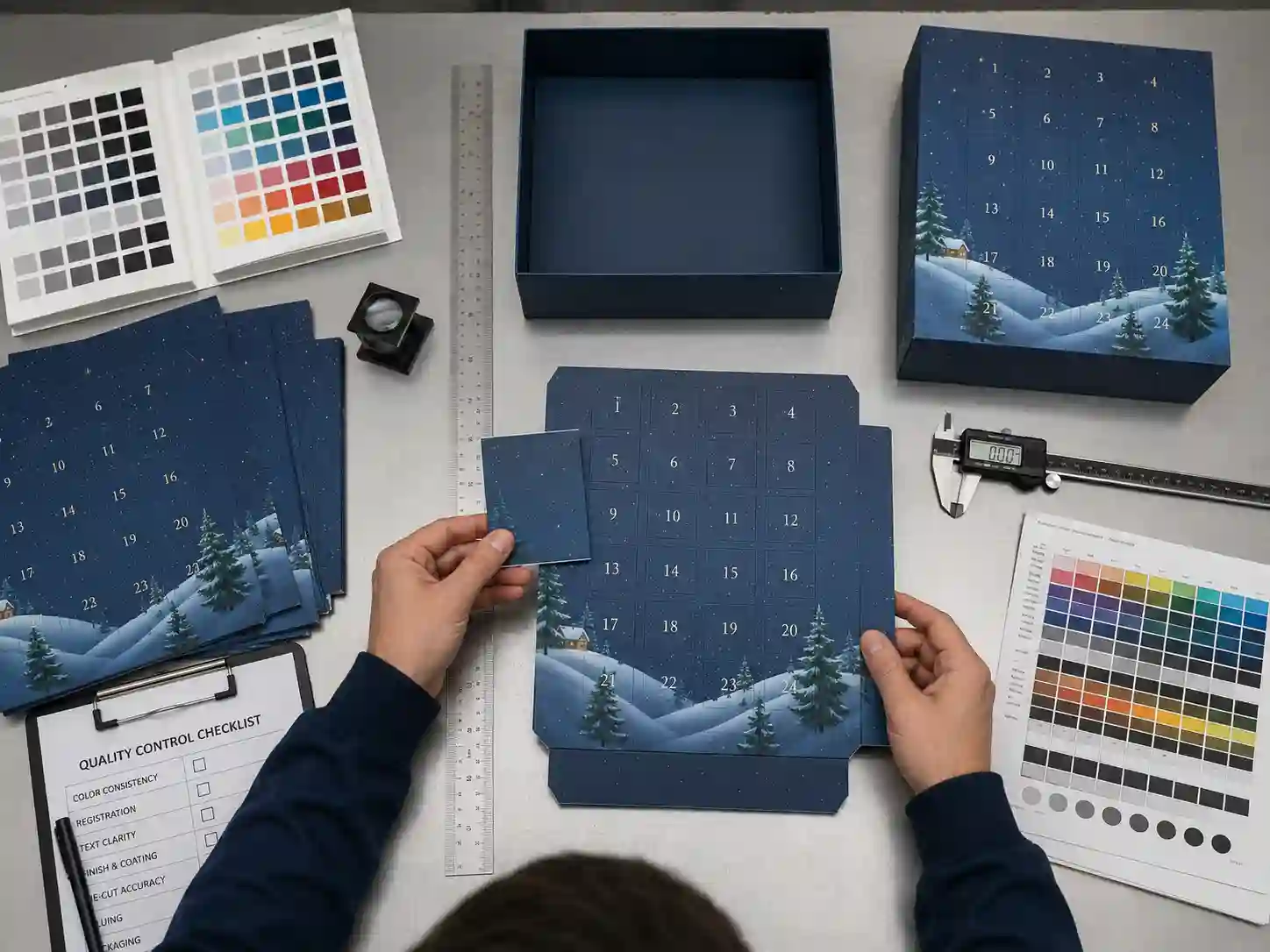
Important checks include color consistency, lamination surface, foil position, drawer sliding, door opening, glue strength, insert position, product fit, carton strength, barcode placement, and final packing sequence.
Fit Testing Checklist
Before bulk production, buyers should test real products inside the final insert. Check whether each item is easy to place, easy to remove, and secure during movement. Turn the box gently, simulate handling, and check whether products shift, scratch, or press against doors and drawers.
For fragile products, ask whether extra cushioning, sleeve packing, paper wrapping, or carton dividers are needed. For export orders, confirm master carton size, gross weight, pallet plan, carton marks, and loading method.
Quote Preparation Advice
To receive a more accurate quotation, buyers should prepare the following information before contacting Giftpackpro:
- Box style, such as drawer, door-opening, book-style, or two-piece rigid structure
- Product list with dimensions, weight, and quantity per set
- Preferred insert material, or a request for supplier recommendation
- Target order quantity and expected MOQ range
- Artwork files, logo files, Pantone colors, and finishing requirements
- Destination country, shipping method, and target delivery date
- Retail packing, barcode, label, carton mark, and pallet requirements
If the project is still in early planning, buyers can request a custom quote with product photos and rough dimensions first. The supplier can then suggest structure options, insert directions, and sample steps before final artwork is ready.
When Not to Choose a Rigid Structure
Rigid structure is not always necessary. If the product is very lightweight, the campaign is price-sensitive, or the calendar will be shipped flat and assembled locally, a folding carton or corrugated structure may be more suitable.
Rigid advent calendar boxes are better when the buyer values structure, finish, protection, and retail presentation enough to justify the extra material and assembly cost. If the main goal is only low-cost seasonal packaging, a simpler paperboard option may be more practical.
Final Decision: Structure First, Decoration Second
The best time to choose rigid advent calendar boxes is when the product set needs controlled compartments, stronger inserts, better protection, and a premium retail appearance. The structure should be confirmed before decoration, because product fit affects nearly every later decision.
Giftpackpro supports B2B buyers with structure planning, insert discussion, sampling, bulk production, and export packing. Buyers can review the custom advent calendar box services, compare custom advent calendar box products, learn more about the Giftpackpro packaging factory, read more advent calendar box buying guides, or request a custom quote for a specific seasonal packaging project.