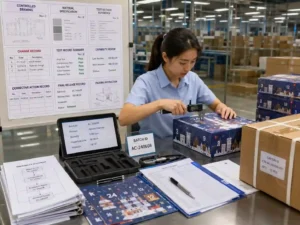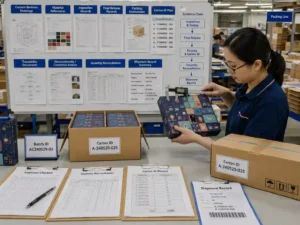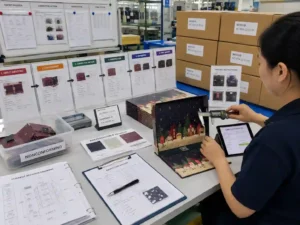
Choosing between custom vs ready-made advent calendar boxes is not only a design decision. For overseas B2B buyers, it affects quotation accuracy, sampling time, artwork control, insert fit, MOQ planning, retail presentation, export packing, and seasonal delivery risk.
Ready-made boxes can look attractive when a buyer needs something fast, has a small test order, or does not need a fully branded retail package. Custom advent calendar boxes make more sense when the project involves a specific product size, brand artwork, retail campaign, influencer mailer, gift set, cosmetic launch, food promotion, or seasonal display program.
This guide compares both options from a sourcing and production point of view, so purchasing teams can choose the right direction before sending a quotation request to a custom advent calendar boxes manufacturer.
What Are Ready-Made Advent Calendar Boxes?
Ready-made advent calendar boxes are existing box structures or stock-style designs that a supplier already has available or can reproduce with limited changes. The size, drawer layout, number of compartments, paperboard thickness, and insert style are usually fixed or only partly adjustable.
For simple seasonal packaging, this can be useful. A buyer may choose from a standard drawer box, door-opening calendar, fold-out box, or rigid paperboard format. Some suppliers may allow logo stickers, sleeve printing, simple label changes, or limited artwork replacement. However, the structure is usually not developed around the buyer’s exact products.
Ready-made boxes are often considered when the order is small, the product dimensions are close to an existing structure, or the buyer wants to reduce development discussions. They can also help marketing teams test a concept before investing in full custom tooling, dieline work, sample development, and bulk production planning.
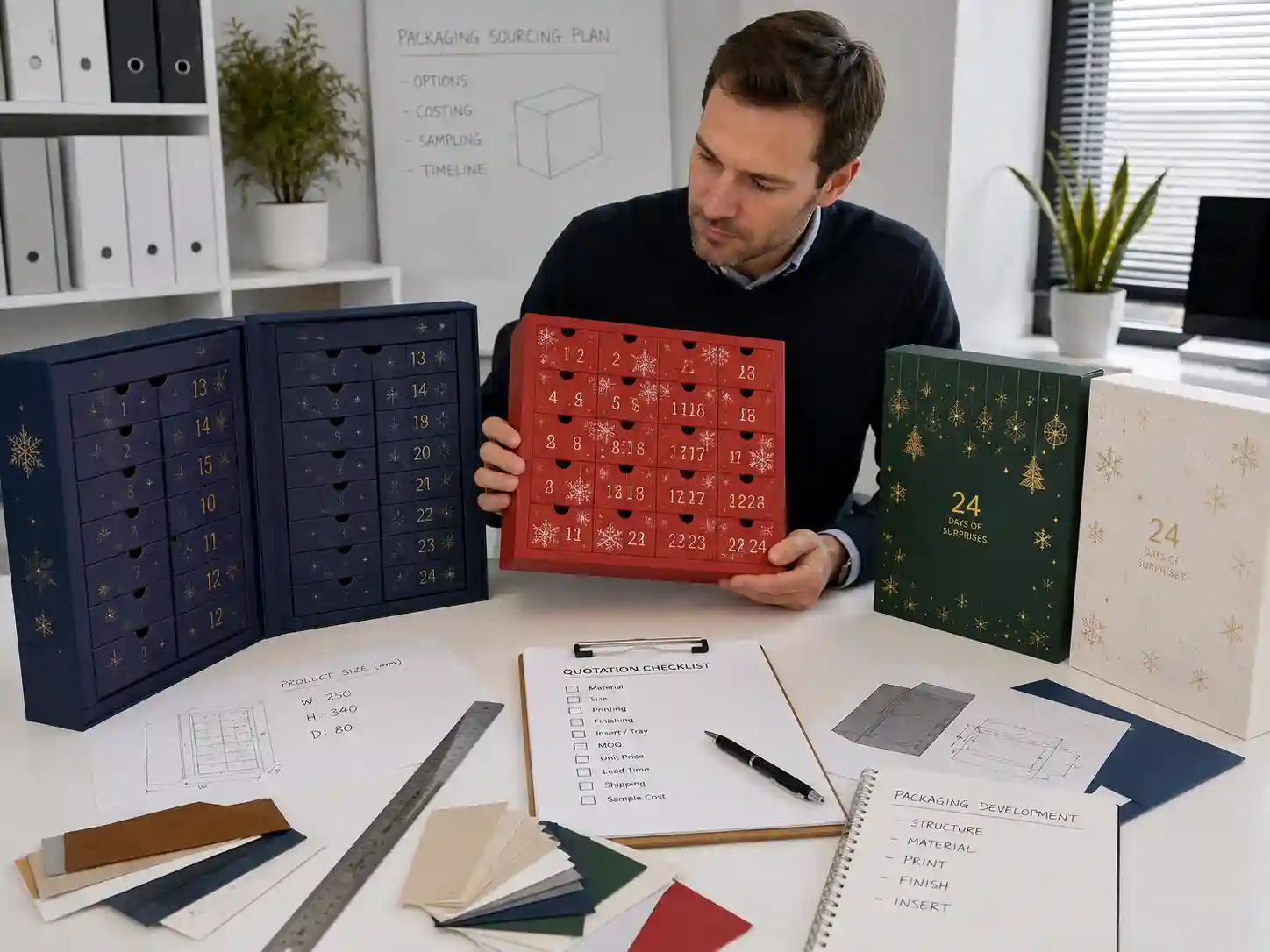
What Are Custom Advent Calendar Boxes?
Custom advent calendar boxes are developed around the buyer’s products, brand identity, retail channel, and campaign goals. The box structure, insert, drawer count, door layout, artwork, finishing, internal compartments, barcode area, export carton plan, and packing method can be planned from the beginning.
This option is usually better for B2B buyers who need a branded retail solution rather than a generic seasonal box. For example, a cosmetics brand may need 24 drawers for trial-size products, while a food brand may need paperboard inserts for different product weights. A promotional campaign may require a book-style calendar, rigid box, fold-out structure, or counter-ready display presentation.
Custom production normally needs more communication. Buyers should prepare product dimensions, weight, quantity estimate, artwork direction, preferred structure, insert requirements, target retail market, and expected shipping method. If the project is still early, reviewing advent calendar box buying guides can help the team organize details before requesting a quote.
Quick Comparison: Custom vs Ready-Made Advent Calendar Boxes
The better choice depends on whether the buyer values speed and simplicity or brand control and product fit. The table below gives a practical comparison for sourcing teams.
| Comparison Point | Ready-Made Advent Calendar Boxes | Custom Advent Calendar Boxes |
|---|---|---|
| Structure | Based on existing drawer, window, or fold-out formats with limited changes. | Developed around product size, compartment count, display purpose, and retail plan. |
| Insert Fit | May need product size compromises if the standard insert does not match. | Paperboard, molded pulp, foam, EVA, or other insert options can be planned for product fit. |
| Artwork Control | Often limited to label, sleeve, or simple print areas. | Full-surface artwork, brand colors, numbered doors, seasonal graphics, and retail information can be customized. |
| MOQ Factors | May support smaller tests depending on stock and supplier policy. | MOQ depends on structure, material, printing, finishing, and insert complexity; usually around 300-500 pcs depending on structure. |
| Sampling | Faster if the supplier has a matching existing sample. | Requires dieline review, structural sample, artwork proofing, and fit testing before bulk production. |
| Retail Readiness | Suitable for simple gifts or low-risk trials. | Better for branded retail campaigns, launch kits, gift sets, export programs, and supplier comparison. |
When Ready-Made Boxes May Be the Better Choice
Ready-made boxes can be a practical option when the project is simple and the buyer accepts design limits. This is not a bad choice for every situation. It just needs to match the sourcing goal.
1. You Need a Fast Concept Test
If the marketing team wants to test an advent calendar idea before committing to a full custom structure, a ready-made box can reduce early development work. It allows the buyer to check whether the category, product mix, or seasonal offer has market potential.
2. Your Products Fit a Standard Layout
Ready-made boxes are easier to use when the products are small, lightweight, and close in size. Simple chocolate pieces, small samples, lightweight accessories, or flat promotional items may fit standard compartments without major changes.
3. Branding Requirements Are Light
If the buyer only needs a generic seasonal look, simple logo label, or limited printed sleeve, ready-made packaging may be enough. This works better for internal gifting, low-volume trials, or short-term promotional use than for a full retail launch.
4. The Budget Is Mainly for Product Testing
For early-stage projects, buyers may prefer to spend less on packaging development and more on product mix, campaign testing, or market feedback. Ready-made packaging can support this stage, as long as expectations are realistic.
Where Ready-Made Boxes Can Create Problems
The main risk with ready-made boxes is mismatch. A standard box can look fine in a catalog photo but create problems when real products, retail labels, inserts, barcodes, and shipping cartons are added.
Product fit is the first concern. If the compartments are too large, products move during transport. If they are too tight, workers may struggle during packing, and consumers may have difficulty opening the doors or drawers. This is why insert planning is important for bulk production.
Artwork can also become limited. Some ready-made structures do not allow full-surface printing or accurate brand color matching. Door numbering, barcode space, warning labels, ingredient panels, and retail stickers may not have enough clean space. For supply-chain labels and barcodes, buyers can also review general GS1 standards when planning retail information placement.
Export packing is another issue. A beautiful box still needs to survive carton packing, container loading, warehouse handling, and retail distribution. If the structure was not designed for the product weight and route, damage risk may increase.
When Custom Advent Calendar Boxes Are the Better Choice
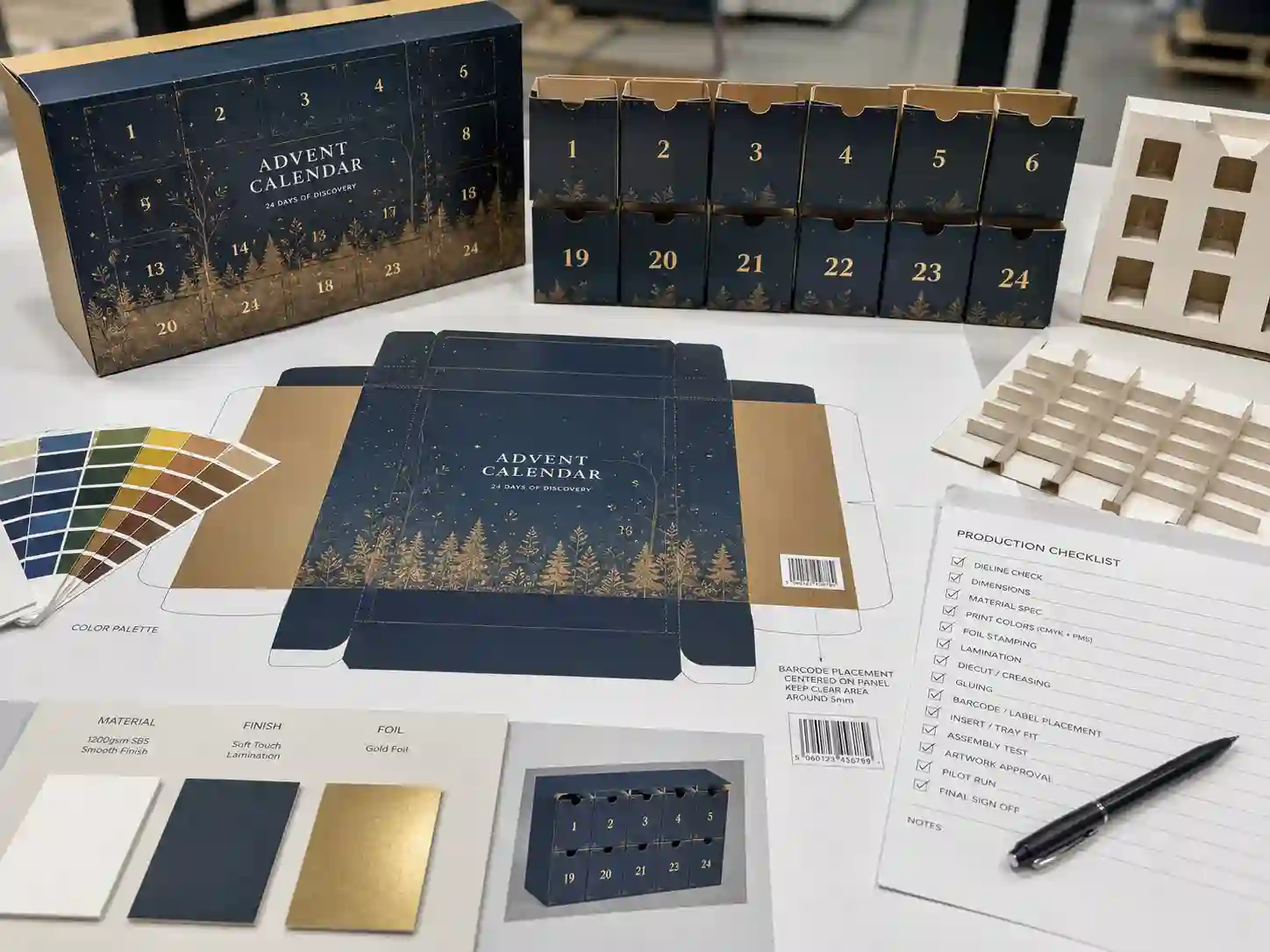
Custom advent calendar boxes are usually the stronger option when the packaging must support a real retail campaign, brand launch, product kit, or seasonal sales program. The buyer can align structure, artwork, insert, finishing, and packing method before mass production.
1. You Need Exact Product Fit
Product fit is one of the biggest reasons to choose custom packaging. Different products may need different compartment depths, drawer heights, insert materials, or door-opening strength. A custom dieline allows the supplier to design around real product dimensions instead of forcing products into an existing layout.
2. You Need Strong Brand Presentation
Advent calendar boxes are often used as seasonal brand assets. For cosmetics, food, beverages, jewelry, wellness products, and promotional gifts, the box is part of the campaign. Custom printing allows brand colors, logo placement, numbered windows, campaign message, seasonal artwork, and retail information to work together.
3. You Need Better Supplier Comparison
A custom project makes supplier comparison clearer. When all suppliers quote based on the same structure, material, insert, print finish, quantity, and export packing requirement, buyers can compare capability instead of comparing unclear assumptions. The custom advent calendar box services page can help buyers understand which details should be confirmed before production.
4. You Need Retail or Export Packing Support
Custom packaging can be planned with carton quantity, protective packing, barcode area, pallet requirements, and shipping method in mind. This matters when the boxes will move through international logistics, retailer warehouses, or seasonal distribution schedules.
Key Factors Buyers Should Compare Before Ordering
Before choosing custom vs ready-made advent calendar boxes, buyers should compare more than unit price. A low initial cost may become expensive if the box does not fit the product, fails during packing, or needs artwork changes too late.
- Product dimensions: Send length, width, height, and weight for each product that will go inside the calendar.
- Structure type: Decide whether the project needs drawers, numbered doors, book-style opening, fold-out panels, rigid box construction, or a hybrid structure.
- Insert material: Paperboard inserts are common for many packaging projects, while foam, EVA, molded pulp, or other options may be considered depending on product shape and protection needs.
- Artwork readiness: Confirm whether final artwork, logo files, dielines, color references, and retail text are ready before sample production.
- MOQ expectation: Ask the supplier how structure, printing, finishing, and insert choice affect MOQ. Do not compare MOQ without comparing the full specification.
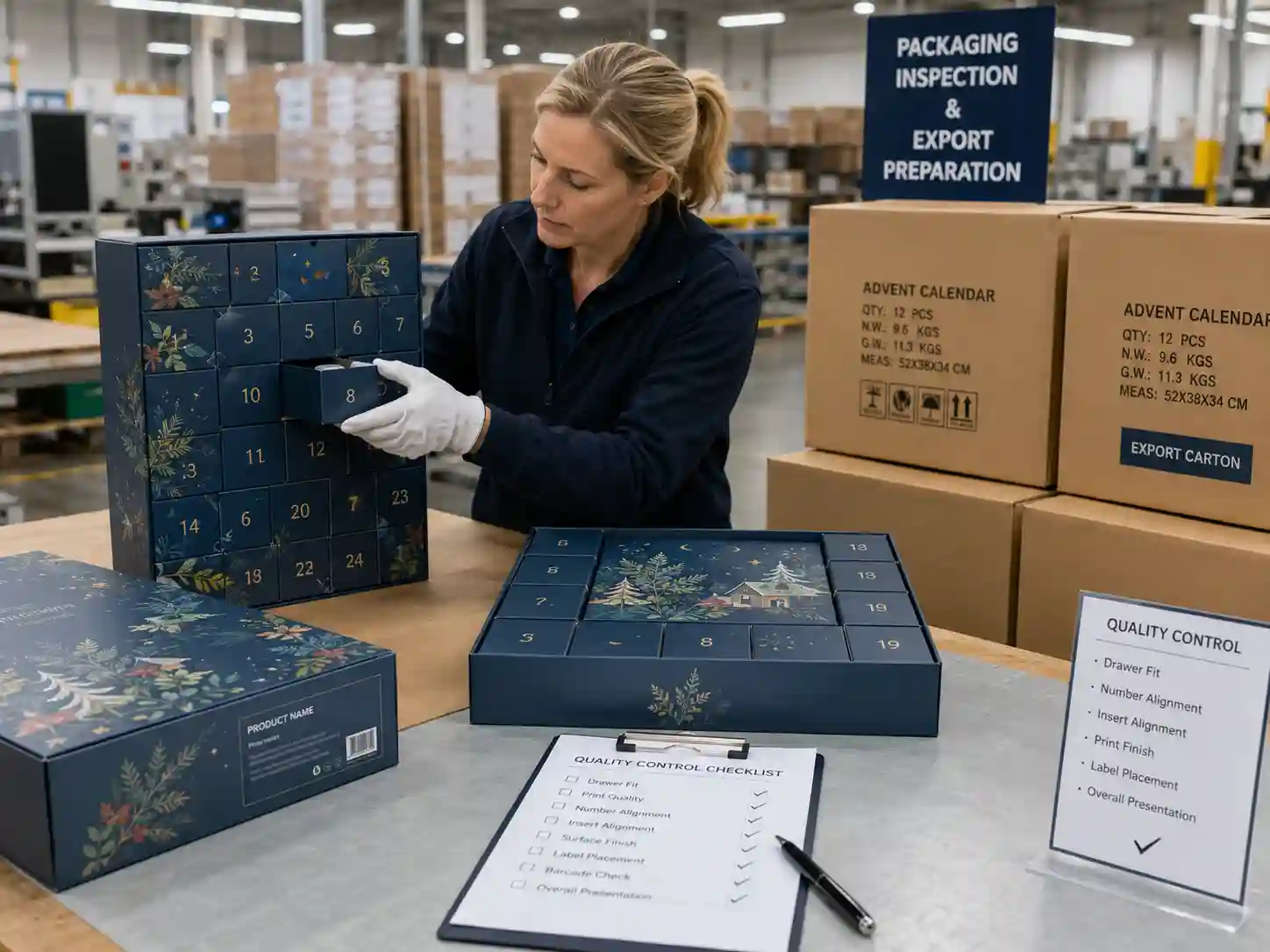
- Quality checks: Confirm drawer fit, door opening, insert holding strength, print finish, glue strength, edge quality, and export carton packing.
- Responsible paper sourcing: If the buyer has sourcing policies, discuss paper options and references such as FSC without assuming supplier certification unless documents are provided.
How Custom Projects Usually Move From Quote to Bulk Production
A custom project works best when the buyer and supplier confirm details in stages. First, the buyer sends product information, quantity estimate, target market, structure preference, and artwork direction. The supplier reviews whether the structure is practical and asks questions about insert fit, material, printing, finishing, packing, and shipment.
Next comes quotation and dieline discussion. A serious quotation should explain the structure, material, insert, printing method, finishing, sample needs, bulk quantity, and packing assumptions. If any detail is missing, the quotation may change later.
After that, a sample can be prepared for structure checking, artwork review, and product fit testing. Buyers should not approve bulk production based only on a digital mockup if the products have unusual size, weight, or fragile surfaces. A physical sample helps the team check drawers, doors, inserts, print finish, and packing workflow.
Before bulk production, confirm the final dieline, artwork files, barcode area, export carton mark, and any retail labeling needs. Buyers can also learn more about production background from the Giftpackpro packaging factory page before sending project details.
Which Option Is Better for Seasonal Retail Planning?
For seasonal retail planning, custom packaging usually provides more control. Advent calendar projects often involve many small decisions: product order, compartment numbering, insert height, opening experience, graphic theme, retail label location, and export packing. A ready-made box can support a quick test, but it may not support a full campaign smoothly.
That said, ready-made boxes can still be useful when the buyer is testing a market, preparing a small promotional run, or working with a product set that fits an existing structure. The key is to avoid treating ready-made and custom boxes as equal options. They solve different problems.
If the project needs brand value, exact product fit, strong retail presentation, or export reliability, custom development is usually the safer B2B route. If the project needs speed and the buyer accepts limits, ready-made packaging may be acceptable.
FAQ: Custom vs Ready-Made Advent Calendar Boxes
Are custom advent calendar boxes always more expensive than ready-made boxes?
Not always in the total project view. Custom boxes may require more development work, but they can reduce product-fit problems, artwork limitations, repacking work, and retail presentation issues. Buyers should compare the full specification, not only the initial unit quote.
Can I use a ready-made advent calendar box for a branded retail campaign?
Yes, but only if the structure, print area, insert, barcode space, and product fit match your campaign needs. If brand presentation and retail information are important, custom packaging usually gives better control.
What information should I send for a custom quotation?
Send product dimensions, product weight, quantity estimate, target structure, insert requirement, artwork status, preferred material, finishing idea, delivery market, and export packing needs. You can also request a custom quote if you want the supplier to review your project details.
Is MOQ different for custom and ready-made boxes?
Yes. Ready-made options may support smaller tests depending on stock and supplier policy. Custom MOQ depends on structure, material, printing, finishing, inserts, and production setup. For many custom structures, MOQ is usually around 300-500 pcs depending on structure, but it should be confirmed case by case.
Should I approve bulk production before seeing a sample?
For custom advent calendar boxes, a physical sample is strongly recommended. It helps check structure, drawer fit, insert holding, door opening, print finish, and packing workflow before bulk production starts.
Need Custom Advent Calendar Boxes?
If you are comparing custom vs ready-made advent calendar boxes for a seasonal retail project, Giftpackpro can help review structure, insert, artwork, sample, bulk production, quality control, and export packing requirements. Share your product size, quantity estimate, artwork idea, and target structure to request a custom quote.