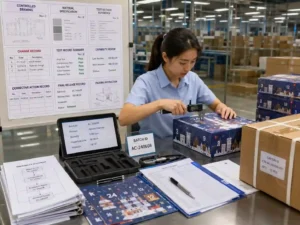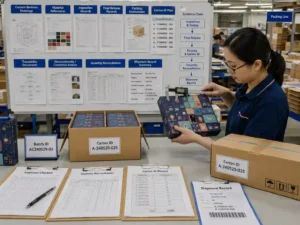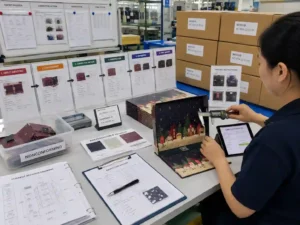
Quick answer: A credible packaging case study should connect a defined packaging challenge to identifiable specifications, controlled samples, measurable checks, production evidence, and a documented result. For advent calendar projects, buyers should look beyond polished finished-box photography. Strong evidence shows what was required, which packaging revision was evaluated, how important claims were verified, what problems occurred, and whether corrective actions were checked before approval or shipment.
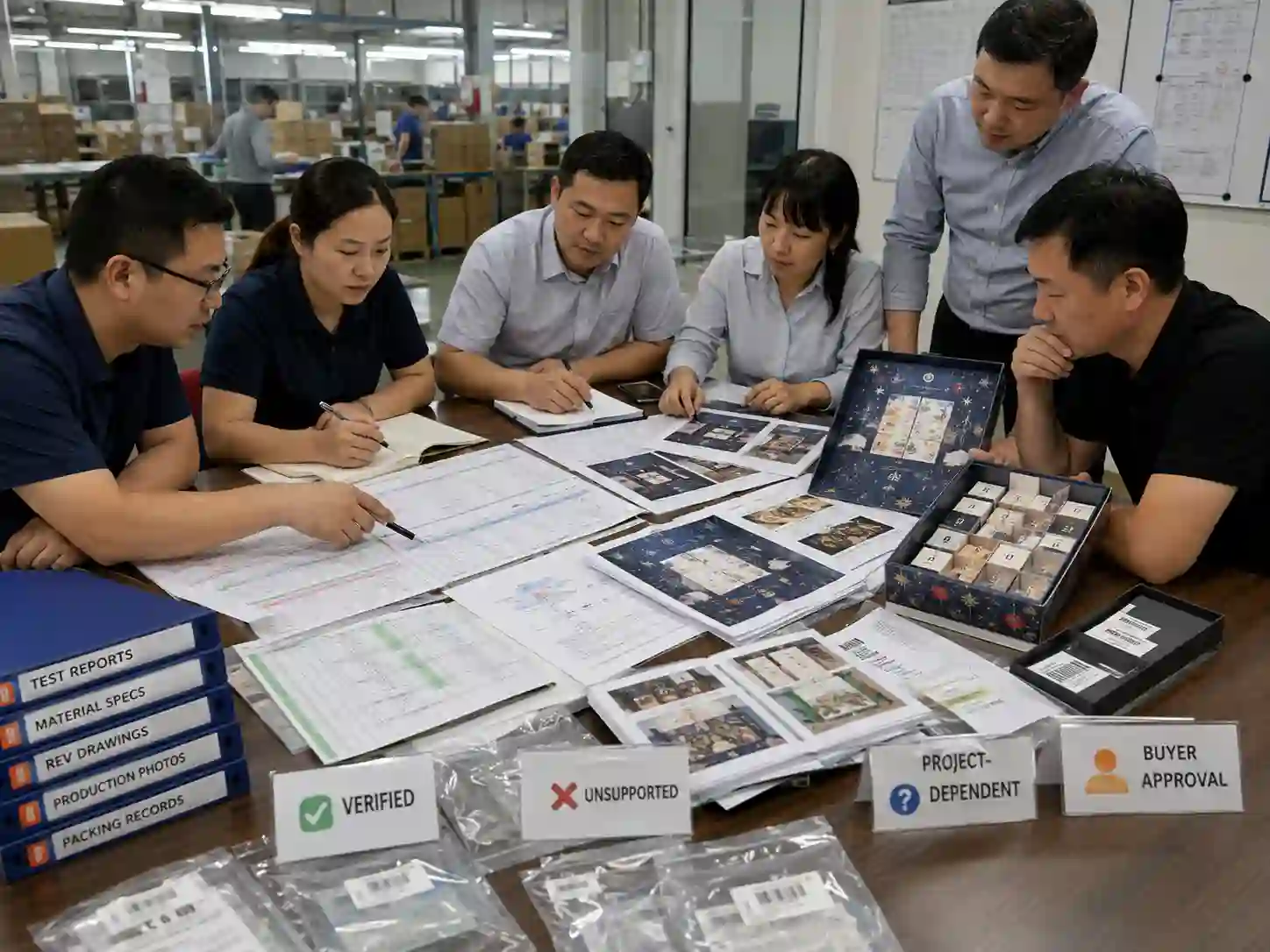
What evidence makes an advent calendar packaging case study credible?
A credible packaging case study provides enough traceable evidence for a buyer to understand what was actually made and how the supplier knows it met the stated requirements. It should distinguish documented facts from supplier interpretation and buyer-approved decisions.
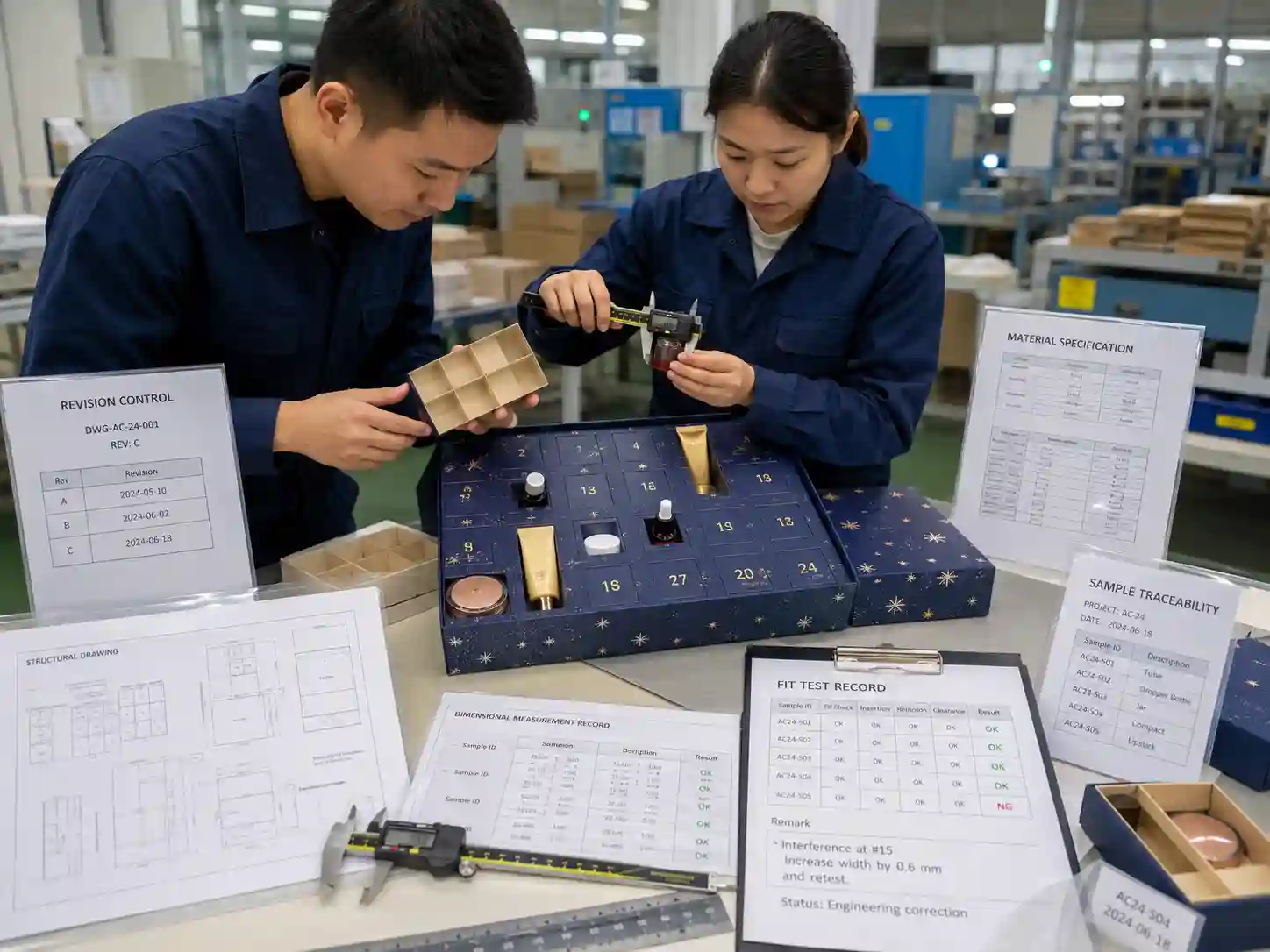
The strongest case studies normally connect several records rather than relying on one impressive photograph. Relevant evidence may include a structural drawing revision, material specification, identified sample, dimensional inspection record, functional test record, dated production photograph, packing record, nonconformity report, or approval document.
Not every project requires every record. The evidence should match the claims being made. For example, a statement about compartment fit needs dimensional or functional fit evidence; a statement about material construction needs a controlled material specification; and a statement about production consistency needs production or inspection records rather than only a prototype photograph.
Which case-study claims should buyers be able to verify?
Any claim that influences a sourcing, quality, or approval decision should have evidence appropriate to that claim. Buyers should ask, “What document, measurement, sample, or record would allow us to verify this statement?”
| Case-study claim | Useful supporting evidence | What the buyer should check |
|---|---|---|
| A structure was developed for a particular product set | Controlled structural drawing, identified sample, product dimensions | Drawing revision and sample identity correspond to the described project |
| Products fitted the compartments correctly | Fit-test record, measurements, dated sample photos | Actual products or controlled reference samples were tested for insertion, retention, removal, and interference |
| A specified board or paper construction was used | Material specification, purchase or production documentation where appropriate | Specification identifies relevant material type, grade, thickness, or other controlled attributes |
| A production problem was solved | Nonconformity record, corrective-action evidence, reinspection record | The original problem, affected scope, correction, and verification are distinguishable |
| Finished calendars were packed in a defined configuration | Packing specification, carton identification, packing photographs or records | Evidence relates to the stated finished configuration rather than an unrelated sample |
| The project reached an approved state | Approval record or controlled approved reference | It is clear who controlled the approval and which revision was approved |
How should drawings and samples support a case study?
Drawings and samples should establish exactly which packaging configuration the evidence represents. Without revision control or sample identification, photographs and test results can easily become disconnected from the version that was ultimately produced.
For a multi-component advent calendar, a useful structural record may identify compartment dimensions, insert geometry, board construction, major assembly features, or other project-critical details. The case study does not need to publish confidential drawings publicly, but the supplier should be able to demonstrate that controlled records exist when a buyer is conducting a capability review.
Sample evidence should also identify its status. A concept mock-up, engineering sample, approved sample, and production unit are not interchangeable evidence. Buyers should be cautious when a supplier presents one stage as proof of another.
How do test records strengthen case-study credibility?
Test records make a case study stronger when they identify what was tested, against which requirement, using which method, and with what result. A photograph of someone holding a caliper is not equivalent to a recorded measurement linked to a controlled sample.
Useful records can include actual measured values, specified limits or acceptance criteria, sample identity, drawing revision, test date, result, inspector or responsible function, and disposition where a requirement was not met.
The method should fit the claim. Dimensional checks can support dimensional claims, while functional observations may be needed for product insertion, retention, removal, door operation, or component interference. A supplier should not use an unrelated test as broad proof that the complete package is suitable for every application.
What makes material evidence convincing?
Material evidence is convincing when it connects the claimed construction to a controlled specification. Descriptions such as “premium board” or “high-quality paper” are too subjective to verify by themselves.
Depending on the project, a material specification may identify board type, nominal thickness, paper grade, insert material, surface treatment, or another relevant construction parameter. Which attributes must be controlled is project-dependent and should be defined by the packaging design and purchasing requirements.
Buyers should also distinguish a material specification from a certificate. A certificate may be required for a particular sourcing or compliance purpose, but it does not automatically prove every structural, dimensional, printing, or functional claim made in a case study.
How should a case study document problems and corrective action?
A case study can be more credible when it documents a real problem and the verification of its correction instead of presenting the project as frictionless. The important point is whether the records show controlled problem resolution.
For example, if a compartment was initially too tight, useful evidence could identify the affected sample revision, the observed interference, the dimensional or structural change, the revised sample, and the subsequent fit check. If a production issue affected multiple units, the evidence should also make the affected quantity or scope reasonably clear.
What should corrective-action evidence contain?
Corrective-action evidence should show more than a statement that the problem was “fixed.” Buyers should look for a traceable sequence from the detected nonconformity to correction and verification.
- Identify the nonconforming condition and the requirement it failed.
- Record the affected sample, batch, quantity, revision, or production stage where relevant.
- Document the correction or process change.
- Repeat the appropriate inspection or functional test.
- Record the reinspection result and disposition.
Root-cause analysis and broader corrective action may be appropriate for some failures, while a straightforward engineering correction may be sufficient for others. The necessary depth depends on the severity, recurrence risk, production stage, and buyer requirements.
Why do traceability and dates matter?
Traceability helps establish that the documents, photographs, measurements, and finished packaging belong to the same relevant project stage. Dates alone are not enough; useful evidence also identifies the sample, revision, lot, order, or other controlled reference where appropriate.
This becomes particularly important when several versions of an advent calendar are developed. An excellent photograph of an early sample should not be used as evidence that the same construction, material, or fit condition existed in later production unless the records support that connection.
What does strong versus weak case-study documentation look like?
Strong documentation allows another qualified person to follow the evidence chain. Weak documentation depends primarily on marketing statements, isolated photographs, or conclusions that cannot be traced to identifiable requirements.
| Weak documentation | Stronger documentation |
|---|---|
| “The products fitted perfectly.” | Identified products or reference samples linked to a fit-test record and controlled packaging revision |
| Finished-box beauty photos only | Dated engineering, production, inspection, and finished-packing evidence where relevant |
| “High-quality materials were used.” | Controlled material specification identifying the construction attributes relevant to the project |
| “QC solved the problem.” | Nonconformity, correction, reinspection, and disposition records |
| Unidentified measurement photo | Recorded measurement linked to a sample, feature, requirement, and drawing revision |
| One successful prototype presented as production proof | Clear distinction between sample approval evidence and subsequent production inspection evidence |
How can buyers verify a supplier’s case study during capability review?
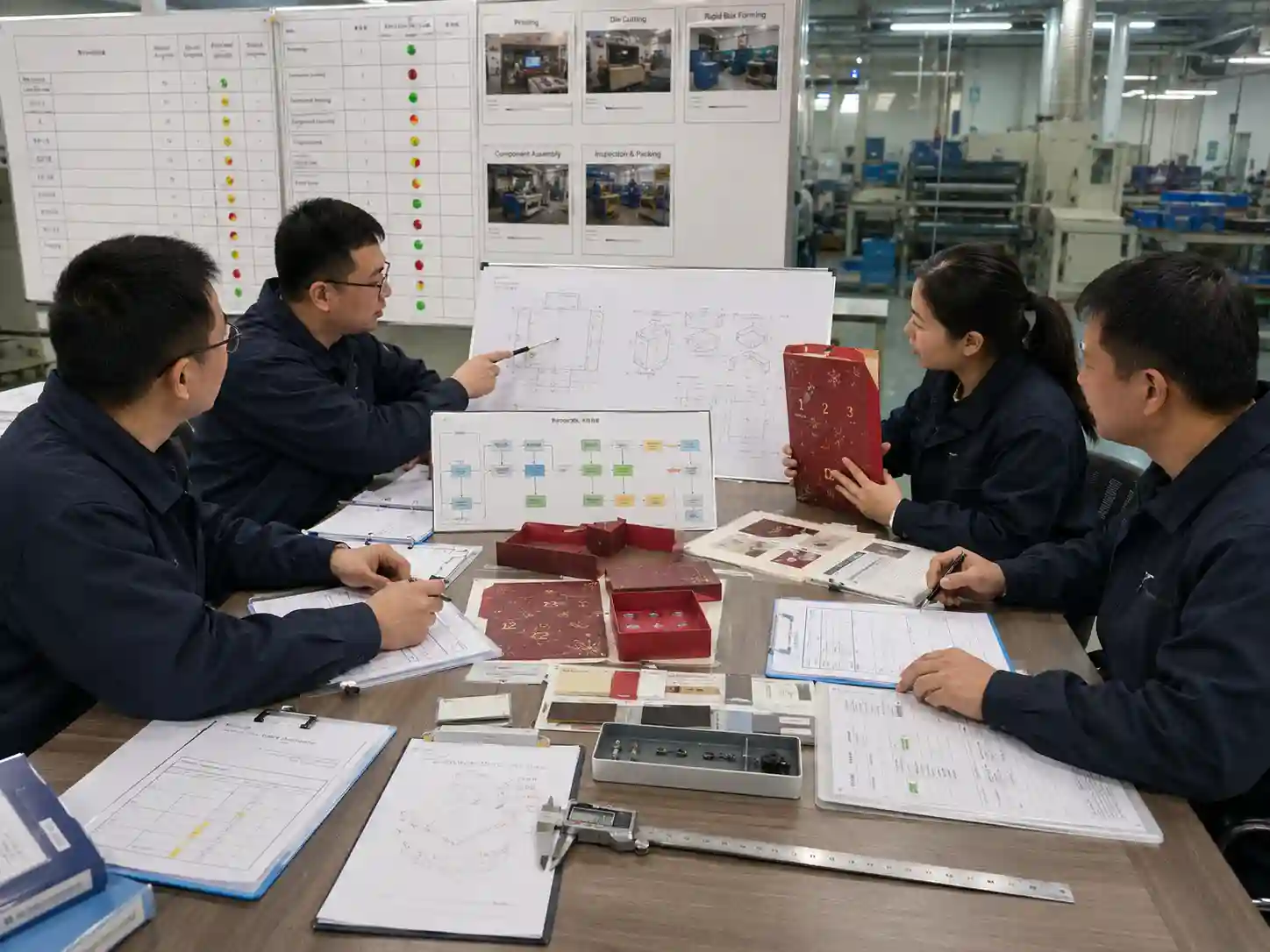
Buyers should test whether the supplier can move from a marketing-level case study to underlying controlled evidence. The objective is not necessarily to obtain every confidential project file, but to determine whether the claimed capability is supported by a repeatable documentation system.
- Ask which structural drawing revision corresponds to the displayed sample.
- Check whether measurement or test records identify the samples evaluated.
- Compare stated materials with controlled material specifications.
- Confirm whether photographs represent prototypes, production units, QC inspection, or final packing.
- Ask how nonconforming results were recorded and resolved.
- Check whether corrected units or revisions were reinspected.
- Look for traceability between specifications, samples, production records, QC records, and packing evidence.
- Confirm which decisions were made by the supplier and which required buyer approval.
A supplier does not need to disclose another customer’s confidential information to demonstrate these controls. Sensitive names, artwork, product information, and commercial details can be removed while retaining enough structure to demonstrate how evidence is generated and controlled.
Buyers evaluating broader production resources can also review the Giftpackpro packaging factory and relevant custom advent calendar box services alongside case-study evidence.
Which conclusions are facts, project-dependent recommendations, or buyer approvals?
A credible case study should keep these three categories separate. Mixing them can make supplier experience appear more universal than it really is.
| Category | Example | How to treat it |
|---|---|---|
| Verifiable fact | A recorded sample dimension or documented material specification | Verify against the corresponding controlled record |
| Project-dependent recommendation | A proposed structural change to improve product retention | Evaluate against the actual product, packaging structure, handling conditions, and project requirements |
| Buyer approval | Acceptance of an appearance, fit condition, or approved sample revision | Record the decision and clearly identify the approved reference |
Previous project success can demonstrate relevant experience, but it does not guarantee the same result for a new product set. Product geometry, materials, structure, tolerances, assembly methods, packing configuration, and acceptance criteria can change the engineering and verification required.
What are the main warning signs of a weak packaging case study?
The main warning sign is a gap between a strong claim and weak supporting evidence. Buyers should investigate when a supplier cannot explain how its stated result was measured, traced, inspected, or approved.
- Only polished finished-product photographs are available.
- Samples, drawings, and test reports have no clear revision relationship.
- Material claims rely on descriptive marketing terms instead of specifications.
- Measurements are shown without acceptance criteria or sample identity.
- Prototype evidence is presented as proof of production consistency.
- Problems are described as corrected without reinspection evidence.
- Dates or traceability references are missing where they are necessary to establish the evidence chain.
- Supplier recommendations are presented as if they were verified buyer approvals.
FAQs about credible advent calendar packaging case studies
Does a case study need to reveal the original customer’s identity?
No. Customer identity is not necessary for technical credibility. Confidential information can be redacted while the supplier retains useful evidence such as controlled revisions, anonymized test records, material specifications, measurement results, production-stage photographs, and QC documentation.
Are finished production photos enough to prove packaging capability?
No. They can show that physical packaging existed, but photographs alone usually cannot prove material specification, dimensional compliance, product fit, inspection results, corrective action, or production consistency. Those claims need appropriate supporting records.
Should buyers expect every case study to contain the same documents?
No. Evidence should be proportional to the claims and risks of the project. A complex multi-component calendar may require different verification from a simpler structure, so buyers should focus on whether each important claim has suitable and traceable support.
Can an old case study prove a supplier can handle a new advent calendar?
It can provide evidence of relevant previous capability, but it cannot approve the new project. Buyers should use previous records to assess supplier experience, then define and verify the specifications, samples, tests, inspections, and approvals required for the new design.
What should buyers request before relying on a case study?
Request enough underlying evidence to connect the supplier’s claims to controlled specifications, identifiable samples, objective checks, and documented outcomes. The goal is not the largest possible document package; it is a coherent evidence chain that can withstand practical procurement and quality review.
For a new project, send the product and packaging requirements through request a custom quote so the relevant evidence, verification points, and buyer approvals can be discussed for the actual advent calendar configuration.