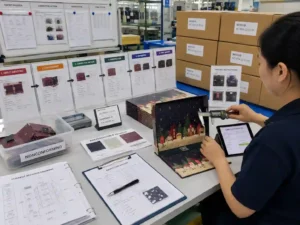
Quick answer: Greyboard thickness directly affects the stiffness, flatness, durability, and visual quality of large advent calendar panels. Thicker greyboard can improve structural stability and reduce panel bending, but it may also increase weight, material usage, and folding considerations. The correct thickness depends on panel size, box construction, finishing method, storage environment, and required appearance after production and transport.

Why does greyboard thickness matter for large advent calendar panels?
Greyboard thickness controls how well a large panel resists bending, twisting, and surface deformation. Large advent calendar covers, back panels, doors, and structural walls have more surface area, so small differences in board construction can create visible changes in flatness and strength.
For large-format seasonal packaging, the board is not selected only by thickness. Packaging engineers usually evaluate the combination of board thickness, density, paper wrapping, panel size, internal support, and expected handling conditions.
How does thickness affect panel stiffness?
Increasing greyboard thickness generally increases panel rigidity because a thicker board structure provides more resistance against bending forces. This is especially important for wide front covers, standing display formats, and deep rigid box constructions.
However, excessive thickness does not automatically improve performance. A thicker board may require adjustments to folding areas, corner construction, magnetic closures, hinge design, and overall box balance.
How should buyers compare greyboard thickness for large box panels?
The comparison should focus on the panel function rather than selecting the thickest available material. Different areas of an advent calendar box may require different structural solutions.
| Panel application | Thickness consideration | Common evaluation point |
|---|---|---|
| Large front cover panel | Higher stiffness may be needed | Check flatness, opening feel, and resistance to bending |
| Back panel | Depends on box depth and support structure | Review overall rigidity when assembled |
| Door or flap areas | Balance thickness with folding performance | Check hinge movement and repeated opening behavior |
| Internal structural panels | May use different board construction | Confirm load support and dimensional stability |
Actual thickness recommendations vary by project. The same board thickness can perform differently depending on board density, humidity exposure, panel dimensions, and the paper covering material.
How does humidity affect greyboard performance?
Humidity can change how greyboard behaves because paper-based materials absorb and release moisture. Large panels are more sensitive because they have wider surfaces where expansion, contraction, or uneven moisture movement can become visible.
Packaging teams should review:
- Storage and production environment conditions.
- Whether the board remains flat after conditioning.
- Whether wrapped surfaces show curling or edge movement.
- Whether different materials expand at different rates.
Humidity-related risks are normally checked through physical samples, supplier material records, and inspection observations rather than relying only on nominal thickness values.
Can thicker greyboard reduce scuffing and surface damage?
Greyboard thickness mainly improves structural strength, while scuffing resistance depends more on the surface paper, coating, lamination, handling process, and packaging protection.
A thicker panel may feel more premium because it provides a stronger hand feel, but surface durability still needs to be verified separately. Buyers should review finished samples for:
- Corner compression and edge exposure.
- Surface scratches after normal handling.
- Cover paper bonding quality.
- Visible dents or deformation on large flat areas.
What evidence should buyers request before approving greyboard construction?
Important material decisions should be supported by documents and physical verification. Buyers can use the following evidence checklist when reviewing large advent calendar panels.
- Greyboard specification showing thickness and material description.
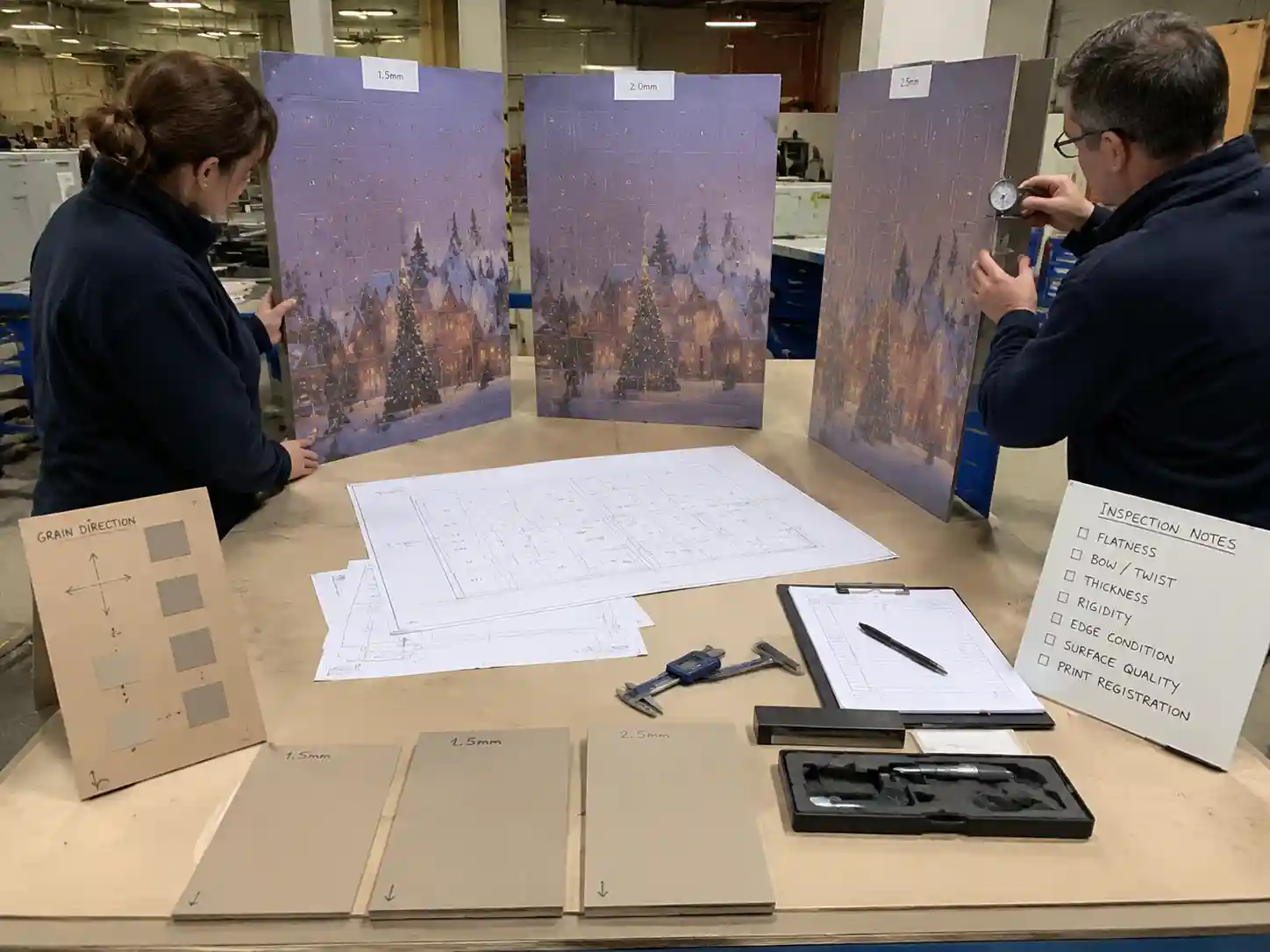
- Board samples showing different thickness options.
- Technical drawings identifying panel dimensions and construction layers.
- Sample inspection records showing flatness and appearance checks.
- Production approval records confirming the selected material version.
These records help separate verified material information from project-specific recommendations. Thickness selection should be approved against the final structure, not treated as an independent specification.
What risks occur when greyboard thickness changes after approval?
Changing greyboard thickness after structural approval can affect more than the board itself. It may influence the finished dimensions, wrapping tolerance, folding performance, weight, and overall appearance.
Common change risks include:
- Panel dimensions no longer matching the approved sample.
- Closures or magnets requiring adjustment.
- Different visual proportions between panels and inserts.
- Changes in packing weight and shipping calculations.
Any material substitution should be reviewed through a controlled approval process with updated samples, drawings, and inspection confirmation.

How do packaging teams validate greyboard thickness before production?
Validation normally combines material review, sample inspection, and assembled box evaluation. The goal is to confirm that the selected board performs correctly in the complete packaging structure.
- Review board specifications and available samples.
- Measure panel dimensions and thickness using appropriate tools.
- Inspect assembled samples for flatness and stiffness.
- Check surface appearance after finishing and handling.
- Approve the final material construction before production.
Giftpackpro supports custom advent calendar projects through custom advent calendar box services, including structural discussions, material selection, and production preparation. Buyers can also review related advent calendar box buying guides for additional packaging planning information.
FAQ: Does thicker greyboard always create a better advent calendar box?
No. Thicker greyboard can improve stiffness, but the best choice depends on panel size, construction design, finishing requirements, and handling conditions. A balanced structure is usually more important than maximum thickness.
FAQ: Should all panels use the same greyboard thickness?
Not always. Large covers, supporting panels, doors, and internal structures may have different requirements. The final choice depends on the role of each component within the assembled box.
FAQ: How can buyers confirm a material change is acceptable?
Material changes should be reviewed through updated samples, measurements, supplier documentation, and approval records. Visual confirmation alone may not identify structural differences.
For a custom large-format advent calendar box project, contact Giftpackpro through request a custom quote to discuss board construction, panel requirements, and material approval considerations.