
Quick answer: Solid bleached sulfate (SBS) board is usually better when a packaging project requires a very clean surface, high-end print appearance, consistent color reproduction, or tighter control of board behavior. Coated recycled board can be a better choice when recycled content evidence, cost control, and sustainability positioning are stronger priorities. The correct choice depends on structure, finishing, humidity exposure, product weight, and the level of appearance consistency required.
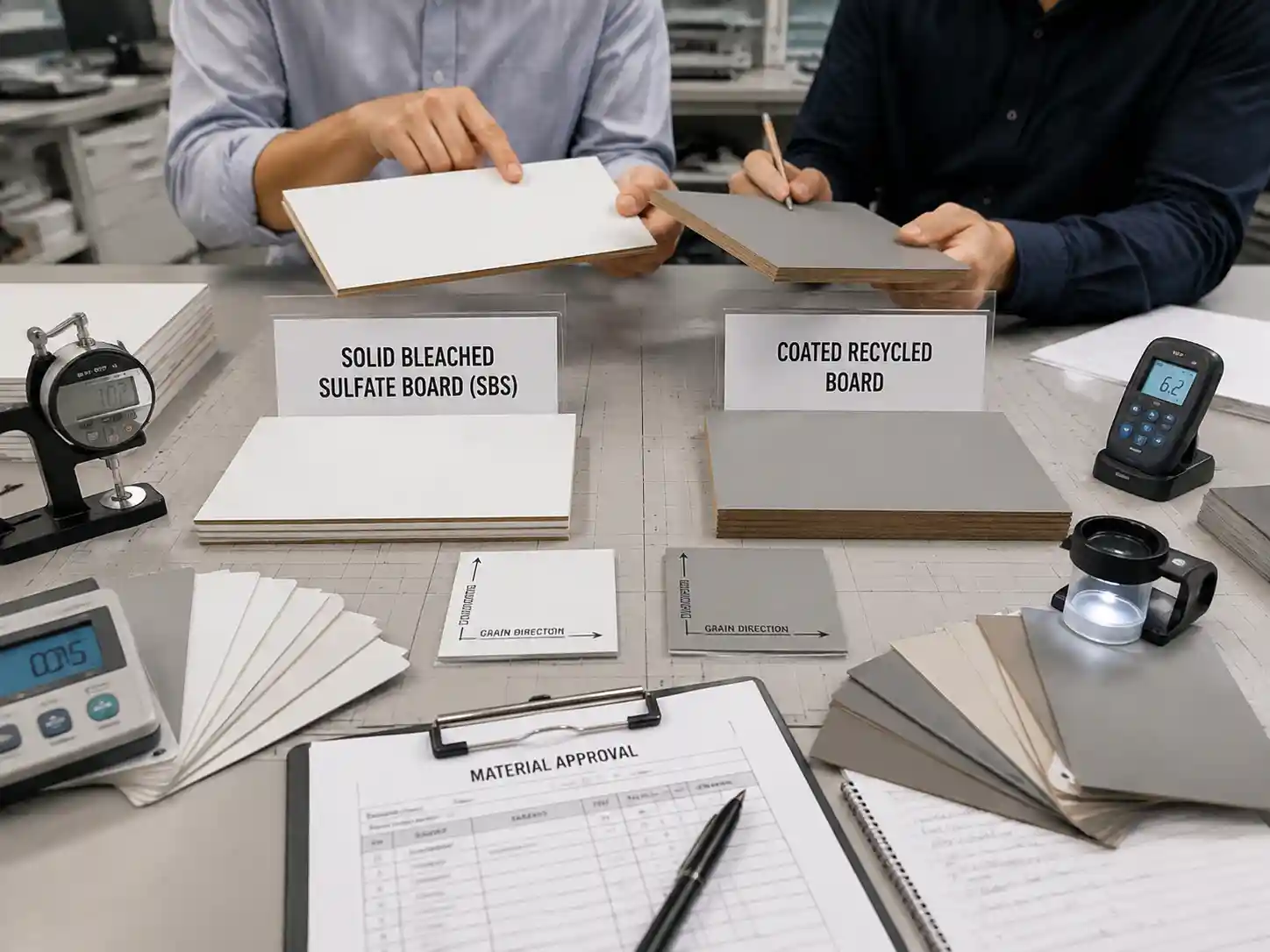
What is the difference between SBS and coated recycled board packaging?
SBS and coated recycled board differ mainly in fiber source, surface consistency, and performance behavior during packaging production.
SBS (Solid Bleached Sulfate) is made from bleached virgin fiber. It typically provides a smooth, bright surface with consistent formation, making it suitable for premium printed packaging where color accuracy and surface appearance are important.
Coated recycled board (often made from recovered paper fibers) uses recycled fiber content and is commonly selected when sustainability requirements and recycled material documentation are key project considerations. Its surface and structural performance can vary depending on fiber composition, manufacturing process, and coating quality.
| Material factor | SBS board | Coated recycled board |
|---|---|---|
| Surface appearance | Very smooth and consistent for premium printing and finishing | Can provide good print results but may show more variation between production batches |
| Fiber structure | Virgin bleached fiber with consistent formation | Recovered fiber composition with more variation possible |
| Color reproduction | Often preferred for precise brand colors and detailed graphics | May require additional approval checks for critical color matching |
| Material story | Focuses on appearance and performance properties | Can support recycled-content documentation when applicable |
| Common risk area | Material selection cost and sustainability requirements | Surface variation, stiffness variation, and appearance consistency |
When is SBS better for advent calendar box panels?
SBS is often the better choice when the outer surface of an advent calendar box is a major part of the product presentation and requires controlled printing, coating, or finishing.
Typical situations where SBS may be preferred include:
- Premium packaging with detailed illustrations, fine text, or multiple finishing layers.
- Projects requiring consistent white background appearance across production batches.
- Packaging with metallic foil, embossing, spot UV, or other surface treatments where board stability affects results.
- Large visible panels where small surface defects or color differences are noticeable.
For large advent calendar structures, the board is not only a print carrier. It also affects folding behavior, panel flatness, and how the finished package maintains its appearance after assembly.
When is coated recycled board a better option?
Coated recycled board can be suitable when recycled material requirements are important and the packaging design allows some natural material variation.
It may be considered for projects where:
- The sustainability strategy requires documented recycled fiber content.
- The printed design is less dependent on extremely tight color matching.
- The structure has sufficient reinforcement through design, layers, or supporting components.
- The buyer has approved acceptable appearance ranges before mass production.
However, recycled board selection should not rely only on the recycled content claim. Buyers should also review physical samples because recycled fiber characteristics can influence stiffness, surface smoothness, and finishing performance.
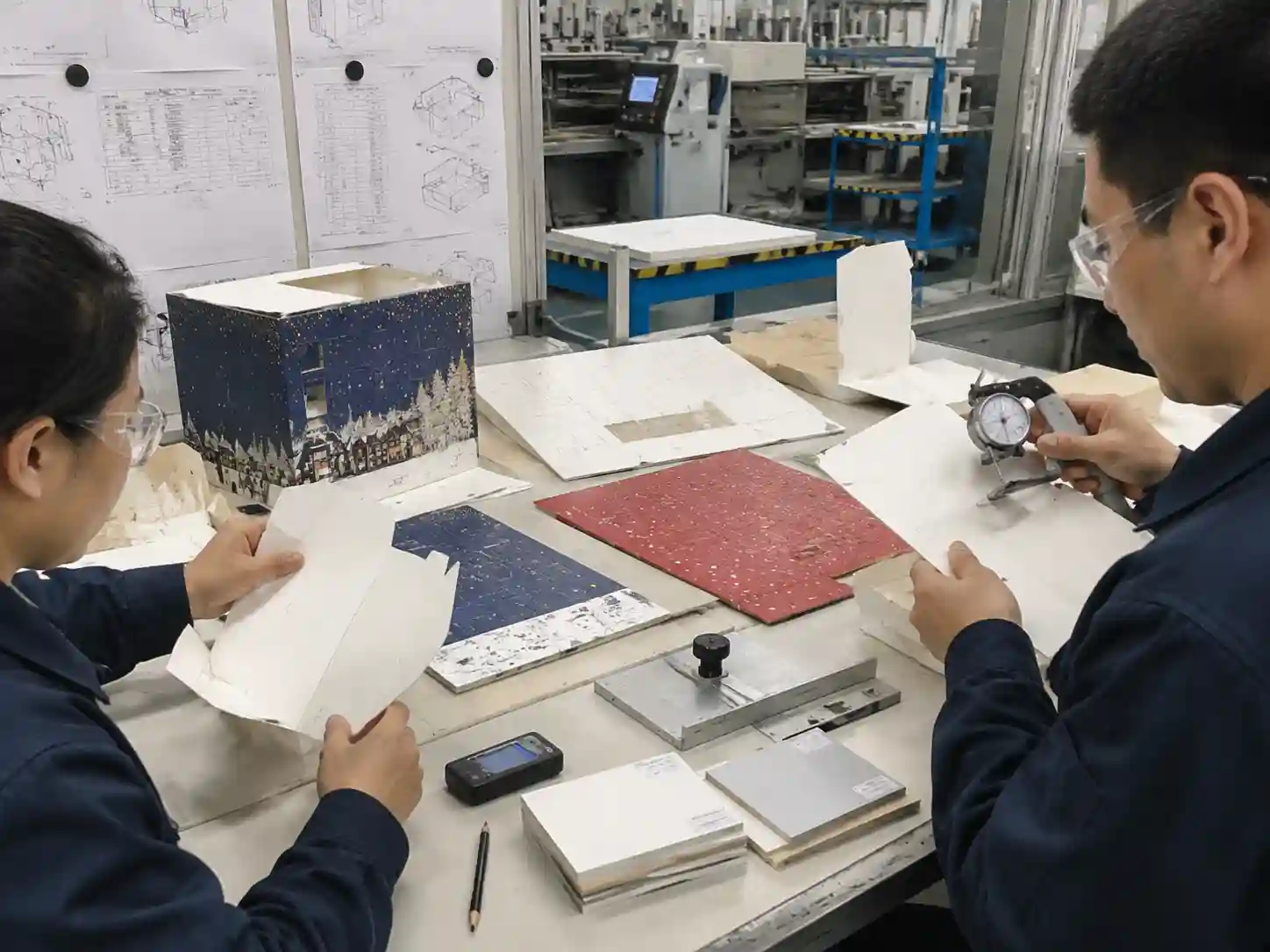
How should buyers compare SBS vs recycled paperboard packaging before approval?
The best comparison method is to evaluate both materials using the same packaging design, artwork, and finishing conditions. A material decision should be based on evidence rather than board name alone.
- Review physical board samples: Compare thickness, surface feel, color consistency, and edge appearance.
- Check structural behavior: Test folding areas, large panels, locking points, and load-bearing sections.
- Review print and finishing samples: Confirm whether coating, foil, embossing, or lamination performs as expected.
- Evaluate environmental conditions: Consider humidity exposure during storage, shipping, and warehouse handling.
- Approve acceptable variation: Define whether small differences in surface or color are acceptable.
What packaging risks change when switching between SBS and recycled board?
Changing board material can affect more than appearance. It may influence production settings, inspection standards, and final package performance.
| Risk area | What to check | How to verify |
|---|---|---|
| Print appearance | Color consistency, fine details, coating interaction | Approved print samples and production proofs |
| Panel stiffness | Large flat panels, folding strength, deformation | Engineering samples and physical measurements |
| Humidity response | Warping, dimensional changes, surface behavior | Storage condition review and sample inspection |
| Scuff resistance | Surface marking during handling and packing | Finishing checks and packaging trials |
What evidence should support a board material approval?
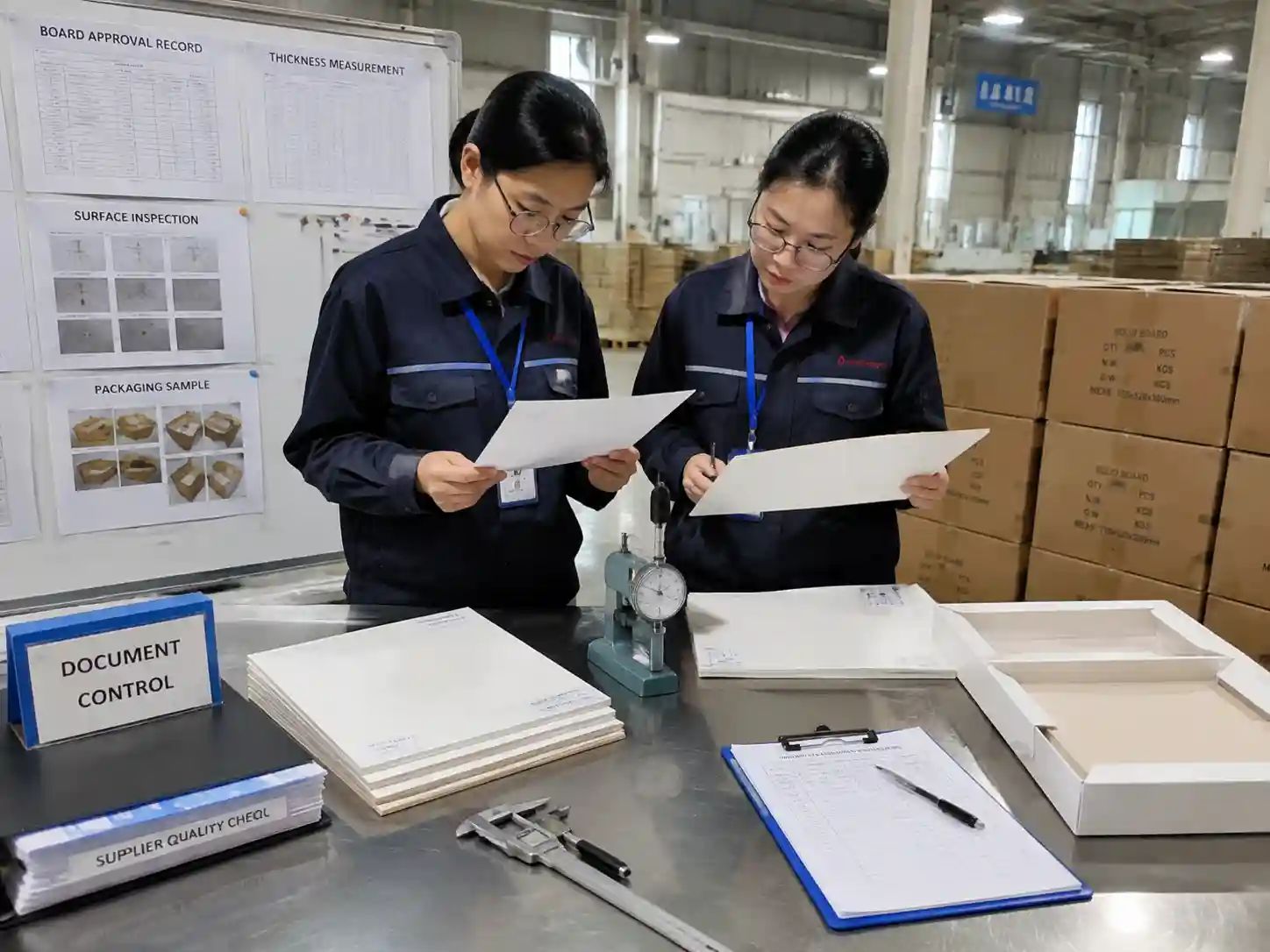
A professional material approval process should include documented evidence showing why the selected board matches the project requirements.
- Board specification sheets showing material type and thickness.
- Physical samples with identified grain direction and construction details.
- Print and finishing approval samples.
- Measurement records for thickness, flatness, and structural checks.
- Supplier documentation supporting recycled-content claims when applicable.
Verifiable evidence helps separate material performance claims from assumptions. The required documents vary depending on the packaging design, customer requirements, and final application.
What is a practical material decision example?
A luxury advent calendar with large printed outer panels, metallic finishing, and strict color requirements may benefit from SBS because surface consistency reduces appearance risks.
A seasonal package where recycled material documentation is a priority and the artwork allows moderate surface variation may consider coated recycled board, provided the approved samples meet structural and visual requirements.
The final choice should be approved after comparing real samples, not only technical descriptions.
FAQs about SBS vs recycled paperboard packaging
Is SBS always stronger than coated recycled board?
Not always. Strength depends on board thickness, construction, product design, and manufacturing conditions. Material selection should consider the complete package structure.
Can recycled board be used for premium advent calendar packaging?
Yes, recycled board can be suitable for premium packaging when surface quality, finishing expectations, and acceptable variation are clearly defined during approval.
Does changing board material require a new sample review?
Yes, a material change can affect printing, folding, stiffness, and finishing results. A new sample evaluation is recommended before production approval.
How does humidity affect board selection?
Humidity can influence dimensional stability and surface behavior. Buyers should review expected storage and shipping conditions when selecting board materials.
Giftpackpro supports commercial packaging projects with material evaluation, structural review, and custom advent calendar box development. For projects requiring a board material comparison, contact our team through the request a custom quote page.


