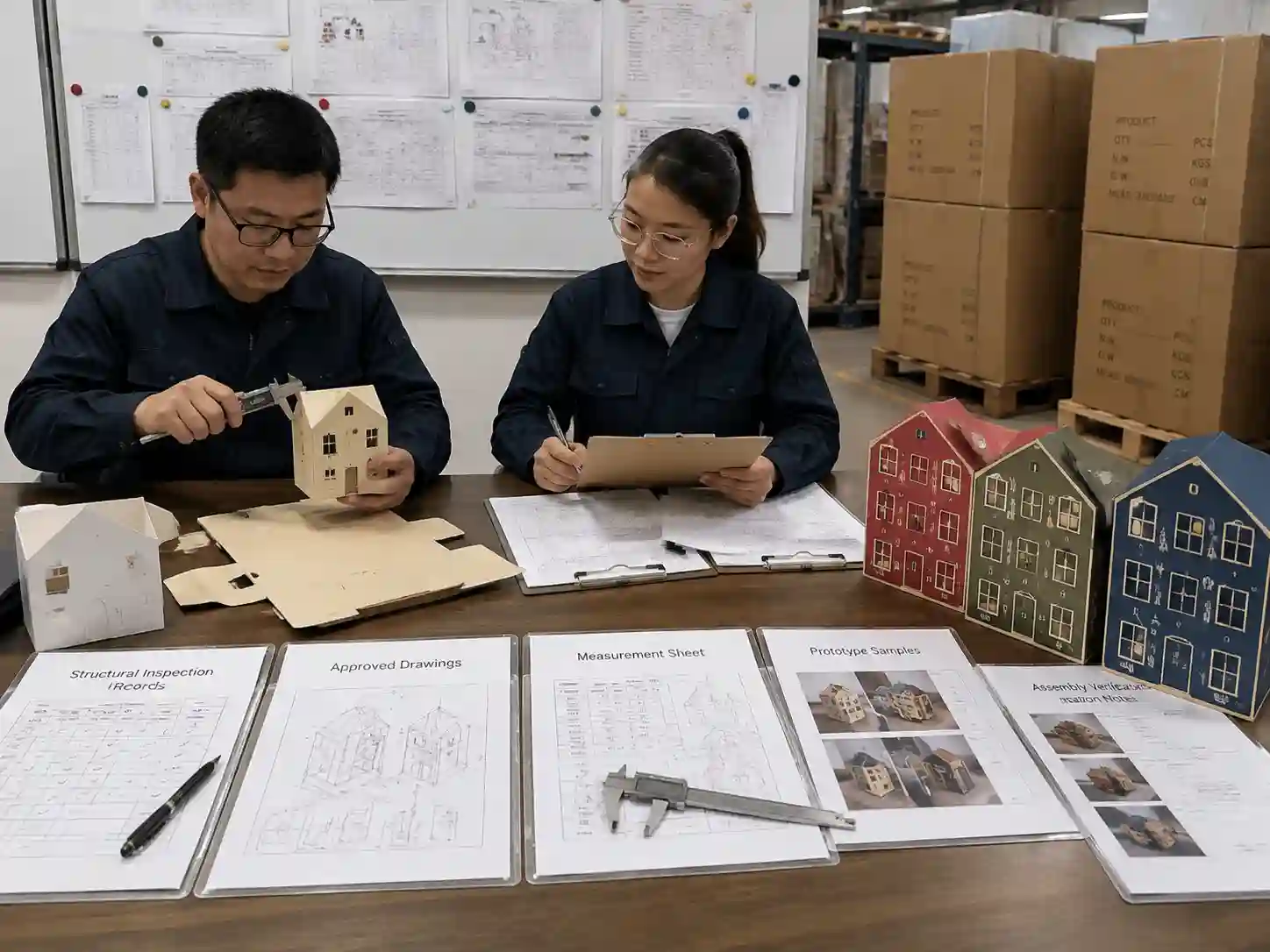
A house-shaped advent calendar requires more than decorative shaping. Efficient production depends on converting the house silhouette into a stable packaging structure with controlled panels, reliable doors or drawers, accurate hinge and magnet positions, and repeatable assembly steps. The engineering process normally begins with structural drawings, prototype checks, dimensional reviews, and production validation before bulk manufacturing. The goal is to maintain the intended appearance while avoiding assembly problems, deformation, or inconsistent retail presentation.
What Makes House-Shaped Advent Calendar Engineering Different?
House-shaped designs create additional structural challenges because the roof, side walls, front openings, and internal compartments often create uneven load distribution. Unlike simple rectangular boxes, the structure must balance appearance, strength, and manufacturing efficiency.
The main engineering focus areas include:
- Panel stability: Roof sections and angled walls need sufficient support to prevent warping or misalignment.
- Door and drawer performance: Openings must maintain consistent gaps and smooth movement after assembly.
- Connection accuracy: Hinges, magnets, ribbons, and closing components must align with the surrounding structure.
- Assembly repeatability: The design should allow workers and equipment to complete production steps consistently.
How Do You Develop the Structure Before Production?
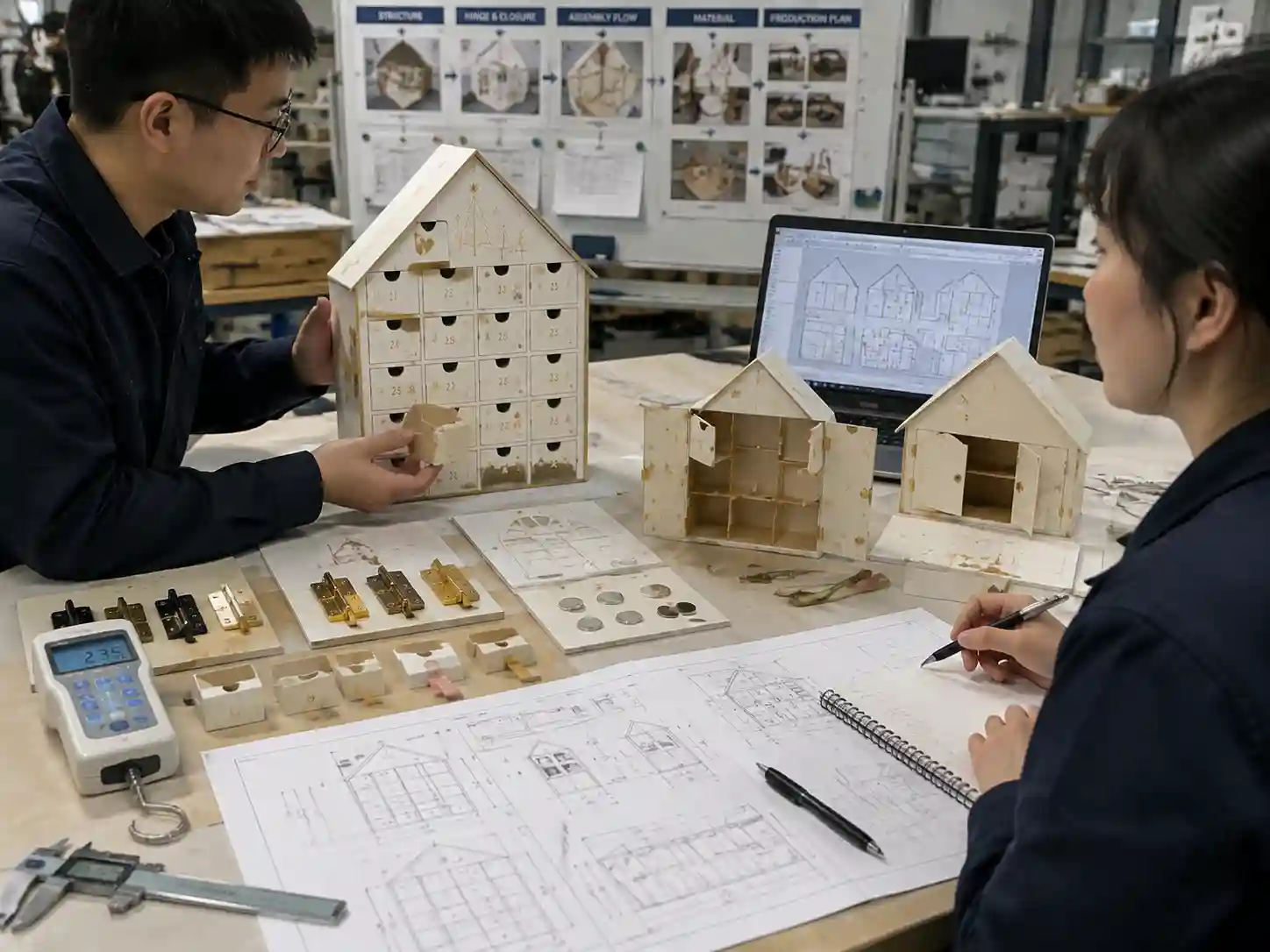
The first step is translating the visual house concept into production-ready structural drawings. Engineers define the board thickness, folding positions, reinforcement areas, opening methods, and component relationships before making physical samples.
A practical development process usually includes:
- Create a structural drawing showing panels, folds, joints, doors, drawers, and reinforcement areas.
- Review how the roof shape affects cutting, folding, and gluing operations.
- Confirm the internal layout and how products or inserts affect the load balance.
- Build a prototype to verify movement, alignment, and assembly sequence.
For commercial projects, buyers can review structural drawings, sample photos, measurement records, and approval notes to confirm that the design matches production requirements.
How Should Drawers and Doors Be Engineered in a House-Shaped Calendar?
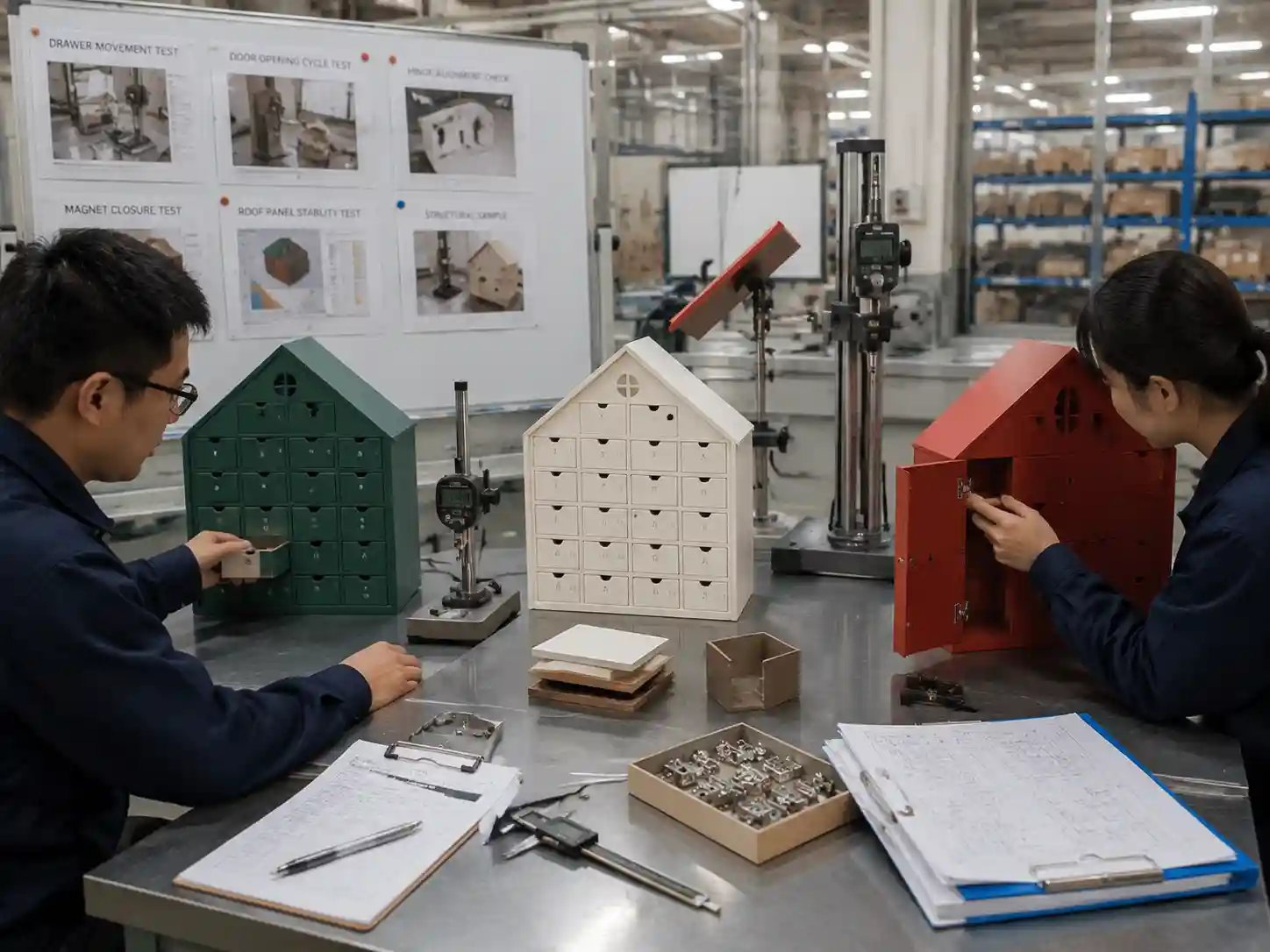
Drawers and doors are usually the highest-risk moving parts because they combine appearance requirements with repeated mechanical movement. The opening method should be selected based on product weight, usage frequency, and available internal space.
| Structure Area | Engineering Consideration | Verification Method |
|---|---|---|
| Drawer system | Check drawer clearance, side support, and sliding resistance. | Prototype movement inspection and dimensional measurement. |
| Door panels | Control hinge location, opening angle, and panel stiffness. | Door opening checks and alignment review. |
| Magnetic closure | Balance holding strength with easy user operation. | Magnet position review and pull-force evaluation. |
| Roof and side panels | Prevent distortion caused by uneven structure loading. | Flatness measurement and visual inspection. |
How Do You Improve Assembly Efficiency for House-Shaped Designs?
Efficient production comes from reducing unnecessary manual adjustments. A strong design defines the assembly sequence before production begins and ensures each component has clear positioning references.
Common production improvements include:
- Adding positioning features to guide panel alignment.
- Reducing complex folds that create inconsistent results.
- Designing reinforcement pieces that can be installed with repeatable steps.
- Confirming adhesive areas and folding directions through prototypes.
The recommended approach varies by project because the best structure depends on the calendar size, compartment layout, opening method, and required appearance level.
Which Failure Modes Should Engineers Check Before Mass Production?
Early identification of structural risks helps prevent production changes after approval. Engineers should review the following failure points:
| Potential Failure | Possible Cause | Recommended Check |
|---|---|---|
| Roof deformation | Insufficient support or uneven material stress. | Measure panel flatness and inspect prototype stability. |
| Door misalignment | Incorrect hinge position or weak support area. | Perform repeated opening and closing checks. |
| Drawer sticking | Insufficient clearance or dimensional variation. | Measure gaps and test drawer movement. |
| Loose closure | Incorrect magnet or fastening placement. | Verify closure strength during sample review. |
What Evidence Should Confirm the Design Is Production Ready?
A production-ready house-shaped advent calendar should be supported by clear engineering evidence rather than appearance approval alone. Useful records include:
- Approved structural drawings and revision records.
- Prototype inspection notes.
- Dimension measurements for critical areas.
- Movement and closure testing results.
- Final sample approval records.
These documents help buyers, designers, and suppliers maintain the same understanding of the approved structure throughout production.
How Does Material Choice Affect the House-Shaped Structure?
Material selection affects rigidity, folding behavior, weight, and assembly performance. A larger house-shaped calendar may require stronger support areas, while compact versions may prioritize easier folding and efficient assembly.
Material decisions should be verified through physical samples because the same structure can perform differently depending on board construction, finishing treatment, and internal components.
Frequently Asked Questions About House-Shaped Advent Calendar Engineering
Can a house-shaped advent calendar use both drawers and doors?
Yes. Mixed structures are possible, but engineers must check how different opening mechanisms affect internal space, weight distribution, and assembly complexity.
Why should prototypes be tested before production?
Prototype testing reveals practical issues such as panel distortion, opening resistance, and component alignment that cannot always be identified from drawings alone.
What should buyers approve before production starts?
Buyers should approve the final structural design, functional sample condition, key measurements, and any agreed changes before manufacturing proceeds.
Giftpackpro provides custom advent calendar box development support, from structural concepts to production-ready packaging solutions. For projects requiring a house-shaped calendar design, you can explore our custom advent calendar box services or request a custom quote for engineering review.