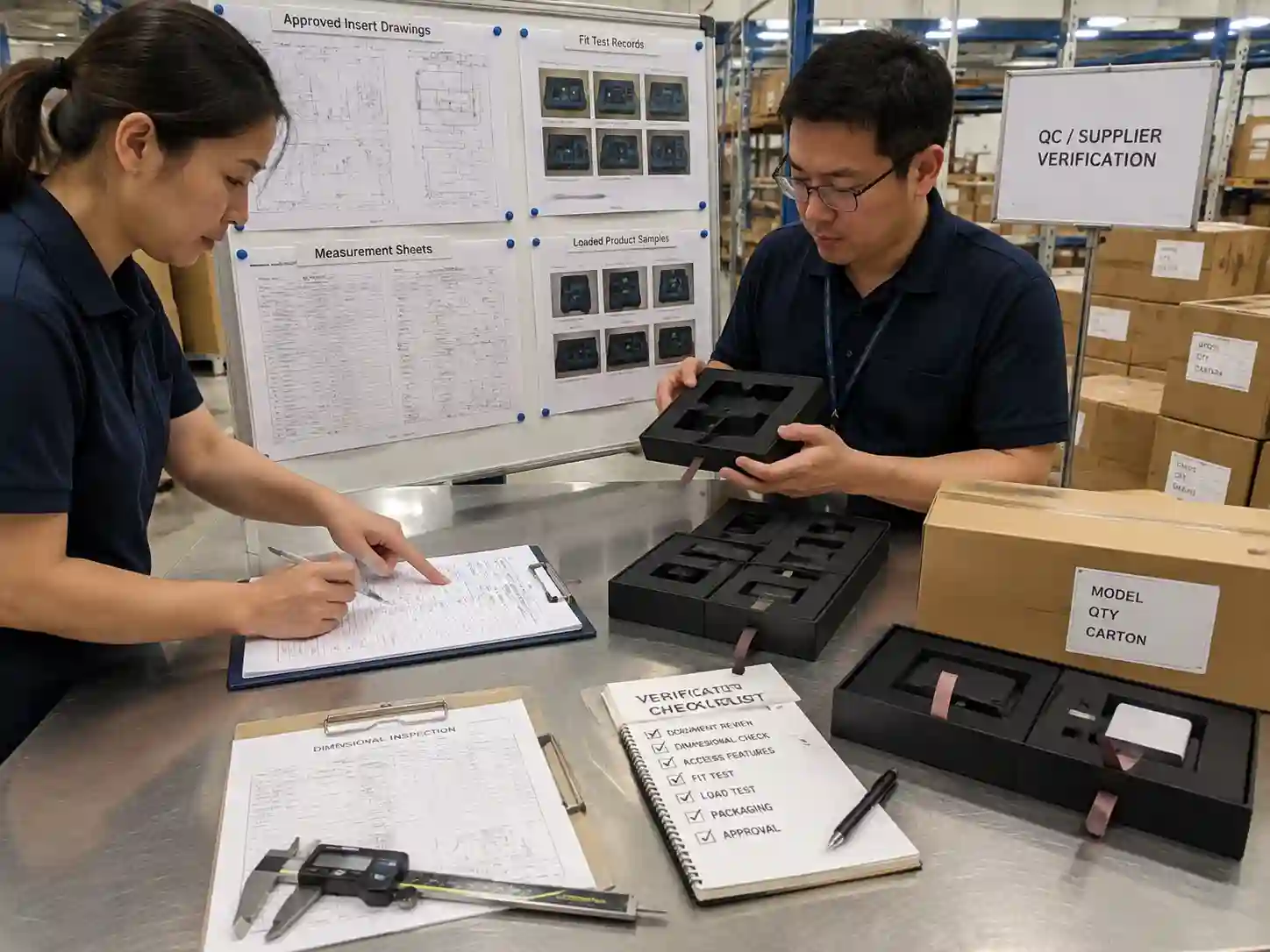
Quick answer: Finger notches, pull tabs, and lift ribbons should be specified as part of the insert access design, not as decorative features. The correct design depends on product size, cavity depth, retention force, removal direction, and transit stability. Packaging teams should define opening method, dimensions, material behavior, and approval criteria through drawings, prototypes, fit checks, and physical testing before production.
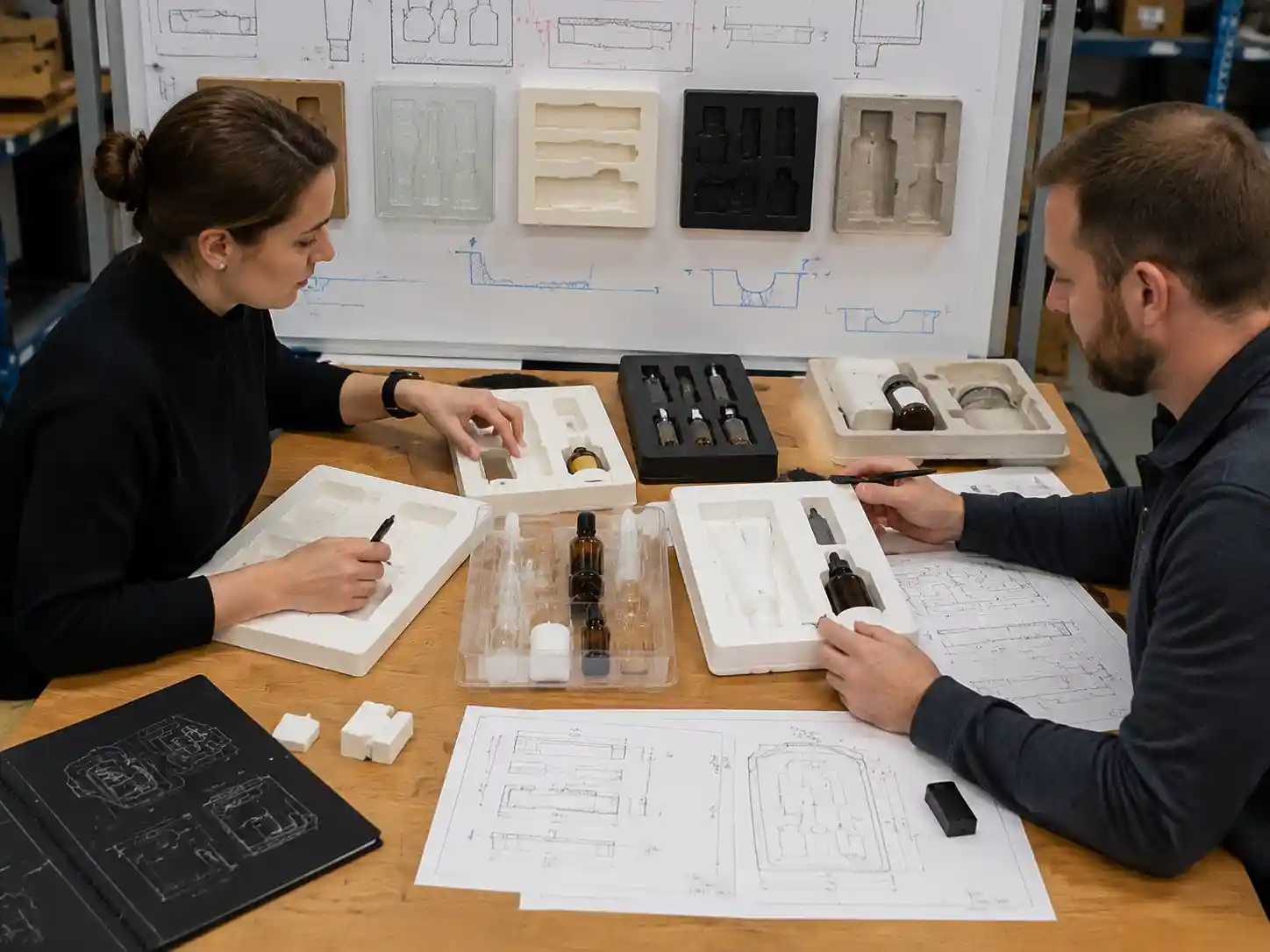
Why should finger notches, pull tabs, and lift ribbons be specified during insert design?
Finger notches, pull tabs, and lift ribbons define how users remove products from retained cavities without damaging the insert or shifting the product position. They directly affect cavity geometry, product access, and the balance between secure holding and easy removal.
In an advent calendar insert, the retention system must prevent movement during handling while still allowing controlled product extraction. A cavity that holds too tightly may require excessive force, while an opening feature that is too large may reduce structural support.
How should buyers define the access method for an insert?
The access method should be selected based on product shape, weight, surface sensitivity, and how the product is loaded inside the cavity. Each method creates different design requirements.
| Access method | Typical application | Main design checks |
|---|---|---|
| Finger notch | Small bottles, jars, tubes, cartons, and rigid products | Notch position, finger clearance, edge strength, product visibility |
| Pull tab | Products requiring a guided lifting action | Tab size, tear resistance, attachment point, pulling direction |
| Lift ribbon | Deep cavities or premium presentation inserts | Ribbon length, fixing method, load capacity, product balance |
| Combined access | Heavy, fragile, or difficult-to-grip products | Retention force, user access sequence, material stiffness |
The final selection varies by project. Product dimensions, insert material, cavity depth, and packaging structure should be reviewed together rather than specifying an opening feature separately.
How does finger notch pull tab ribbon design affect cavity geometry?
Finger notch pull tab ribbon design should be matched with the cavity shape because access features change how the product is supported.
For finger notches, designers normally review:
- Notch width and depth compared with the product gripping area.
- Distance between the notch and product contact points.
- Remaining material around the cavity to prevent tearing or deformation.
- Whether the product can be removed vertically or requires angled movement.
For pull tabs and ribbons, the attachment point is critical. A pull feature should lift the product without collapsing the insert or pulling the product against sharp edges.
What measurements should be included in a pull feature specification?
A complete specification should include measurable details instead of only showing a reference image.
- Product dimensions and orientation inside the cavity.
- Cavity depth and clearance around the product.
- Finger notch opening dimensions.
- Pull tab or ribbon width, length, and fixing location.
- Required removal direction.
- Material thickness and expected folding behavior.
These details can be verified through CAD drawings, physical samples, and measurement records. A supplier should be able to confirm the final opening method against approved samples before mass production.
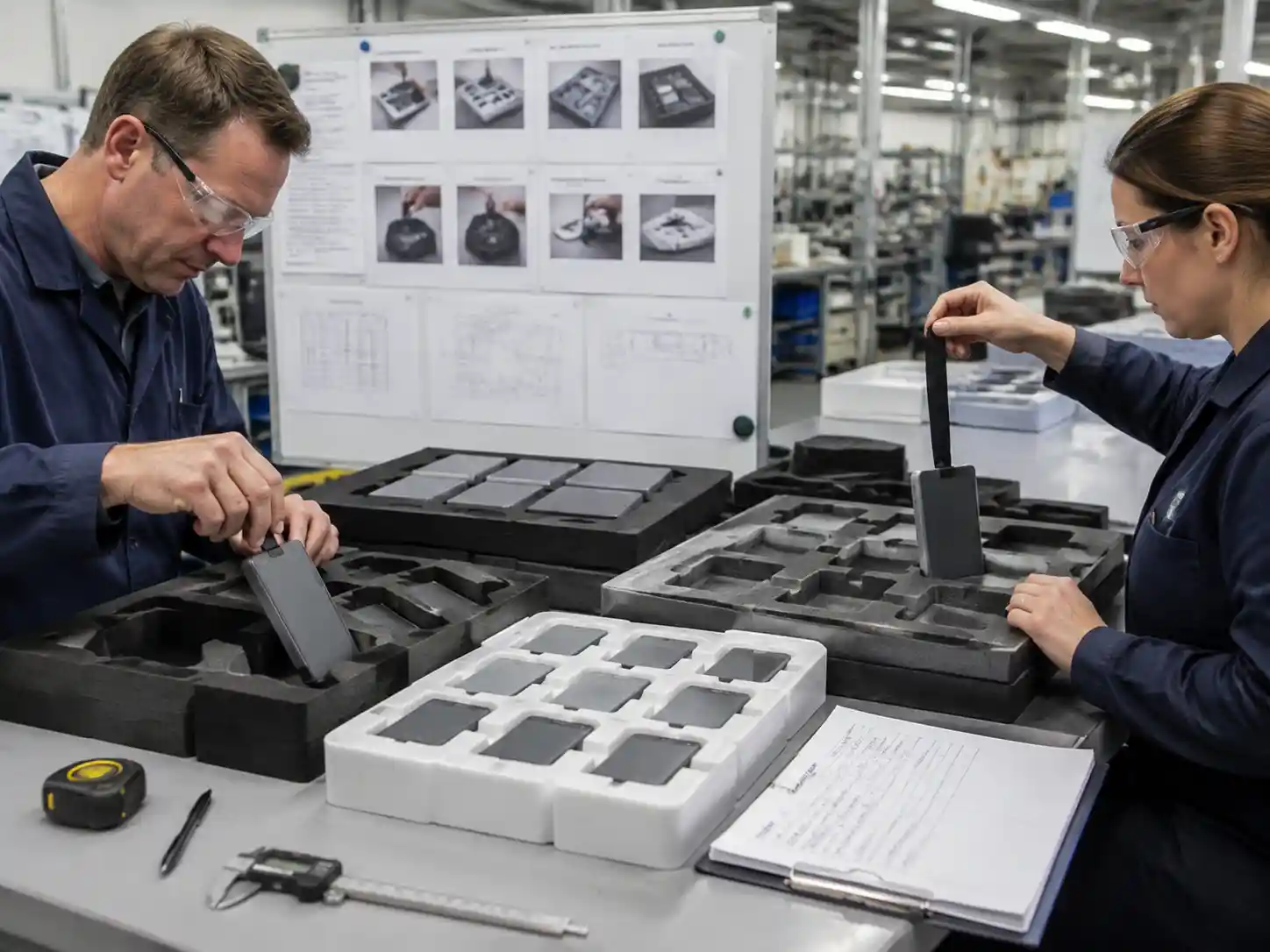
How do you test removal access without reducing retention?
Removal testing checks whether the product can be accessed easily while the insert still maintains its holding function during handling and transport.
What are the practical fit-test steps?
- Load the actual product sample into the finished or prototype cavity.
- Check product orientation and contact points.
- Operate the finger notch, pull tab, or ribbon using the intended removal movement.
- Record whether the product releases smoothly without excessive force.
- Inspect the insert for tearing, deformation, or loss of retention.
For commercial packaging projects, approval records may include prototype photos, dimension sheets, sample comments, and revision notes showing why the final access feature was selected.
What transit checks should be considered after adding pull features?
Access features must remain functional after packaging stress because weak attachment points can fail during movement, stacking, or transport.
| Transit check | Purpose |
|---|---|
| Loaded product inspection | Confirm products remain correctly positioned inside cavities. |
| Pull feature strength check | Verify tabs or ribbons do not detach during normal handling. |
| Insert structure review | Confirm openings do not weaken surrounding support areas. |
| Removal re-check after handling | Ensure access performance remains consistent after movement. |
Actual test methods depend on product weight, insert material, and transportation requirements. Suppliers and buyers should agree on evaluation criteria before approving final samples.
How should buyers approve finger notches, tabs, and ribbons before production?
Approval should be based on physical evidence, not only drawings. The approved sample should show the exact product, insert material, opening feature, and orientation.
- Approved insert drawing with access feature dimensions.
- Prototype or pre-production sample review notes.
- Product loading and removal inspection records.
- Confirmed changes after sampling.
These records help prevent production changes caused by unclear opening requirements. For custom advent calendar projects, access design should be frozen together with cavity layout and product positioning.
What common mistakes occur when specifying insert access features?
The most common mistakes are choosing an opening method without considering product behavior and defining appearance without measurable requirements.
- A finger notch is too small for practical removal.
- A pull tab is attached to a weak insert area.
- A ribbon lifts the product unevenly and causes tilting.
- The opening feature changes cavity strength after production.
Reviewing access features during engineering sampling helps identify these risks before final manufacturing.
FAQs
Can one insert use both finger notches and ribbons?
Yes. Combined access methods can be used when different products need different removal methods, but the insert structure must maintain consistent retention performance.
Should access features be included in the first packaging drawing?
Yes. Finger notches, pull tabs, and ribbons affect cavity layout, material usage, and product orientation, so they should be included during initial structural design.
How can buyers verify a supplier understands the access requirement?
Buyers can request dimensioned drawings, prototype samples, fit-test records, and inspection notes showing how the access feature was evaluated.
Giftpackpro supports custom insert development and seasonal paper packaging projects with structural review, sample evaluation, and production coordination. Learn more about custom advent calendar box services or request a custom quote for a project review.