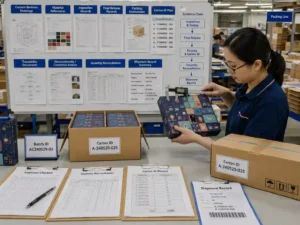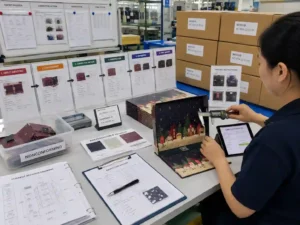
Quick answer: Acceptable foil defects standards should be defined before production through approved samples, inspection criteria, and clear visual limits for issues such as pinholes, edge breaks, missing foil areas, and uneven transfer. The correct tolerance depends on foil coverage, artwork importance, handling conditions, and the position of the defect on the finished advent calendar box.
What Are Acceptable Foil Pinholes and Edge Breaks in Packaging?
Acceptable foil pinholes and edge breaks are small finishing variations that remain within an agreed quality level and do not affect the intended appearance, function, or brand presentation. They should be judged against approved references rather than personal opinions during final inspection.
A foil pinhole is a small area where foil coverage is incomplete, exposing the base surface underneath. An edge break occurs when foil coverage becomes uneven or disappears along the boundary of a stamped or applied foil area.
For premium packaging, these defects are usually evaluated by:
- Size and frequency of the defect
- Location on the package surface
- Visibility under normal viewing conditions
- Impact on logos, key graphics, or decorative details
- Effect on the overall finish appearance
How Do You Create Acceptable Foil Defects Standards Before Production?
The most reliable approach is to define the standard during sampling and record the approval criteria before bulk production. A physical reference sample, inspection sheet, or marked artwork drawing helps different teams apply the same judgment.
The specification process normally includes:
- Reviewing foil coverage areas: Identify whether the foil is used on large backgrounds, fine details, logos, borders, or decorative patterns.
- Marking critical areas: Protect important brand elements from being judged with the same tolerance as hidden or less visible areas.
- Defining inspection conditions: Confirm viewing distance, lighting conditions, and acceptable visual variation.
- Recording approval decisions: Store approved samples, inspection notes, and supplier confirmation records.
What Foil Defects Should Be Included in a Quality Inspection Checklist?
A foil inspection checklist should cover appearance, bonding, registration, and durability-related concerns. The exact criteria vary by project, finish design, and packaging use.
| Foil issue | Inspection focus | Project-dependent consideration |
|---|---|---|
| Pinholes | Check missing foil coverage and visibility | Small marks may be acceptable in low-focus areas but not on important graphics |
| Edge breaks | Review foil boundaries and sharpness | Fine lines and detailed patterns usually require tighter control |
| Uneven foil transfer | Compare density and surface consistency | Larger foil areas may show more visible variation |
| Misregistration | Check alignment between foil and printed artwork | Multi-process finishes require additional alignment review |
How Do You Check Foil Adhesion Along With Visual Defects?
Foil appearance alone does not confirm finish performance. Adhesion checks help determine whether foil remains stable during handling, assembly, and normal use.
- Review foil samples after rubbing or handling simulations when required.
- Check whether foil lifts, cracks, or transfers during evaluation.
- Inspect folded edges, corners, and high-contact areas.
- Compare tested samples with the approved reference sample.
Adhesion expectations depend on the combination of paperboard, coating, foil type, embossing pressure, lamination, and handling requirements. A finish that performs well on one structure may require different controls on another.
Which Foil Areas Usually Need Stricter Approval?
Critical visual areas should receive stricter review because even small defects can affect perceived quality. These areas often include prominent logos, metallic borders, large decorative foil fields, and highly visible drawer faces.
Lower-risk areas may allow more variation when defects are difficult to notice during normal viewing. The final decision should be based on the approved packaging appearance rather than a single isolated defect measurement.
How Should Buyers and Suppliers Document Foil Acceptance?
Clear documentation reduces disagreement during production release. Useful records include approved finish samples, annotated artwork references, inspection reports, and supplier quality confirmation documents.
A practical approval package may include:
- Final approved foil sample or production reference sample
- Finish location drawings showing critical areas
- Inspection checklist covering pinholes, edge breaks, and registration
- Photographs of reviewed samples where necessary
- Production approval records
These records create traceability when packaging moves from sampling to larger production runs.
How Do Foil Defect Standards Change With Other Premium Finishes?
Foil acceptance criteria often need to be reviewed together with embossing, spot UV, and lamination because multiple finishes can influence appearance and durability.
For example, embossing can change how foil edges appear, while lamination may affect surface reflection and scuff resistance. Spot UV registration also needs consideration when it overlaps with foil areas.
Buyers evaluating premium advent calendar packaging should review the complete finish combination rather than approving foil in isolation. Giftpackpro supports custom advent calendar box development through structured finish review and packaging evaluation processes.
FAQ: Are All Foil Pinholes Considered Defects?
No. A pinhole is not automatically a rejection issue. Acceptance depends on its size, location, visibility, quantity, and impact on the approved appearance standard.
FAQ: Should Foil Defect Limits Be Defined Before Sampling?
Yes. Defining expectations before production sampling helps suppliers and buyers evaluate finishes consistently and reduces subjective decisions later.
FAQ: Do Large Foil Areas Require Different Inspection Rules?
Often yes. Large foil coverage can make minor transfer variations more visible, so inspection criteria may need to consider surface consistency across the entire area.
For projects requiring controlled foil, embossing, spot UV, or lamination effects, review finish requirements early with the packaging team. Explore custom advent calendar box products or request a custom quote to discuss your packaging specifications.