Quick answer: Lamination silvering on dark artwork is usually prevented by controlling the interaction between printed ink, lamination film, adhesive coverage, and surface pressure during production. Dark backgrounds reveal tiny air gaps, uneven bonding, and micro-texture more clearly than lighter designs. The most reliable approach is to confirm print surface quality, select suitable lamination materials, run production samples, and approve inspection records before bulk manufacturing.
What causes lamination silvering on dark print?
Lamination silvering happens when microscopic gaps or incomplete bonding areas appear between the printed surface and the laminate film. These areas scatter light and create a cloudy, silver-like appearance that is especially visible on black, deep blue, dark green, and other saturated artwork.
Common causes include:
- Uneven adhesive application between film and printed sheet.
- Ink surfaces that are too smooth, too heavily coated, or not fully suitable for lamination.
- Surface contamination such as dust, powder, or production residue.
- Insufficient pressure, temperature, or curing conditions during lamination.
- Paper or board surface texture creating inconsistent contact with the film.
For premium advent calendar boxes and rigid paper gift packaging, dark artwork requires closer review because small visual defects can affect the perceived quality of the entire package surface.
How do you prepare dark artwork before lamination?
The first step is confirming that the printed sheet provides a stable surface for lamination before applying any finish. Artwork preparation should include reviewing ink coverage, large solid color areas, gradients, and any locations where foil, embossing, or spot UV will overlap.
Important checks include:
- Confirming that large dark color areas have consistent ink density.
- Reviewing whether coatings or varnishes are compatible with the selected laminate film.
- Checking whether fine details, foil areas, and textured effects create uneven surface conditions.
- Using approved printed samples rather than relying only on digital artwork previews.
When dark panels combine with other premium effects, the sequence of printing and finishing can influence the final appearance. For example, a raised emboss area or heavy spot UV layer may require additional review before lamination approval.
Which lamination choices reduce silvering risk?
The best lamination choice depends on the printed surface, paper material, handling requirements, and desired appearance. Film selection alone cannot eliminate silvering if the printed surface or bonding conditions are unsuitable.
| Finish factor | Potential silvering risk | Recommended review |
|---|---|---|
| Dark solid artwork coverage | High visibility of tiny bonding gaps | Approve production samples under normal viewing light |
| Heavy ink or coated surfaces | Reduced adhesive contact | Confirm film and adhesive compatibility |
| Textured paper or specialty stock | Uneven surface contact | Check laminate pressure and surface smoothness |
| Matte or premium appearance requirements | Surface defects become easier to notice | Review appearance standards before production release |
Packaging buyers should avoid selecting lamination based only on gloss level or appearance samples from unrelated materials. The same film may perform differently depending on paperboard structure, printing method, and finish combinations.
How should suppliers test lamination silvering before production?
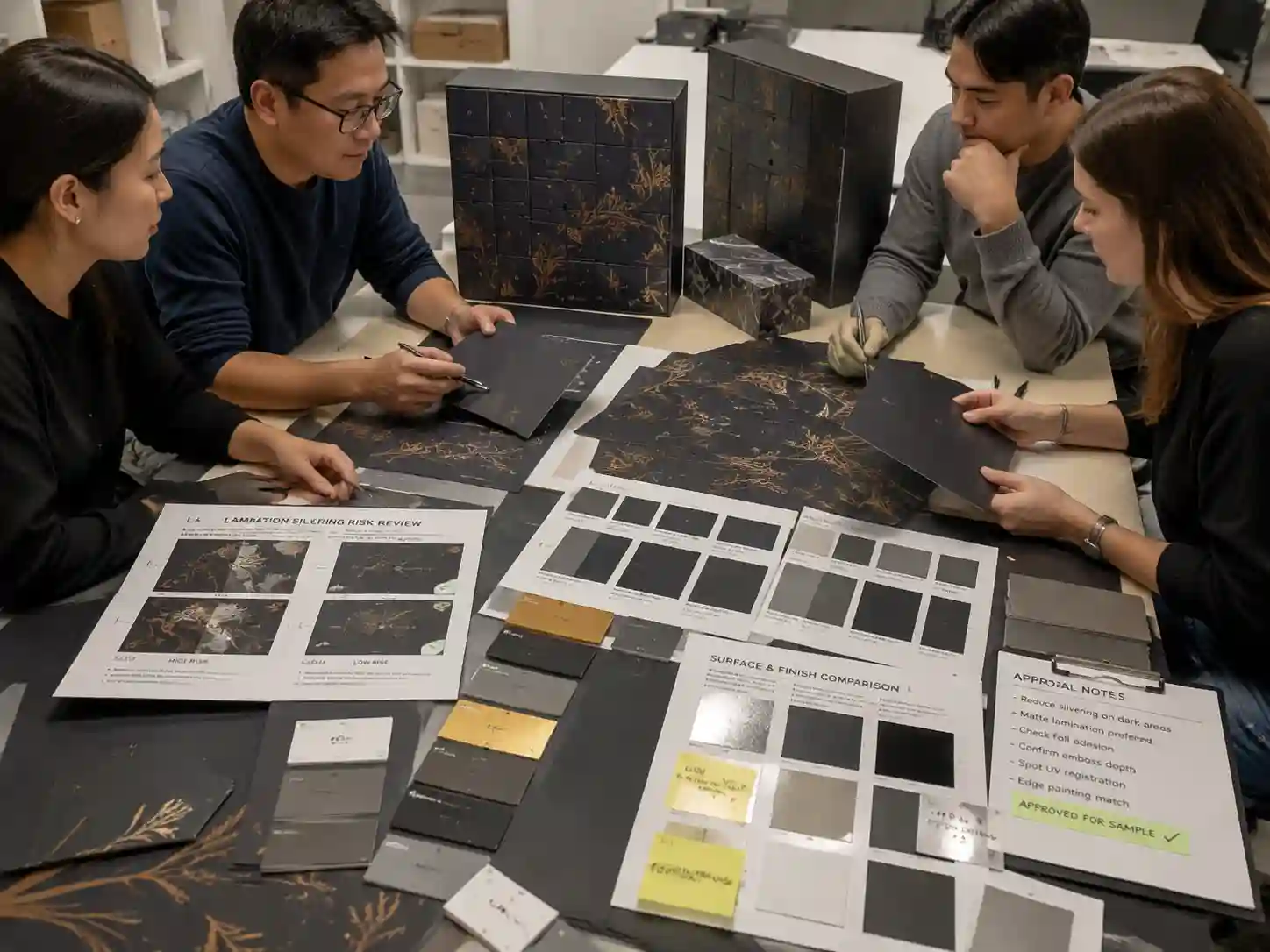
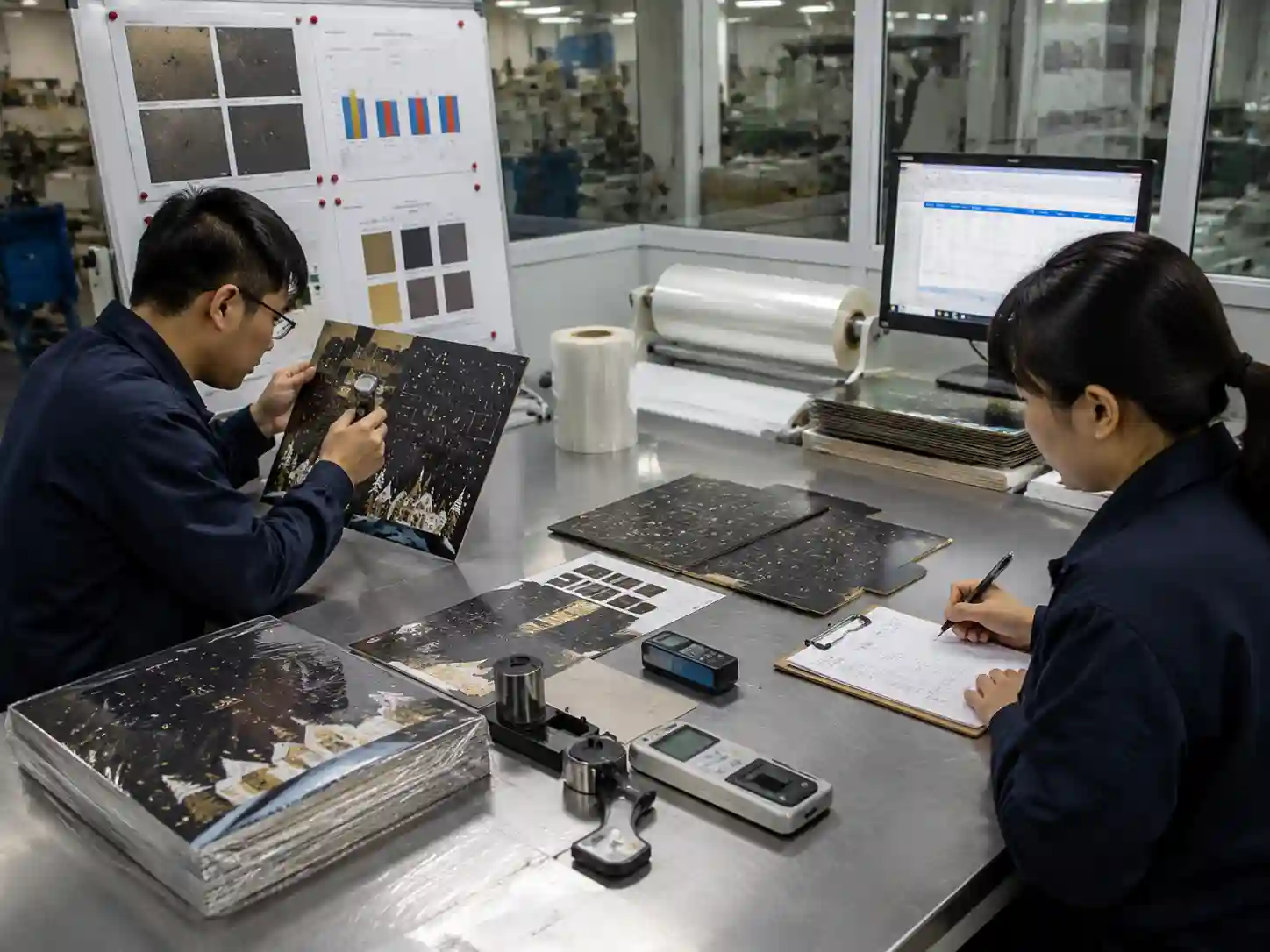
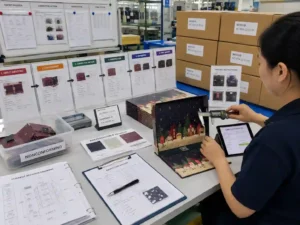
A pre-production sample review is the most practical way to identify silvering risks before bulk manufacturing. The sample should use the actual artwork, board material, printing process, and intended finishing sequence.
A useful approval checklist includes:
- Visual inspection of dark solid areas under consistent lighting.
- Comparison against approved color and finish references.
- Checking laminate bonding around folds, edges, and embossed areas.
- Reviewing whether handling marks or surface defects appear after finishing.
- Recording approval comments with sample references and inspection notes.
Quality teams can also review supplier production records showing material specifications, finishing settings, and inspection results. These documents help confirm whether the approved appearance can be repeated during manufacturing.
What finish combinations increase silvering risk?
Complex finish combinations require additional verification because each layer can affect surface contact and appearance. Dark artwork combined with foil, embossing, spot UV, or textured papers may require a more controlled approval process.
| Combination | Why it requires attention | Buyer approval point |
|---|---|---|
| Dark print + matte lamination | Small surface defects may be visually noticeable | Approve viewing standard and acceptable appearance |
| Dark print + foil stamping | Multiple surface treatments may affect consistency | Check finish registration and surrounding areas |
| Dark print + embossing | Raised areas may change laminate contact | Review sample structure before release |
| Dark print + textured paper | Surface variation can affect bonding | Confirm material suitability with physical samples |
What should buyers approve before mass production?
Buyers should approve a physical finish sample, inspection criteria, and any visible defect standards before production begins. Digital artwork approval is not enough because lamination appearance depends on real material interaction.
The approval package may include:
- Finished production samples showing dark artwork and laminate combination.
- Material information for paperboard, film, and coating layers.
- Inspection notes covering appearance, bonding, and handling durability.
- Supplier records showing the approved sample reference.
Project requirements vary depending on artwork coverage, packaging structure, retail handling conditions, and the number of finishing processes involved.
Frequently Asked Questions
Can lamination silvering be fixed after production?
Usually, no. Once silvering appears after lamination, correction is normally limited because the issue occurs inside the bonded layers. Prevention through sample approval and process control is more effective.
Does thicker lamination film prevent silvering?
Not necessarily. Silvering is mainly related to bonding quality and surface compatibility, not simply film thickness. A suitable film and controlled lamination process are more important.
Are dark colors always more likely to show lamination defects?
Dark colors are more visually sensitive, but defect risk depends on the entire finishing system. Paper surface, ink coverage, adhesive performance, and production control all influence the final result.
For projects requiring premium surface finishes, Giftpackpro supports commercial buyers with custom advent calendar packaging development, finish evaluation, and production approval workflows. Explore our custom advent calendar box products, review our custom advent calendar box services, or request a custom quote for your packaging project.