Quick answer: A packaging finish adhesion test checks whether decorative layers such as foil, spot UV, lamination, coatings, and specialty effects remain securely bonded before bulk production begins. The process usually combines sample inspection, surface rubbing checks, adhesion evaluation, and approval records. The exact method depends on the material structure, finish type, handling conditions, and final packaging application.
Why Is a Packaging Finish Adhesion Test Needed Before Bulk Production?
A packaging finish adhesion test helps identify bonding problems before thousands of finished boxes are produced. Decorative finishes can look acceptable during artwork review but fail later when exposed to rubbing, folding, handling, stacking, or transportation conditions.
For custom advent calendar boxes and premium paper gift packaging, adhesion checks are especially important when multiple processes are combined, such as foil stamping over printed areas, spot UV on coated surfaces, embossing with added pressure, or lamination over specialty papers.
What Finishes Should Be Checked for Adhesion?
The finish type determines the inspection method and risk level. Each decorative layer should be reviewed based on how it bonds with the paperboard, printed surface, or previous finishing layer.
| Finish | Common Adhesion Risk | Typical Check |
|---|---|---|
| Hot foil stamping | Foil lifting, incomplete transfer, weak bonding on textured areas | Visual inspection, rubbing evaluation, sample comparison |
| Spot UV coating | Peeling, uneven coating, poor bonding with base surface | Surface inspection and handling simulation |
| Lamination | Film separation, edge lifting, bubbles | Edge review and surface bonding inspection |
| Embossing with finishing | Cracking around raised areas or damaged finish layers | Fold, pressure, and appearance checks |
| Specialty coatings or papers | Inconsistent bonding due to surface characteristics | Material compatibility review |
How Do You Perform a Packaging Finish Adhesion Test?
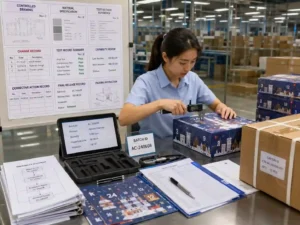
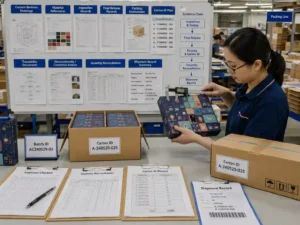
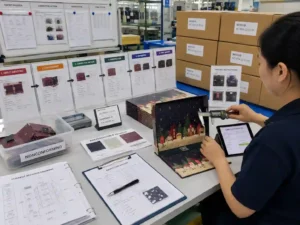
The test process normally begins with production-representative samples rather than only artwork proofs. The sample should include the actual board, print surface, finishing sequence, and manufacturing method planned for bulk production.
1. Review the Finish Structure and Material Combination
Before testing, the supplier and buyer should confirm the finish stack-up. This includes paperboard type, printed coating, lamination layer, foil application, UV coating, embossing position, and any special surface treatments.
Drawings, finish samples, and production notes provide evidence that the approved sample matches the intended manufacturing process.
2. Inspect the Surface Before and After Handling
Inspectors check whether the finish remains uniform after controlled handling. Areas requiring attention include edges, folding points, raised embossing areas, foil boundaries, and high-contact surfaces.
Important evidence may include:
- Approved finish sample records
- Surface inspection photographs
- Measurement notes
- Supplier quality check records
- Comparison between approved and production samples
3. Check Rubbing and Scuff Resistance
Adhesion performance is often evaluated together with handling durability because a finish that bonds poorly may show rubbing marks, flaking, or surface damage during use.
The required level of resistance depends on the packaging purpose. A drawer face, opening panel, or frequently touched area may need more attention than an exterior surface that receives less contact.
Which Factors Can Change Adhesion Test Results?
Adhesion performance varies by project because finishing results depend on several production conditions rather than the finish name alone.
- Paper and board surface: Coated, uncoated, textured, and specialty papers can react differently with finishing processes.
- Finish sequence: Applying foil, UV, embossing, or lamination in different orders can affect bonding.
- Artwork position: Fine details, small foil areas, and registration-sensitive graphics may require closer review.
- Handling requirements: Packaging that is opened repeatedly may require stronger durability evaluation.
What Should Buyers Approve Before Starting Bulk Production?
Buyers should approve documented evidence, not only visual appearance. A production release decision should be based on an approved sample, confirmed finishing specifications, and recorded inspection results.
A practical adhesion approval checklist includes:
- Finish type and application method confirmed
- Material combination reviewed
- Critical high-contact areas identified
- Sample appearance approved
- Surface durability concerns reviewed
- Quality records completed before production release
Verified facts include the need to inspect finish bonding, surface condition, and manufacturing consistency. Project-dependent recommendations include the exact testing method, acceptance criteria, and sampling quantity, which should be agreed according to the packaging design and usage requirements.
How Does Finish Adhesion Testing Help Avoid Production Problems?
Early testing reduces the risk of discovering finish failures after bulk manufacturing. Problems such as peeling foil, damaged UV coating, lamination separation, or scuffed surfaces can create rework, delays, or quality disputes.
For commercial packaging projects, a clear approval trail connecting drawings, samples, inspection records, and supplier communication helps teams make faster production decisions. Giftpackpro supports buyers through custom advent calendar box services, custom advent calendar box products, and structured packaging development discussions.
FAQs About Packaging Finish Adhesion Testing
Can a visual inspection replace an adhesion test?
No. Visual inspection identifies appearance issues, but bonding performance may require handling checks and documented evaluation before production approval.
Should foil and spot UV be tested differently?
Yes. Different finishes use different bonding methods and may react differently depending on the base material, surface treatment, and production process.
When should adhesion testing happen?
It should happen after the production-representative sample is available and before bulk manufacturing approval is given.
For packaging teams reviewing premium finishes, Giftpackpro can help evaluate finish options and production requirements through request a custom quote with project-specific details.