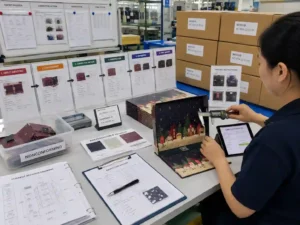
Quick answer: Makeup palette scuff protection depends on controlling contact points, movement, and surface friction inside the packaging. The most reliable approach is to match the palette shape with a fitted insert, prevent printed surfaces from rubbing against other components, confirm orientation during loading, and verify finished samples through physical fit checks. The correct solution varies by case finish, palette weight, insert material, and mixed-SKU arrangement.

Why Do Printed Makeup Cases Need Special Scuff Protection?
Printed makeup cases are vulnerable because the decorative surface is often the first visible quality point checked by buyers and consumers. Foil, coated paper wraps, printed laminations, soft-touch finishes, and textured surfaces can show abrasion when products shift or contact rough packaging materials.
The main risks usually come from uncontrolled movement, tight cavities, incorrect orientation, and contact between multiple products. A palette that fits structurally may still require additional protection if its printed cover or edges can rub during handling.
| Risk area | Possible cause | Verification method |
|---|---|---|
| Printed cover scratches | Palette movement against inserts or neighboring products | Loaded sample inspection and surface comparison |
| Corner scuffing | Insufficient clearance or pressure points | Dimension measurement and cavity fit review |
| Mixed-SKU contact | Different product shapes sharing limited space | Full loaded arrangement check |
| Finish damage | Insert material or packing method not suitable | Material review and physical testing |
How Does Insert Design Prevent Makeup Palette Surface Damage?
A suitable insert prevents scuffing by controlling where the palette contacts the packaging. The goal is not simply to hold the product tightly, but to support it without creating unnecessary friction on visible printed areas.
Packaging engineers normally review:
- Palette length, width, thickness, and edge profile.
- Contact points between the palette and insert cavity.
- Clearance around printed covers, hinges, and opening areas.
- Movement risk when the package is rotated or transported.
- Compatibility with other products placed in the same calendar.
For custom advent calendar structures, the insert design may need to balance palette protection with available compartment space. A cavity that is too loose allows movement, while a cavity that is too tight can create pressure marks or surface friction.
What Fit Tests Should Be Completed Before Production?
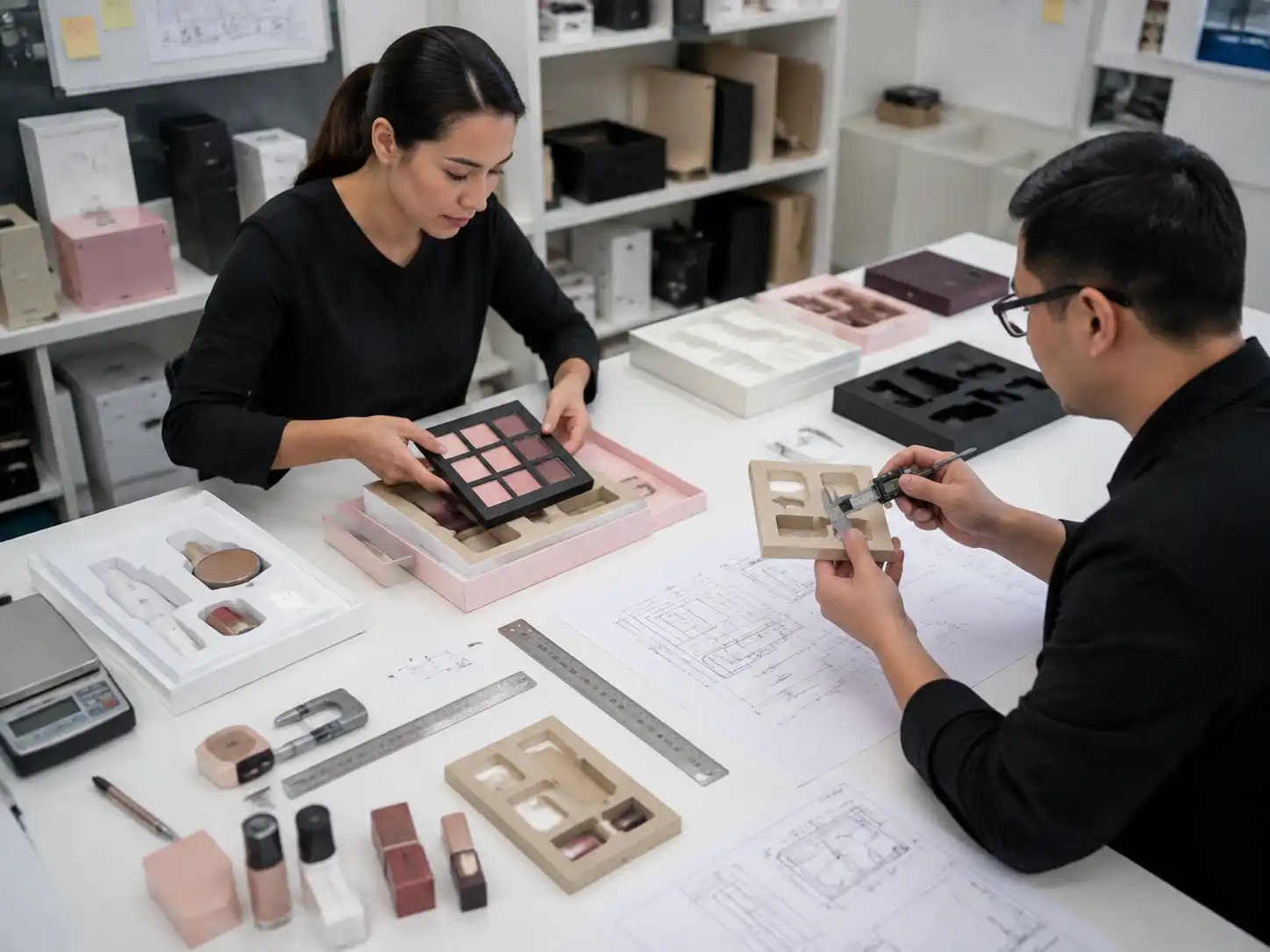
A physical fit review is one of the most practical ways to confirm makeup palette scuff protection. Digital drawings can show dimensions, but loaded samples reveal actual contact conditions.
Which steps are used in a palette fit test?
- Place the actual or approved representative palette into the production-intended cavity.
- Check whether the palette moves when the package is handled in normal orientations.
- Inspect printed surfaces, corners, edges, and closure areas after loading and removal.
- Review contact marks and adjust cavity support points if required.
- Record approved dimensions, orientation, and packing instructions.
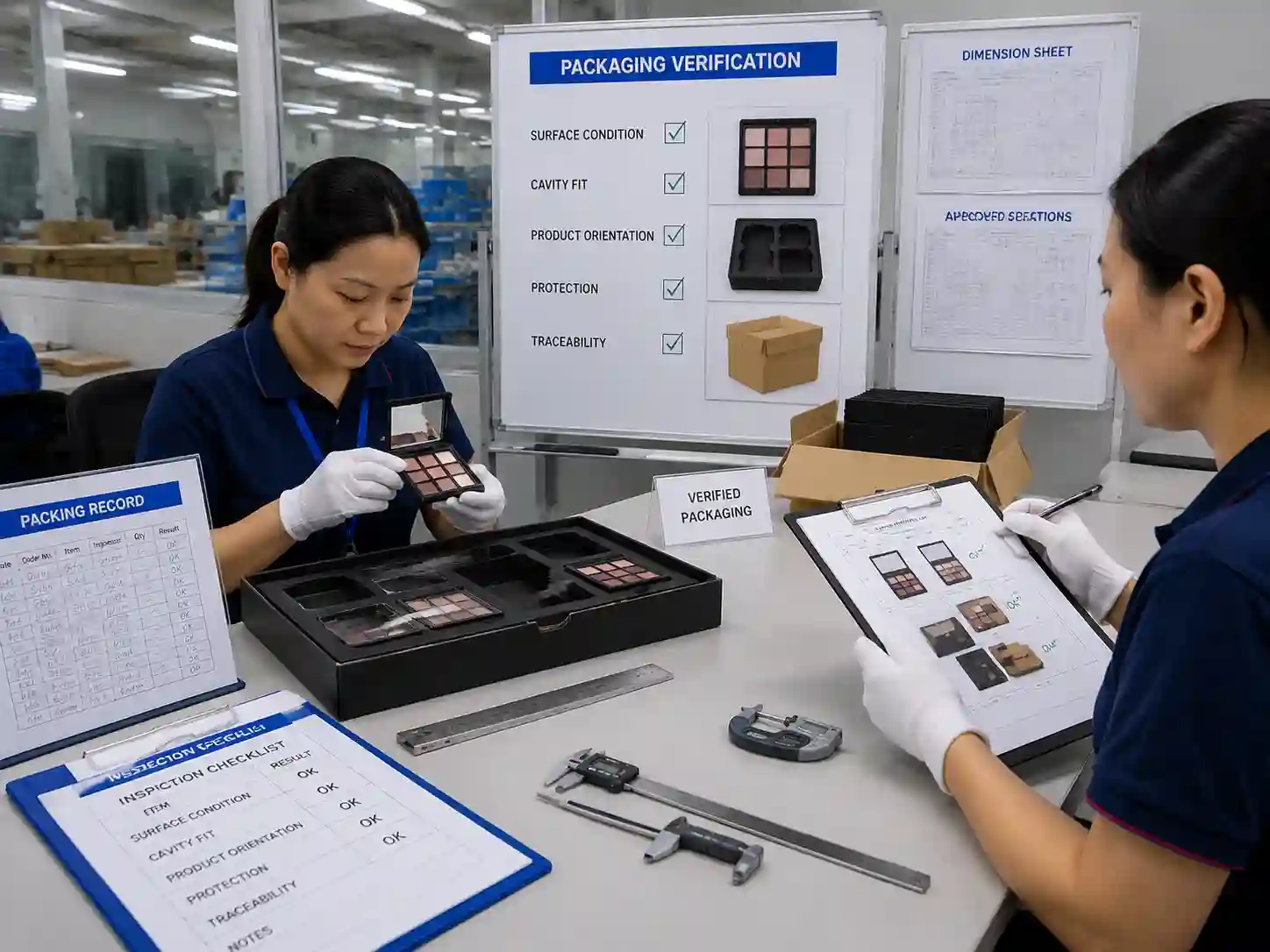
The evidence from these checks can include marked-up drawings, sample approval records, measurement sheets, and inspection notes. These records help ensure production follows the agreed packaging configuration.
How Do You Protect Palettes When Calendars Contain Mixed Beauty Products?
Mixed-SKU packaging requires additional attention because palettes may share space with bottles, tubes, brushes, lip products, or fragrance items. Each product creates different movement and contact risks.
- Pump bottles and droppers require clearance around dispensing components.
- Glass containers require stable support to avoid impact against palettes.
- Tubes and flexible packs should not press against printed palette covers.
- Brushes and slim accessories need controlled placement to avoid rubbing.
A loaded-SKU review should confirm both individual product protection and the interaction between products inside the finished package.
What Should Buyers Check During Supplier Approval?
Buyers should separate verified facts from project-dependent decisions. A supplier can confirm measured dimensions, approved samples, and inspection records, while final protection requirements depend on the actual product finish and packaging structure.
Which approval items should be documented?
- Approved palette sample or representative product sample.
- Insert drawing showing cavity dimensions and support areas.
- Loading orientation instructions.
- Inspection criteria for visible surface damage.
- Photos or records showing the approved packing condition.
Giftpackpro develops custom seasonal packaging solutions where product fit and presentation requirements need to be considered together. Related solutions can be explored through custom advent calendar box services and custom advent calendar box products.
What Packaging Factors Change the Recommended Protection Method?
The recommended approach varies depending on several project conditions:
- Case finish: Gloss, matte, foil, textured, or soft-touch surfaces have different visible damage risks.
- Palette construction: Lightweight plastic palettes and heavier rigid cases may need different support strategies.
- Insert material: Material selection affects friction, cushioning, and appearance protection.
- Calendar layout: Multi-product arrangements change available clearance and movement risks.
These decisions should be confirmed through samples and measurements rather than relying only on product dimensions.
FAQs About Makeup Palette Scuff Protection
Can a tight insert prevent all palette scratches?
No. A tight fit can reduce movement, but excessive pressure or unsuitable contact materials may create other surface risks. The cavity design must balance stability and protection.
Should palettes be individually wrapped inside an advent calendar?
Not always. The correct method depends on the palette finish, insert design, product arrangement, and handling requirements. Some projects may use controlled cavities instead of additional wrapping.
How can buyers confirm the protection method before mass production?
Buyers can request loaded samples, review fit measurements, inspect visible surfaces, and approve documented packing requirements before production release.
For packaging projects requiring controlled product fit and protection planning, request a custom quote and discuss your palette dimensions, product mix, and packaging requirements.