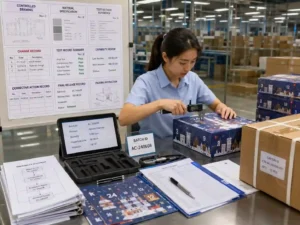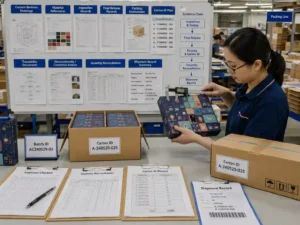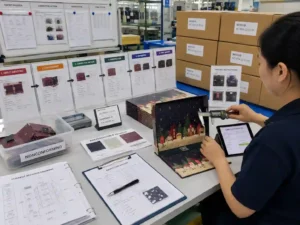
Quick answer: Lipstick cap separation during shipping is prevented by controlling the fit between the lipstick body, cap, and insert cavity before production packing. The main checks are cap retention force, product orientation, cavity support, vibration resistance, and loaded-SKU inspection. Packaging teams should verify samples with the actual lipstick components rather than relying only on dimensions, because small differences in cap geometry, surface finish, and assembly tolerance can affect transit performance.
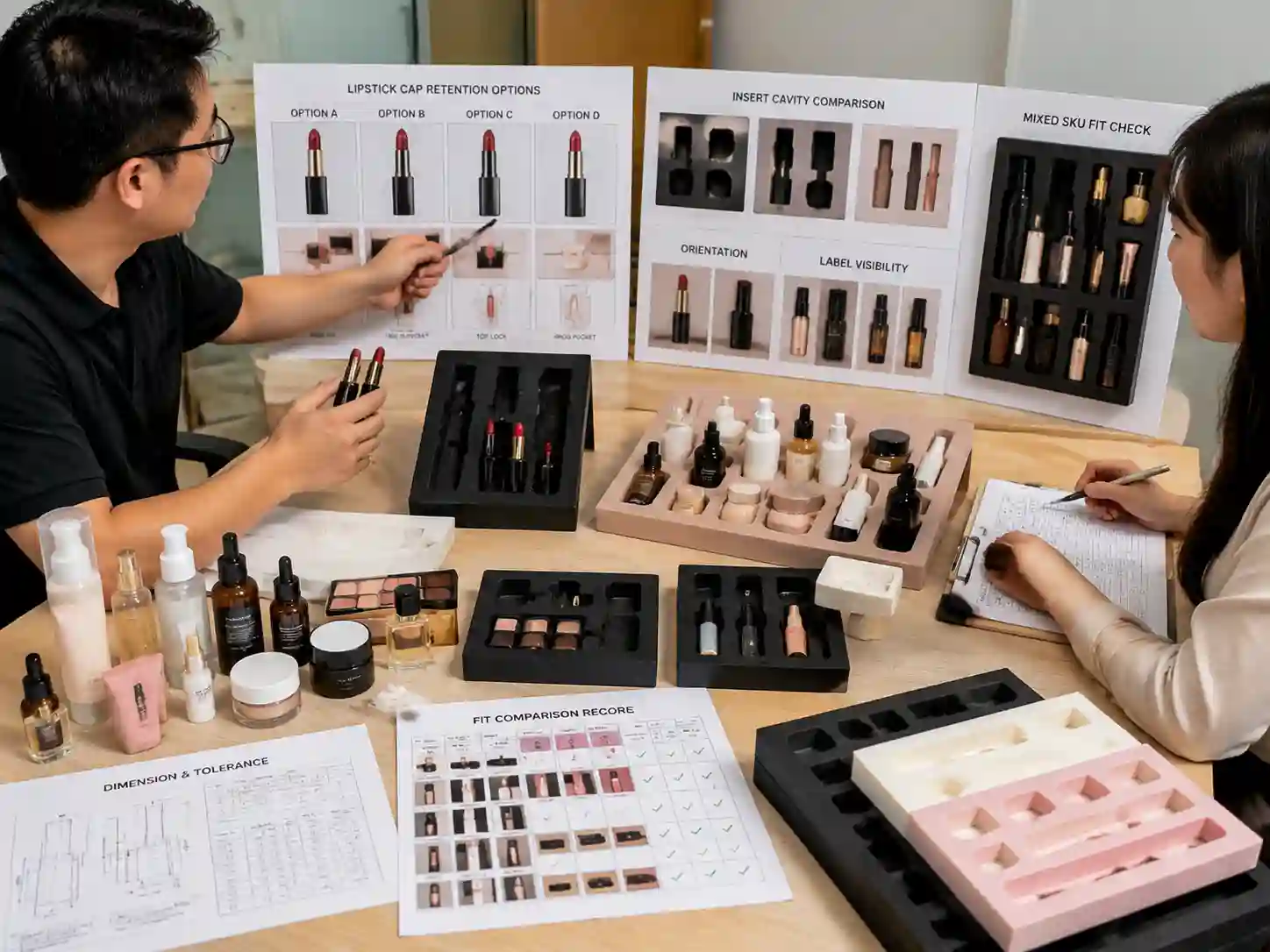
Why does lipstick cap separation happen during shipping?
Loose lipstick caps usually result from a mismatch between the product assembly and the packaging support system. Common causes include insufficient cavity restraint, sideways movement inside the compartment, pressure from neighboring products, or excessive vibration during transport.
For mixed beauty calendars, the risk increases when lipstick units share space with pumps, droppers, glass bottles, jars, or other cosmetic formats. Each product requires its own support points and clearance requirements.
| Risk area | Possible issue | Verification method |
|---|---|---|
| Cap retention | Cap loosens or separates from the lipstick body | Check assembled product fit and cap stability during handling tests |
| Insert cavity | Product shifts and receives impact loads | Measure cavity clearance and contact points |
| Product orientation | Cap receives repeated pressure during movement | Confirm approved loading direction with samples |
| Mixed-SKU packing | Different products interfere with each other | Review loaded calendar sample with all product types installed |
How does lipstick cap separation prevention work in packaging design?
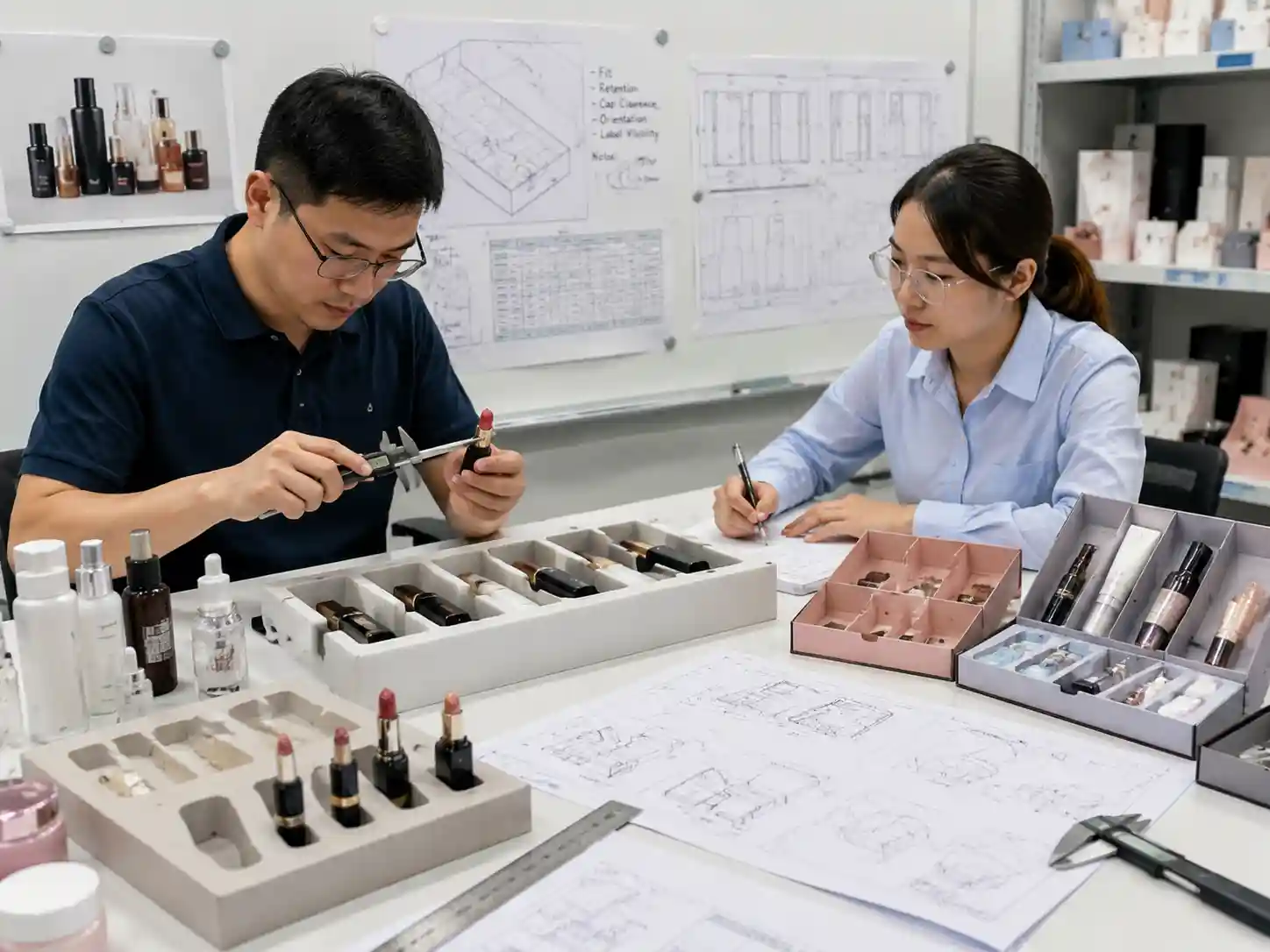
Lipstick cap separation prevention starts with matching the insert structure to the assembled product dimensions. The cavity should hold the lipstick body securely while avoiding unnecessary pressure on the cap.
Packaging engineers typically review:
- Body diameter and cap diameter differences.
- Cap height, closure position, and exposed surfaces.
- Clearance between the lipstick and neighboring compartments.
- Contact points that may create scratches or decorative surface damage.
- Product orientation needed for label visibility and presentation.
Use the correct cavity support points
The insert should support the strongest areas of the lipstick package rather than pushing directly against weak closure areas. The exact support design varies by lipstick construction, cap material, and outer finish.
Control movement before shipment
A well-fitted compartment reduces sliding, rotation, and repeated impact. Excess movement can gradually loosen caps even when the lipstick assembly passes initial manual checks.
What fit tests should be completed before mass packing?
Actual loaded-SKU testing is more reliable than checking an empty insert. The packaging should be reviewed with the final lipstick units installed in the intended compartment position.
- Load approved lipstick samples into the production-intent insert.
- Confirm cap position, body support, and surrounding clearance.
- Inspect whether movement occurs when the package is handled.
- Review contact areas for scuffing or pressure marks.
- Record measurements, observations, and approval decisions.
What records help verify lipstick packaging quality?
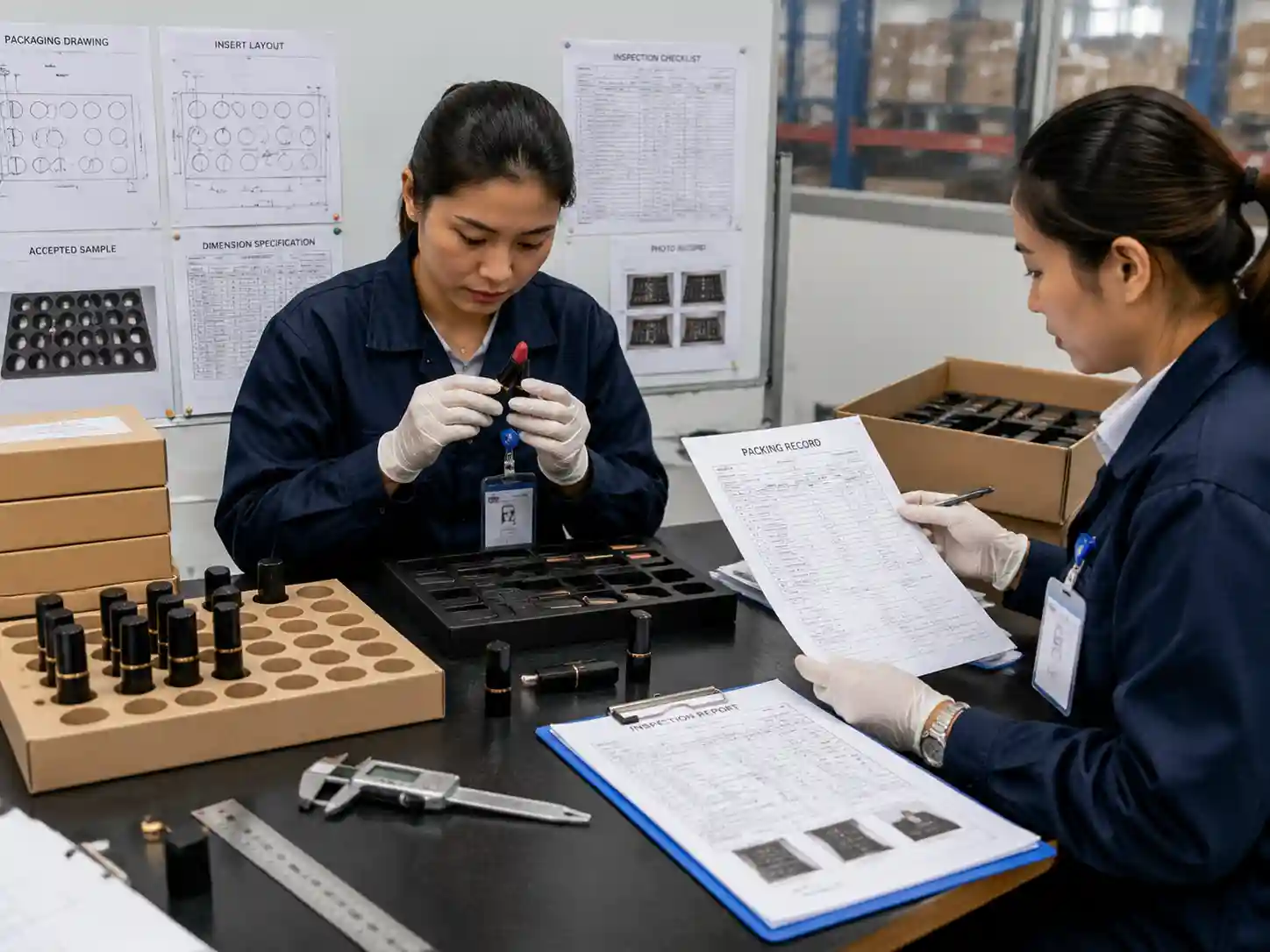
Important verification evidence includes approved drawings, cavity measurements, sample photos, fit review notes, inspection records, and packing instructions. These documents help confirm that production follows the approved configuration.
Buyers should separate verified facts from project-dependent decisions. For example, measured cavity dimensions and sample approval records are factual evidence, while the best insert material or support method depends on lipstick construction, shipping conditions, and packaging goals.
How should lipstick products be checked in a mixed beauty calendar?
When lipstick units are packed together with other beauty products, the final inspection should consider interaction between all SKUs.
- Check that lipstick caps do not contact pumps, droppers, or glass surfaces.
- Confirm labels remain visible in the approved orientation.
- Verify heavier items do not apply pressure to lipstick compartments.
- Inspect the loaded arrangement rather than individual products only.
A loaded-SKU checklist may include:
- Product count matches the approved layout.
- Lipstick caps remain fully seated.
- Insert cavities match approved samples.
- No visible movement during handling review.
- Inspection results are recorded for approval.
What varies by lipstick packaging project?
The required protection method depends on lipstick size, cap locking design, packaging materials, insert structure, and distribution conditions. A rigid cap, magnetic closure, snap-fit cap, or friction-fit cap may require different support strategies.
For custom beauty gift packaging projects, Giftpackpro reviews product dimensions, compartment requirements, and presentation needs together with the overall structure. Related packaging solutions can be explored through custom advent calendar box products and custom advent calendar box services.
FAQs
Can a tight insert prevent every lipstick cap issue?
No. Excessive pressure can also create problems. The insert must balance retention with safe clearance based on the actual lipstick design.
Should lipstick caps be tested before final packaging approval?
Yes. Product samples should be reviewed in the intended compartment configuration because packaging fit can change the forces applied during handling and transport.
What should buyers request from packaging suppliers?
Useful records include approved samples, measurement references, fit photos, inspection notes, and confirmation of the final packing arrangement.
For lipstick-focused advent calendar packaging requirements, you can request a custom quote and discuss product fit, compartment design, and packaging verification needs.