Quick answer: Heavy lid skincare jars need insert designs that support both the glass body and the added weight of the lid without transferring pressure to the product surface. The most reliable approach is to create multi-level cavities with controlled support points, verify jar orientation through loaded samples, and record measurements before production approval. The final structure depends on jar dimensions, lid weight, mixed-SKU layout, and the protection requirements of each project.
Why does heavy lid skincare jar packaging need multi-level inserts?
Heavy lid skincare jar packaging requires multi-level inserts because the lid can shift the center of gravity and create uneven pressure during handling. A single flat cavity may allow the jar to tilt, rotate, or load stress onto the lid edge, glass shoulder, or decorative surface.
Multi-level inserts separate the support functions:
- The lower cavity supports the jar base and controls vertical movement.
- The upper support layer stabilizes the lid or shoulder area.
- The surrounding walls limit side movement during transport and handling.
The exact support locations should be confirmed through product drawings, physical samples, and fit checks rather than estimated from external dimensions alone.
How do you design insert levels for jars with heavy lids?
The insert should be designed around the actual load path of the jar. The first question is not only whether the jar fits, but where the weight is transferred when the calendar is opened, closed, stacked, or moved.
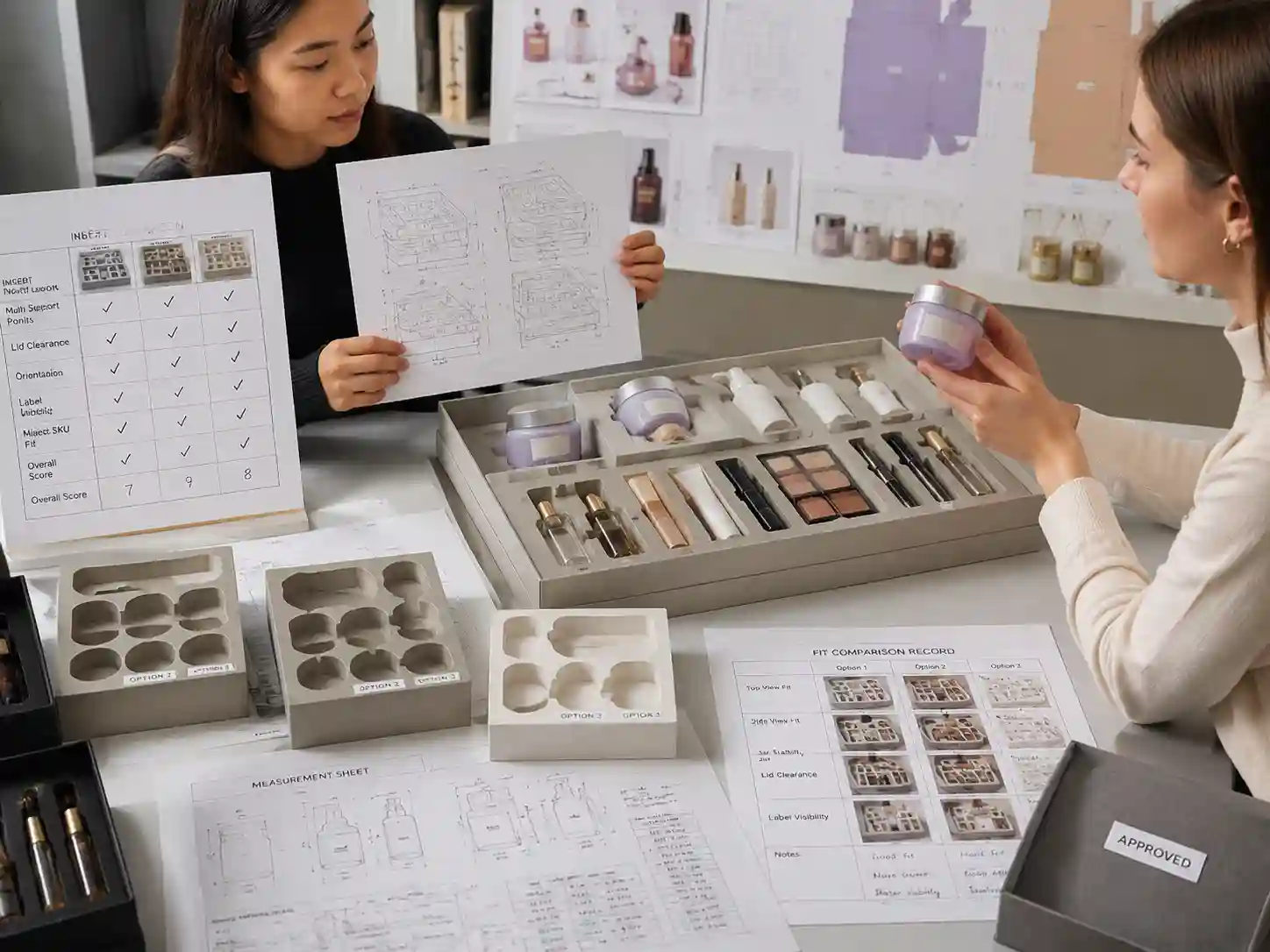
A practical design review usually checks:
- Jar diameter, height, lid diameter, and lid overhang.
- Glass thickness and fragile contact areas.
- Clearance around the lid to prevent scuffing.
- Label visibility after the jar is positioned.
- Compatibility with other products in mixed-SKU layouts.
For jars with larger or heavier lids, the insert may use a deeper lower cavity with a separate upper restraint area. This reduces direct pressure on the lid while keeping the jar stable.
What risks should be checked before approving a multi-level jar insert?
Before approval, teams should identify product-specific risks and define how each risk will be verified.
| Risk area | Possible issue | Verification method |
|---|---|---|
| Lid movement | Lid contacts nearby compartments or shifts during handling | Loaded sample inspection and clearance measurement |
| Jar stability | Jar tilts because support points are uneven | Physical fit test with production-intent samples |
| Surface damage | Glass, coating, or labels become scratched | Visual inspection after packing simulation |
| Mixed-SKU fit | Different jar sizes interfere with each other | Full layout review and cavity measurement |
How do engineers test heavy lid jars inside calendar inserts?
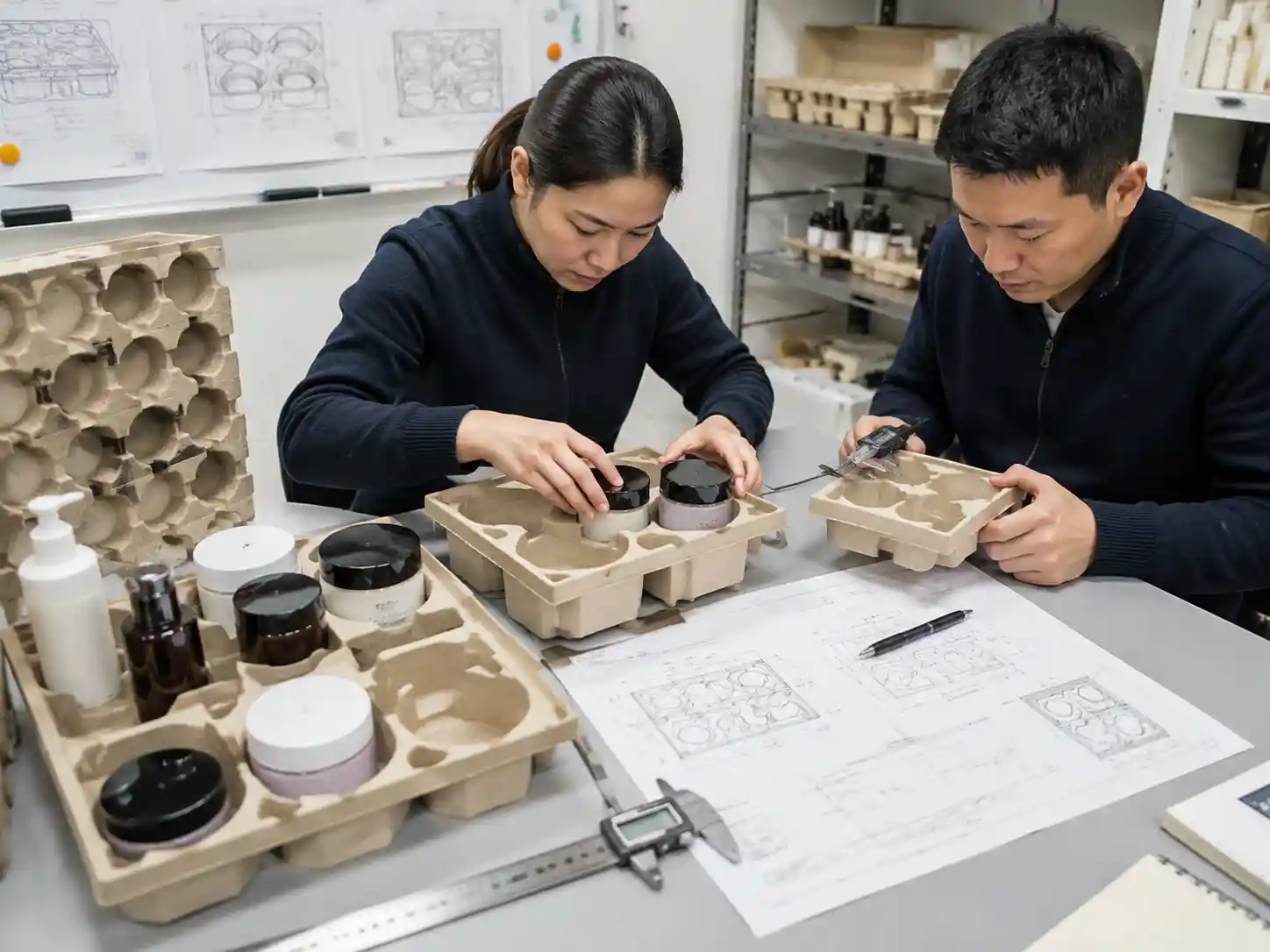
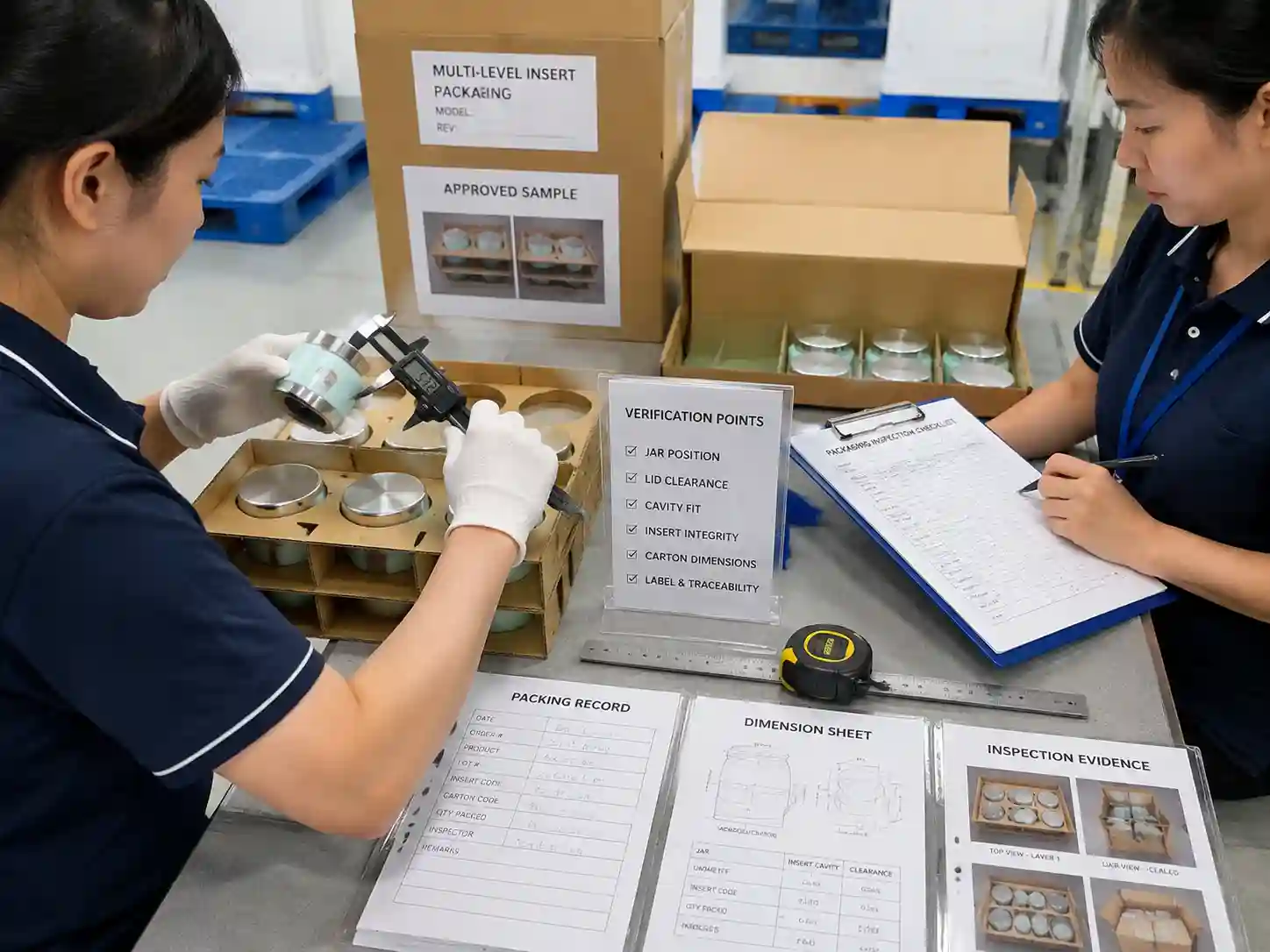
Engineers normally validate the insert using loaded product samples rather than an empty structure test. The jar, lid, and insert need to work together as one packaging system.
- Measure the actual jar and lid dimensions, including height differences caused by caps or decorative components.
- Place the loaded jar into the prototype cavity and check seating position.
- Inspect clearance around the lid, shoulder, and label area.
- Review orientation after movement or handling simulation.
- Record any changes required before production approval.
Useful evidence includes cavity drawings, measurement sheets, sample photos, approval comments, and revision records. These documents help buyers confirm that the approved structure matches the intended product configuration.
What should a loaded-SKU checklist include for heavy lid jars?
A loaded-SKU checklist helps teams verify that the insert protects the actual product rather than only matching a drawing.
- Jar model and approved sample reference.
- Jar body and lid measurements.
- Cavity depth and support point confirmation.
- Lid clearance and movement check.
- Label-facing orientation.
- Adjacent product interference review.
- Final packing configuration approval.
For projects containing pumps, droppers, glass bottles, or tubes alongside jars, the insert layout should also consider different protection requirements. Pumps may require dispenser clearance, droppers may require neck protection, and glass containers may require additional separation.
How does QC verify heavy lid jar insert performance?
QC verification should compare finished packaging against approved specifications, not only check appearance. Inspectors typically review cavity dimensions, product positioning, and packing consistency.
Typical inspection evidence may include:
- Approved insert sample or reference structure.
- Measurement records for cavities and finished packages.
- Packing checklists.
- Photos showing jar orientation and support areas.
- Records of approved changes.
If a jar sits too loosely, inspectors may find movement, label rubbing, or lid contact risks. If the cavity is too tight, pressure points may appear on the jar or lid. The acceptable balance depends on the product material, insert construction, and handling requirements.
What varies by project when packing heavy lid skincare jars?
Some packaging decisions cannot be standardized because jar designs vary significantly. A lightweight plastic jar and a thick glass jar with a metal lid may require completely different support strategies.
Project-dependent factors include:
- Glass weight and fragility.
- Lid material and closing mechanism.
- Number of calendar compartments.
- Mixed product arrangement.
- Required presentation orientation.
Buyer approval is usually needed for the final cavity design, product orientation, and appearance requirements before bulk production begins. Supplier recommendations should be supported by physical samples and measurable verification records.
How can buyers reduce heavy lid jar packaging problems?
The most effective approach is to review the product, insert, and packing method together. Early confirmation of dimensions, support points, and orientation reduces the risk of late structural changes.
Giftpackpro supports custom seasonal packaging development through custom advent calendar box services and helps commercial buyers review packaging requirements through structured project communication. Explore related advent calendar box buying guides or request a custom quote for a packaging discussion.
FAQs
Can heavy lid jars use standard flat inserts?
Some lighter jars may work with simpler structures, but heavier lids often require additional support levels to control movement and pressure points.
Should the jar lid be supported directly?
Usually the insert should control movement around the product while avoiding unnecessary pressure on decorative lids or closures. The correct method depends on the jar design and approved fit test results.
What documents help approve a jar insert?
Common approval evidence includes drawings, measurement records, loaded sample reviews, inspection notes, and final configuration records.