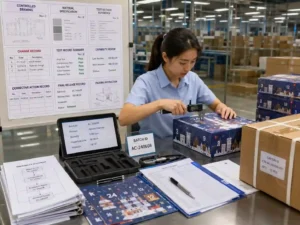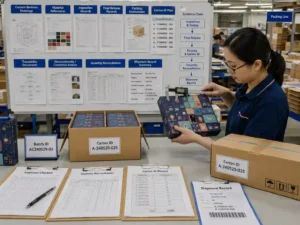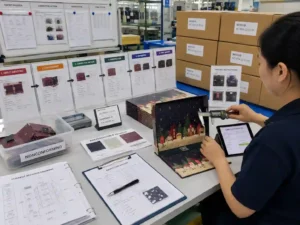
A product label can become partially hidden when insert walls are too high, cavities are too deep, or products are positioned incorrectly. A product label visibility insert design balances retention with presentation by controlling cavity depth, wall height, product angle, and viewing direction. The correct approach is to verify visibility during engineering samples, loaded fit tests, and approval checks before production.
Why Do Insert Walls Hide Product Labels?
Insert walls hide labels when the product display area is not considered during cavity design. Retention features that are useful for preventing movement can unintentionally cover important label information if the product sits too low or the opening angle is incorrect.
Common causes include:
- Insert walls extending above the main label area.
- Cavity dimensions that allow products to sink below the intended display position.
- Products placed with labels facing away from the viewing direction.
- Excessive side support added without considering presentation requirements.
- Variation between product samples and final production units.
These issues should be checked through physical samples rather than only relying on drawings, because actual packaging finishes, product shapes, and label placement can change the visible result.
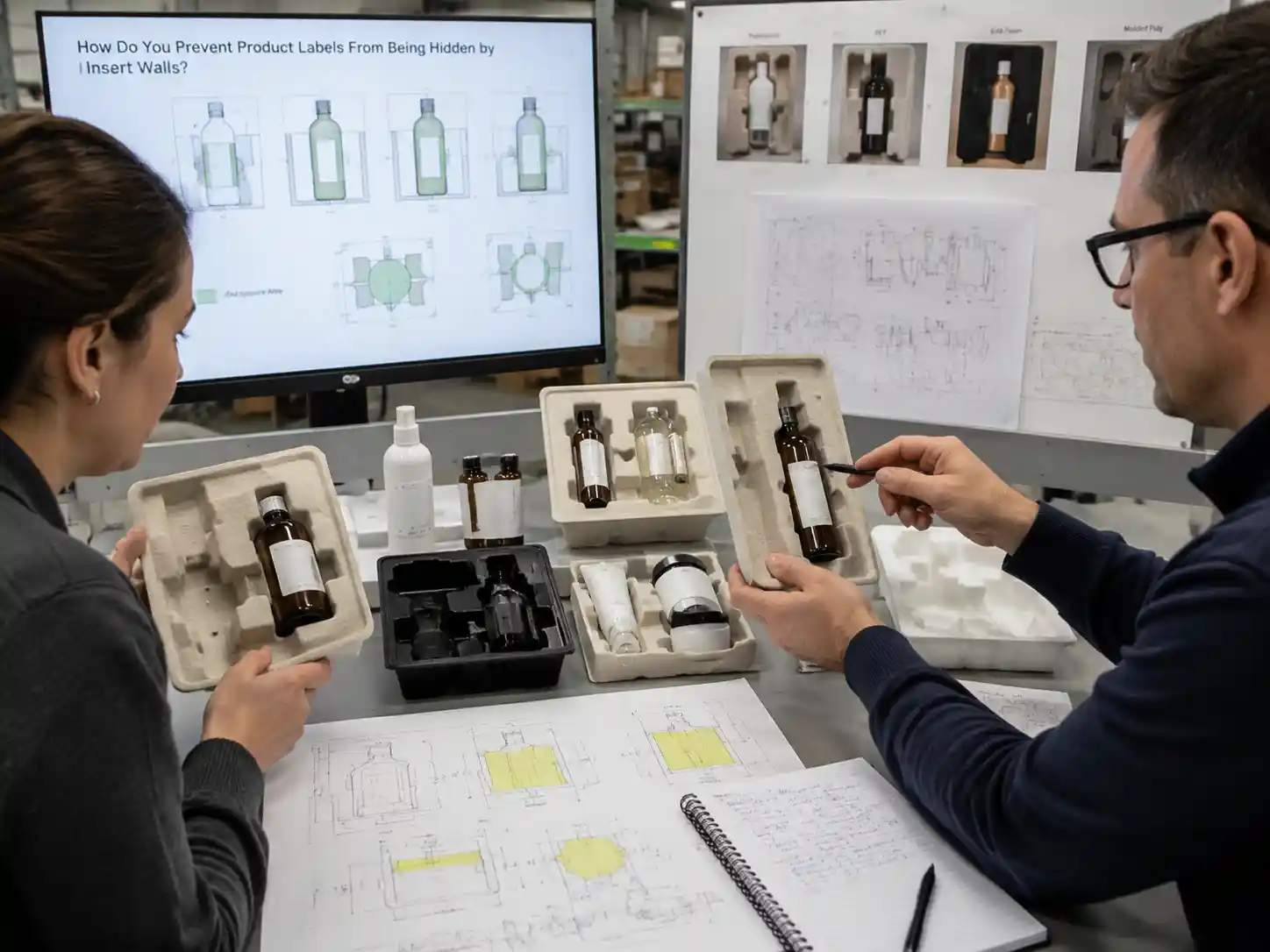
How Should Cavity Geometry Be Designed for Better Label Visibility?
The cavity should support the product at the correct height while leaving the required label area exposed. The first design decision is usually the relationship between product diameter, cavity depth, insert wall height, and the viewing angle.
What Measurements Should Be Reviewed Before Insert Production?
Packaging teams should review product dimensions and define the visible label zone before finalizing insert geometry. Useful information includes:
- Total product height and diameter.
- Label height, width, and orientation.
- Cap, pump, or closure position.
- Required front-facing display direction.
- Clearance needed for removal by hand.
Engineering drawings can mark a “no obstruction area” around the label surface. This gives insert designers a clear limit for cavity walls, tabs, or retention points.
Which Retention Methods Protect Products Without Blocking Labels?
The best retention method depends on product shape, weight, and how the calendar will be handled. A retention feature should secure the product while keeping the important viewing surface open.
| Retention method | Label visibility consideration | Common application |
|---|---|---|
| Low cavity wall | Keeps the label area exposed while supporting the product base | Bottles, jars, and tubes with front labels |
| Side support points | Should contact non-display areas rather than printed labels | Round or irregular products |
| Paperboard locking tabs | Placement must avoid covering important graphics | Lightweight packaged items |
| Molded cavity support | Shape can control product angle and visible face | Premium product sets and mixed-size inserts |
Project recommendations vary depending on whether the priority is maximum protection, premium presentation, manual packing speed, or shipping stability. Buyer approval should confirm which label areas must remain visible.
How Do You Validate Product Label Visibility During Sampling?
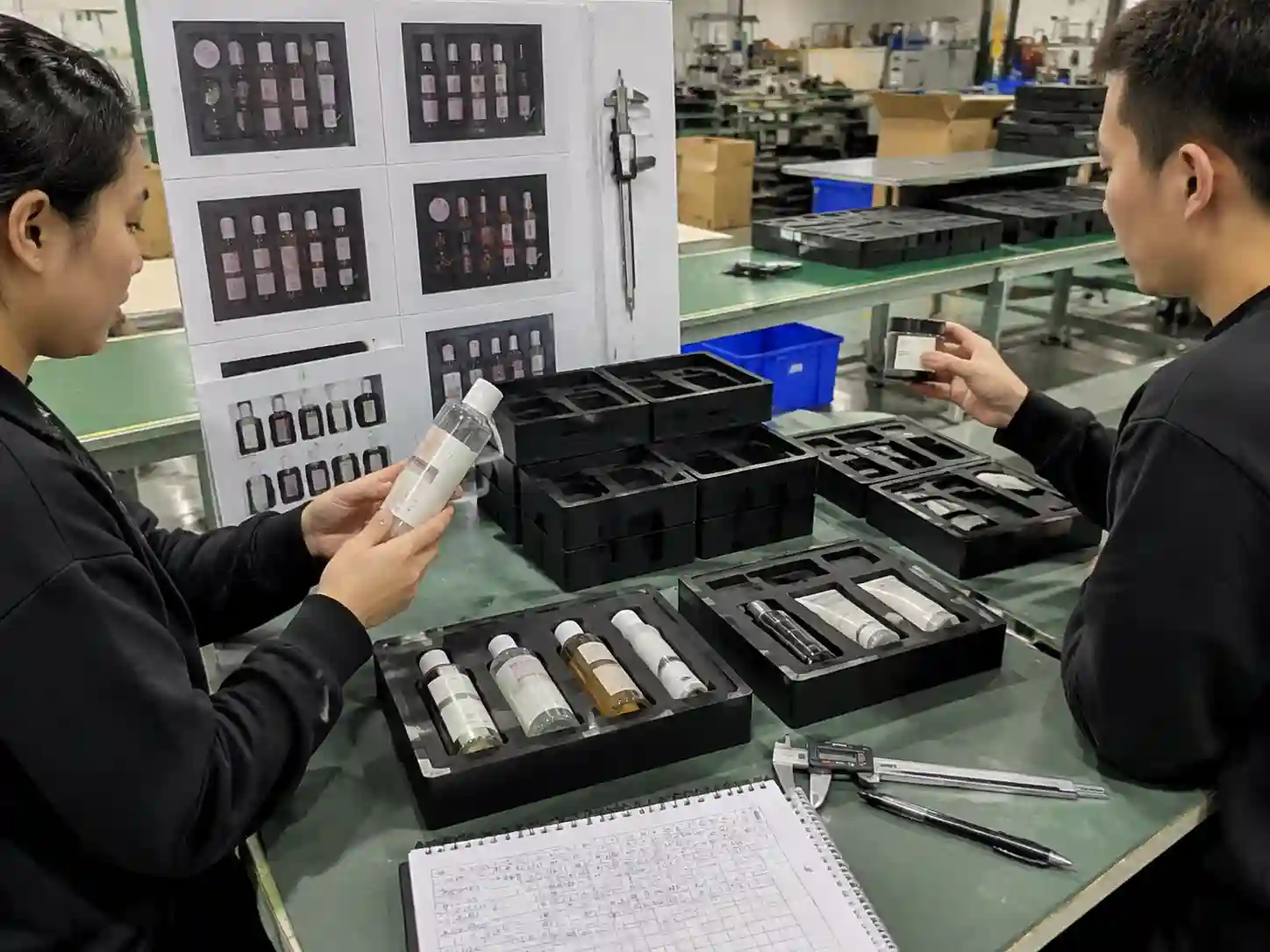
Physical validation is the most reliable way to confirm that insert walls do not block product information. A typical fit-test process includes:
- Load actual or approved product samples into the insert cavity.
- Place the product in the intended orientation.
- Check the front, side, and top viewing angles.
- Measure any blocked label area caused by insert walls or supports.
- Record adjustment requirements on the sample approval document.
Sample photos, cavity drawings, measurement notes, and approval records provide evidence that the visibility requirement was reviewed before production.
How Can Transit Requirements Affect Label Visibility?
Insert designs must maintain visibility after handling and transport, not only when first packed. Products may shift, rotate, or settle if the cavity does not provide enough support.
What Should Be Checked Before Mass Production?
- Product remains in the intended orientation after movement.
- Insert walls do not press against visible label surfaces.
- Retention points do not damage labels or printed sleeves.
- Removal access remains practical for the final user.
- Loaded samples maintain appearance after packing evaluation.
| Check area | Verification method |
|---|---|
| Label exposure | Visual inspection with loaded samples |
| Product position | Orientation check against approved drawings |
| Cavity clearance | Dimensional measurement and fit review |
| Retention performance | Handling and movement evaluation |
Transit requirements, product weight, and packaging structure can change the final insert solution. These factors should be confirmed through project-specific testing and supplier documentation.
What Information Should Buyers Approve Before Final Insert Production?
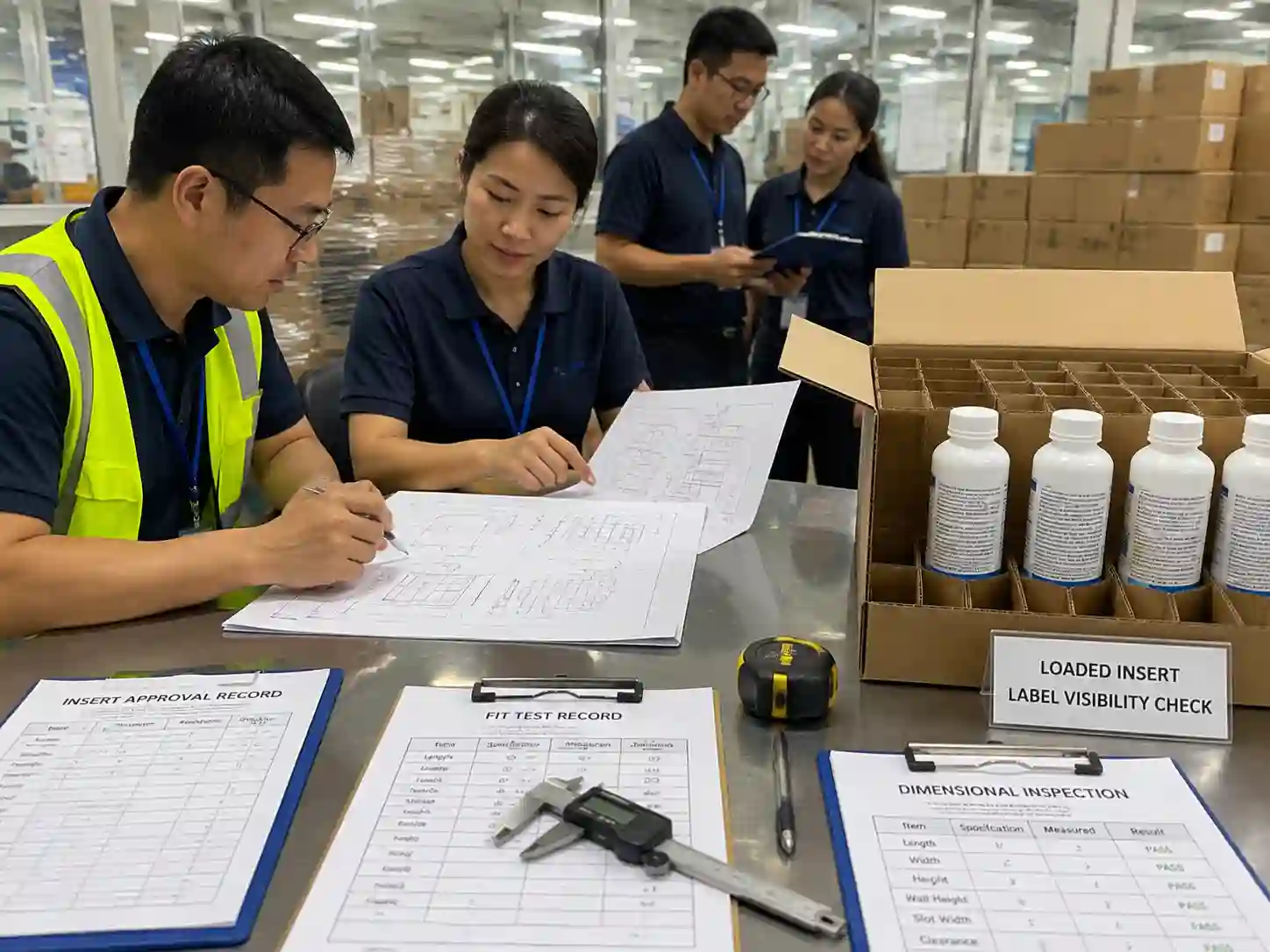
Before production approval, buyers should confirm the final insert drawing, loaded sample appearance, product orientation, and label visibility requirements. Approval records should clearly show which sample version was reviewed.
Useful approval materials include:
- Approved cavity drawings.
- Product dimension references.
- Sample photographs showing visible labels.
- Inspection notes and measurement records.
- Final comments from packaging and product teams.
Giftpackpro supports custom packaging development through custom advent calendar box services and engineered packaging solutions. Insert visibility requirements can be reviewed together with product fit, structure, and presentation needs.
FAQs
Can a deeper insert cavity improve product protection but reduce label visibility?
Yes. A deeper cavity may improve retention, but it can lower the visible product height. The cavity depth should be balanced with the required display area.
Should labels always face the front of an advent calendar insert?
Not always. The required orientation depends on the product presentation goal and packaging structure. The intended viewing direction should be confirmed during design review.
Can insert walls be reduced to improve visibility?
Sometimes, but reducing walls may affect retention. Alternative solutions such as shaped supports, lower contact points, or product orientation adjustments may provide a better balance.
For a project requiring controlled product presentation and secure retention, you can request a custom quote and discuss insert engineering requirements with the packaging team.