
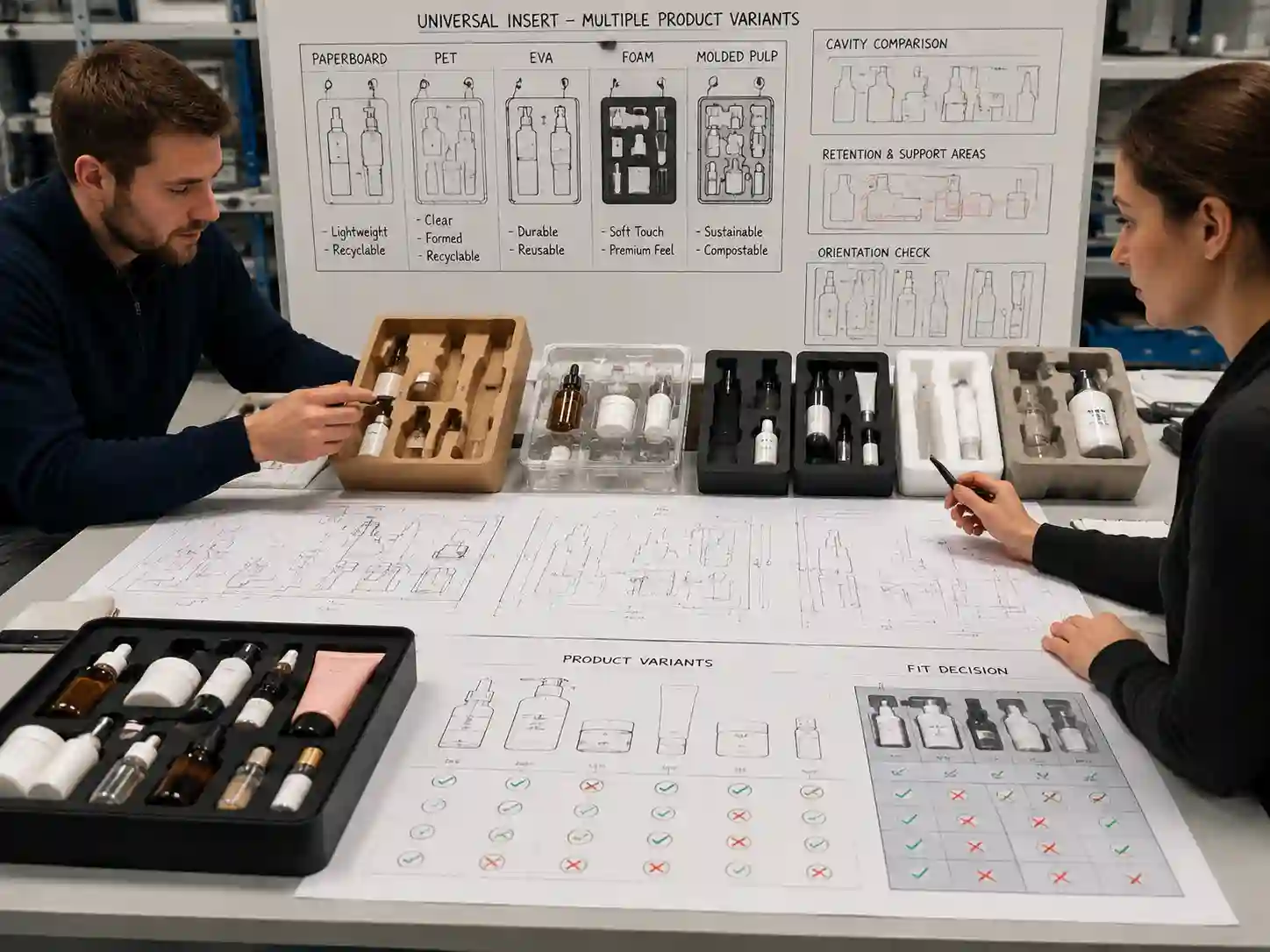
A universal insert for multiple product variants is created by designing shared cavity geometry that can securely hold different product sizes, shapes, and orientations while maintaining easy removal and reliable transport performance. The process starts with accurate product measurements, then balances retention points, clearance, visibility, and loading efficiency through prototypes and fit validation. A successful design is not simply one cavity that fits everything, but a controlled system that performs across the approved product range.
How Do You Design a Universal Insert for Multiple Product Variants?
The first step is defining the product range and identifying which dimensions can share one insert structure. A universal insert multiple product variants solution usually begins with grouping products by similar footprint, height, weight, and handling requirements.
Packaging engineers review product drawings, physical samples, and measurement records to determine the common design limits. The goal is to create cavities that provide enough tolerance for variation without allowing excessive movement during handling.
Which Product Dimensions Matter Most for Shared Insert Cavities?
Critical dimensions include overall height, maximum diameter or width, base shape, cap or closure position, center of gravity, and any fragile or protruding areas. These measurements determine cavity depth, support points, and removal access.
- Footprint dimensions: define the cavity opening and lateral support.
- Height variation: affects product visibility and lid clearance.
- Weight differences: influence retention strength and insert material selection.
- Shape differences: determine whether flexible support or dedicated contact points are needed.
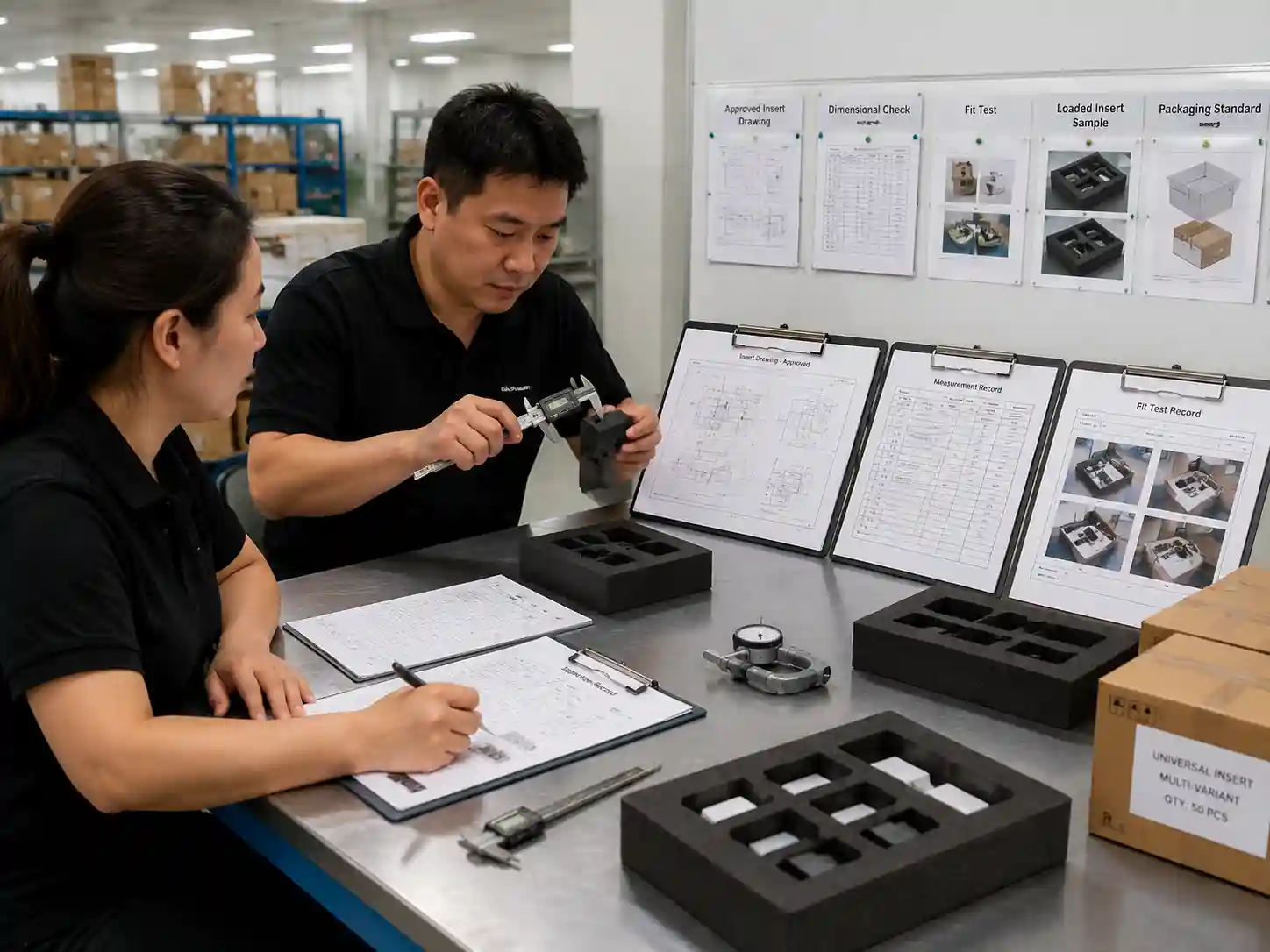
Verified dimensions should be recorded through drawings, measurement sheets, or approved product samples rather than estimated from images or supplier descriptions.
What Retention Methods Work for Multiple Product Variants?
A shared insert must hold different products securely while avoiding excessive force during removal. Engineers typically combine several retention approaches depending on the product range.
| Retention Method | How It Works | Suitable Applications |
|---|---|---|
| Flexible side support | Uses controlled contact areas to accommodate small size differences. | Bottles, jars, tubes with similar shapes. |
| Adjustable cavity geometry | Creates tolerance zones instead of one exact-fit opening. | Mixed product collections with several dimensions. |
| Base locking points | Supports the product bottom to prevent shifting. | Heavier containers or taller items. |
| Raised positioning features | Controls product orientation and presentation angle. | Display-focused advent calendar inserts. |
The correct method depends on product material, packaging weight, required presentation position, and how often products are removed or handled.
How Do You Test One Insert With Different Product Variants?
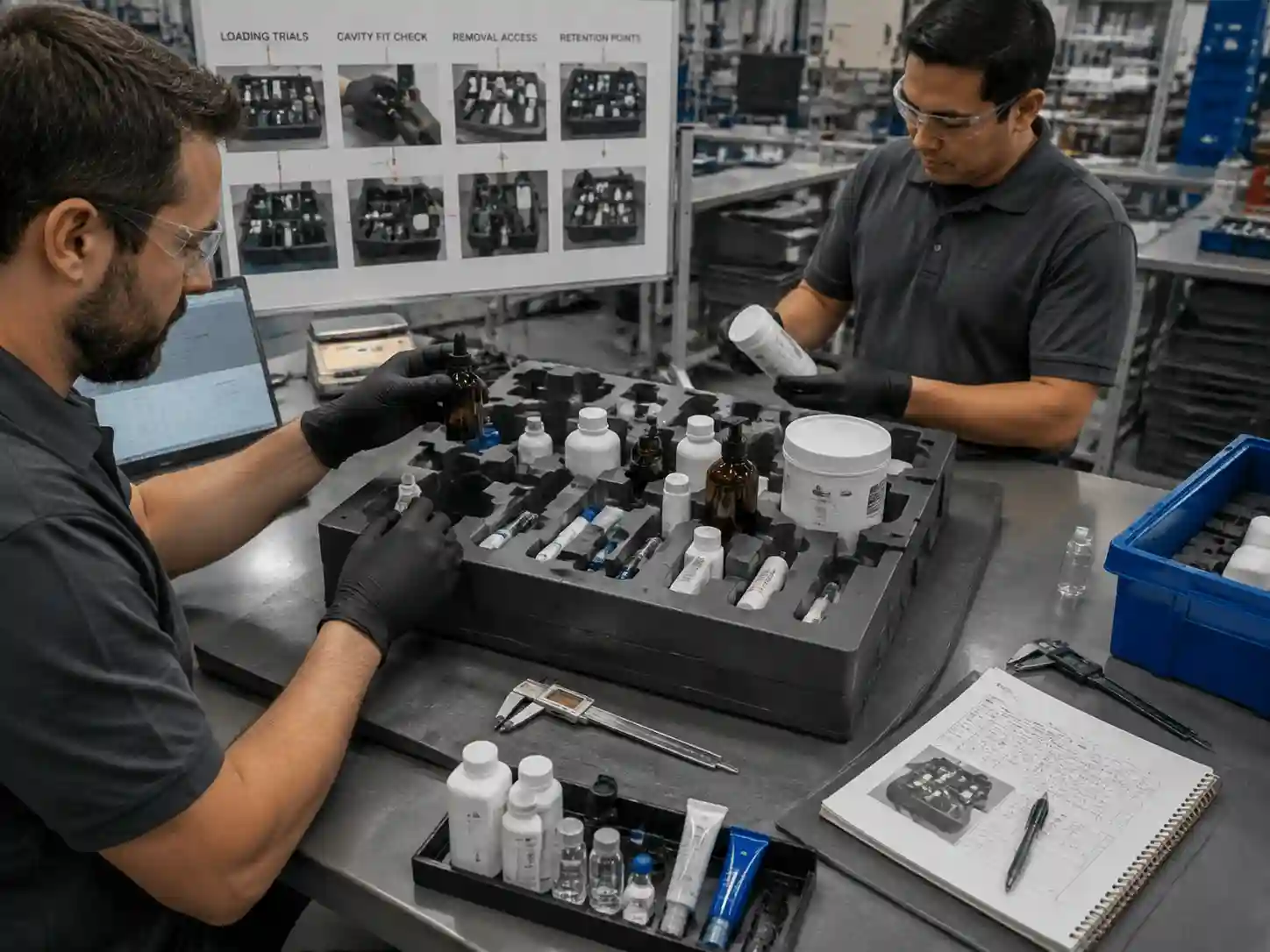
A universal insert should be validated using physical samples from every approved product group. Computer drawings can predict cavity dimensions, but physical loading tests reveal issues such as tight removal, hidden labels, unstable positioning, or unexpected movement.
- Load each product variant: Check whether every item enters the cavity without damaging the insert or product.
- Evaluate removal access: Confirm users can grip and remove products without excessive force.
- Check product orientation: Verify labels, caps, and visual features remain correctly positioned.
- Review movement: Test whether products shift when the package is moved or tilted.
- Record adjustments: Update drawings and approval documents after each revision.
Evidence from these checks normally includes prototype photos, cavity measurements, fit-test notes, and approved sample records. These records help suppliers and buyers confirm that the final insert matches the agreed design intent.
What Should Be Checked Before Approving a Multi-Variant Insert?
Approval should cover both product protection and presentation performance. A cavity that prevents movement but blocks product visibility or makes removal difficult may not be suitable.
| Check Area | Validation Question |
|---|---|
| Fit tolerance | Do all approved products fit without excessive looseness? |
| Removal access | Can products be removed without damaging the insert or package? |
| Orientation | Are labels and important product features visible? |
| Transit stability | Does the loaded insert maintain product position during movement? |
How Does a Universal Insert Perform During Transit?
Transit performance depends on how well the insert manages combined product weight, movement forces, and packaging compression. A shared insert should be evaluated with the actual product mix rather than only individual items.
- Confirm heavier products do not deform lighter support areas.
- Check that repeated product positions do not create weak points.
- Review whether cavity walls maintain their shape after loading.
- Verify the insert remains aligned inside the outer packaging structure.
Project-dependent validation methods may include handling simulations, packing trials, or other agreed evaluation methods based on the product category and shipping requirements.
What Information Should Buyers Provide Before Creating a Shared Insert?
Accurate input reduces redesign risk. Buyers should provide product samples or technical information, approved dimensions, product weight, orientation requirements, and any areas that must remain visible.
For custom advent calendar projects, insert development is normally connected with the overall packaging structure. Giftpackpro supports buyers through custom advent calendar box services, including structural coordination between inserts and outer packaging.
What Are the Common Risks of Using One Insert for Multiple Products?
The main risks are excessive tolerance, weak retention, difficult removal, and inconsistent presentation. These problems usually occur when product differences are larger than the shared insert design range can support.
When variation is significant, a project may require separate cavity groups, interchangeable inserts, or a different retention strategy. The final decision should be based on measured product data and physical validation rather than assuming one design can fit every variation.
FAQs About Universal Inserts for Multiple Product Variants
Can one insert hold products with different shapes?
Yes, but the design must use controlled support areas and appropriate tolerance zones. Highly different shapes may require grouped cavities instead of one fully universal structure.
Does a universal insert reduce product protection?
Not necessarily. Protection depends on cavity geometry, retention points, material choice, and validation results. A properly engineered shared insert can perform reliably across approved variants.
Why are physical samples important for insert approval?
Samples reveal practical issues such as removal force, product movement, and visual presentation that cannot always be confirmed from drawings alone.
For custom packaging projects requiring engineered inserts and product-fit validation, you can explore custom advent calendar box products or request a custom quote with your product specifications.


