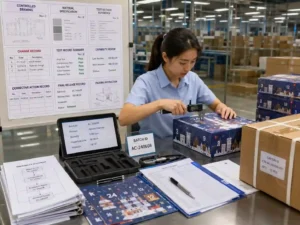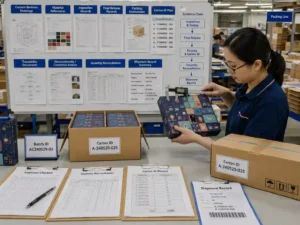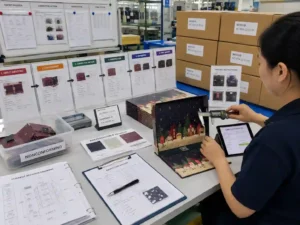
Flexible packaging requires a different compartment planning approach because pouches, sachets, tubes, and soft packs can change shape under pressure. The correct flexible packaging compartment design process starts with measuring the filled product, defining the supported areas, allowing controlled clearance, and validating loaded samples inside the insert. The goal is to prevent loose movement, excessive compression, and inconsistent presentation during production.
Why Does Flexible Packaging Need Different Compartment Planning?
Flexible packaging needs different cavity planning because the product shape is not always fixed like a rigid bottle or jar. Engineers must consider both the product’s nominal dimensions and its compressed or expanded condition after filling.
Flexible products may include cosmetic sachets, refill packs, pouches, masks, soft tubes, or wrapped items. Their dimensions can vary because of air content, sealing areas, material thickness, and filling volume. A compartment designed only from flat artwork dimensions may create inaccurate fit results.
How Does Flexible Packaging Compartment Design Start With Measurement?
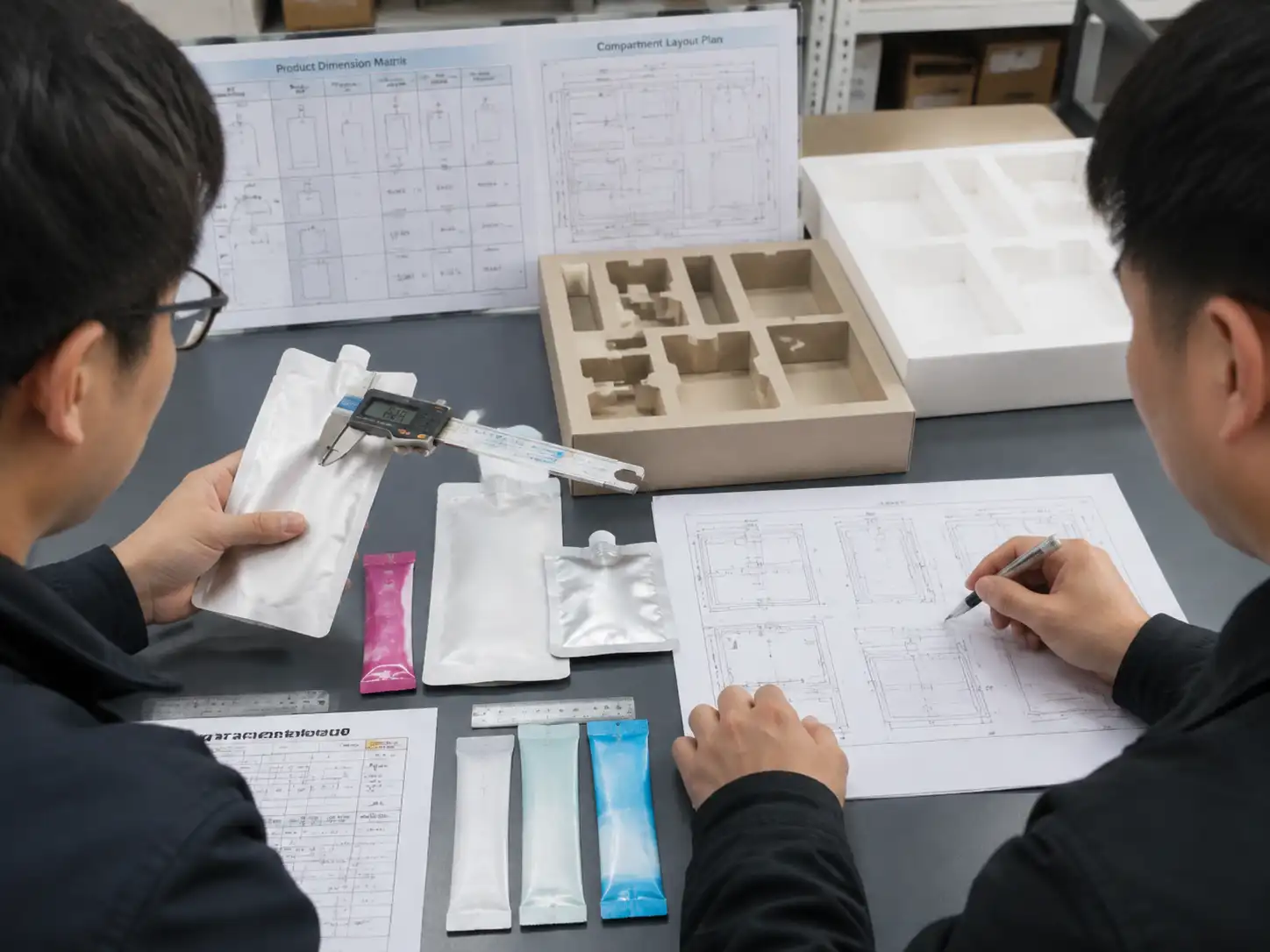
The first step is collecting actual product measurements from representative samples. The measurement record should describe the filled product condition that the insert must support.
- Measure product length, width, thickness, and any irregular bulging areas.
- Record the filled and sealed condition rather than only the empty packaging size.
- Identify areas that can be compressed and areas that should not receive pressure.
- Document product orientation inside the final compartment.
- Confirm whether products are placed individually or combined with other items.
Measurement evidence should include sample photos, dimension drawings, and marked-up cavity layouts. These records help structural designers and suppliers avoid designing compartments from incomplete assumptions.
How Much Clearance Should Be Allowed Around Flexible Products?
The correct clearance depends on product material, stiffness, handling method, and required appearance. Flexible products usually need enough space for insertion and removal while still maintaining controlled positioning.
| Design factor | Why it matters | How it is verified |
|---|---|---|
| Product thickness variation | Soft packaging may expand or flatten differently between units. | Measure multiple samples and compare dimensional ranges. |
| Side clearance | Too much space can allow shifting during handling. | Load samples into prototype cavities and check movement. |
| Compression allowance | Excessive force can damage seals or affect appearance. | Review contact points and inspect loaded samples. |
| Removal access | Flexible items can be difficult to grip if cavities are too tight. | Perform repeated removal checks using production-like samples. |
Clearance values are project-dependent. The final decision varies according to product material, packaging construction, insert material, and the expected customer interaction.
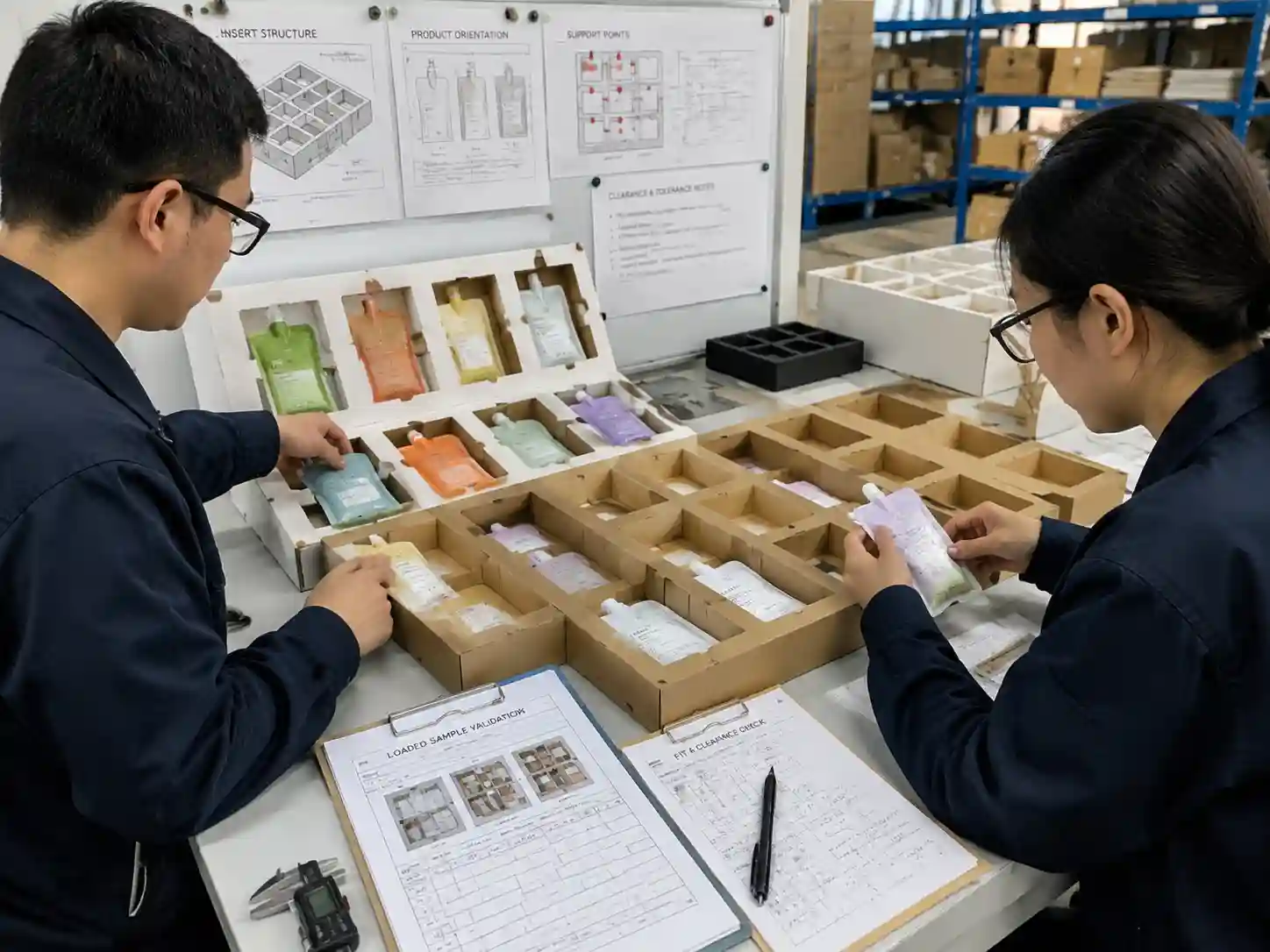
How Should Product Orientation Be Planned for Flexible Packaging Compartments?
Product orientation should be defined before cavity drawings are finalized because flexible packages often have preferred display surfaces or vulnerable areas.
Engineers should record whether the product should stand upright, lie flat, face outward, or be arranged according to a specific visual direction. Orientation affects cavity depth, support points, and how much movement is acceptable during transport.
- Identify the front-facing surface if appearance is important.
- Avoid placing pressure on seals, closures, or weak packaging areas.
- Define support zones that hold the product without excessive compression.
- Confirm whether multiple flexible items can share one compartment.
How Do You Validate Flexible Packaging Compartments With Samples?
Prototype validation is required because flexible packaging behavior cannot always be predicted from drawings alone. A cavity that looks correct digitally may perform differently when loaded with real products.
A practical loaded-sample checklist includes:
- Correct product sample loaded into the approved cavity.
- Product sits in the intended orientation.
- No visible deformation, folding, or excessive pressure marks.
- Product remains positioned after movement simulation.
- Removal is possible without damaging the box or product.
- Measurements and approval notes are updated after testing.
Validation records may include prototype photos, measurement sheets, cavity revision drawings, and approval comments. These documents provide traceability when production decisions need to be reviewed.
What Risks Occur When Flexible Packaging Compartments Are Designed Incorrectly?
The main risks are unstable positioning, product damage, inconsistent appearance, and production variation. Flexible items that are given too much free space may move inside the calendar, while overly tight cavities may create pressure points.
Common design problems include:
- Using empty package dimensions instead of filled product measurements.
- Ignoring thickness variation between product units.
- Failing to test removal after insert production samples are made.
- Not recording approved orientation and support requirements.
These risks can be reduced through controlled measurement, prototype review, and documented approval before bulk production.
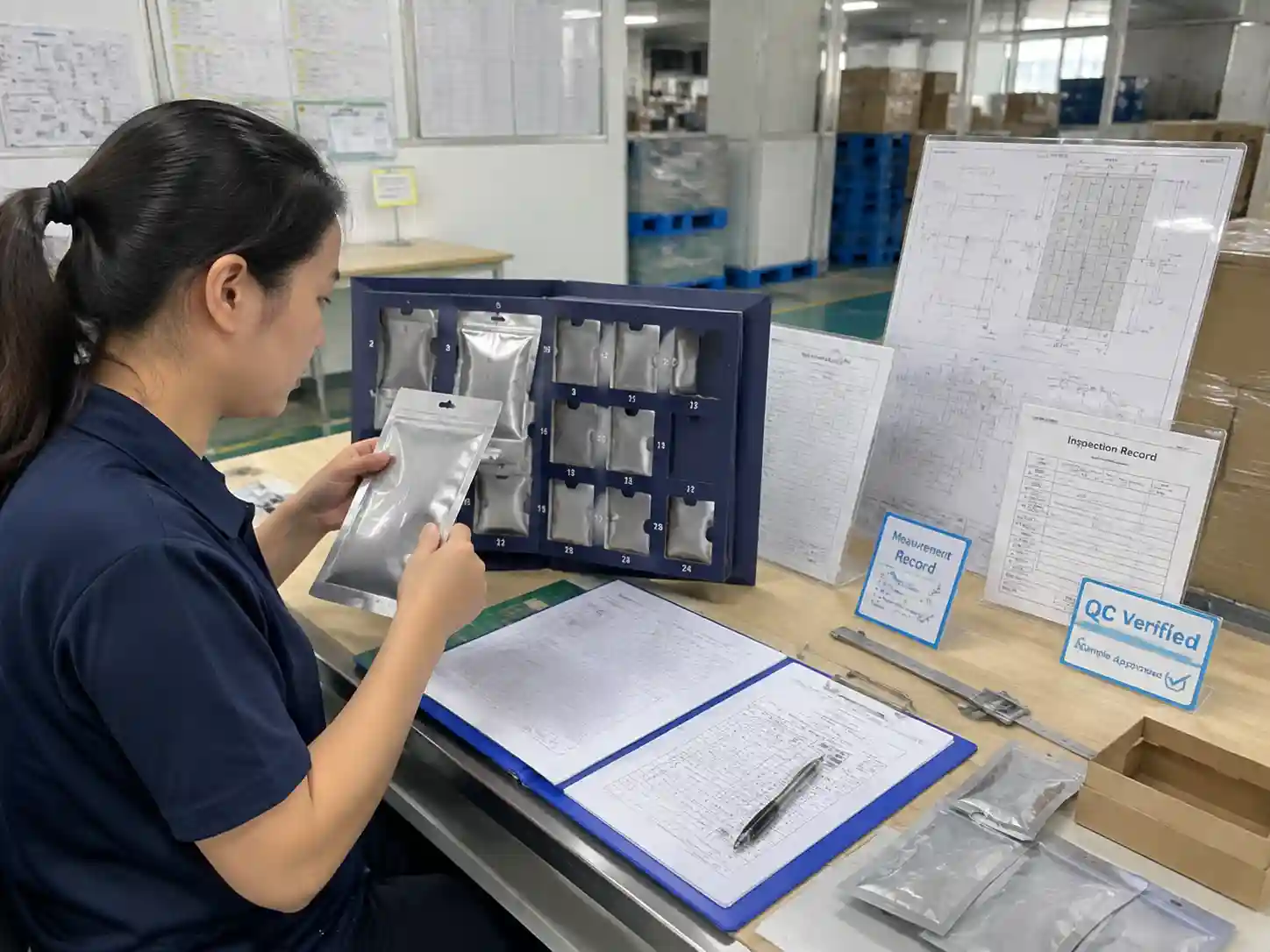
Which Information Should Buyers Confirm Before Approving the Insert Design?
Buyers should approve the product dimensions, orientation, clearance approach, and sample validation results before finalizing compartment structures.
- Approved product measurement data.
- Confirmed product loading direction.
- Reviewed cavity drawings and revisions.
- Accepted prototype sample performance.
- Recorded changes after testing.
These approvals create a clear reference between product development teams, packaging engineers, and manufacturing partners. Giftpackpro applies this type of measurement-based approach when developing custom advent calendar box services and related packaging solutions.
FAQ: Can Flexible Packaging Use the Same Compartments as Rigid Products?
Usually not. Rigid products maintain fixed dimensions, while flexible packaging may change shape. Compartment design should be based on actual filled samples and expected deformation behavior.
FAQ: Should Multiple Flexible Products Share One Compartment?
It depends on combined size, weight, movement risk, and product protection requirements. Shared compartments should be validated with loaded samples before approval.
FAQ: What Documents Help Verify Flexible Packaging Compartment Decisions?
Useful evidence includes dimension records, product photos, cavity drawings, prototype test notes, and approval records. These documents help confirm why specific clearances and support features were selected.
For projects requiring measured compartment planning and custom structural development, you can review custom advent calendar box products or request a custom quote with your product specifications.