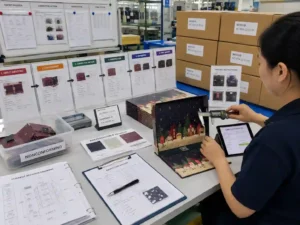
When product weight is concentrated on one side of an advent calendar, the structure can experience uneven loading, increased stress on inserts, unstable handling, and possible fit problems during transport or display. The solution is not simply adding stronger material. Packaging teams need to measure loaded weight, review product orientation, check cavity support, and validate the finished calendar under realistic conditions before production approval.
Why does uneven advent calendar weight distribution affect packaging performance?
Uneven advent calendar weight distribution affects how forces move through the box, insert, and supporting structure. A calendar with heavier products grouped on one side may bend, twist, or place extra pressure on specific compartments.
Common effects include:
- Unequal load on the backboard, tray, or structural support panels.
- Higher stress around heavy product cavities and divider walls.
- Product movement caused by insufficient retention or incorrect orientation.
- Changes in opening experience because one side feels heavier than the other.
These risks depend on the calendar format, material construction, product density, insert design, and how the finished package is handled.
How should packaging teams measure weight distribution before insert design?
The first step is to collect product data and map the loaded calendar layout. Weight should be reviewed together with product dimensions because a small heavy item can create different stresses than a large lightweight item.
What measurements should be recorded?
| Measurement | Purpose |
|---|---|
| Individual product weight | Identifies heavy and light positions before cavity allocation. |
| Product dimensions | Confirms cavity size, clearance, and orientation requirements. |
| Filled compartment weight | Shows actual loading conditions after products are placed. |
| Left/right and top/bottom weight balance | Highlights concentrated loading areas. |
| Center of gravity position | Helps evaluate stability during handling and display. |
Measurement records, product drawings, and cavity layout files provide evidence for design decisions. Final values should be confirmed with approved product samples rather than assumptions.

How can designers reduce problems caused by one-sided product loading?
Designers can reduce uneven loading by adjusting product placement, support points, and insert structure. The goal is to distribute forces more evenly without creating unnecessary material or restricting product access.
What practical design steps are used?
- Map heavy products across the calendar layout before finalizing cavity positions.
- Place high-weight items closer to stronger structural areas when possible.
- Review insert support around heavier cavities and contact points.
- Check whether product orientation increases leverage or pressure on dividers.
- Validate the filled prototype instead of reviewing only empty packaging.
For custom advent calendar projects, the insert design, box construction, and product arrangement must be considered together. Giftpackpro develops custom structures through product measurement and packaging design reviews, including custom advent calendar box services and custom advent calendar box products.
How do you validate a calendar with concentrated product weight?
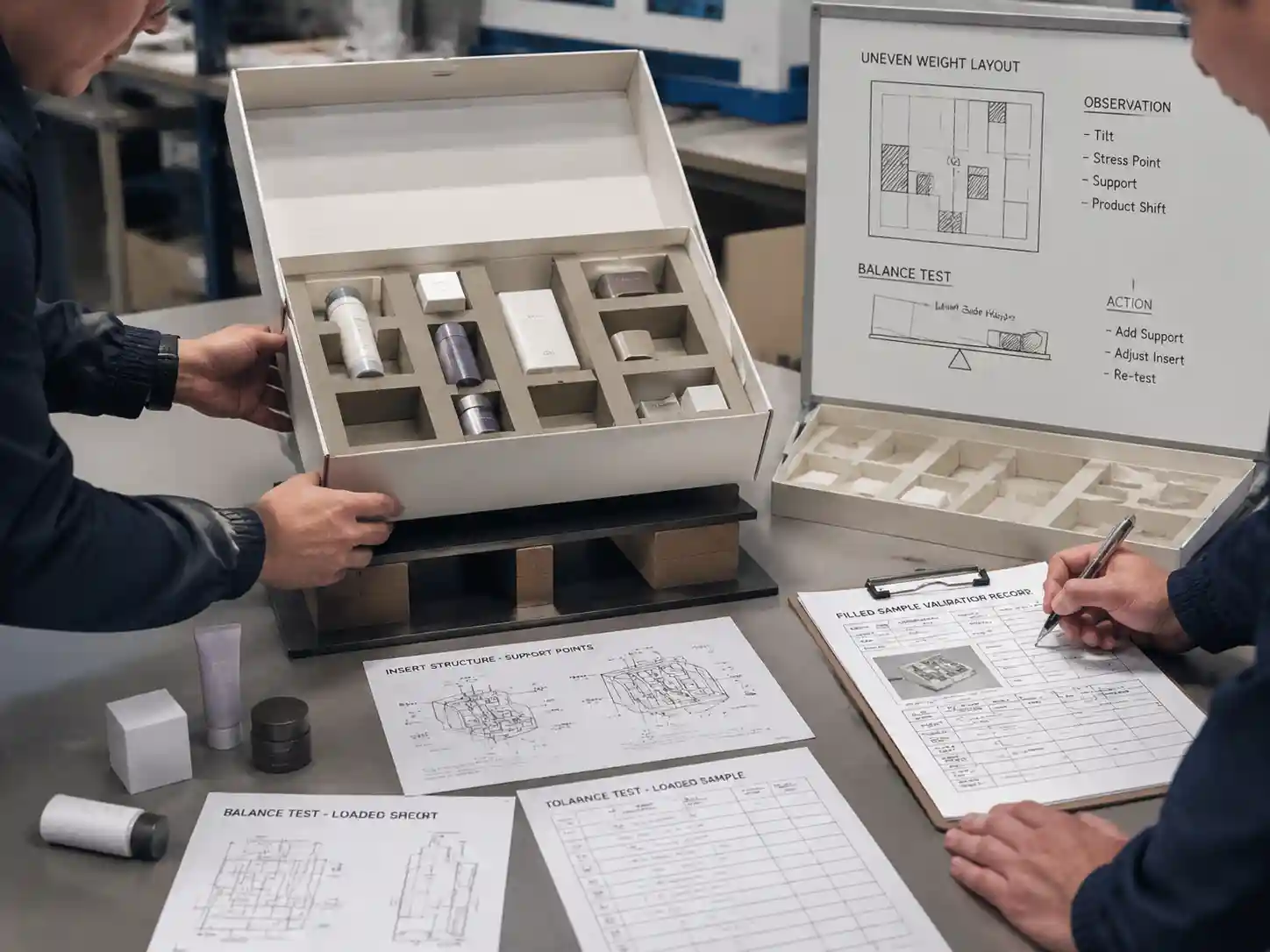
Validation should use a loaded sample that represents the actual product arrangement. Empty-box checks cannot show the real effect of uneven loading.
Loaded-sample validation checklist
- Confirm all compartments contain the intended product weights.
- Check whether the box remains flat when placed on a surface.
- Inspect insert movement, deformation, or stress marks.
- Verify product clearance against lids, doors, and adjacent cavities.
- Review product removal and retention after loading.
- Record findings with photos, measurements, and approval notes.
QC teams and suppliers should maintain records showing the tested configuration, approved drawings, and any agreed design adjustments. The final validation method varies depending on product weight, packaging style, and distribution requirements.
What risks appear if weight concentration is ignored?
If concentrated weight is not considered during development, problems may appear after sampling or production. These issues are usually related to incorrect assumptions about loading rather than the box material alone.
- Insert deformation around heavy compartments.
- Misalignment between panels or opening sections.
- Reduced product protection during handling.
- Unbalanced appearance when the calendar is displayed upright.
- Additional revisions after sample approval.
Separating verified facts from project decisions is important. Product weights and dimensions are measurable facts. Cavity locations, support methods, and structural changes are engineering recommendations that require project approval.
What documents help confirm weight distribution decisions?
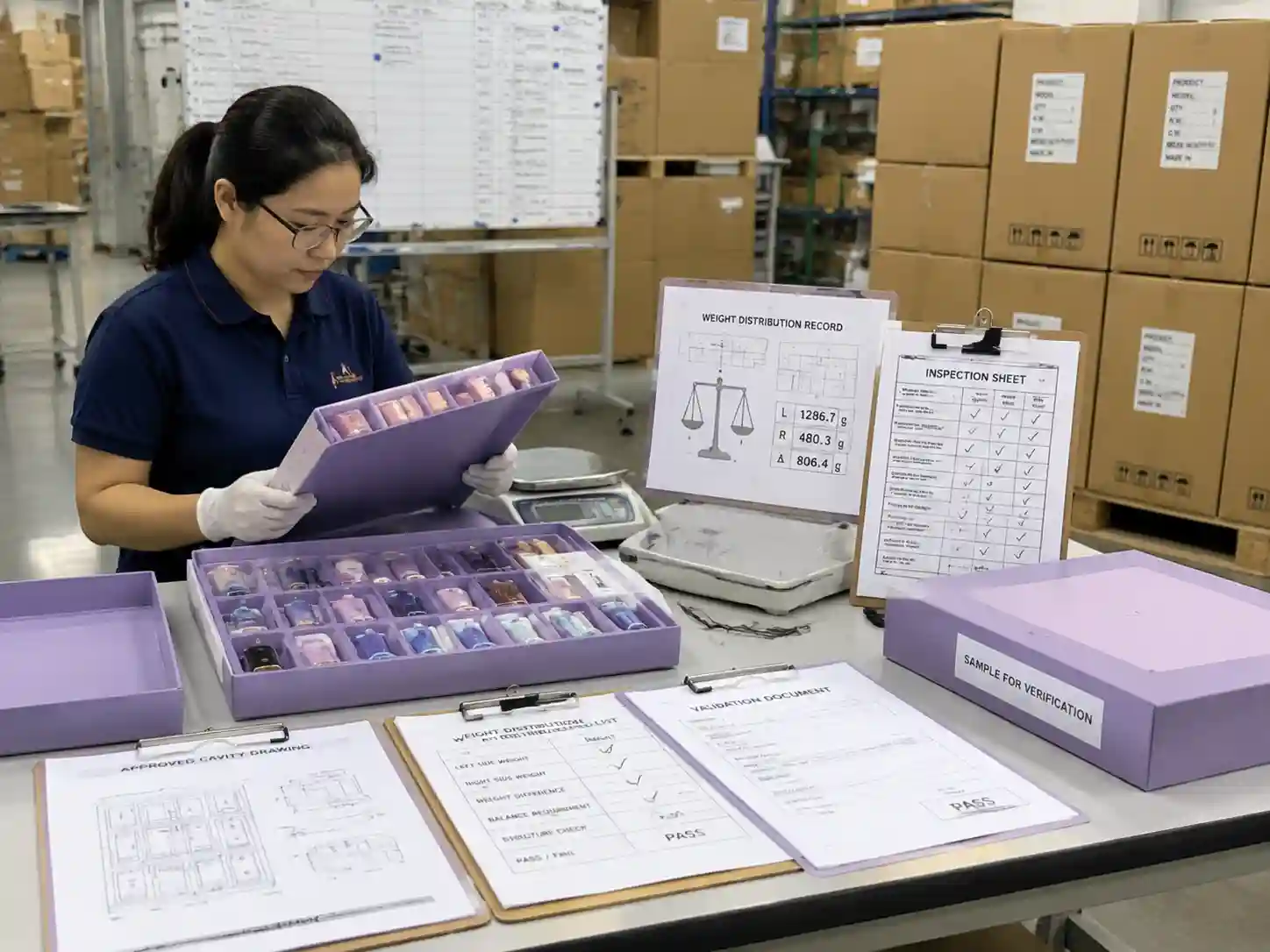
Packaging decisions should be supported by clear records rather than verbal confirmation alone. Useful evidence includes product measurement sheets, cavity drawings, insert prototypes, loaded sample inspection forms, and approval records.
These documents allow engineering, sourcing, and QC teams to confirm that the final structure matches the approved product arrangement. Buyers can also use the advent calendar box buying guides to review related packaging development considerations.
Frequently asked questions about uneven calendar weight distribution
Can heavier products always be placed on one side of an advent calendar?
Not always. Some structures can support uneven loading, but the decision depends on the box construction, insert support, product weight, and validation results.
Does adding thicker board always solve weight imbalance?
No. A stronger material may not correct poor weight placement, weak support points, or unsuitable cavity design. Layout and load distribution should be reviewed first.
When should weight distribution be checked?
Weight distribution should be reviewed during product measurement and insert development, then confirmed again with filled prototypes before production approval.
How can buyers review weight balance before production?
Buyers should provide accurate product weights, dimensions, and intended arrangement before final structural approval. A measured, loaded prototype review helps confirm that the calendar can support the actual product configuration.
For a packaging project requiring engineering review of product weight, compartment layout, and structural validation, request a custom quote from Giftpackpro.