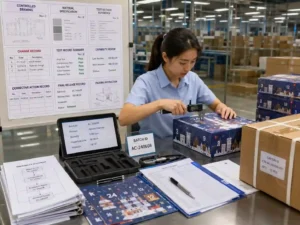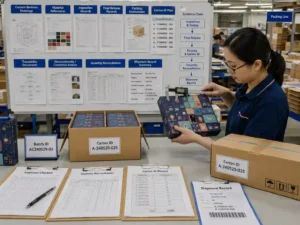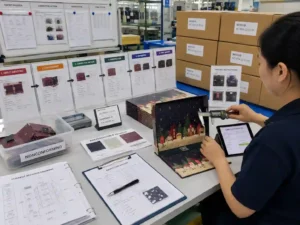
When two or more products share one compartment, the measurement process must consider the combined footprint, orientation, movement, clearance, and loaded weight rather than measuring each item separately. Bundled product compartment measurement starts with recording the assembled product set, checking the final packed condition, and validating the cavity using physical samples or accurate dimensional references.
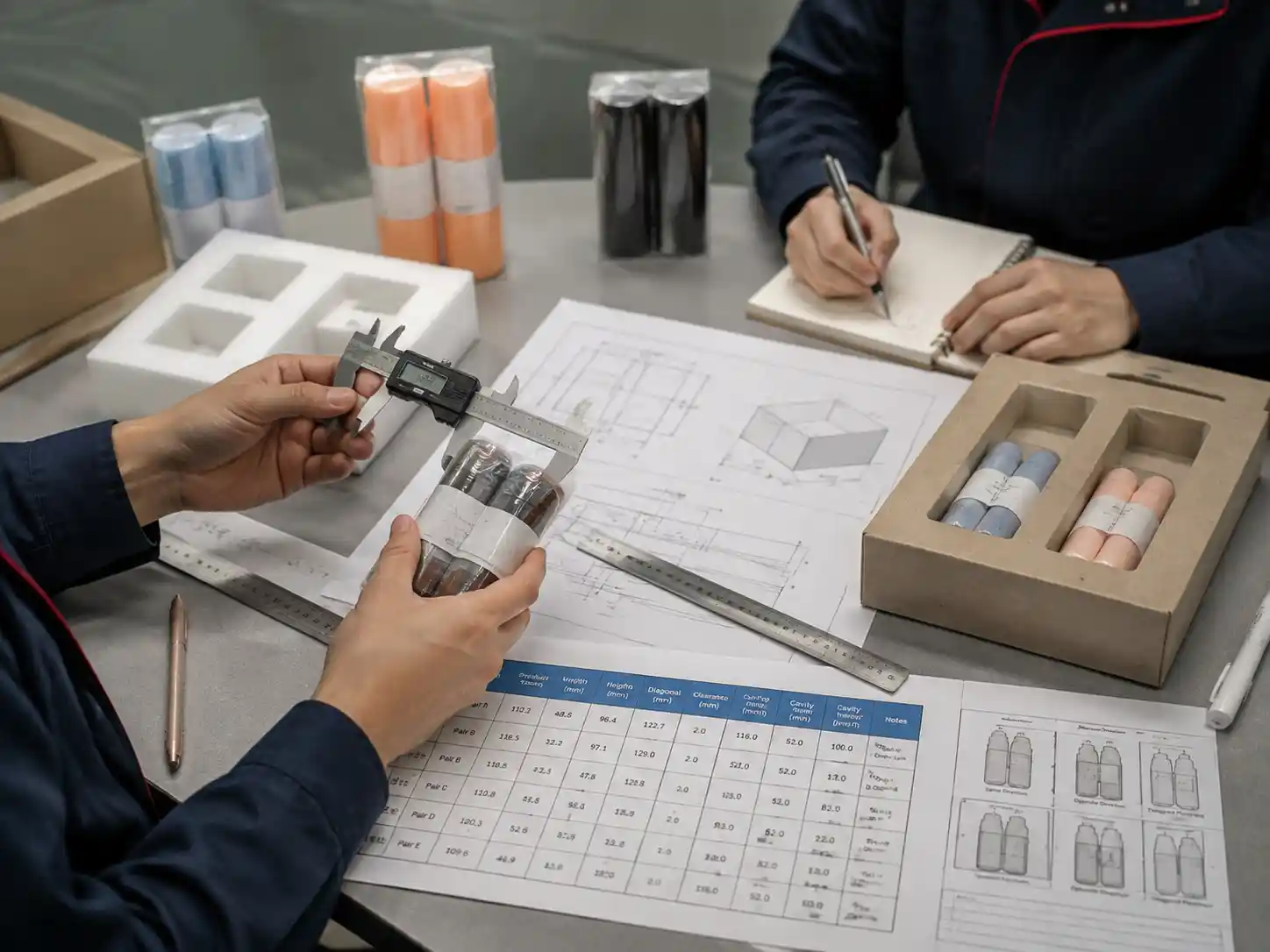
Why Should Bundled Products Be Measured as One Assembly?
Bundled products should be measured as one assembly because the insert cavity must hold the complete set in its final selling configuration. Individual product dimensions do not show how items contact each other, shift during handling, or affect the available compartment space.
For example, a bottle paired with a small accessory, a cosmetic tube with an applicator, or two items packed together with a sleeve may require different cavity dimensions than either item alone. The measurement reference should be the actual bundled condition, including any protective packaging that remains inside the compartment.
What Dimensions Are Required for Bundled Product Compartment Measurement?
The required dimensions depend on the product combination, but the key measurements are the total external size of the bundle, contact points between products, and clearance needed for insertion and removal.
| Measurement Item | Purpose | Verification Method |
|---|---|---|
| Overall length, width, and height | Defines the minimum cavity envelope | Digital caliper, ruler, or 3D measurement data |
| Combined footprint | Shows the space occupied when products sit together | Physical bundled sample positioning |
| Product contact areas | Identifies pressure points and movement risks | Sample inspection and cavity review |
| Loaded weight | Confirms insert support requirements | Scale measurement of the complete bundle |
How Do You Measure a Product Pair Before Designing the Insert?
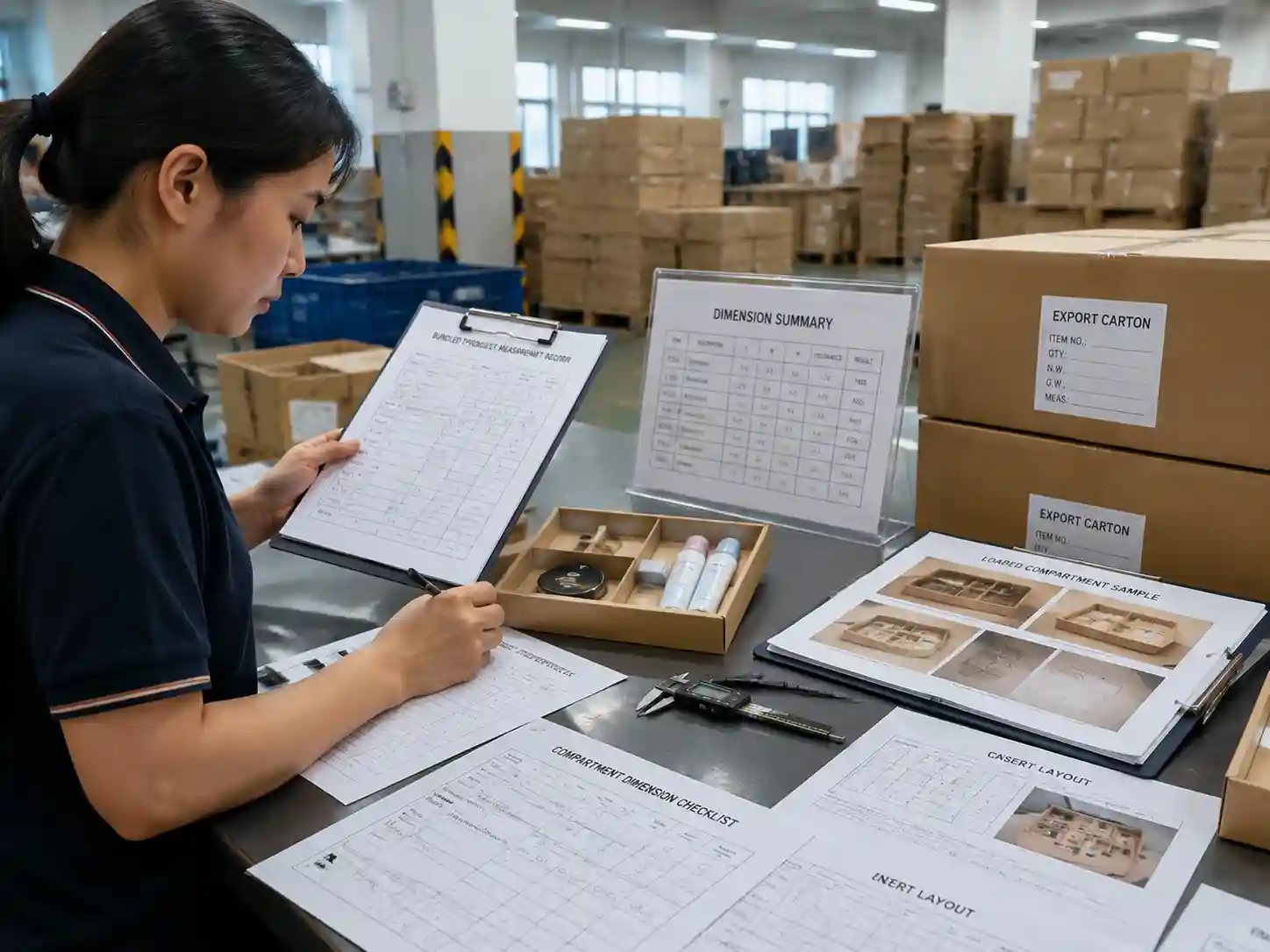
The first step is to create a measurement record for the actual product pair before any cavity layout is finalized. The measurement should follow the same orientation expected in the finished package.
- Assemble the product pair: Place the products together exactly as they will appear inside the compartment.
- Record the maximum outer dimensions: Measure the widest, tallest, and longest points of the combined unit.
- Check irregular areas: Identify handles, caps, pumps, protrusions, curved surfaces, or uneven contact zones.
- Confirm orientation: Document whether products are vertical, horizontal, angled, or nested together.
- Create a cavity reference: Use the measured bundle dimensions as the basis for insert development.
Measurement drawings, product photos, and sample records should be kept together so structural designers and suppliers are working from the same reference.
How Much Clearance Should Be Added Around Bundled Products?
The required clearance depends on product shape, insert material, production tolerance, and the expected loading process. There is no single clearance value suitable for every bundled product combination.
Project-dependent recommendations usually consider:
- Product movement: Loose bundles may need more retention control than fixed pairs.
- Surface protection: Fragile finishes or glass surfaces may require additional separation.
- Insert material behavior: Paperboard, molded pulp, foam, and plastic inserts respond differently under pressure.
- Assembly method: Manual placement and automated loading may require different cavity allowances.
The final clearance decision should be confirmed through sample loading rather than calculated from dimensions alone.
How Do You Validate a Bundled Product Cavity With Samples?
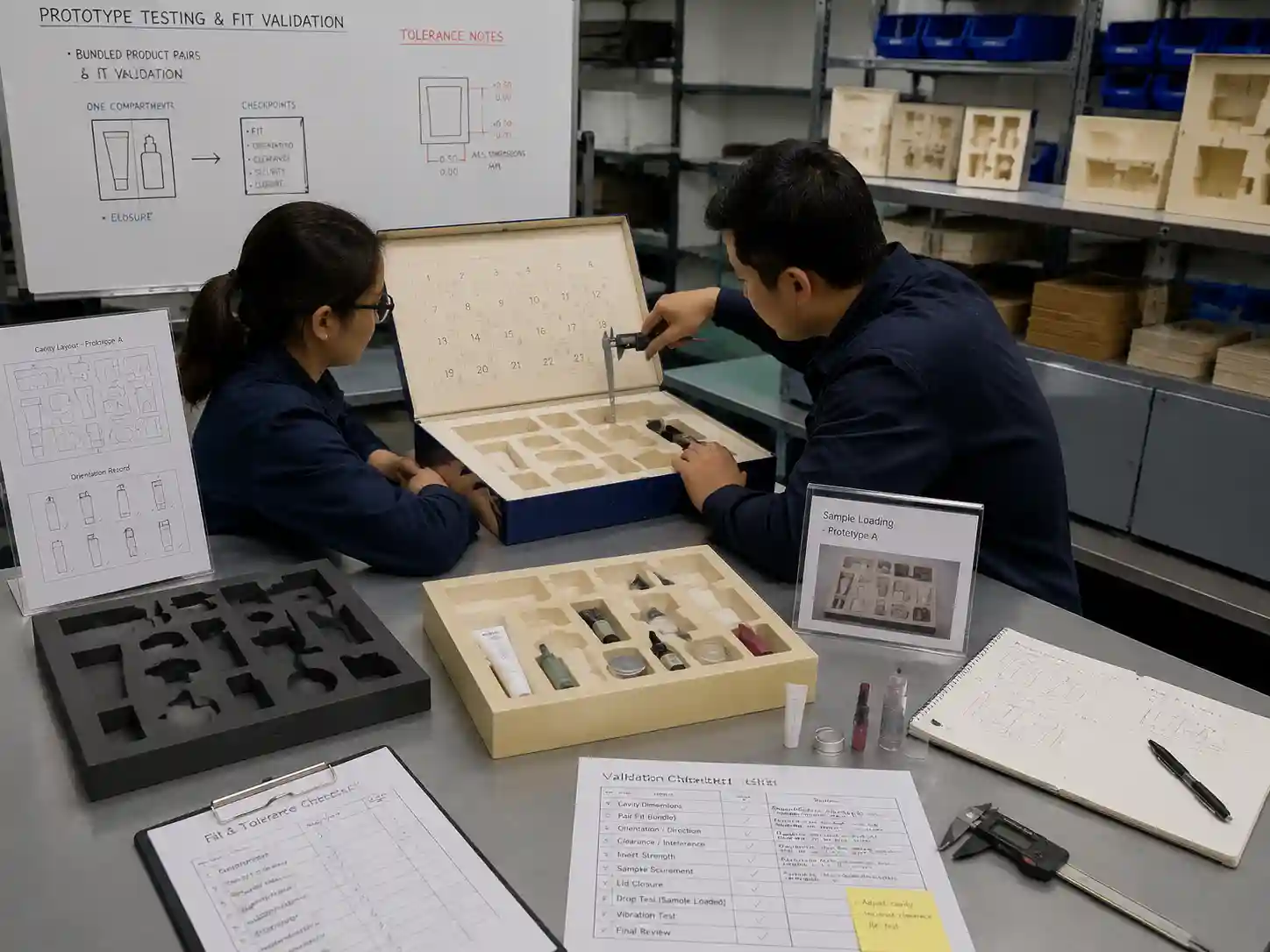
A physical validation sample is the most reliable way to confirm whether a shared compartment works correctly. The sample should represent the final product condition, not only empty insert measurements.
- Load the complete product bundle into the cavity.
- Check whether products enter without excessive force.
- Confirm that items do not shift, rotate, or collide.
- Close the calendar structure and inspect compression points.
- Record any dimensional adjustments before production approval.
A loaded sample checklist can include:
| Check Point | Approval Question |
|---|---|
| Bundle fit | Does the complete pair sit inside the cavity correctly? |
| Clearance | Is there enough space without unwanted movement? |
| Orientation | Are products positioned consistently? |
| Weight support | Does the insert hold the loaded bundle securely? |
| Closing test | Does the outer structure close without pressure marks? |
What Evidence Should Buyers Keep for Approval?
Approval records should show how the compartment decision was made and what reference was used. Useful evidence includes dimension drawings, marked sample photos, cavity layouts, measurement sheets, and signed approval records.
Verifiable project records help prevent disputes when product dimensions change between early samples and final production units. They also allow packaging engineers, sampling teams, and suppliers to confirm whether changes require a cavity adjustment.
What Risks Occur When Bundled Products Are Measured Separately?
Measuring each product separately can create inaccurate cavity assumptions because the final bundle behaves as one packaging unit.
- The combined width may exceed the sum of individual assumptions.
- Products may create pressure points when placed together.
- Accessories may shift into unused cavity areas.
- The loaded weight may exceed insert support expectations.
These risks can be reduced by using the final bundled sample as the primary measurement reference and validating the cavity before bulk production.
How Does Giftpackpro Support Bundled Product Measurement Decisions?
Giftpackpro works with packaging specifications, product references, insert structures, and sample validation information to support custom advent calendar box development. Buyers can also review custom advent calendar box services and custom advent calendar box products when planning compartment structures.
Frequently Asked Questions About Bundled Product Measurement
Can two products with different shapes share one compartment?
Yes. The compartment can be designed for different shapes when the combined dimensions, orientation, contact areas, and retention requirements are properly recorded.
Should protective sleeves or bags be included during measurement?
Yes, if those components remain with the product inside the compartment. The cavity should match the final packed condition.
Is a drawing enough to approve the compartment size?
A drawing is useful for design review, but a loaded physical sample provides stronger confirmation because it shows actual fit, movement, and pressure conditions.
Final Checklist Before Approving a Bundled Product Compartment
- Measure the complete product bundle, not only individual items.
- Record orientation and contact points.
- Confirm clearance based on the project requirements.
- Validate using loaded samples.
- Keep measurement records and approval documents.
For custom compartment planning, buyers can request a custom quote with product dimensions, bundled samples, and packaging requirements for more accurate development.