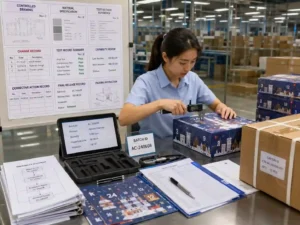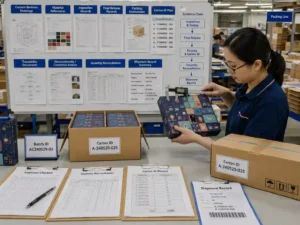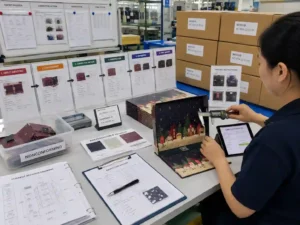
Quick answer: Product removal accessibility testing confirms that products can be removed from an advent calendar compartment without tearing the box, crushing the insert, damaging the product, or requiring excessive force. The process combines dimensional measurement, prototype evaluation, finger access verification, loaded sample testing, and documented inspection records. Rather than relying only on CAD dimensions, engineers validate removal performance using actual product samples before approving production.
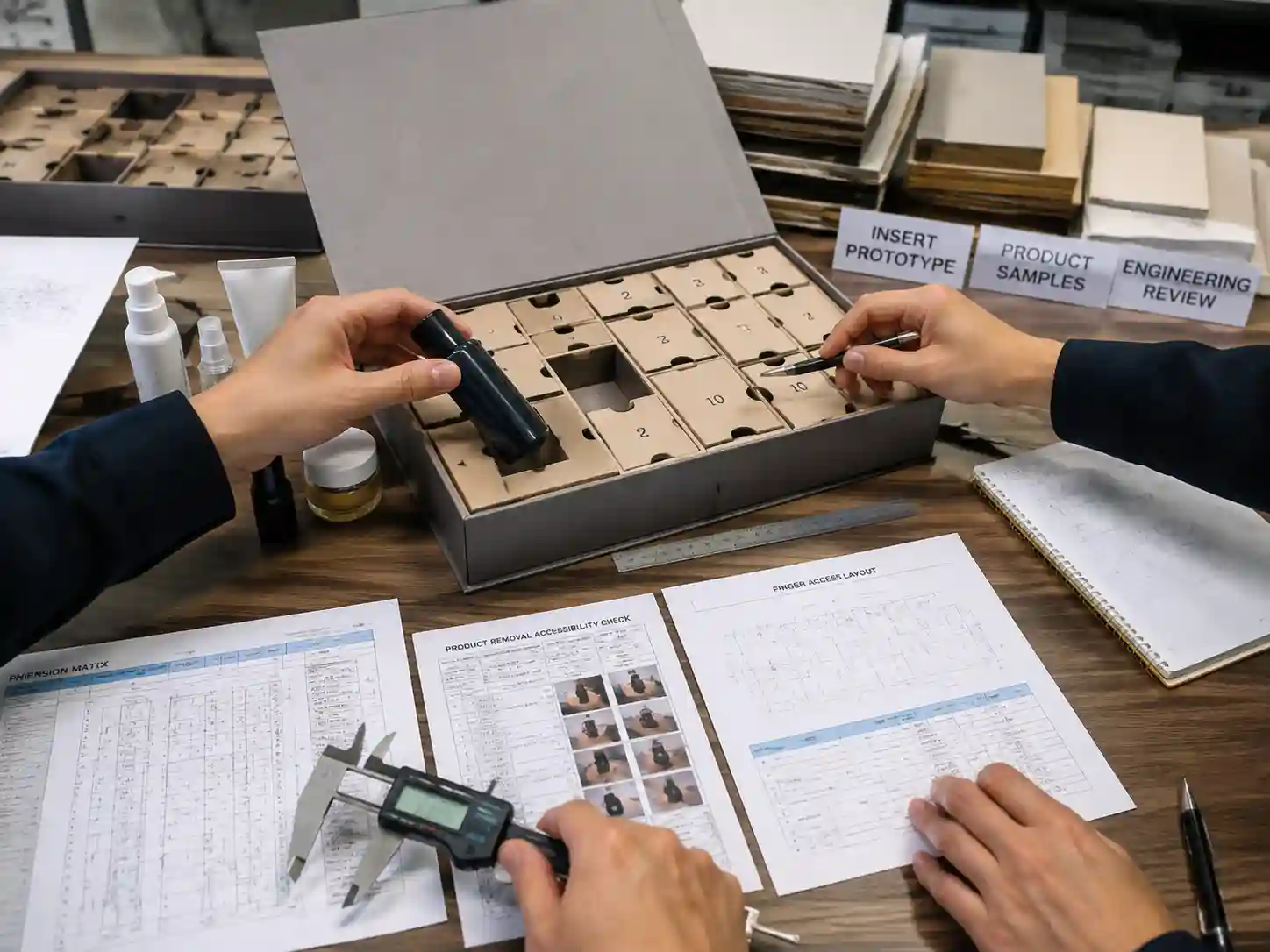
Why is product removal accessibility testing important?
Product removal accessibility testing evaluates whether a finished package performs as intended during normal use. A compartment that securely holds a product during shipping may still fail if users cannot remove the item without bending paperboard, tearing inserts, or deforming adjacent compartments.
The objective is to balance product retention with practical accessibility while maintaining structural integrity throughout the package.
For advent calendar projects, this evaluation should be completed before production tooling is finalized because accessibility is influenced by cavity dimensions, insert material, product orientation, and clearance.
What should be measured before accessibility testing begins?
Accurate testing starts with verified product dimensions instead of nominal catalogue specifications. Engineers measure the actual production samples that will be packed into the insert.
Key dimensions to verify
- Maximum product width, length, and height
- Protruding caps, pumps, handles, or closures
- Protective sleeves, bags, labels, or shrink wrap
- Product weight
- Preferred loading orientation
- Finger access opening dimensions
- Insert wall thickness and material recovery
These measurements become part of the approved engineering drawing used during prototype evaluation.
How is product removal accessibility testing performed?
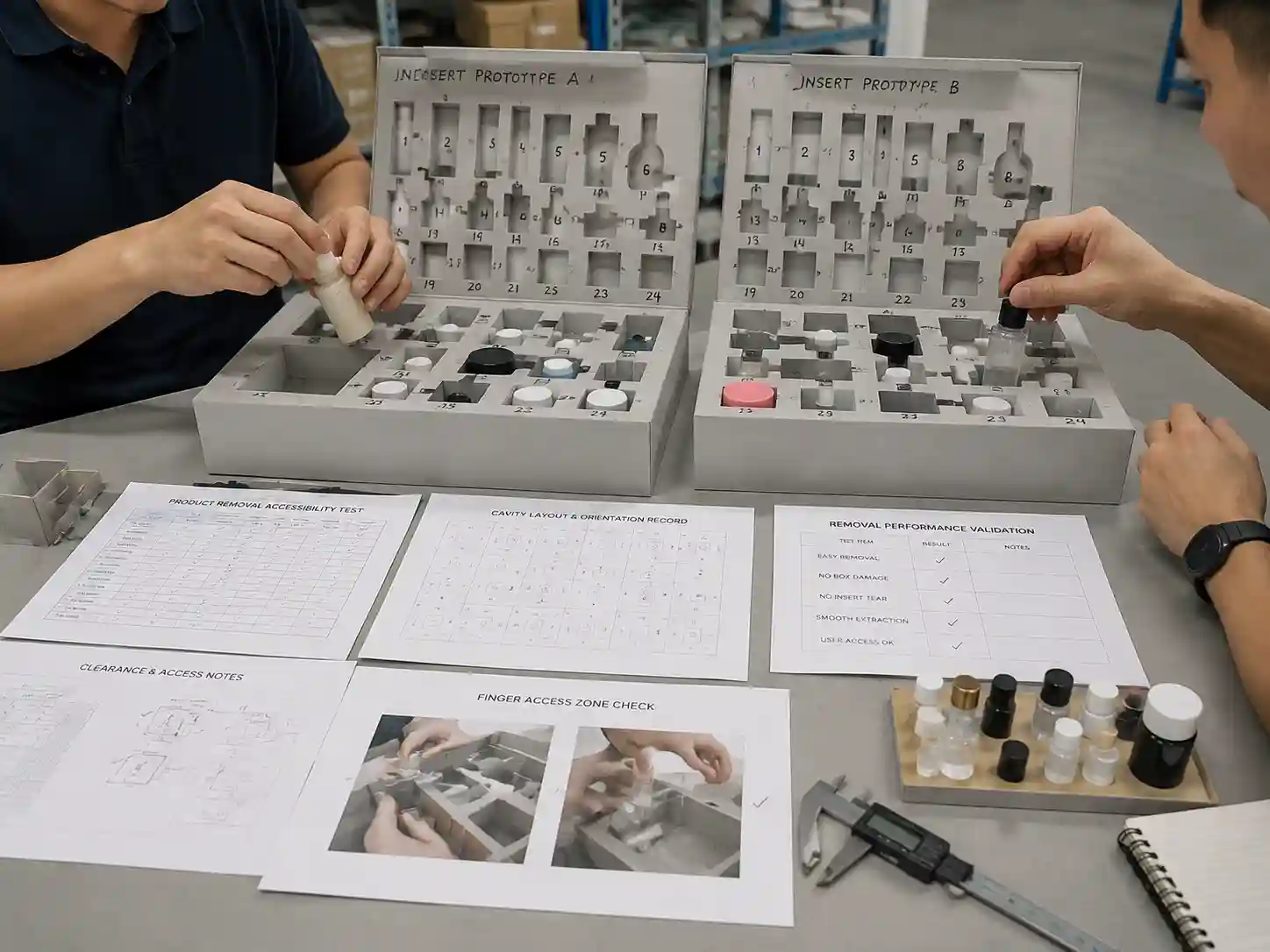
The most reliable method combines dimensional review with repeated physical testing on loaded prototypes.
- Measure the finished product and verify orientation.
- Load products into prototype inserts.
- Remove products using normal hand movements.
- Repeat removal multiple times from every compartment.
- Inspect inserts, printed surfaces, and structural panels after testing.
- Document observations and adjust the design if necessary.
Testing should represent realistic handling rather than unusually careful or excessive force.
Which conditions should engineers evaluate during removal?
Successful removal depends on more than cavity dimensions. Several interacting factors influence accessibility.
| Evaluation Item | Verification Method | Purpose |
|---|---|---|
| Finger access opening | Measure opening and perform physical removal | Confirm adequate grip area |
| Cavity clearance | Compare measured product against cavity dimensions | Avoid excessive friction |
| Product orientation | Verify loading matches approved drawing | Prevent interference during removal |
| Insert deformation | Inspect after repeated removals | Identify permanent damage |
| Adjacent compartments | Observe surrounding products | Ensure neighboring cavities remain stable |
| Printed surfaces | Visual inspection | Detect scuffing or tearing |
How much removal force is acceptable?
The appropriate removal force depends on the product, insert material, shipping conditions, and packaging objectives.
Rather than relying on subjective opinions, engineering teams compare multiple loaded samples and record whether removal requires smooth, controlled motion without excessive pulling, twisting, or deformation.
If significant force is needed, engineers should determine whether the cause is insufficient clearance, incorrect orientation, or inadequate finger access instead of enlarging every compartment unnecessarily.
What evidence should support engineering approval?
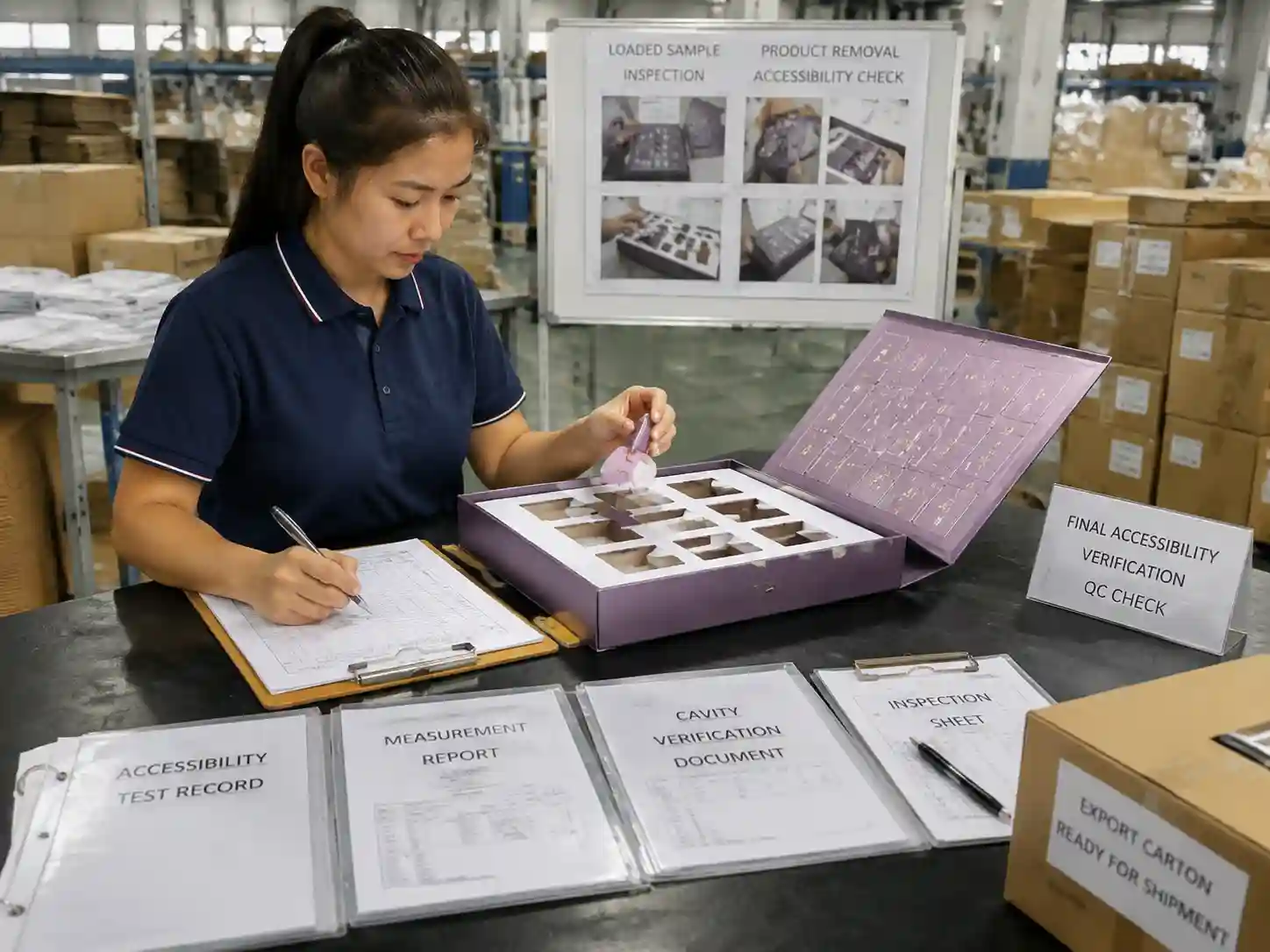
Accessibility decisions should be supported by documented evidence rather than verbal confirmation.
Typical engineering records include:
- Approved dimension drawings
- Measured product data
- Insert cavity dimensions
- Prototype photographs
- Loaded sample inspection records
- Removal observations
- Revision history after design changes
- Final approval documentation
Maintaining these records allows future production to follow the same validated design.
Loaded sample accessibility checklist
- ✓ Product dimensions match approved samples
- ✓ Orientation follows engineering drawing
- ✓ Finger opening allows comfortable grip
- ✓ Product removes without excessive force
- ✓ Insert walls remain intact
- ✓ Printed board shows no tearing
- ✓ Adjacent products remain properly seated
- ✓ Product returns smoothly during repeat testing if required
- ✓ Inspection results documented
- ✓ Buyer approval recorded before production release
Which findings are objective and which require buyer approval?
Separating measurable engineering results from customer preferences helps prevent misunderstandings during sampling.
Verifiable engineering facts
- Measured product dimensions
- Measured cavity dimensions
- Finger opening dimensions
- Insert material thickness
- Visible damage after testing
- Photographic inspection records
Project-dependent recommendations
- Preferred amount of removal resistance
- Acceptable clearance around products
- Finger opening geometry
- Insert material selection
- Compartment retention priorities
Buyer approvals
- Approved loaded prototype
- Final removal experience
- Product orientation
- Accepted design revisions
- Production release documentation
What problems commonly appear during accessibility testing?
Most accessibility issues originate from small dimensional differences rather than major design errors.
- Protective packaging increases product size.
- Products vary slightly between approved samples and production.
- Finger openings are too narrow for comfortable access.
- Products rotate during loading.
- Insert material flexes differently after assembly.
- Adjacent compartments restrict finger movement.
These issues are usually identified during loaded prototype validation instead of after mass production.
FAQs
Should accessibility testing use production samples?
Whenever possible, yes. Production-intent samples provide the most accurate representation of finished dimensions, packaging accessories, and weight.
Can CAD drawings replace physical removal testing?
No. CAD models verify geometry, but physical testing confirms grip comfort, friction, insert behavior, and actual removal performance.
Should every compartment be tested?
Yes. Compartments with different product sizes, orientations, or insert geometries should each be evaluated because accessibility may vary across the calendar.
Conclusion
Effective product removal accessibility testing combines accurate measurement, physical prototypes, repeat removal trials, documented inspections, and formal approvals. Verifying accessibility before production helps reduce damaged inserts, protects printed surfaces, improves user experience, and ensures that the approved design can be manufactured consistently.
To learn more about engineering support for custom seasonal packaging, explore our custom advent calendar box products, review our custom advent calendar box services, browse additional advent calendar box buying guides, or request a custom quote for your project.