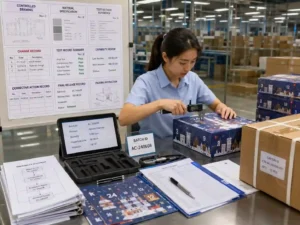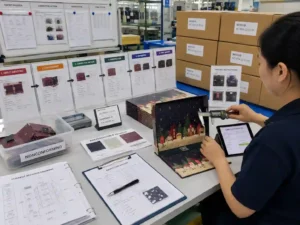
Quick answer: Cartons should be oriented on a pallet according to their load-bearing strength, product protection requirements, pallet footprint, and transport conditions. The correct master carton pallet orientation keeps carton walls supported, reduces empty space, improves stacking stability, and lowers the risk of crushing, shifting, or damage during handling. For custom advent calendar boxes, the final orientation should be confirmed through carton measurements, pallet layout drawings, sample loading checks, and shipment requirements.
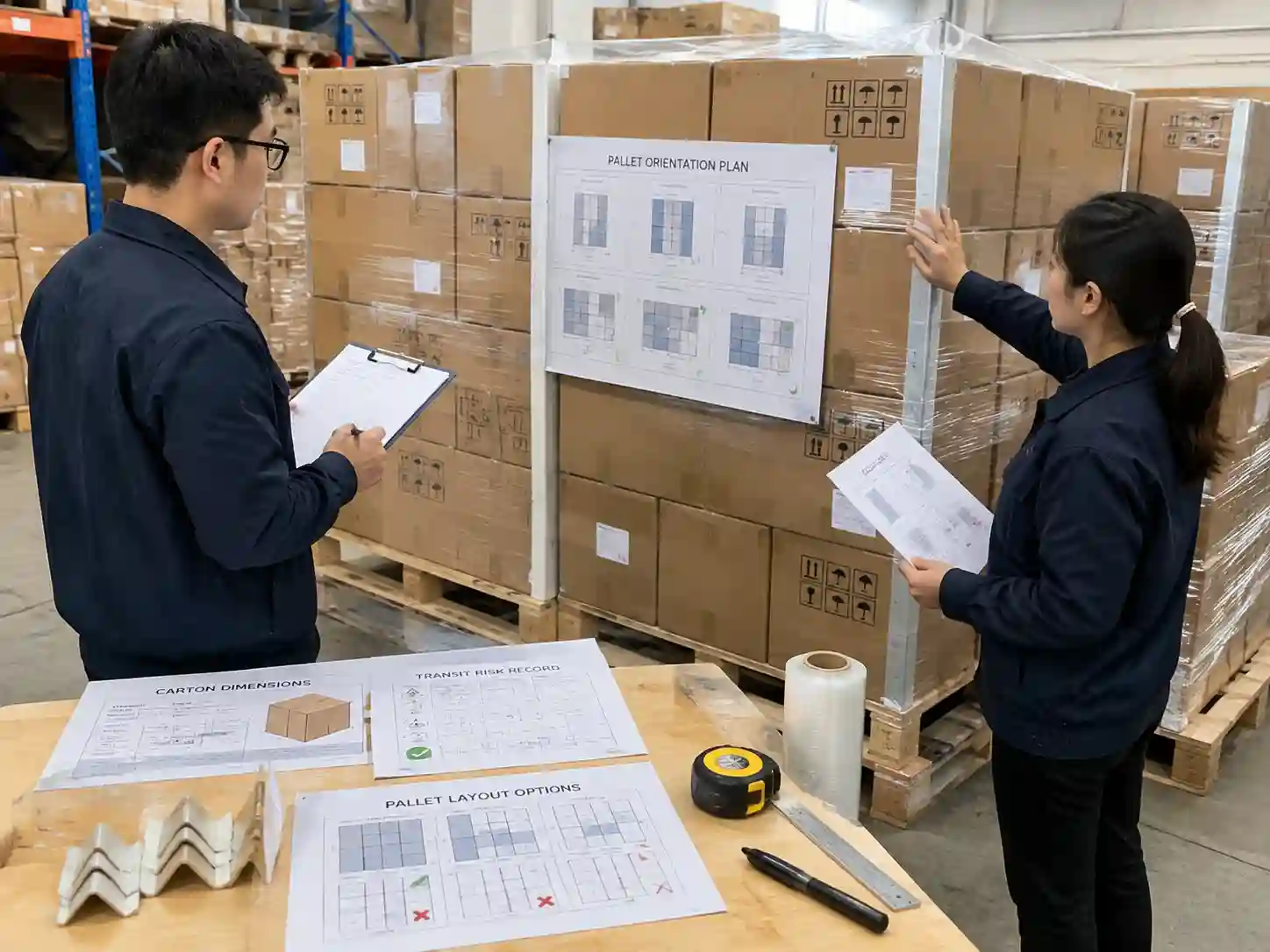
Why does master carton pallet orientation matter?
Master carton pallet orientation determines how loads transfer through the pallet during storage and transportation. A carton arrangement that looks efficient in a warehouse may create problems if lower cartons carry excessive compression, unsupported edges, or uneven weight.
For seasonal paper gift packaging such as custom advent calendar boxes, orientation decisions usually affect:
- Vertical compression resistance of lower carton layers.
- Protection of printed surfaces, drawers, doors, and decorative components.
- Pallet stability during forklift movement, vibration, and long-distance transport.
- Carton count per layer and overall shipping efficiency.
- Ease of destination handling and assembly preparation.
How should cartons be positioned on a pallet?
The correct pallet position depends on the carton design, but several practical rules are commonly applied. Cartons should normally be arranged so their strongest structural areas support the stacking load while avoiding unsupported spans or concentrated pressure points.
Keep carton edges aligned with the pallet footprint
Cartons should generally stay within the pallet footprint and maintain consistent edge alignment. Overhang can expose carton corners to impact, while excessive gaps can allow movement during vibration.
Use stable stacking patterns instead of simply maximizing quantity
A higher carton count is not always the best solution. A stable pallet pattern balances space utilization with compression strength and handling safety.
| Carton arrangement factor | Preferred approach | Risk if ignored |
|---|---|---|
| Carton edge support | Align carton walls and corners where possible | Lower layers may deform under compression |
| Void space | Control unnecessary gaps between cartons | Cartons may shift during transport vibration |
| Stack height | Match carton strength and handling limits | Increased crushing or pallet instability |
| Product orientation | Follow approved carton loading direction | Internal components may receive unwanted stress |
What factors determine the correct carton orientation?
The final orientation should be selected using project-specific information rather than a single universal pallet pattern.
Master carton construction
Carton board grade, flute structure, carton dimensions, closure method, and internal support influence how much vertical load a carton can carry. A tall narrow carton may behave differently from a shorter wide carton even when the weight is similar.
Product structure inside the carton
Advent calendar boxes often contain rigid structures, drawers, paperboard components, or decorative surfaces that require controlled positioning. The carton orientation should prevent internal movement and reduce pressure on sensitive areas.
Transport environment
Export shipments may experience repeated handling, vibration, stacking in containers, humidity changes, and temperature variation. Pallet orientation should consider the complete transportation route rather than only warehouse storage.
How do packaging teams verify pallet orientation before shipment?
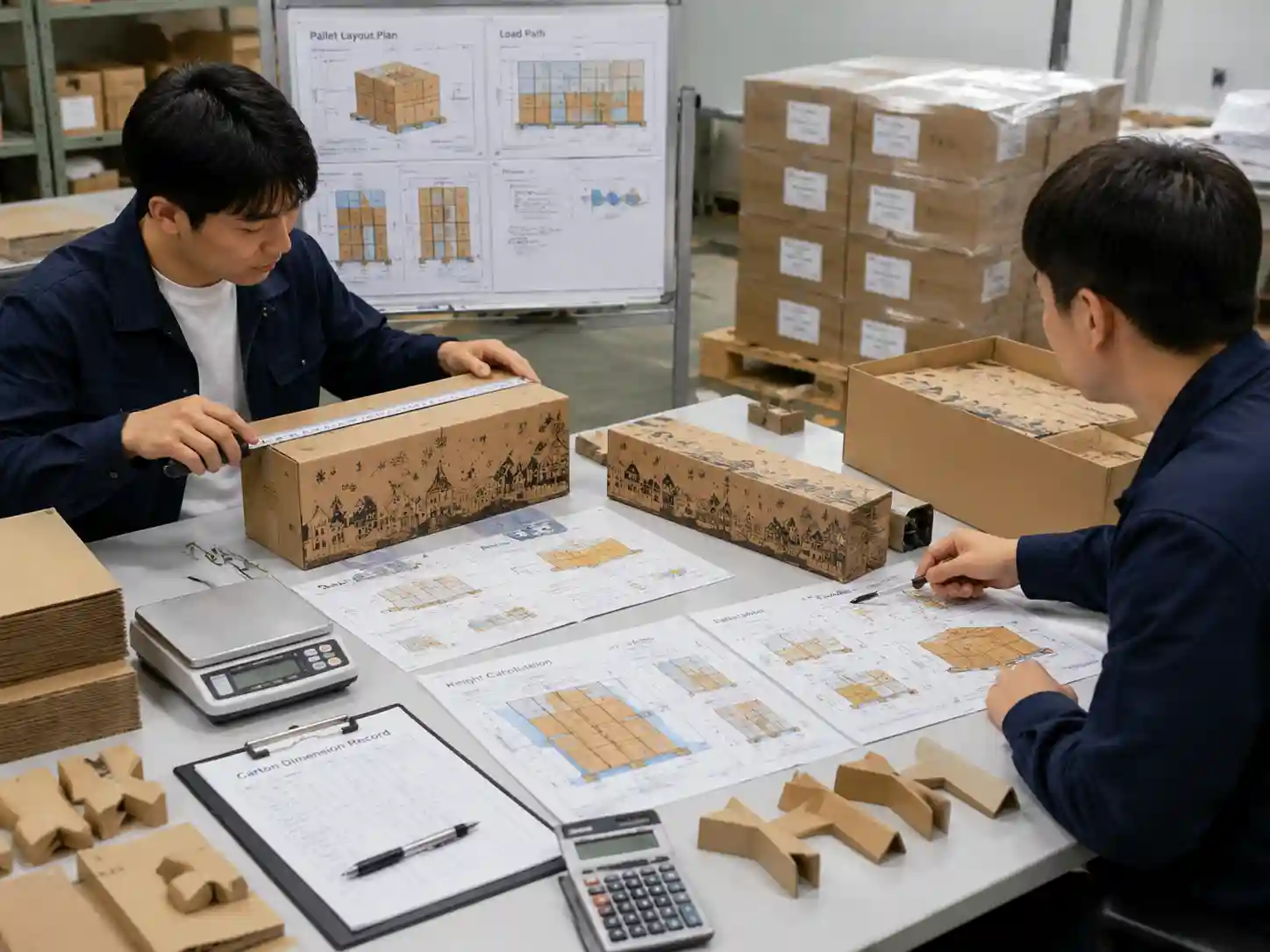
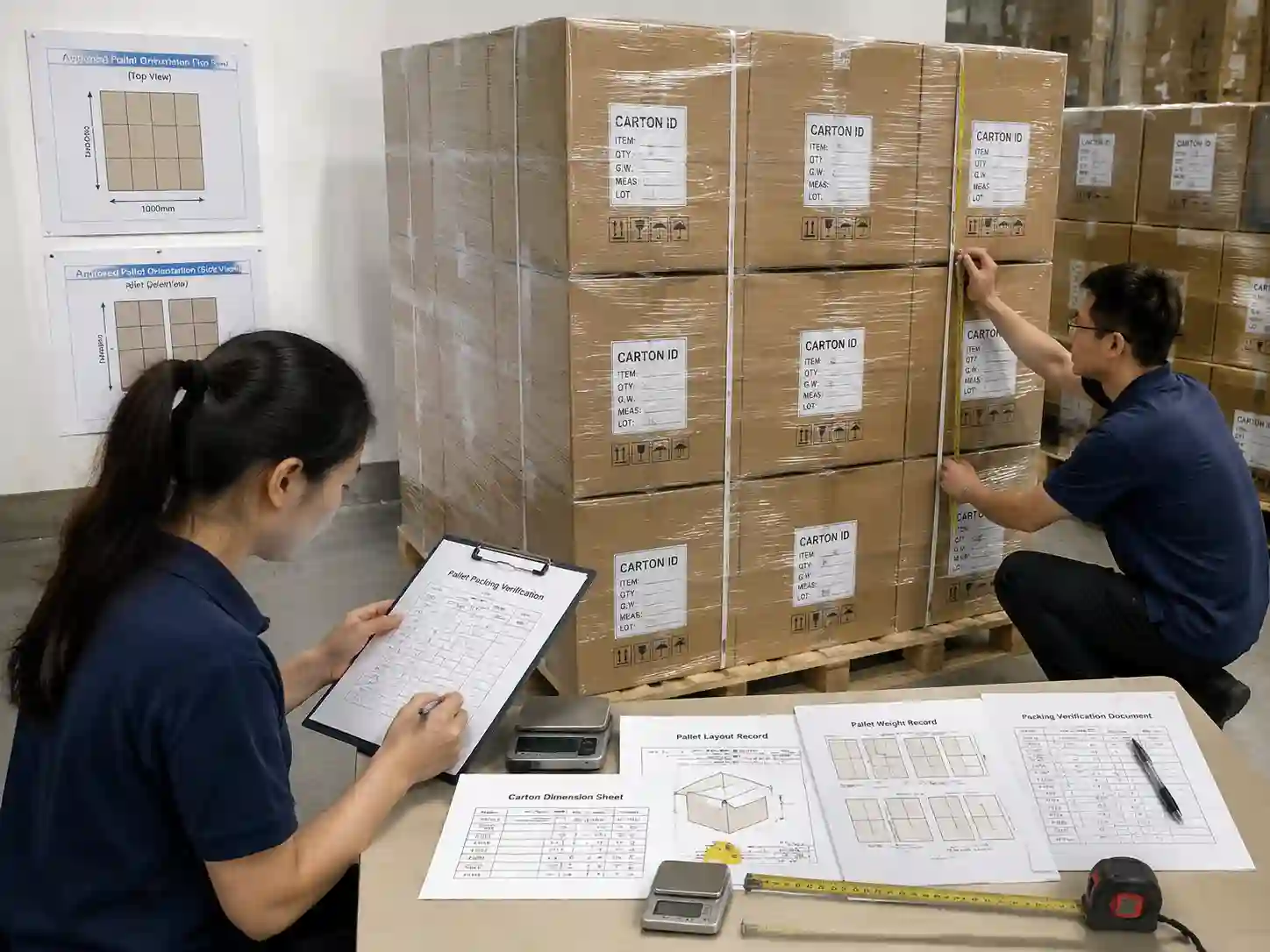
Approved pallet orientation should be supported by physical checks and documented records. A reliable verification process normally compares the planned pallet pattern with the actual production packing result.
- Review carton dimensions, gross weight, and product loading direction.
- Create or approve a pallet layout drawing showing carton positions and layer arrangement.
- Load representative cartons according to the planned orientation.
- Check carton alignment, void spaces, pallet overhang, and stacking stability.
- Record the approved configuration for production packing reference.
| Verification item | Evidence to review |
|---|---|
| Carton position | Pallet layout drawing and packing photos |
| Dimensions | Measured carton length, width, and height records |
| Weight distribution | Carton weight records and pallet calculations |
| Production consistency | Packing inspection records and approved references |
What pallet orientation risks should buyers review?
Buyers should focus on risks that appear after handling and transport rather than only reviewing the pallet appearance at the factory.
Lower-layer carton crushing
If upper carton weight is transferred onto weak areas instead of supported carton walls, lower layers may compress. Signs include bowed carton panels, collapsed corners, or reduced internal protection.
Carton movement caused by excessive voids
Large gaps between cartons can allow shifting during vibration. Movement can damage printed surfaces, corner areas, or internal components.
Humidity-related weakening
Paper-based cartons can lose strength when exposed to moisture. Shipping routes, container conditions, and protective measures should be considered when approving pallet stacking height and orientation.
What should be included in a pre-shipment pallet orientation check?
- Approved carton dimensions and loading direction.
- Confirmed pallet footprint and carton placement.
- Check of carton alignment and unsupported gaps.
- Verification of stretch wrap, corner protection, and stability aids where required.
- Comparison between approved pallet plan and actual packed pallets.
- Recorded inspection results for shipment approval.
How does carton orientation affect destination assembly?
Pallet orientation can influence how efficiently cartons are unloaded, stored, and transferred at the destination. For products requiring retail preparation or final assembly, consistent carton labeling and predictable carton positions can reduce handling errors.
Shipping marks, carton identification, and loading records should match the approved packing configuration so receiving teams can identify cartons correctly.
Frequently asked questions
Should heavier cartons always be placed at the bottom of a pallet?
Usually, heavier cartons require lower placement, but the decision also depends on carton strength, product sensitivity, and the approved stacking pattern. Weight alone does not determine the safest orientation.
Can the same pallet orientation be used for every advent calendar carton?
No. Carton dimensions, internal structure, weight distribution, and transport conditions can require different pallet patterns. Each configuration should be reviewed before production packing.
How can buyers confirm that a supplier follows the approved pallet pattern?
Buyers can request pallet layout records, packing photos, carton measurements, and inspection records that compare production pallets with the approved configuration.
Related Giftpackpro resources
For projects requiring engineered carton solutions, explore custom advent calendar box services and review available custom advent calendar box products. Buyers can also use the advent calendar box buying guides for related packaging decisions.
Need a packaging configuration review for your custom calendar project? request a custom quote and discuss your carton, pallet, and export packing requirements.