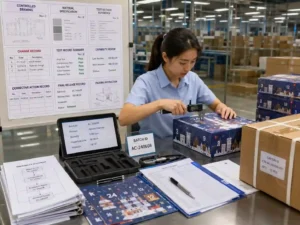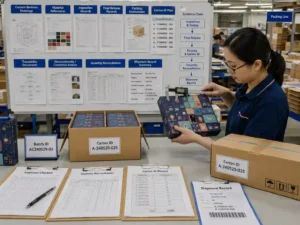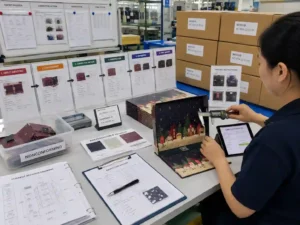
A corporate gift calendar with mixed items is designed by first mapping each product’s packaging boundaries, size, weight, odor risk, and movement behavior before creating compartments. A successful corporate gift mixed item calendar balances presentation with protection by separating incompatible products, controlling empty space, and verifying fit through drawings, samples, measurements, and inspection records.
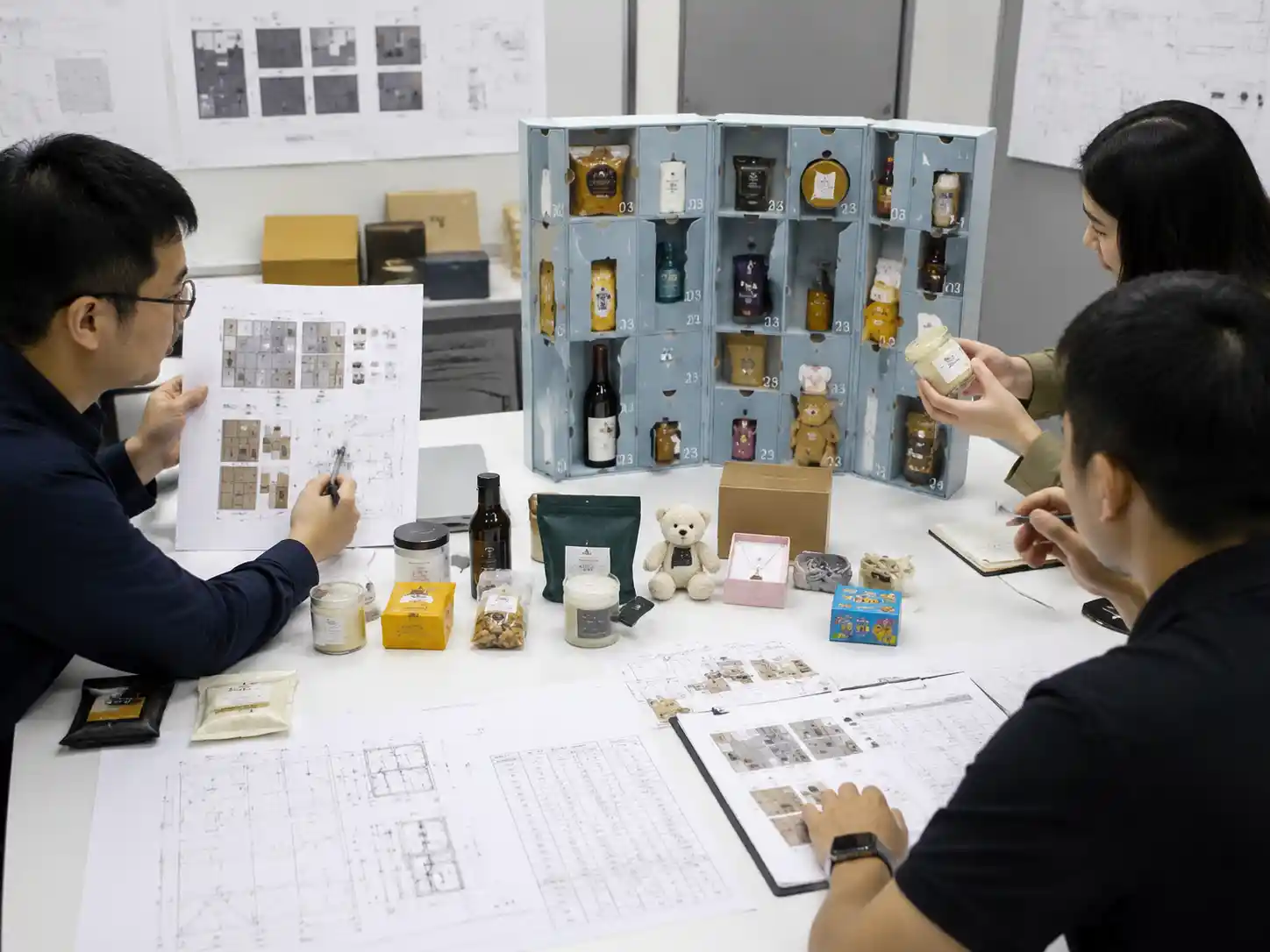
How Do You Plan a Corporate Gift Calendar With Mixed Branded Items?
The first step is to create a product matrix that defines how every item will be placed, protected, and accessed. Mixed corporate gifts often combine different product shapes and packaging types, so the calendar structure should be developed around actual product dimensions rather than a standard compartment layout.
Packaging teams typically review:
- Product dimensions including height, diameter, thickness, and irregular shapes.
- Primary packaging boundaries such as sealed pouches, bottles, jars, boxes, or wrapped items.
- Weight differences between lightweight accessories and heavier gift items.
- Potential interaction risks such as odor transfer, scratching, crushing, or tangling.
What Product Risks Should Be Checked Before Designing Compartments?
Each product category creates different packaging requirements. The compartment design should prevent contact between items while maintaining efficient use of internal space.
| Product type | Main packaging risk | Compartment consideration |
|---|---|---|
| Confectionery and snacks | Odor transfer, crushing, wrapper damage | Maintain clearance around sealed primary packs and avoid compression points. |
| Tea, coffee, and beverage items | Pouch deformation, leakage concerns, weight imbalance | Control cavity depth and support heavier items during handling. |
| Candle jars and mini bottles | Weight concentration, glass contact | Use stronger separation areas and prevent direct impact between items. |
| Jewelry, stationery, and small accessories | Tangling, movement, surface scratches | Create retention features that keep small components positioned. |
| Toys and mixed promotional items | Shape variation and loose movement | Adjust cavity dimensions for different forms and avoid excessive empty space. |
How Do You Design Compartments for Mixed Corporate Gift Items?
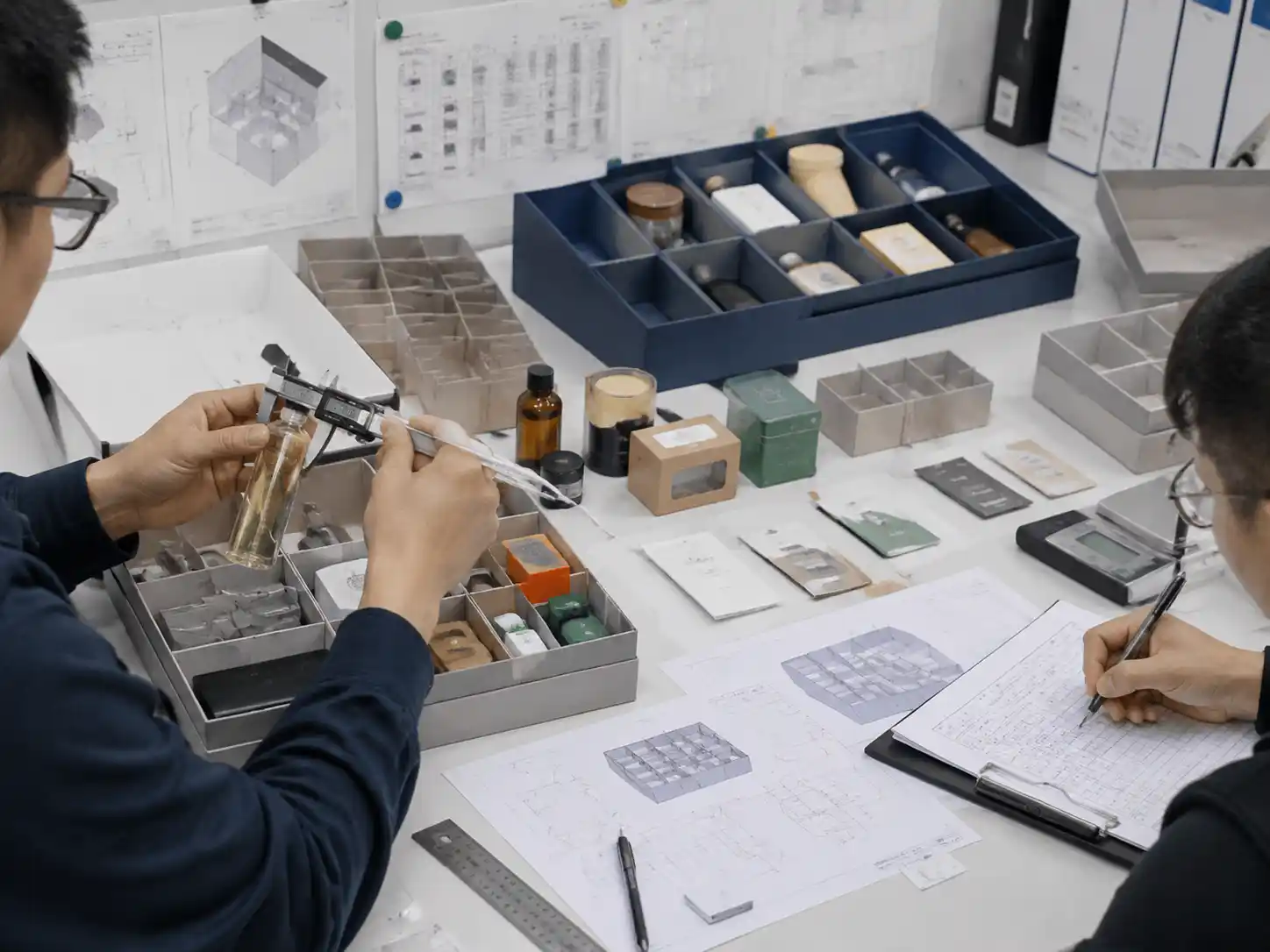
Compartment design starts with structural drawings and product measurements. Engineers normally review cavity length, width, depth, opening method, and the amount of retention needed for each item.
A practical design process includes:
- Create a product placement map showing every daily position or compartment.
- Measure each item with physical samples instead of relying only on supplier specifications.
- Define separation distances between products with different risks.
- Review insertion and removal performance to avoid tight fits or loose movement.
- Confirm that doors, drawers, or openings operate correctly after loading.
For example, a calendar containing a candle jar, tea sachets, stationery items, and small accessories may require different cavity depths and support levels. Heavy items may need stronger internal support, while delicate or flexible products may need movement control.
How Do You Verify Fit Before Mass Production?
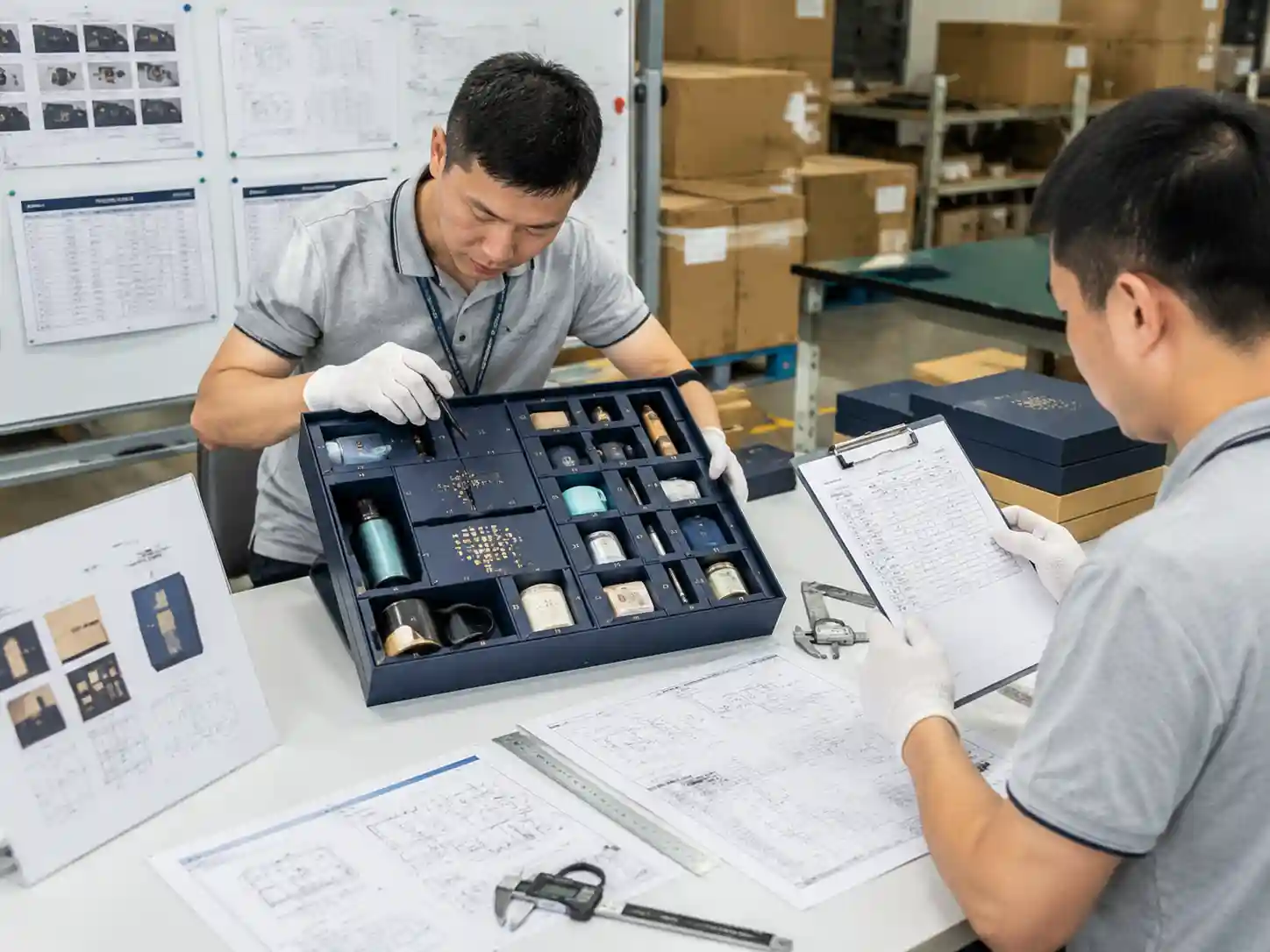
Fit verification should be completed with physical samples, measurement records, and approval documentation. A compartment that looks suitable in a drawing may behave differently when products are actually inserted.
Common verification evidence includes:
- Loaded prototype samples showing the final product arrangement.
- Dimension checks using rulers, calipers, or measurement tools.
- Structural drawings showing cavity positions and separation areas.
- Product placement records identifying approved orientations.
- Approval notes confirming accepted changes.
What Checks Help Prevent Movement, Bulging, and Damage?
The packaging structure should control movement without creating excessive pressure. The correct balance depends on product shape, primary packaging strength, and transportation conditions.
How Can You Prevent Bulging?
Bulging usually occurs when compartments are too shallow, products are oversized, or internal materials compress the contents. Engineers can verify this by loading the full product set and checking panel alignment, door closure, and surface appearance.
How Can You Prevent Tangling and Loose Components?
Small items such as jewelry pieces, clips, or accessory sets may require dedicated positioning features. The design should limit movement while allowing easy removal without pulling connected components together.
How Can You Manage Odor and Material Separation?
Odor-sensitive products should remain within their own primary packaging boundaries. Paper compartments help organize products, but the final protection level depends on the product’s sealed packaging and material compatibility.
What Should Buyers Approve Before Finalizing a Mixed Item Calendar?
Buyers should approve the complete loaded configuration rather than reviewing the empty calendar structure alone. The approval process should confirm both appearance and functional performance.
- Final product placement and orientation.
- Compartment fit and product retention.
- Surface condition after loading.
- Movement control during handling.
- Documentation matching the approved structure.
Giftpackpro develops custom seasonal paper packaging solutions including custom advent calendar box products and supports project discussions through custom advent calendar box services. The exact structure varies depending on the product mix, primary packaging, and required presentation format.
FAQ: Can One Calendar Structure Fit Different Corporate Gift Products?
Usually not without adjustment. Different product sizes, weights, and protection requirements often require revised compartment dimensions or internal support features.
FAQ: Should Products Be Measured Before Packaging Design?
Yes. Physical product measurements help confirm cavity fit, clearance, and loading sequence more accurately than assumptions based only on product descriptions.
FAQ: Does Paper Compartment Packaging Replace Primary Product Packaging?
No. Paper compartments mainly organize, separate, and protect products inside the gift calendar. The primary packaging of each product remains responsible for functions such as sealing and product protection.
For a mixed-item corporate gift calendar project, share your product list, dimensions, and packaging requirements to discuss a suitable structure. request a custom quote for a packaging review.