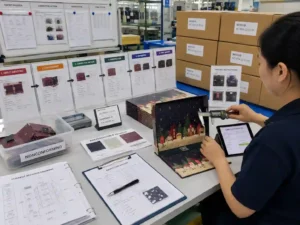
A hardware accessory advent calendar should be designed around the size, weight, shape, and movement risks of small tools or components rather than only the outside appearance. The key is creating compartments that control position, prevent contact damage, separate different items, and work with the original product packaging. A practical design process combines product measurements, structural drawings, fit samples, and inspection records before final production decisions.

How do you plan compartments for a hardware accessory advent calendar?
The first step is to map each accessory by dimensions, weight, shape, and handling requirements. Small hardware items such as bits, fasteners, clips, measuring accessories, or tool attachments may look similar in size but require different cavity designs because their edges, finishes, and movement behavior vary.
Packaging teams normally create a product layout showing the position of each item, including:
- Individual compartment size and clearance.
- Product orientation and removal direction.
- Separation distance between metal parts.
- Protection requirements for coated or polished surfaces.
- Space required for the primary package if the item remains wrapped.
For mixed accessory calendars, the compartment plan should avoid forcing all products into identical spaces. A heavy metal accessory and a lightweight plastic tool part can require different retention methods even when their external dimensions appear close.
What risks should be checked when packaging small hardware items?
Small hardware products create several packaging risks because their weight, edges, and movement can affect both the calendar structure and the product condition. These risks should be reviewed during design and sample approval.
| Risk area | Design consideration | Verification method |
|---|---|---|
| Movement inside compartments | Use suitable cavity depth, dividers, or retention features to reduce shifting. | Loaded sample inspection and movement checks. |
| Surface scratching | Prevent metal-to-metal contact and protect finished surfaces. | Visual inspection after handling simulation. |
| Weight concentration | Balance heavy items to avoid panel stress or deformation. | Loaded structure review and measurement records. |
| Sharp edges or corners | Maintain clearance from doors, drawers, and paper structures. | Physical fit check with production-intent samples. |
| Mixed accessory sizes | Match cavity dimensions to each product category. | Layout approval and sample comparison. |

How do you test compartment fit for small tools and accessories?
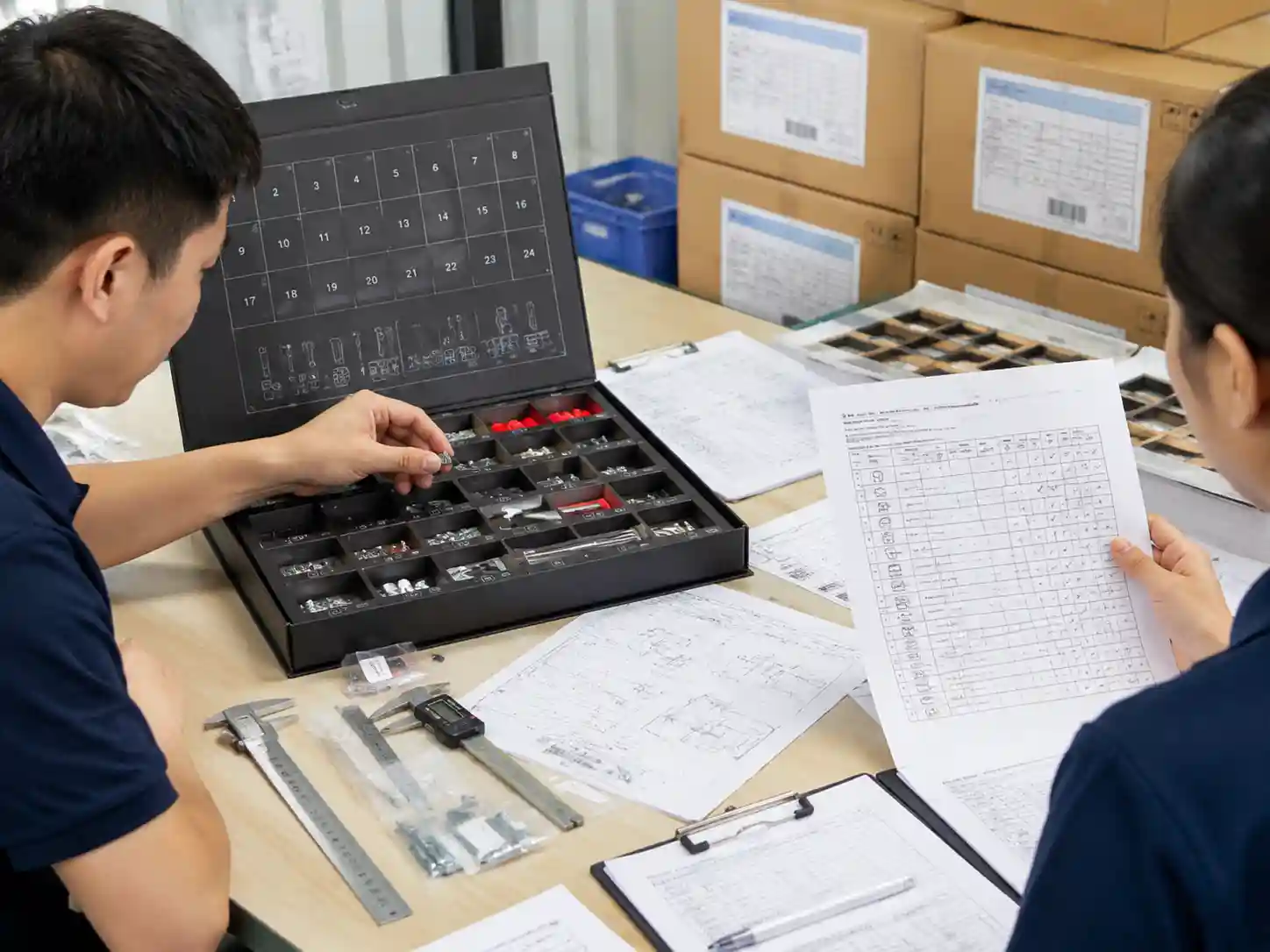
Compartment fit should be confirmed with actual product samples rather than relying only on drawings. Measurements from product samples help identify whether cavities are too tight, too loose, or unsuitable for repeated handling.
A practical fit review usually checks:
- Product insertion and removal without excessive force.
- Clearance around corners, edges, and moving parts.
- Whether accessories can rotate, slide, or collide during transport.
- Whether doors, drawers, or panels close correctly after loading.
- Whether the internal structure supports the expected product weight.
What documents help approve the packaging design?
Approval decisions are easier when packaging teams maintain clear evidence from each review stage. Useful records may include product dimension sheets, cavity drawings, loaded sample photos, measurement results, and approval comments.
The exact approval package varies by project. Some buyers may require more detailed records for complex accessory combinations, while simpler calendars may only need basic fit confirmation.
How do you prevent hardware accessories from damaging the calendar structure?
Hardware accessories can create crushing, tearing, or deformation risks when their weight is concentrated in small areas. The packaging structure should distribute loads and keep heavier components away from vulnerable paper panels.
Design considerations include:
- Using reinforced internal support where heavier items are positioned.
- Avoiding direct pressure on decorative panels or opening mechanisms.
- Separating dense metal components from lighter accessories.
- Reviewing stacked storage conditions when multiple calendars are packed together.
For accessories with sharp profiles or hard edges, the primary product packaging should remain the first protection boundary where applicable. The calendar structure should organize and present the products without replacing necessary product protection.
How should buyers review a hardware accessory calendar before production?
Buyers should approve the loaded packaging configuration, not only an empty prototype. A complete review should confirm that the intended accessories fit correctly and that the final structure matches the approved layout.
- Compare loaded samples against approved drawings.
- Confirm accessory sequence and compartment allocation.
- Check visible damage risks after handling.
- Review measurement records and sample comments.
- Confirm any changes to product dimensions before final approval.
Giftpackpro supports custom advent calendar box development with packaging structures designed around specific product requirements. Explore custom advent calendar box products or learn more about custom advent calendar box services for project-specific packaging solutions.
FAQs
Can a hardware accessory advent calendar use standard compartments?
Standard compartment layouts may work for uniform products, but mixed hardware accessories usually require customized sizing because weight, shape, and surface risks differ between items.
Should hardware accessories remain in their original packaging inside the calendar?
This depends on the product and protection requirements. The packaging decision should consider odor, surface protection, handling safety, and whether the original package is needed for identification.
What is the most important approval check before production?
The most important check is a loaded sample review using the actual accessories or representative samples to confirm fit, positioning, and structural performance.
For a project-specific review of your product requirements, request a custom quote from Giftpackpro.