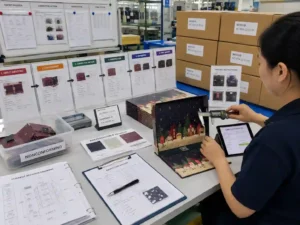
Quick answer: A liquid dry goods gift calendar is handled by separating product risks before designing the paper packaging structure. The calendar must consider primary packaging boundaries, leakage protection, odor transfer, weight differences, crushing risks, and compartment fit. The paper insert or divider system should support the products without replacing their original packaging function. Engineering checks, loaded samples, measurements, and approval records help confirm that mixed products can be packed together reliably.
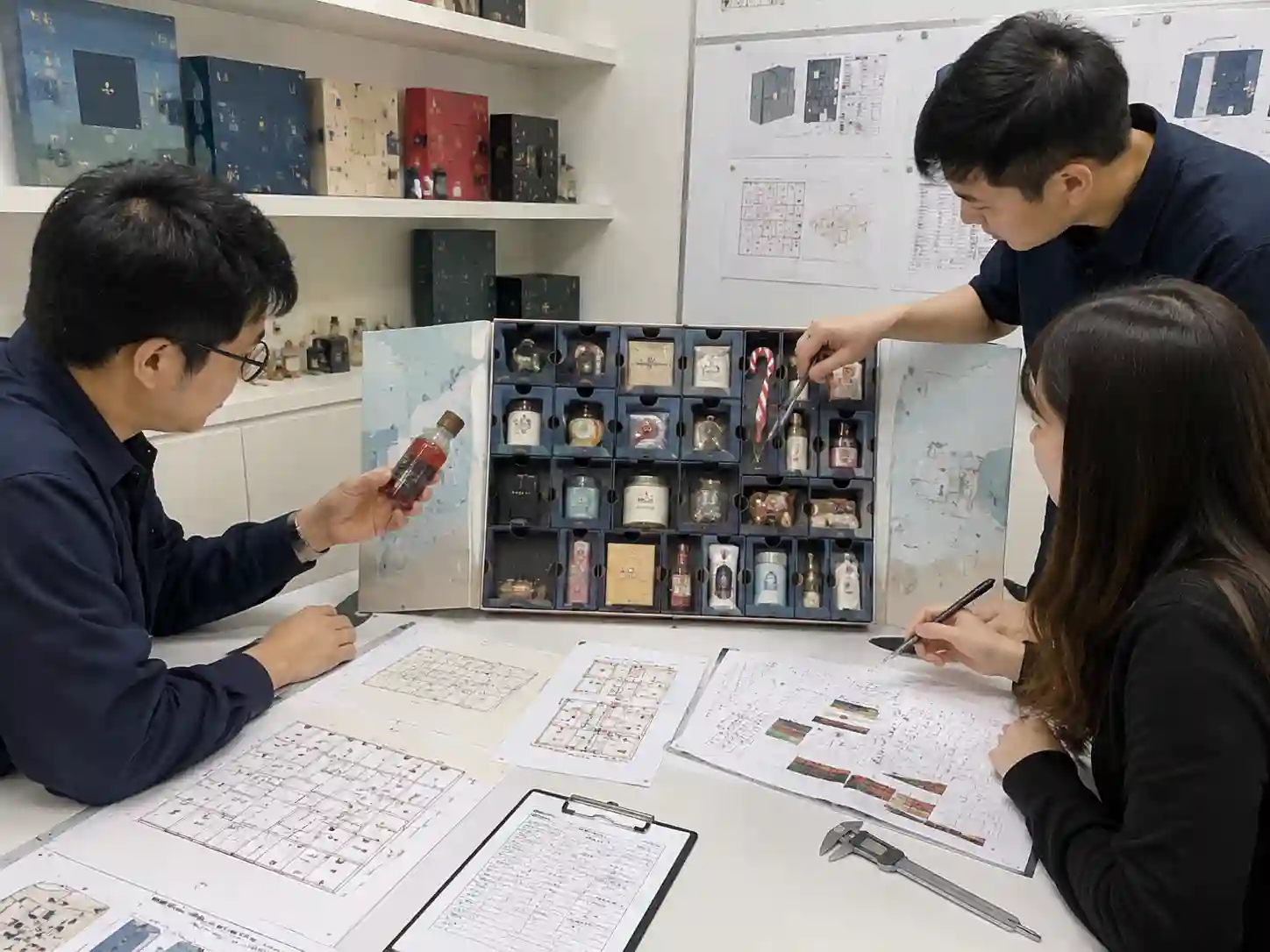
How Do You Design a Liquid Dry Goods Gift Calendar?
The first step is to classify each product by packaging risk instead of treating all compartments the same. Liquid items and dry goods often require different support conditions, so the calendar structure should be planned around the most sensitive products.
For example, a mini beverage bottle, skincare-style liquid container, or small jar may require stronger retention and vertical control, while tea sachets, coffee packs, confectionery, or stationery items may need protection from crushing, movement, or odor exposure.
| Product type | Main packaging risk | Typical design consideration |
|---|---|---|
| Mini bottles and liquid containers | Leakage risk, weight, movement | Secure cavities, upright positioning, clearance around caps or closures |
| Tea, coffee, and dry sachets | Crushing, odor transfer, compression | Flat support surfaces, protected edges, separation from strong-smelling items |
| Wrapped confectionery | Bulging, wrapper damage, flavor transfer | Controlled cavity size and spacing between products |
| Candle jars or heavier items | Weight loading and impact | Reinforced support areas and balanced distribution |
Why Must Primary Packaging Boundaries Be Considered?
The calendar insert should support product protection, but it should not be treated as a replacement for the product’s own primary packaging. Liquids should remain protected by their bottles, pouches, jars, or sealed containers before they are placed into the gift calendar.
Packaging teams should review whether the original product packaging can handle contact with adjacent items. Important checks include:
- Whether liquid containers have secure caps, seals, or closures.
- Whether dry goods can absorb odors from nearby products.
- Whether flexible packs can be compressed by neighboring items.
- Whether product surfaces may scratch, stain, or damage other items.
These points are verified through product drawings, supplier specifications, physical samples, and loaded packaging reviews rather than assumptions from product names alone.

How Do You Prevent Odor Transfer Between Different Products?
Odor control depends on the product type and the protection already provided by the primary package. Separation inside the calendar helps reduce direct contact, but the final approach varies by product combination.
Mixed calendars containing coffee, tea, confectionery, candles, pet treats, or scented products require closer review because strong odors may affect nearby goods. Packaging engineers may evaluate:
- Distance between compartments.
- Use of sealed primary packaging.
- Whether paper materials contact odor-sensitive surfaces.
- Whether products require additional internal separation.
How Do You Control Weight Differences in Mixed Gift Calendars?
Weight distribution is important when liquid products are combined with lighter dry goods. Heavy compartments can create stress on dividers, drawers, doors, or outer panels during handling.
Project-specific checks usually include:
- Mapping heavier products to stronger structural areas.
- Checking whether inserts remain stable when fully loaded.
- Reviewing movement during handling and transportation conditions.
- Confirming that product removal does not damage neighboring compartments.
Measurement records and loaded prototypes provide evidence that the structure supports the planned product mix.
What Fit Checks Are Needed Before Production?
Fit testing confirms that each item can be inserted, held, and removed without damaging the product or packaging. A mixed product calendar should be reviewed with the actual product samples whenever possible.
- Compartment dimensions match product height, width, and depth.
- Liquid containers remain stable without excessive pressure.
- Dry goods do not bend, crush, or become trapped.
- Caps, labels, strings, tabs, and accessories remain accessible.
- Products do not shift excessively inside their cavities.
A product-fit checklist, cavity drawing, measurement sheet, and approval sample record help purchasing and quality teams confirm the final arrangement.
How Do Quality Teams Verify Mixed Product Packaging?
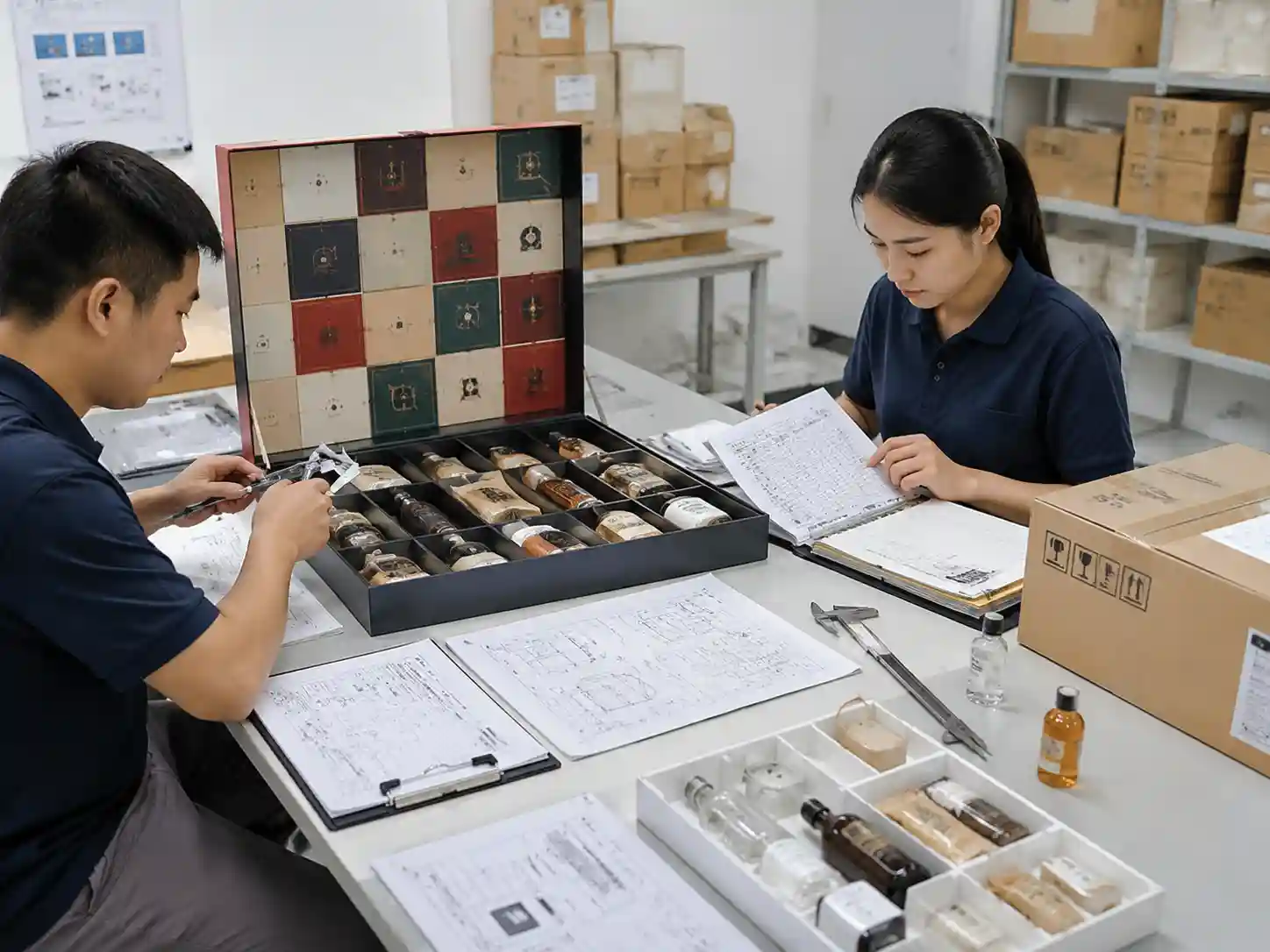
Quality verification focuses on whether the approved structure matches the loaded production condition. Inspectors may compare finished calendars against approved samples, drawings, and inspection records.
Useful verification evidence includes:
- Compartment measurement records.
- Loaded sample photos or inspection records.
- Product position checks.
- Packaging surface condition reviews.
- Carton and packing documentation when shipping risks apply.
What is verified depends on the product combination, packaging format, and buyer requirements. A calendar containing glass bottles requires different inspection points from one containing only lightweight dry products.
What Changes Between Different Liquid and Dry Goods Projects?
There is no single insert design that fits every mixed-product calendar. The final structure depends on product dimensions, primary packaging strength, weight distribution, odor sensitivity, and required presentation format.
Giftpackpro develops custom paper gift packaging solutions through product evaluation, structural planning, and sample review. Explore custom advent calendar box products or learn more about custom advent calendar box services when planning a mixed-product packaging project.
Frequently Asked Questions
Can paper compartments directly protect leaking liquid products?
No. Paper compartments provide organization and support, but liquid products should rely on their own sealed primary packaging. The calendar structure should help control movement and reduce secondary risks.
Can liquid and dry products share the same calendar insert?
Yes, but the insert design must account for different product dimensions, weights, and protection needs. Mixed layouts are usually confirmed through drawings, samples, and loaded fit checks.
Should every compartment have the same size?
Not necessarily. Different product sizes and shapes often require customized cavities to prevent movement, crushing, or inefficient space usage.
What documents help approve a mixed-product calendar?
Common approval materials include structural drawings, product dimension records, sample review notes, inspection checklists, and loaded sample photos. The required documents vary by project.
For a custom mixed-product calendar structure, contact Giftpackpro through request a custom quote to discuss product fit, separation requirements, and packaging design needs.