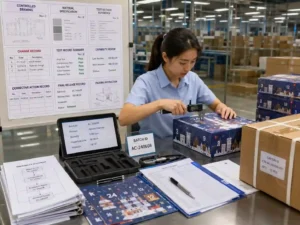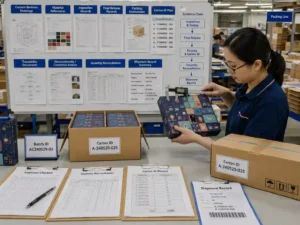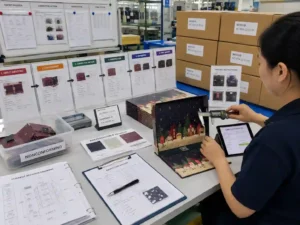
Planning food packaging requires more than fitting the product inside a compartment. The package must also leave enough controlled area for required food labels, best-before information, batch details, and other identification marks without damaging the product presentation. A practical approach is to define the primary-pack labeling area first, then coordinate cavity size, orientation, insert structure, and inspection records so the finished advent calendar protects both product fit and information visibility.

Why is food label best before space important in advent calendar packaging?
Food label best before space is important because product information must remain visible and accessible after packing, transport, and retail handling. The compartment design should not cover, crease, rub, or compress the area reserved for mandatory or commercial labeling.
For food products, the paper insert or outer calendar structure is usually a secondary packaging component. The primary package, such as a sealed pouch, wrapper, pod container, or bottle label, remains the main boundary for product identification and protection. Packaging development should therefore confirm that the primary pack can carry required information before finalizing compartment geometry.
What information should be considered before designing compartments?
The packaging team should identify which information must remain readable and where it appears on the product. Typical considerations include:
- Best-before or expiry information location.
- Batch or lot identification area.
- Ingredient, allergen, or regulatory label space where applicable.
- Barcode or retail scanning requirements where applicable.
- Brand graphics and product recognition areas.
The exact requirements vary by product category, market destination, and labeling method. Buyers should confirm final label requirements with their food compliance and product teams before approving the structural design.
How do you create space for food labels during packaging design?
The most reliable method is to treat label visibility as a measured packaging requirement rather than an artwork adjustment after sampling. Packaging engineers normally review the product dimensions, label position, and cavity layout together.
- Map the primary packaging: Record product length, width, height, diameter, label location, seal areas, and any sensitive surfaces.
- Reserve label clearance: Ensure the insert does not press against printed information, barcode zones, or date coding areas.
- Check product orientation: Define how each item sits in the compartment so the information area faces the intended direction.
- Review removal access: Make sure consumers or retail staff can view the information without damaging the product wrapper or container.
- Confirm final loaded conditions: Test the complete calendar with products inside because weight, movement, and compression can change the visible label area.
How do different food products affect label space planning?
Different product formats create different packaging risks. Small changes in label placement, seal construction, or product orientation can affect whether information remains readable.
| Product type | Label space consideration | Common packaging risk |
|---|---|---|
| Tea sachets and drip bags | Keep printed wrapper areas flat and avoid folding over identification zones. | Compression, creasing, or string and tag interference. |
| Coffee pods | Maintain clearance around printed lids, rims, or primary wrappers. | Stacking pressure or cavity contact affecting visibility. |
| Confectionery packs | Protect wrapper graphics and date-marking areas. | Wrapper rubbing, crushing, or pinching. |
| Mini bottles | Allow label panels to remain visible and avoid excessive contact. | Rotation, scratching, or blocked information areas. |
How do engineers verify that label space works before production?
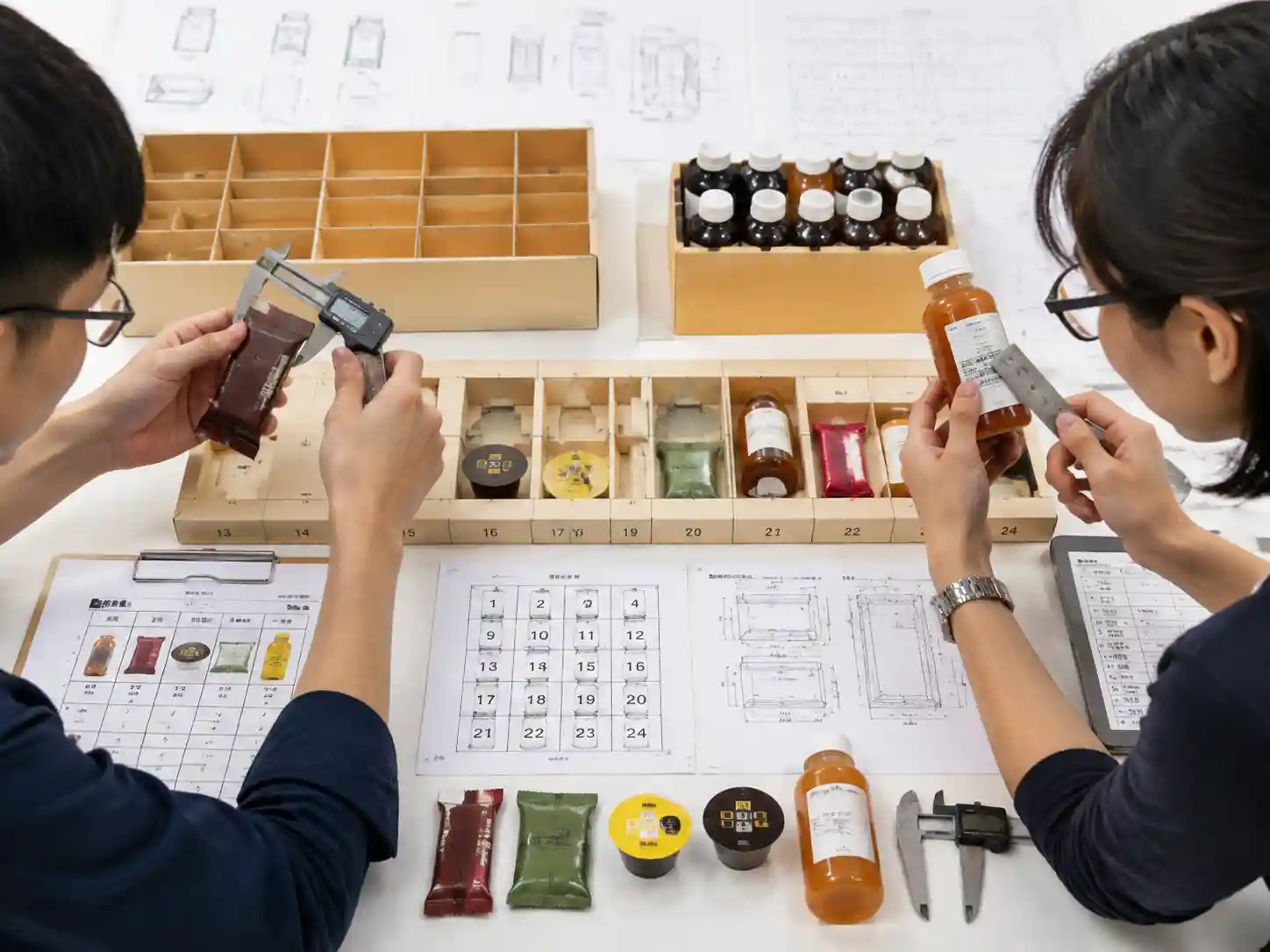
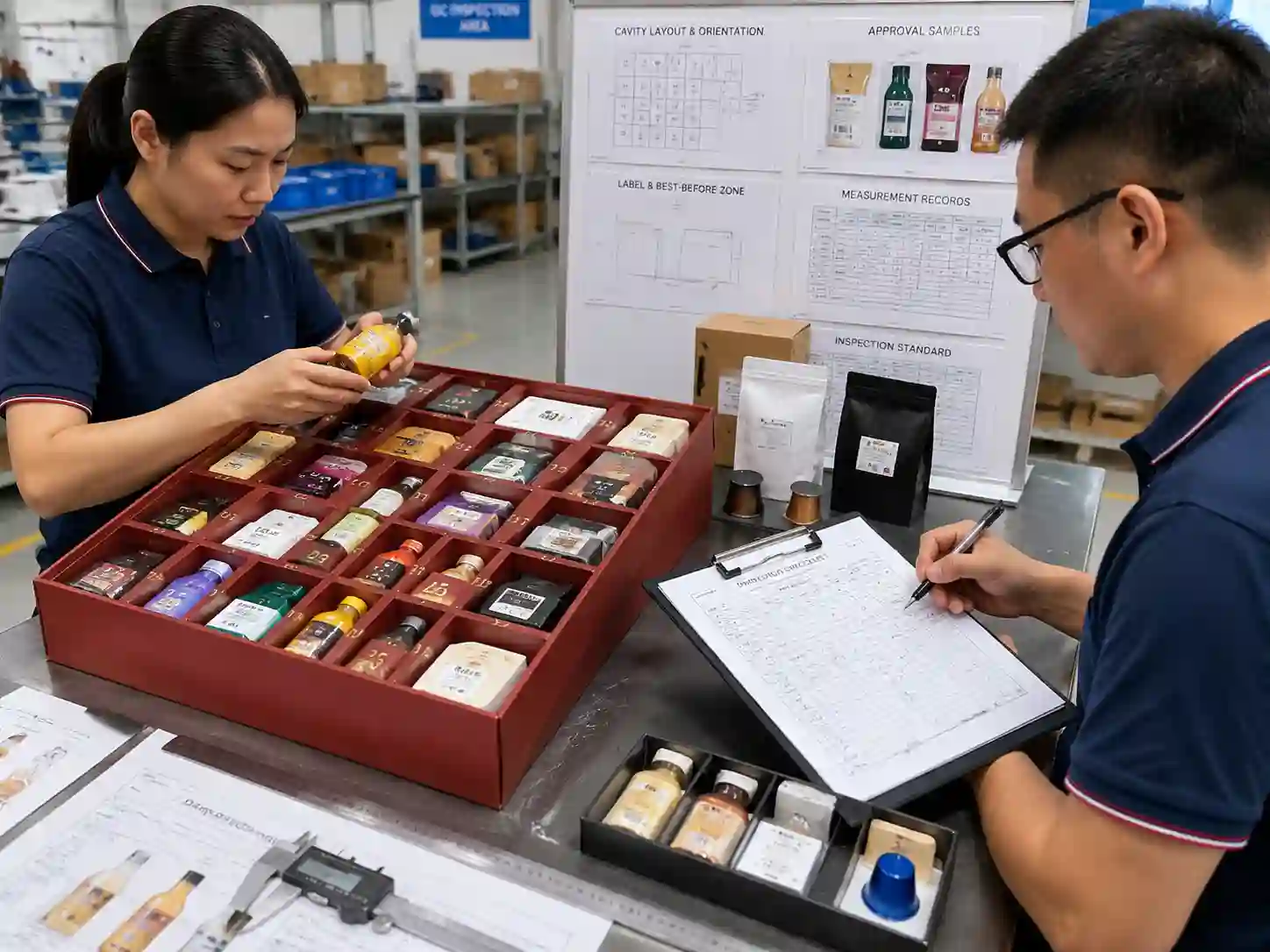
Verification usually combines drawings, physical samples, measurements, and approval records. The purpose is to confirm that the intended label area survives real packing conditions.
- Dimension drawings: Compare product measurements with cavity and insert layouts.
- Prototype loading: Place actual or representative products into compartments to check orientation and clearance.
- Measurement records: Use rulers, calipers, or product specifications to document critical dimensions.
- Visual inspections: Confirm that labels, dates, and codes remain visible after packing.
- Approval samples: Retain approved references showing the accepted product position and appearance.
Project-dependent checks may also include shipping simulations, vibration review, or additional handling tests when products are sensitive to movement, crushing, or surface abrasion.
What risks occur when label space is not planned early?
Insufficient label clearance can create problems that are difficult to correct after the structure is finalized.
- The insert may cover required information areas.
- Products may rotate inside compartments and hide important markings.
- Pressure from tight cavities may wrinkle wrappers or labels.
- Retail teams may receive products that require relabeling or manual handling.
- Quality teams may reject packaging because identification cannot be verified easily.
These risks are often reduced by confirming product orientation, cavity fit, and labeling requirements during structural development rather than after mass production preparation.
What should buyers approve before finalizing food label space?
Buyers should approve both the physical packaging structure and the information placement together. A packaging approval record should clearly show the accepted product position, label visibility, and any agreed limitations.
- Approved product drawings or dimension sheets.
- Primary-pack samples with final labeling format.
- Loaded prototype photos showing product orientation.
- Fit inspection records and comments from quality teams.
- Final confirmation of label areas from the product owner.
Giftpackpro supports custom advent calendar box development by coordinating structural packaging considerations with product presentation requirements. Learn more about custom advent calendar box services, explore custom advent calendar box products, or request a custom quote for a project-specific packaging discussion.
FAQs
Can the paper insert provide the required food label information area?
No. The insert mainly provides separation, support, and positioning. Food information normally belongs to the product’s primary packaging unless a specific packaging system defines another method.
Should label space be checked before or after the insert design?
It should be considered at the same time. Product label locations influence cavity dimensions, orientation, and retention requirements.
Can different SKUs use the same compartment design?
Only when their dimensions, weight, orientation, and label locations are compatible. Mixed-product calendars usually require additional fit verification.