
Quick answer: Glass serum bottles should be packed by controlling movement, protecting fragile closures, and preventing contact between droppers, caps, and surrounding products. Effective glass serum bottle dropper protection usually combines the right cavity fit, clearance around sensitive parts, correct bottle orientation, and inspection records that confirm the approved packing method. The exact solution depends on bottle shape, closure design, liquid leakage risk, and the final product assortment.
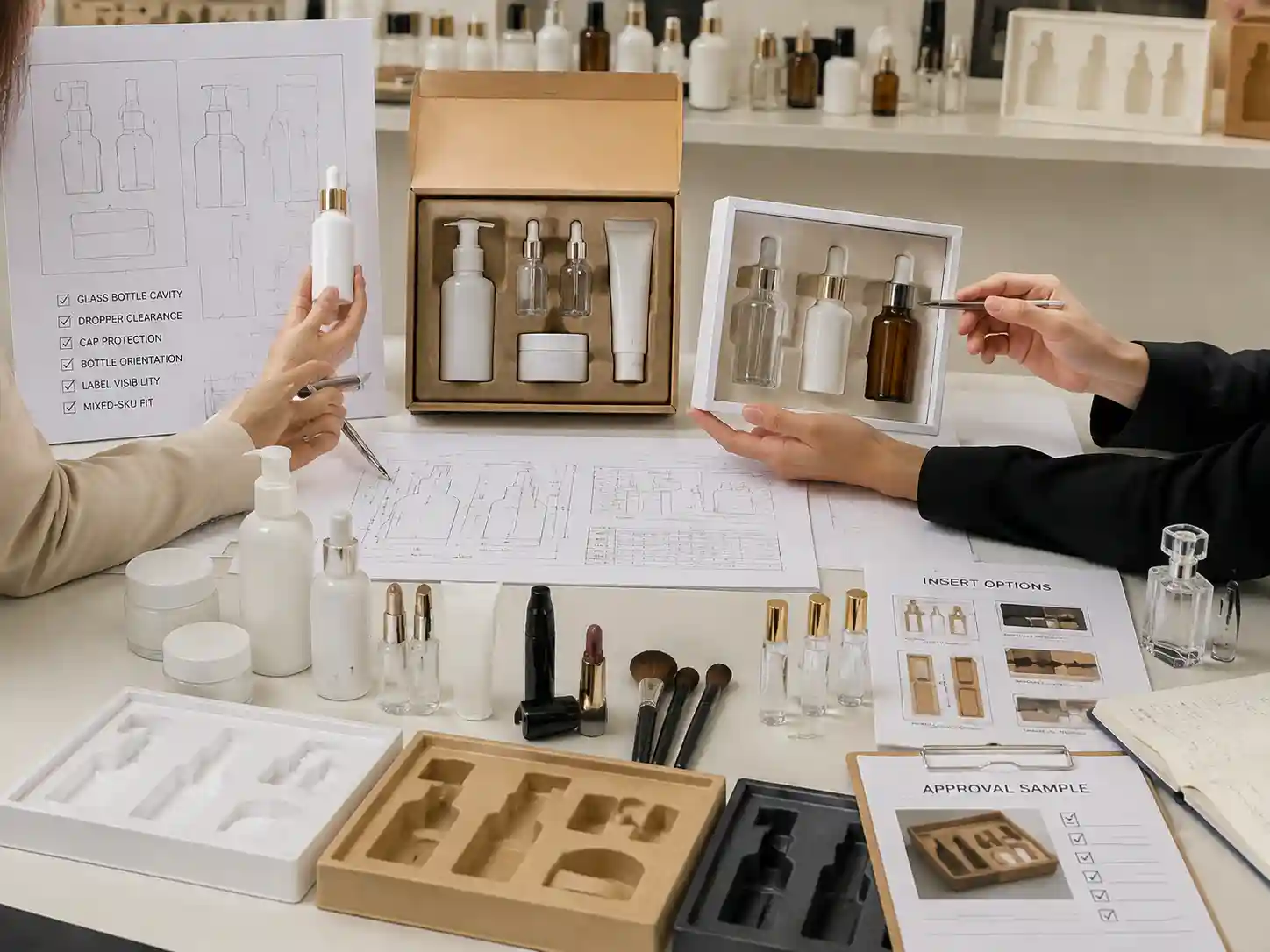
Why Does Glass Serum Bottle Dropper Protection Matter in Advent Calendar Packaging?
Glass serum bottles have multiple risk points: the glass body can crack, droppers can bend or loosen, caps can become scratched, and closures can leak if products move during handling. Protection must focus on the entire bottle system rather than only the glass container.
For beauty packaging projects, the main risks should be identified before selecting inserts or packing methods. A bottle with a long pipette dropper creates different requirements from a short cap, pump closure, or sealed tube.
| Risk area | Possible issue | Verification method |
|---|---|---|
| Dropper assembly | Bending, loosening, or impact damage | Fit inspection and loaded product checks |
| Cap and closure | Scratches, pressure marks, leakage concerns | Visual inspection and closure condition records |
| Glass bottle body | Cracks, chips, surface contact damage | Packaging sample review and dimensional checks |
| Mixed SKU arrangement | Contact with other beauty products | Loaded assortment inspection |
How Should Glass Serum Bottles Be Positioned Inside the Package?
The bottle should be positioned so that the closure area and glass body are both supported without creating pressure points. The insert cavity should hold the product securely while leaving controlled clearance around sensitive components.
Should Droppers Face Up or Down During Packing?
In most cases, fragile dropper assemblies require an orientation that avoids direct compression from other components. The correct direction depends on the bottle structure, insert design, and handling conditions.
Packaging engineers usually confirm orientation by loading actual bottles into the proposed structure and checking:
- Dropper clearance from lids, doors, and neighboring compartments.
- Bottle stability when the package is moved or rotated.
- Label visibility after final placement.
- Contact risks between glass, caps, and other beauty products.
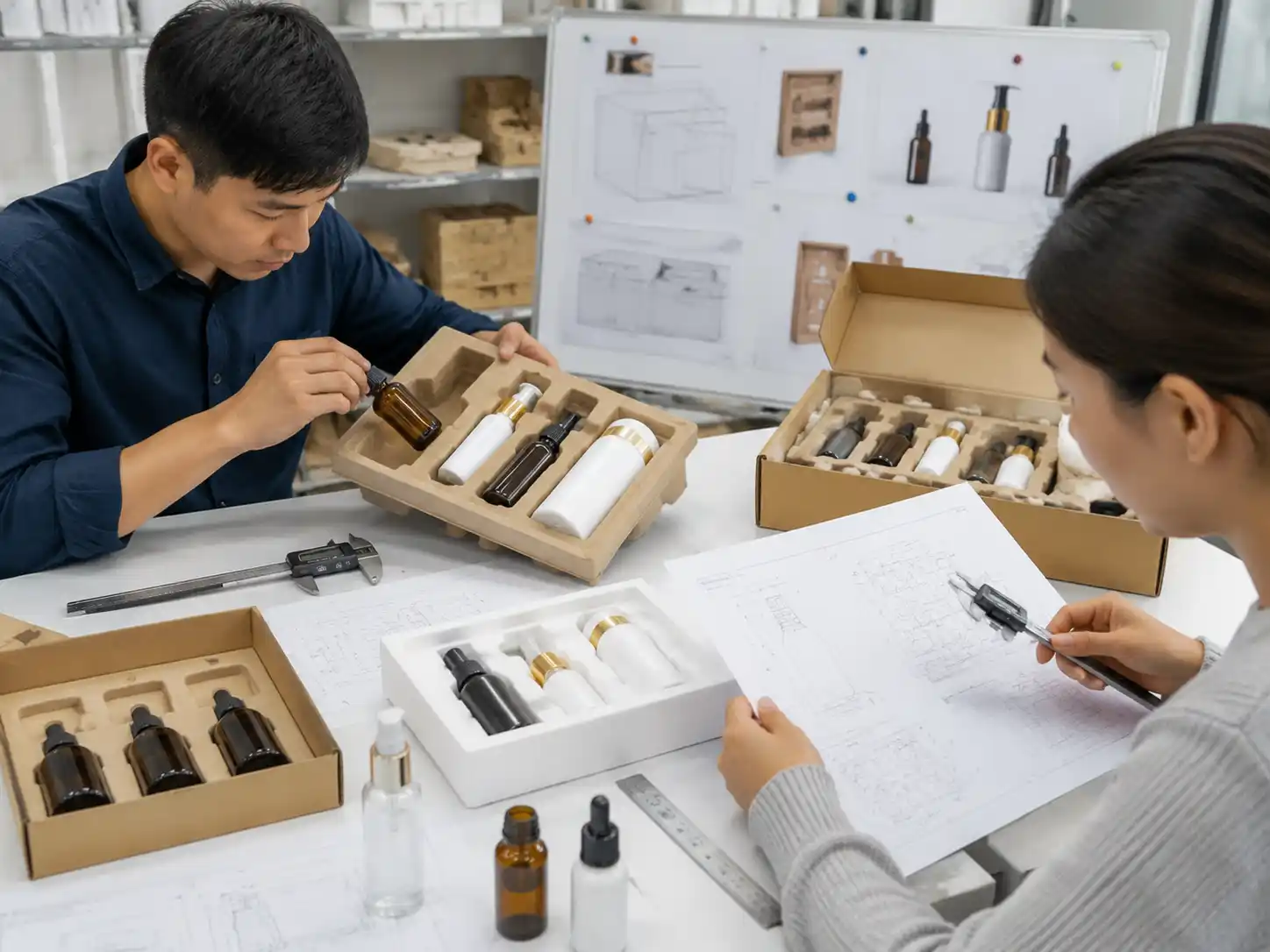
What Fit Tests Confirm Dropper and Cap Protection?
A practical fit test uses the real bottle, closure, and insert configuration instead of relying only on drawings. This confirms whether the packaging protects the product under realistic conditions.
- Place the serum bottle into the approved cavity or holder.
- Check top, side, and bottom clearance around the dropper and cap.
- Measure whether the bottle shifts during handling simulation.
- Inspect contact areas for scratches or pressure marks.
- Record the approved orientation and packing position.
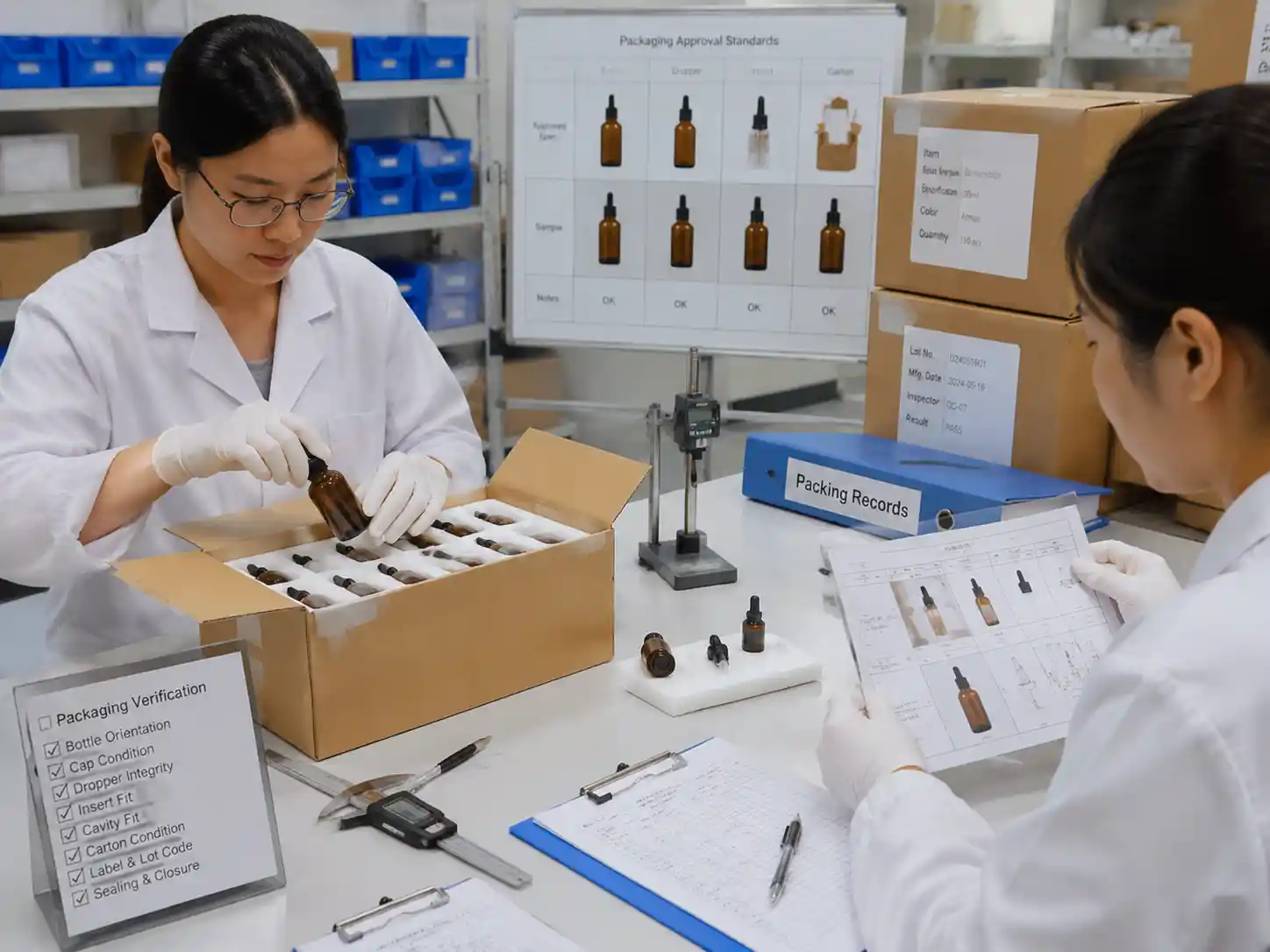
Evidence from these checks may include structural drawings, dimension sheets, loaded samples, approval records, and inspection photos. These records help purchasing and quality teams confirm that production follows the agreed configuration.
How Do You Protect Glass Serum Bottles in Mixed Beauty Product Sets?
Mixed-SKU advent calendars require additional control because serum bottles may be packed beside jars, tubes, palettes, brushes, or fragrance items with different shapes and weights.
A loaded-SKU review should confirm:
- Each product has the correct cavity and orientation.
- Heavy items cannot press against droppers or caps.
- Labels remain visible and readable for identification.
- Glass products are separated from abrasive surfaces.
- Empty spaces do not allow excessive movement.
Giftpackpro supports custom advent calendar packaging projects where product dimensions, protection requirements, and final package structure need to be coordinated. Related solutions can be reviewed through our custom advent calendar box services and custom advent calendar box products.
What Packing Details Should Buyers Approve Before Production?
Buyers should approve the actual packing method, not only the outside appearance of the package. Important approval points include cavity dimensions, bottle orientation, closure protection, product separation, and loaded package condition.
- Approved bottle and closure dimensions.
- Confirmed insert or holder design.
- Loaded product arrangement.
- Protection requirements for caps and droppers.
- Inspection records showing the approved configuration.
What Changes Between Projects?
Protection requirements vary by bottle diameter, glass thickness, dropper length, closure material, liquid formula, and assortment design. A compact serum vial may need only controlled positioning, while a larger glass bottle with a delicate pipette may require more support around the closure area.
Verifiable information includes measurements, approved samples, drawings, and inspection results. Project-dependent recommendations should be confirmed through packaging trials and buyer approval before production.
FAQs About Glass Serum Bottle Packaging Protection
Can the same insert design protect different serum bottles?
Not always. Different bottle heights, diameters, caps, and droppers can create different movement and contact risks. Mixed bottle sizes should be checked through actual fit testing.
Is preventing leakage only a bottle quality issue?
No. Packaging can reduce handling damage risks by preventing impact and excessive movement, but bottle closure performance and product filling quality remain separate project considerations.
Why are loaded samples important for approval?
Loaded samples show how the complete product arrangement behaves. They allow teams to verify orientation, clearance, appearance, and protection before final production decisions.
For a packaging structure designed around your serum bottles, droppers, and mixed beauty products, request a custom quote and discuss the required protection approach.


