Quick answer: Pump bottles should be held with an engineered insert that supports the bottle body while keeping the pump actuator free from compression. Effective pump bottle insert protection uses measured cavities, controlled clearance, orientation checks, and loaded-sample verification to prevent accidental dispensing, leakage, label damage, and poor presentation. The correct structure depends on bottle shape, pump design, product weight, and how the package will be handled.
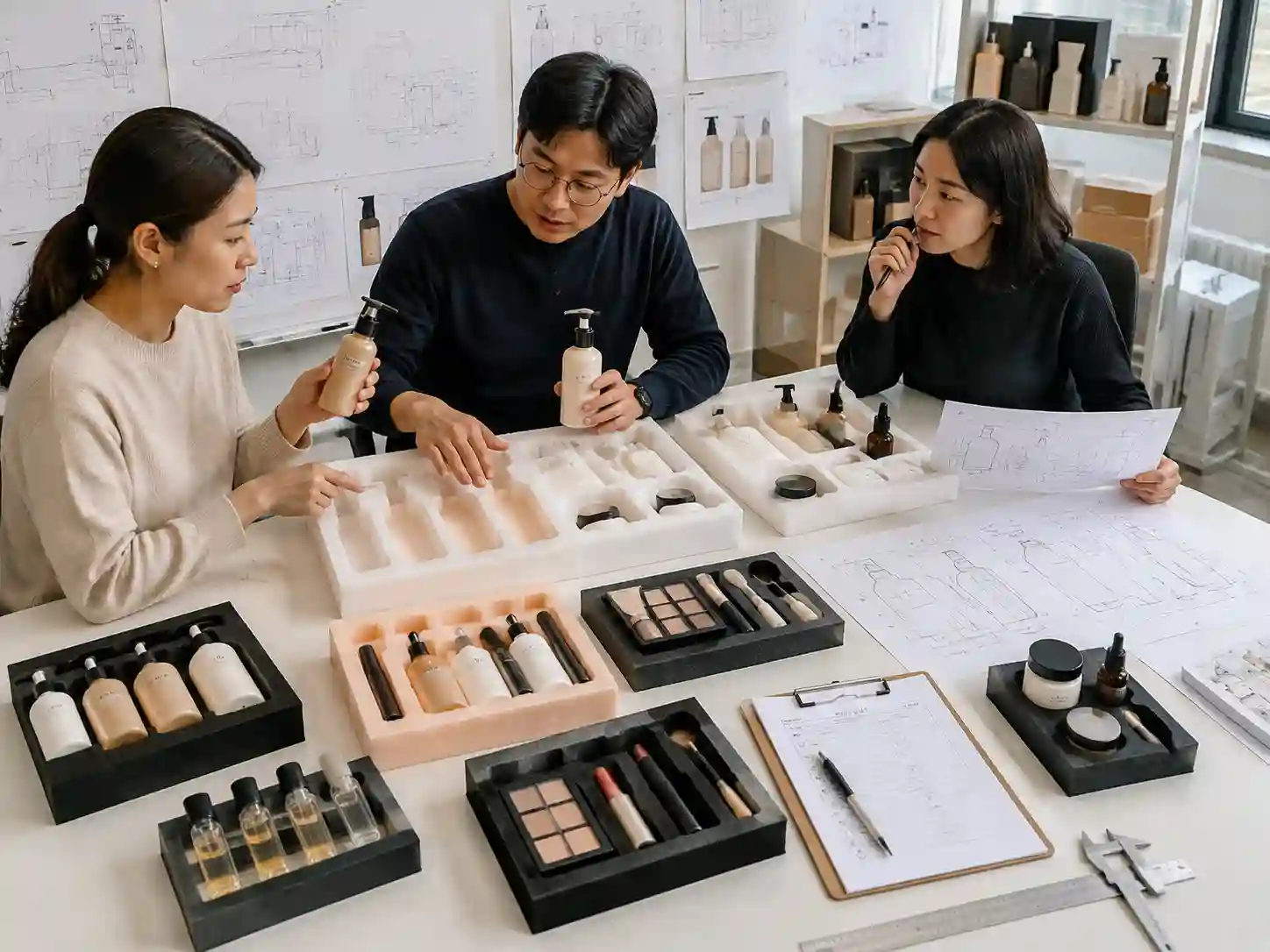
Why is pump bottle insert protection needed for beauty packaging?
Pump bottle insert protection is needed because the dispenser area is usually the most vulnerable part of a beauty package. During handling, transport, and retail display preparation, pressure on the pump head can cause unintended activation, product leakage, or damage to the closure system.
A well-designed insert does not simply hold the bottle tightly. It separates the load-bearing area from the pump mechanism. The insert should support the bottle shoulder, body, or base while leaving enough space around the dispenser to avoid direct contact.
| Risk area | Possible issue | Verification method |
|---|---|---|
| Pump actuator | Accidental pressing or product release | Check clearance between insert and dispenser in loaded samples |
| Bottle body | Movement, scratches, or label rubbing | Measure cavity fit and inspect contact points |
| Glass packaging | Cracking or impact damage | Review support points and packaging handling conditions |
| Mixed SKU sets | Incorrect fit between different bottle sizes | Perform individual cavity and full-set fit tests |
How should an insert hold a pump bottle without pressing the dispenser?
The insert should restrain the bottle from stable structural areas instead of the pump. The first design step is identifying the bottle dimensions, pump height, closure shape, and areas that can safely receive pressure.
Common engineering approaches include:
- Using a shaped cavity around the bottle body to prevent sideways movement.
- Adding controlled clearance above the pump head so the dispenser cannot touch the outer package.
- Supporting heavier bottles from the base to reduce stress on the neck and pump connection.
- Separating multiple beauty products so one item cannot push against another during movement.
What fit tests confirm dispenser protection?
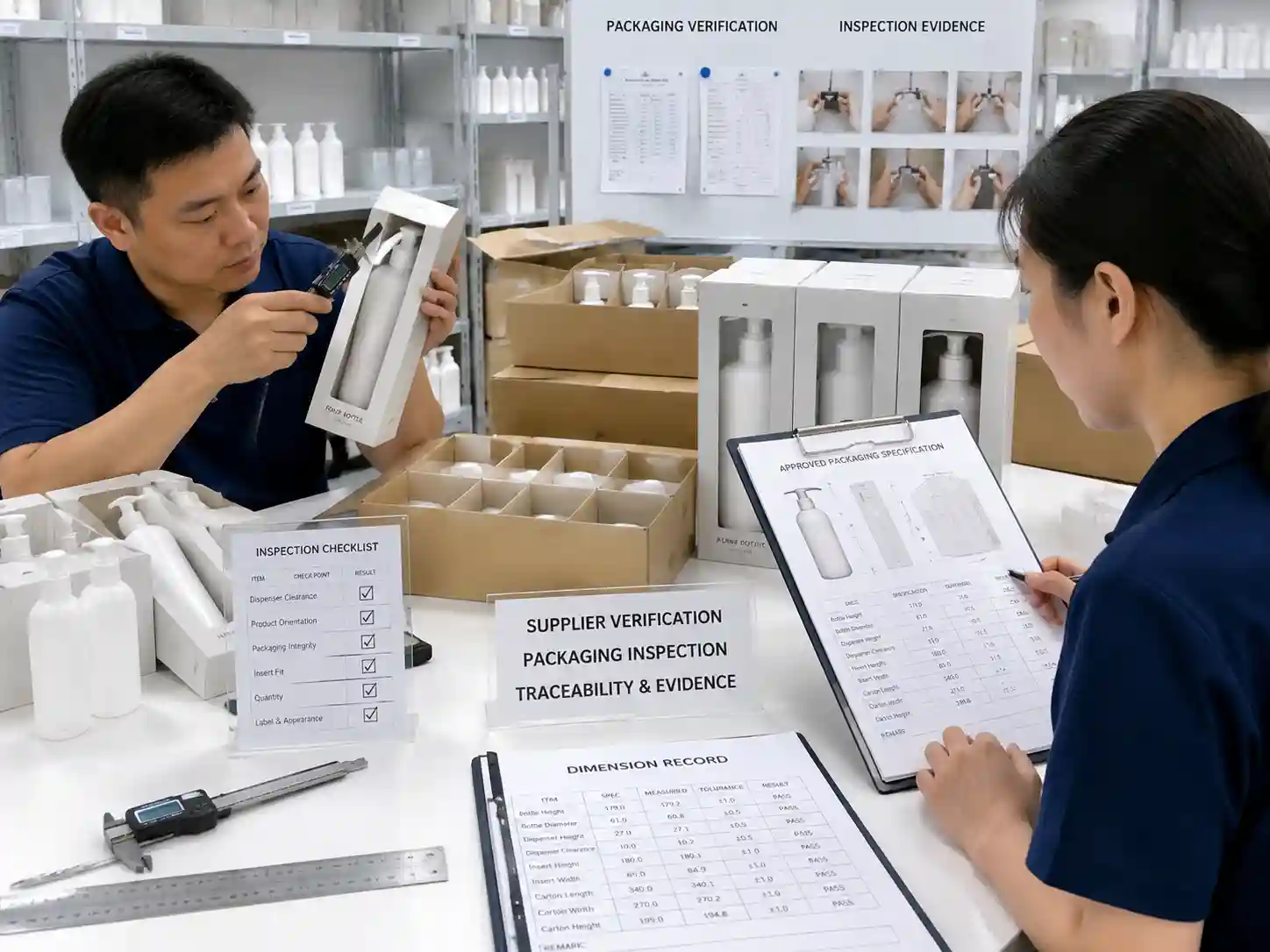
Fit testing should use actual loaded products rather than empty packaging samples. A supplier or packaging team can verify whether the insert protects the dispenser by checking movement, contact points, and product condition after handling simulations.
Typical pump bottle insert fit-test steps
- Place the actual pump bottle into the approved insert cavity.
- Confirm the bottle sits in the intended orientation and does not lean into neighboring compartments.
- Measure the clearance around the pump head and dispenser area.
- Close the complete calendar or gift packaging structure with the product loaded.
- Inspect whether pressure marks, leakage, label rubbing, or pump movement appear.
- Record measurements, observations, and approval decisions.
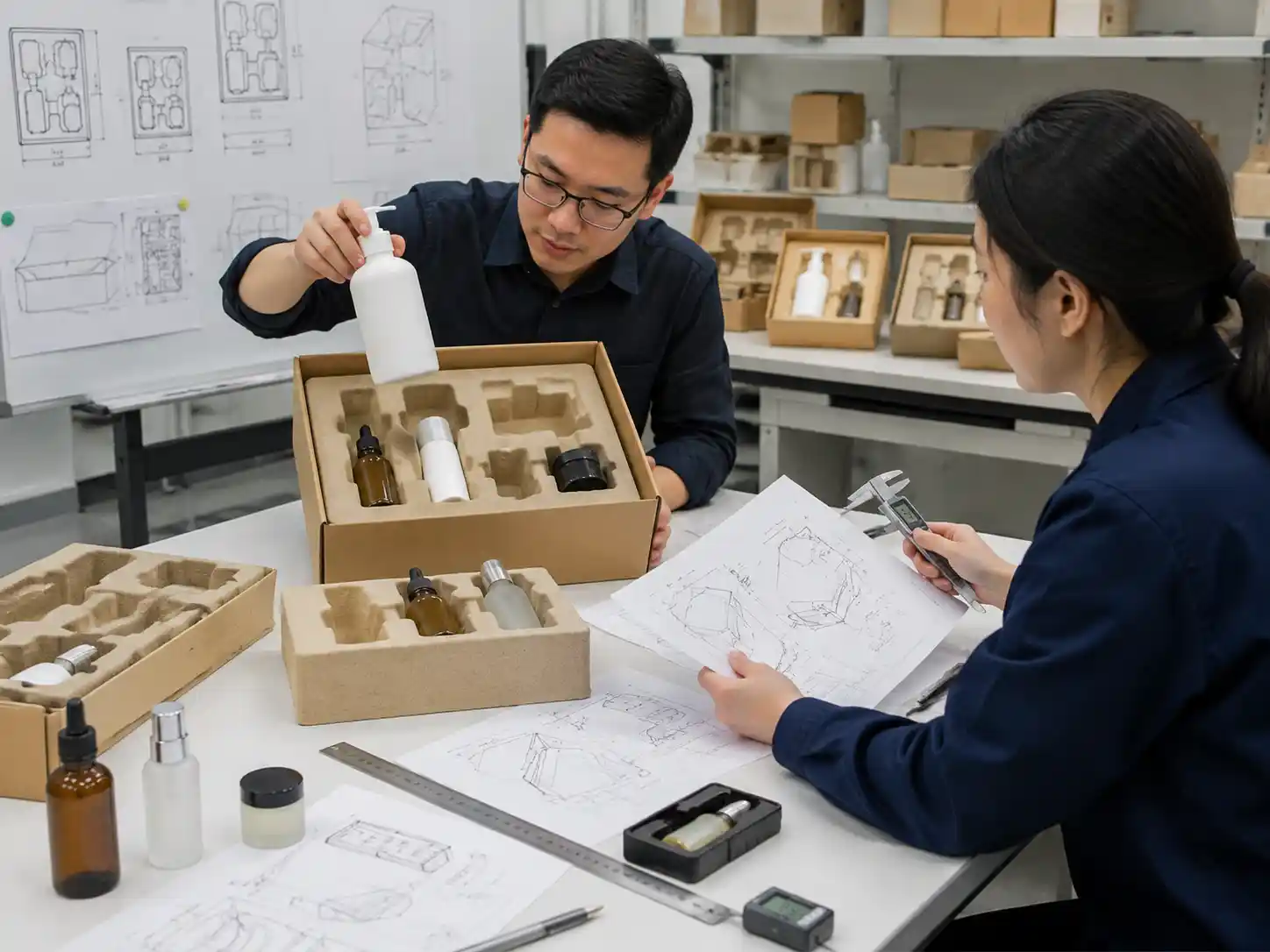
How do you prevent leakage, scuffing, and label visibility problems?
Preventing leakage requires more than protecting the pump. The complete package must control movement while preserving the appearance of every beauty product component.
Project recommendations vary depending on bottle material, surface finish, and product format. Glass serum bottles may require more impact control, while plastic pump bottles may require stronger movement restriction. Decorative finishes, transparent bottles, and printed labels may also require softer contact surfaces.
- Leakage control: prevent pump activation and avoid forces that loosen closures.
- Scuffing control: reduce uncontrolled rubbing between bottles, inserts, and dividers.
- Label visibility: maintain the intended product orientation so labels face correctly after packing.
- Surface protection: consider sensitive finishes such as coated bottles, metallic surfaces, or printed decorations.
What should buyers approve before production?
Buyers should approve the loaded packaging configuration, not only the empty box structure. The most reliable evidence is a documented sample showing the actual products positioned inside the insert.
Loaded-SKU approval checklist
- Correct bottle type and size are loaded into each cavity.
- Pump heads are not compressed when the package is closed.
- Bottles remain stable when the package is moved.
- Labels face the required direction.
- Glass, caps, pumps, and decorative surfaces show no visible damage.
- Measurements and approval comments are recorded for reference.
For multi-product beauty calendars, the insert design may need to accommodate pumps, droppers, jars, tubes, palettes, lip products, or fragrance containers together. The final structure should be based on the actual SKU combination rather than a single representative item.
How does mixed-SKU packaging change insert design?
Mixed-SKU packaging requires separate consideration because different products create different support and clearance requirements. A tall pump bottle, a small dropper bottle, and a flat cosmetic item may require different cavity depths and holding methods.
Packaging engineers typically review product drawings, physical samples, dimensions, weight distribution, and opening orientation before confirming the insert structure. This information helps prevent a design that protects one item while creating risk for another.
What records help verify pump protection?
Important verification records include dimension sheets, cavity drawings, loaded sample photos, inspection notes, and approval records. These documents allow teams to compare production packaging against the approved design.
Giftpackpro supports custom seasonal packaging projects through custom advent calendar box services, with packaging structures developed around specific product requirements. Teams can also review related advent calendar box buying guides or explore custom advent calendar box products for packaging formats.
FAQs
Can a standard insert protect all pump bottles?
No. Pump bottles vary in diameter, height, pump design, and weight. Insert dimensions should be verified against the actual product configuration.
Should the pump be locked during packing?
That depends on the product and supplier requirements. The packaging structure should still prevent external pressure from reaching the dispenser.
What is the most important approval sample?
A loaded sample containing the final product combination is usually more informative than an empty packaging sample because it verifies real fit and protection conditions.
For a custom beauty packaging structure designed around pump bottles and other cosmetic formats, request a custom quote to discuss your packaging requirements and approval process.