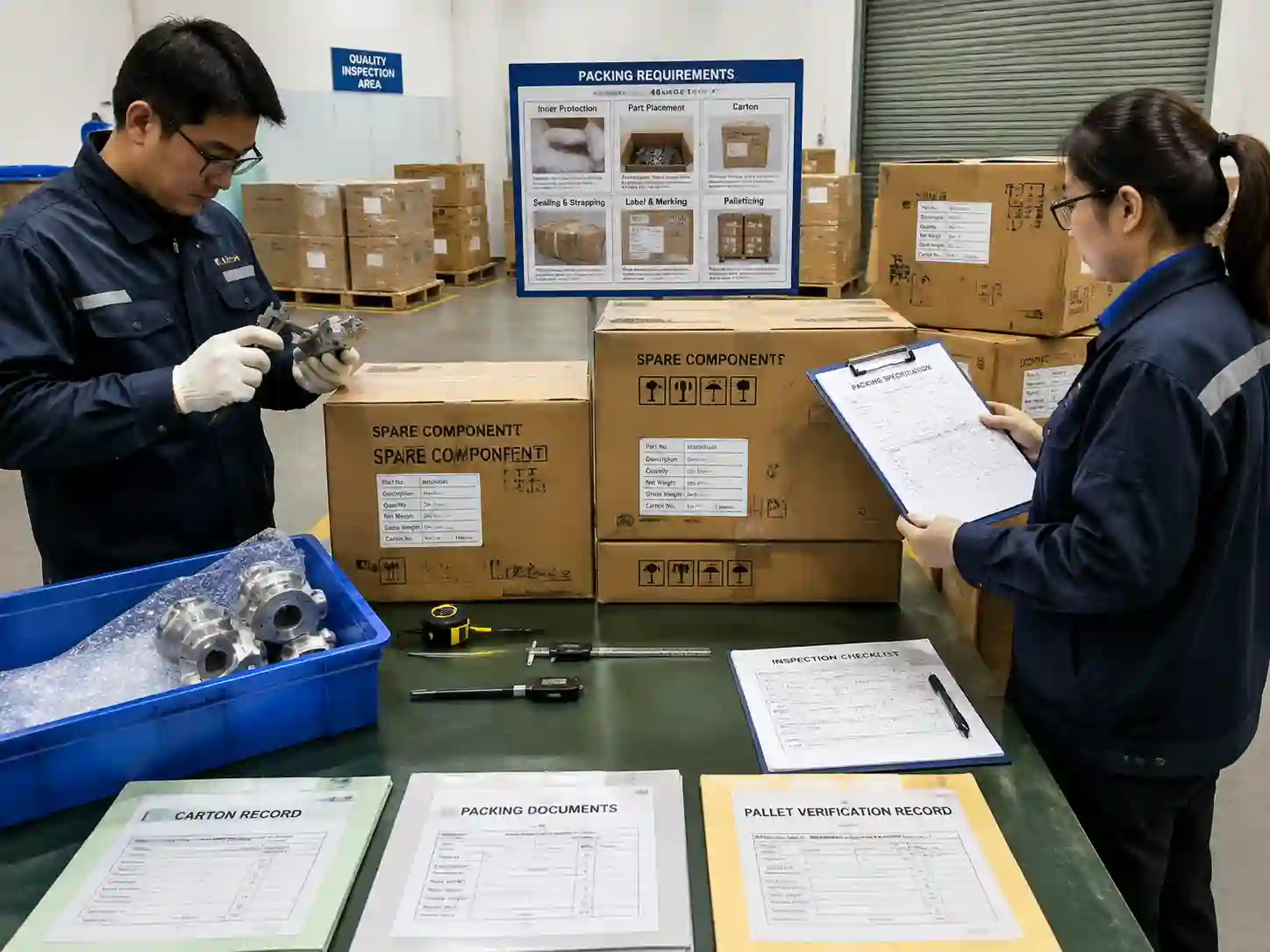
Spare components and replacement units should be packed as controlled service parts, not as leftover production pieces. Effective spare component replacement packing uses separated cartons, protective materials, clear identification, and verified quantity records to prevent damage, loss, or confusion during export transport. The correct method depends on component size, fragility, destination assembly needs, and shipment conditions.

Why should spare components use a dedicated packing method?
Spare components need dedicated packing because they often move through different handling conditions than complete assembled calendars. A replacement drawer, door panel, insert, or accessory part may require different protection from the finished product.
The packing plan should define:
- which components are packed together or separately;
- how many replacement units are included per carton;
- how parts are protected against scratches, crushing, humidity, and movement;
- how cartons are identified for destination assembly or service use.
Buyers should verify this information through packing drawings, carton specifications, component lists, and pre-shipment records rather than relying only on verbal confirmation.
How should spare components be organized inside master cartons?
Spare components should be organized so that each carton protects the parts and allows fast identification after arrival. The internal arrangement should reduce empty space while preventing pressure between components.
| Packing area | Recommended control point | Verification method |
|---|---|---|
| Small accessories | Separate bags, trays, or compartments where needed | Quantity count and packing record |
| Drawer or door replacement units | Individual protection and controlled stacking direction | Dimension check and visual inspection |
| Paper inserts or printed parts | Flat support to avoid bending or deformation | Sample inspection before shipment |
| Mixed replacement kits | Clear grouping and carton identification | Component checklist reconciliation |
How can packaging teams reduce damage risks during export?
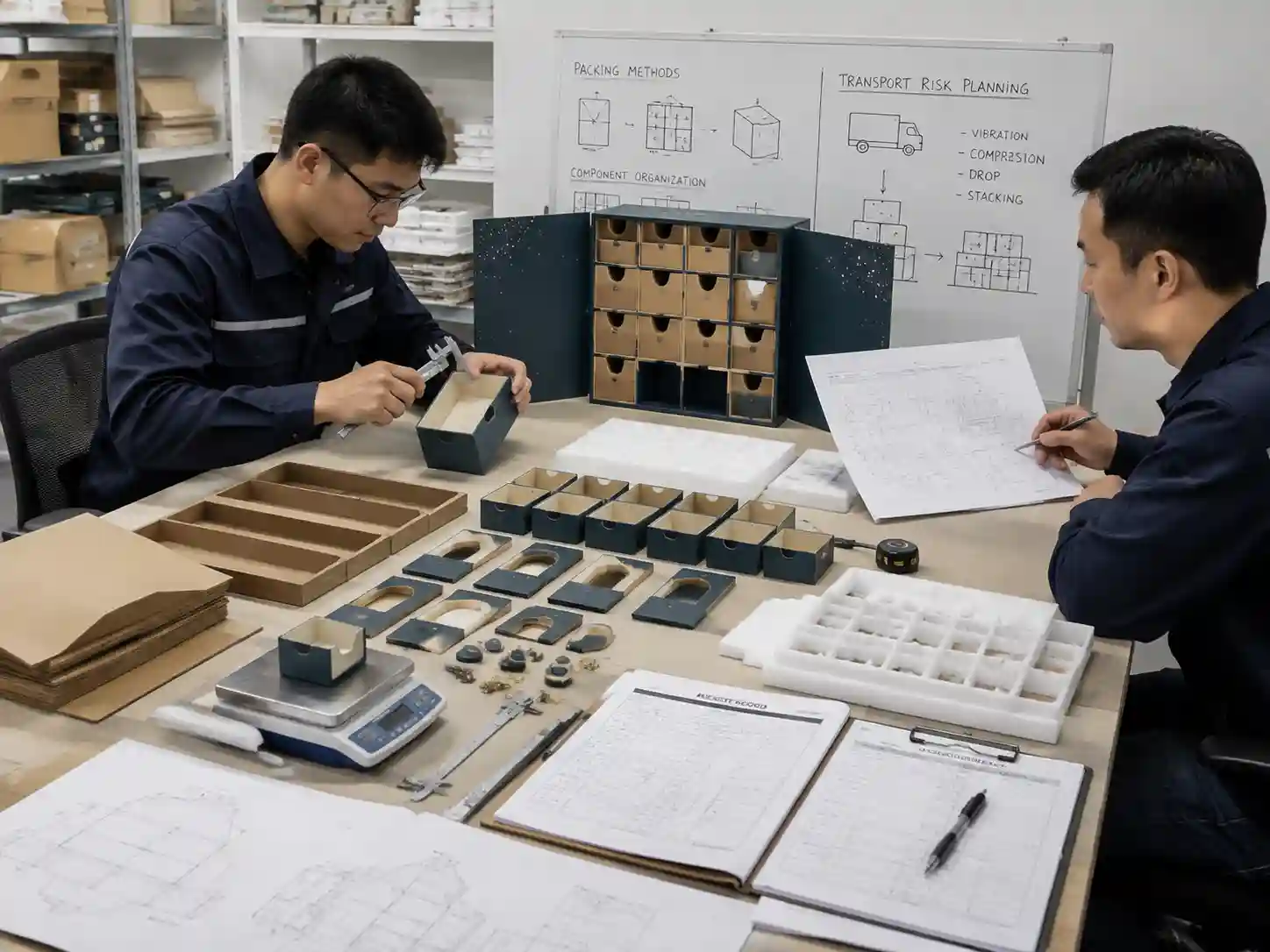
Damage prevention starts with understanding the transport risks before selecting carton construction and internal protection. Spare parts may experience drops, vibration, compression from stacking, and humidity exposure during ocean or long-distance freight.
Common controls include:
- using dividers or separators when parts can contact each other;
- adding cushioning where movement inside the carton is possible;
- avoiding excessive empty space that allows shifting;
- checking carton strength against stacking conditions.
A transit-risk review should connect the packing method with the actual shipping route, pallet configuration, and handling environment. Project recommendations may vary depending on whether replacement units are shipped together with finished calendars or as separate service cartons.
How should pallet loading be planned for spare component cartons?
Spare component cartons should follow a stable pallet pattern that protects carton shape and keeps identification visible. Smaller service cartons may need different pallet planning from larger finished product cartons.
| Pallet factor | Planning consideration |
|---|---|
| Carton orientation | Keep cartons aligned to maintain stacking stability and reduce shifting. |
| Weight distribution | Place heavier cartons where the pallet structure can support the load. |
| Void reduction | Adjust carton arrangement to reduce unsupported spaces. |
| Identification | Keep shipping marks and carton references visible after wrapping. |
Pallet layouts, carton dimensions, gross weight records, and loading diagrams provide evidence that the shipment configuration was reviewed before dispatch.
What checks should buyers approve before shipment?
Buyers should approve the spare component packing method before mass shipment by reviewing samples, records, and inspection results. The approval should focus on whether replacement units arrive usable and correctly identified.
- Confirm component type and quantity per carton.
- Review carton dimensions and internal protection method.
- Check that labels or shipping marks match approved identification requirements.
- Verify that packing records match the final shipment configuration.
- Review any corrective actions from previous packing issues.
What evidence can verify spare component packing quality?
Reliable verification uses physical evidence rather than assumptions. Useful records include:
- approved packing drawings;
- carton measurement records;
- component quantity checklists;
- inspection photos or inspection reports;
- pallet layout records;
- shipment packing documents.
For custom advent calendar packaging, suppliers and buyers can use these records to confirm that replacement units follow the approved packing method before export.
What are common spare component packing mistakes?
The most common mistakes happen when replacement parts are treated as ordinary loose items. Typical problems include:
- mixed components without clear identification;
- insufficient separation between decorative surfaces;
- cartons with excessive empty space causing movement;
- incorrect quantities packed in replacement cartons;
- pallet arrangements that create unstable stacking.
A controlled packing process reduces these risks by linking component lists, carton plans, and inspection records together.
How does spare component packing vary by project?
The final packing method depends on component structure, quantity, destination requirements, and assembly process. A replacement drawer may require different protection from a flat paper insert or a decorative door panel.
Project-specific decisions should be confirmed through approved samples, measurements, and packing documentation. Buyers should separate verified requirements from supplier recommendations and approve changes before shipment.
FAQ: Should spare components be packed with finished advent calendars?
Not always. Spare units may be packed with finished products when space and protection requirements allow, but separate service cartons are often easier to identify and manage after delivery.
FAQ: Should replacement parts have separate carton markings?
Yes, when identification after arrival is important. Clear carton references help receiving teams distinguish replacement units from retail products and production components.
FAQ: How can buyers check if spare components will survive transport?
Buyers can review packing samples, carton dimensions, protective materials, stacking plans, and inspection records. Transit-risk evaluations should be based on the actual shipment configuration.
Giftpackpro supports custom advent calendar packaging projects with structured packaging development and export preparation. For spare component packing requirements, request a custom quote and discuss the appropriate protection method for your project.