Quick answer: Effective co packer assembly instructions should convert the approved packaging design into a clear production document that destination teams can follow without interpretation. For advent calendar boxes and seasonal paper packaging, instructions should show component sequence, orientation, protection methods, carton placement, pallet requirements, and inspection points. The best documents combine drawings, photos, measurements, approval records, and packing checks so every assembly step can be verified.

What should co packer assembly instructions include?
Co packer assembly instructions should include every detail needed to assemble, protect, check, and ship the finished packaging correctly. The document is not only an assembly guide; it is a control document connecting packaging design, destination operations, quality inspection, and logistics requirements.
For custom advent calendar packaging, important instruction sections usually include:
- Component identification and assembly sequence.
- Correct orientation of drawers, doors, inserts, trays, and decorative elements.
- Protection requirements during handling and packing.
- Master carton loading arrangement.
- Pallet orientation and stacking method.
- Inspection points before shipment or retail distribution.
Project requirements vary depending on the calendar structure, destination assembly process, labor method, and shipping environment. A flat paper structure may need different instructions from a rigid box with multiple moving parts.
How do you design co packer assembly instructions for destination teams?
The most reliable approach is to create instructions from the approved packaging structure rather than writing them only from a product description. The destination co packer should receive a controlled document that matches the final approved design, materials, and packing configuration.
Should assembly instructions use drawings or photos?
Both drawings and photos are useful, but technical drawings usually provide the most accurate reference for dimensions, orientation, and component relationships. Photos help operators recognize the physical parts during assembly.
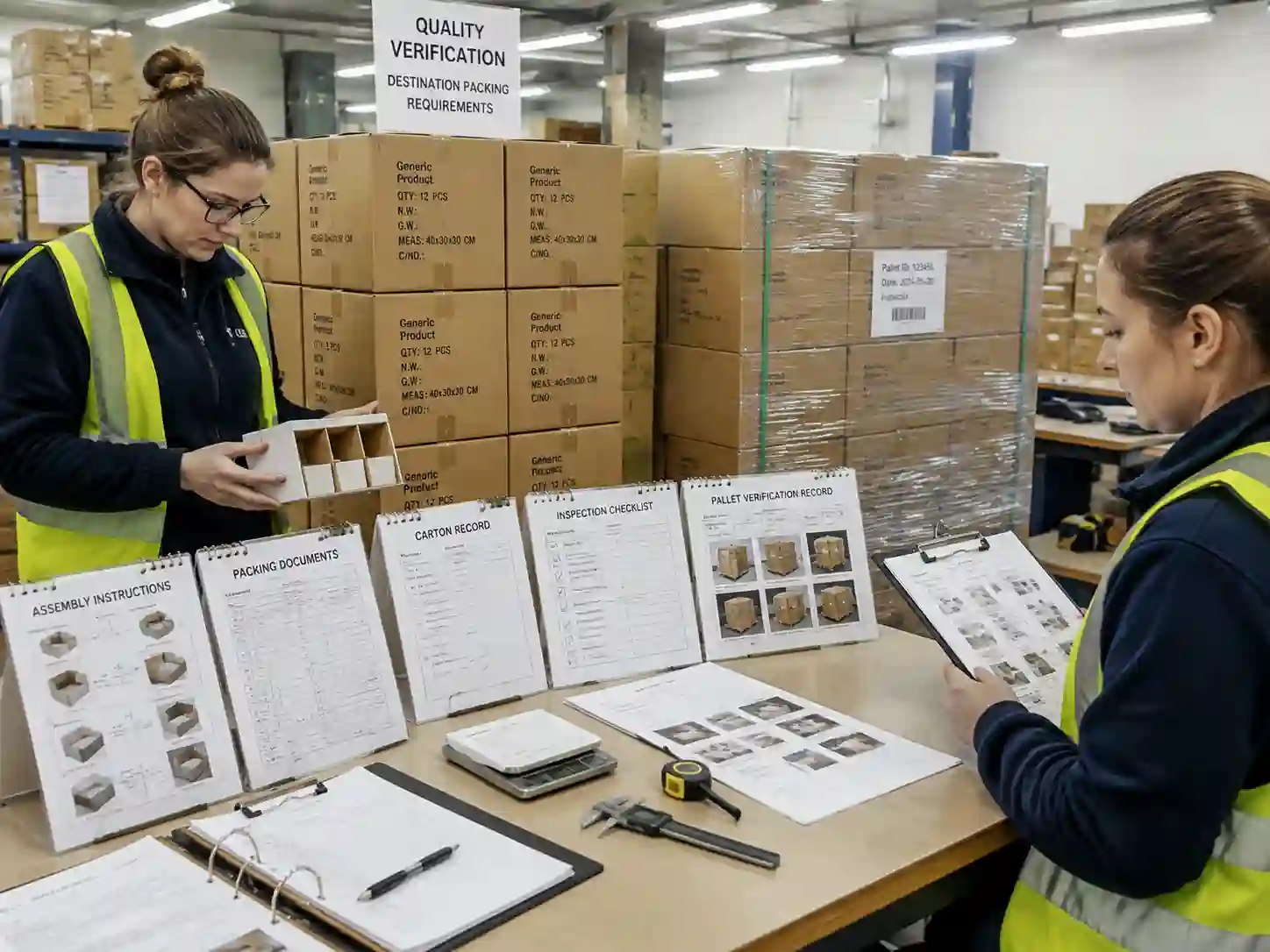
A practical instruction package may include:
- Exploded views showing component relationships.
- Numbered assembly steps.
- Close-up images of critical folding, attachment, or positioning areas.
- Dimension references for alignment checks.
- Warnings for incorrect orientation or missing components.
Important instructions should avoid relying on long text explanations. A co packer working at a production station needs fast visual confirmation.
How should assembly steps be organized?
Assembly steps should follow the actual production flow. Operators should not need to search through unrelated information to find the next action.
- Identify incoming components and verify quantities.
- Prepare the assembly area and required tools.
- Assemble the main calendar structure according to sequence numbers.
- Install drawers, doors, inserts, or accessories in the correct position.
- Check movement, alignment, and appearance.
- Pack finished units using the approved carton configuration.
- Record inspection results and shipment preparation information.
The sequence should also consider damage prevention. For example, delicate printed surfaces, foil areas, or finished edges may require protection before later assembly operations.

How do you define carton and pallet instructions for destination assembly?
Assembly instructions should extend beyond the product assembly stage and explain how completed units are packed for transportation. Incorrect carton loading can create movement, crushing, or surface damage after assembly.
| Area | Instruction Detail | Verification Method |
|---|---|---|
| Master carton loading | Show unit direction, quantity arrangement, separators, and protection materials. | Carton layout drawing and packing record review. |
| Void reduction | Define acceptable clearance and support method without creating compression risk. | Dimension measurement and visual inspection. |
| Pallet pattern | Specify carton orientation, layer arrangement, and stability requirements. | Pallet plan comparison and finished pallet inspection. |
| Shipping marks | Identify required carton information and placement areas. | Marking verification before dispatch. |
Carton and pallet requirements depend on the final product size, transportation route, handling conditions, and destination warehouse requirements. Buyers should confirm the approved loading method before mass packing begins.
What measurements and records should be included?
Reliable assembly instructions should define measurable checkpoints instead of only describing appearance expectations. Measurements create a common reference between the packaging supplier, destination co packer, and inspection teams.
Useful records may include:
- Finished component dimensions.
- Master carton dimensions and gross weight records.
- Pallet configuration drawings.
- Assembly approval samples or reference samples.
- Inspection checklists.
- Photo records of critical assembly stages.
Verifiable records help identify whether a problem comes from component production, destination assembly, packing methods, or transportation handling.
What transit risks should assembly instructions address?
Destination assembly instructions should consider how the finished packaging will behave after assembly and during shipment. The assembly process can influence later transport performance.
For example, a large advent calendar structure may require additional support if incorrect assembly creates weak areas. Excess empty space inside cartons may allow movement during vibration. Poor pallet alignment may increase pressure on lower carton layers.
Transit-risk example: incorrect packing after assembly
A destination team assembles calendar boxes correctly but places finished units loosely inside the master carton. During transportation, repeated movement causes surface abrasion and corner damage.
The prevention method is not only stronger materials. The instruction document should show the approved carton arrangement, required separators or protection, acceptable clearance, and final inspection method.
How do buyers approve destination assembly instructions?
Buyer approval should focus on whether the instructions accurately represent the final packaging solution and can be followed by the destination team. Approval should be based on evidence rather than document appearance alone.
Typical approval checks include:
- Compare instructions against approved samples.
- Confirm drawings match final dimensions.
- Review carton loading and pallet plans.
- Verify inspection points are measurable.
- Confirm production changes are reflected in updated documents.
Supplier documents, packaging drawings, sample reviews, and inspection records provide traceability when multiple teams are involved.
What common mistakes reduce assembly accuracy?
The most common problems occur when instructions are incomplete, outdated, or created without considering the destination working environment.
- Using general assembly descriptions without part identification.
- Showing images that do not match the approved structure.
- Leaving carton loading decisions to operators.
- Ignoring pallet stability after final packing.
- Failing to update instructions after approved changes.
For commercial packaging projects, instructions should be treated as a controlled production reference rather than a simple user manual.
Frequently asked questions about co packer assembly instructions
Can one assembly instruction document support multiple destinations?
Sometimes. If destinations use the same components, assembly method, carton configuration, and inspection requirements, one controlled document may work. Different labor processes or shipping requirements may require separate versions.
Should pallet information be included in assembly instructions?
When destination teams also complete final packing, pallet information is useful. It helps prevent incorrect carton orientation, unstable stacking, and unnecessary transport risk.
Who approves final assembly instructions?
Approval depends on project responsibility. Packaging engineers, purchasing teams, logistics teams, quality representatives, and destination partners may all review different sections.
How can Giftpackpro support destination assembly planning?
Giftpackpro helps commercial buyers develop custom advent calendar packaging solutions with practical production and logistics considerations. Clear packaging documents, structural references, and shipment preparation details help connect factory production with destination assembly requirements.
For custom packaging projects requiring coordinated assembly planning, request a custom quote and discuss your packaging requirements with the team.